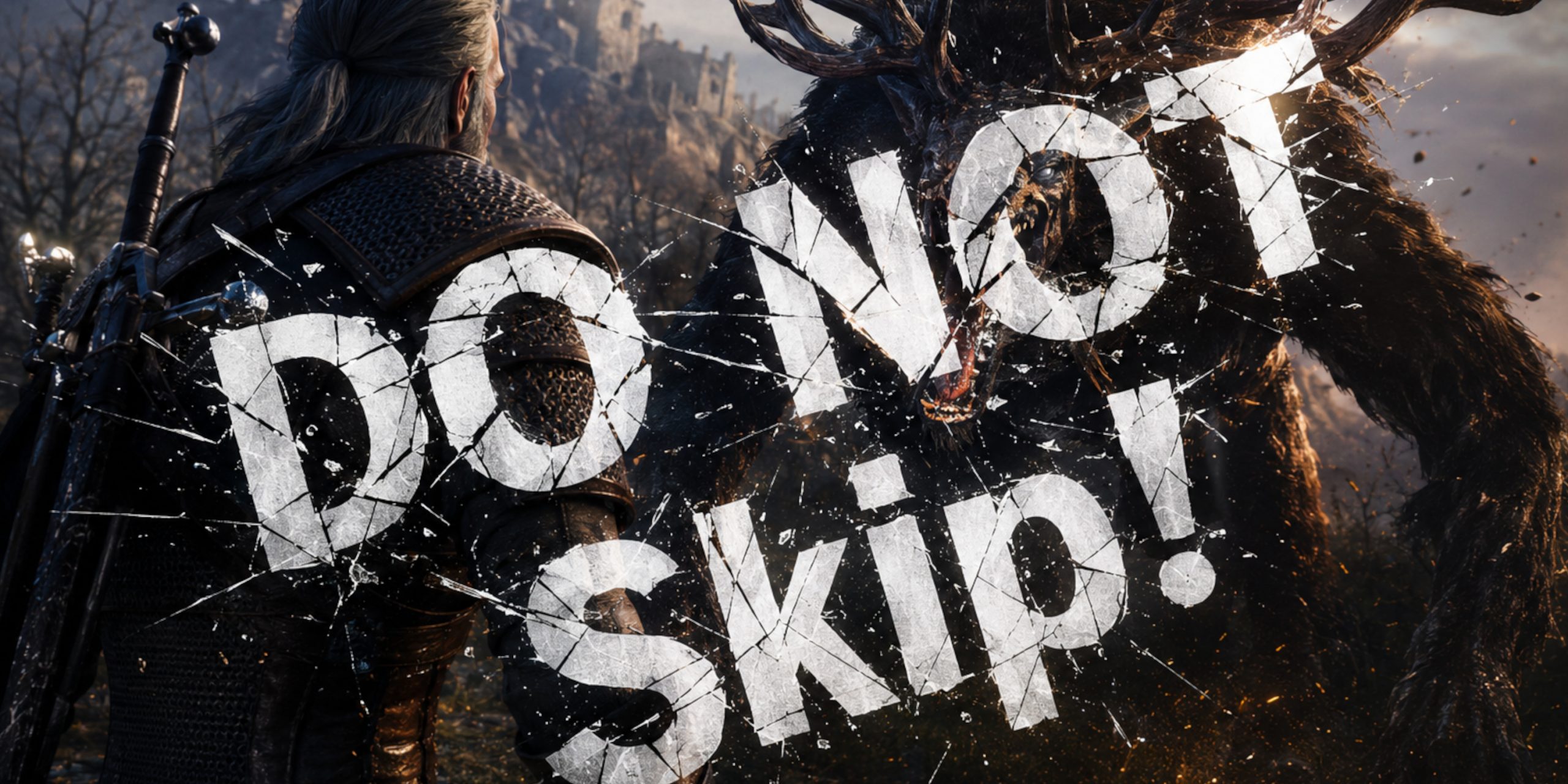
There are open-world games with “side quests”, and then there’s The Witcher 3. CD Projekt Red somehow looked at the idea of optional content and decided it should emotionally ruin you, make you laugh at tax inspectors, send you into existential spirals with vampires, and occasionally force you to babysit a goat with a bell.
The scary part is that some of the best writing in the game is completely missable.
You can technically sprint through Geralt’s main story and still have a great time. But you would also miss haunted islands, drunken necromancy, political assassinations, fairy tale nightmares, and one of the most unexpectedly moving quests about an old woman’s frying pan.
Honestly, Witcher 3 side quests have no right being this good.
Here are the quests you absolutely should never skip.
Bloody Baron
If there is one questline that transforms The Witcher 3 from “really good RPG” into “oh wow, this game is operating on another level”, it is the Bloody Baron storyline.
At first, the Baron looks like a classic drunken warlord stereotype. Loud voice, messy castle, terrible parenting skills. Standard fantasy material. Then the story slowly peels away layers of guilt, abuse, grief, and desperation until you realise nobody involved is entirely innocent.
The quest refuses to give you clean moral choices. Every decision feels heavy. Even the so-called “better” outcomes still leave scars behind.
This is also the moment many players realise Witcher contracts and investigations are not just filler activities. They are the backbone of the world itself.
The Ladies of the Wood section deserves special mention too. The Crookback Bog remains one of the creepiest places in gaming. You can practically smell the swamp through the screen.
Carnal Sins
This quest starts as a murder investigation and slowly mutates into psychological horror.
Novigrad already feels tense during Geralt’s stay there. Religious fanaticism is everywhere, public executions are common, and the city constantly feels like it is one bad day away from collapse. Carnal Sins leans directly into that atmosphere.
The investigation itself is excellent, but what really sticks is the final reveal. The villain is genuinely unsettling in a way that many fantasy antagonists are not. There is no grand army or magical apocalypse. Just obsession, cruelty, and someone who has completely detached themselves from humanity.
Also, this quest proves that Geralt works surprisingly well as a noir detective. Half the game is basically medieval crime scene analysis with extra monsters.
The Last Wish
If you care at all about Geralt and Yennefer, skipping this quest should probably be illegal.
The Last Wish gives the pair space to actually talk beyond the chaos of war, politics, and monsters. It is quieter than many major quests, but that is exactly why it works. The chemistry between them feels natural, messy, sarcastic, and believable.
The boat ride alone carries more emotional weight than entire romances in other RPGs.
It also cleverly addresses the magical “destiny” binding between Geralt and Yennefer from the books. The quest asks an important question. Are these two together because of genuine love, or because magic forced them together years ago?
That uncertainty gives the story real emotional bite.
Plus, watching Geralt awkwardly navigate feelings remains deeply entertaining. This man can fight ancient curses but still struggles with basic communication.
Possession
Skellige quests operate on a different frequency. Everything feels colder, stranger, and more mythological.
Possession is one of the best examples.
The setup is fantastic. A jarl appears cursed by a violent spirit, and the entire island is trapped between fear and superstition. The quest constantly pushes you toward uncertainty. Is this actually a curse? Is someone lying? Are the rituals real?
Then comes one of the most memorable moments in the entire game involving a baby and an oven.
It sounds ridiculous written down. Somehow it becomes one of the tensest sequences in the game.
This quest also highlights one of Witcher 3’s greatest strengths. It understands folklore. The monsters and spirits feel rooted in old myths rather than generic fantasy creatures.
A Towerful of Mice
Fyke Isle is pure nightmare fuel.
The fog, abandoned towers, rotting corpses, plague victims, whispering ghosts. Everything about this place feels wrong from the moment Geralt arrives.
A Towerful of Mice slowly unpacks the story behind the island’s destruction, and the deeper you go, the worse it becomes. There is tragedy everywhere. Fear, betrayal, starvation, cruelty. Nobody comes out clean.
Keira Metz also shines throughout this questline. She brings badly needed humour and charm into an otherwise grim section of the game.
Then the ending arrives and forces you to make a decision that feels deeply uncomfortable either way.
Classic Witcher.
Dead Man’s Party
The Hearts of Stone expansion is arguably the best DLC ever made for an RPG, and Dead Man’s Party is one huge reason why.
This quest basically asks one important question:
“What if Geralt got possessed and became the most chaotic wedding guest alive?”
The answer is incredible.
Watching normally stoic Geralt dance, flirt, drink excessively, play games, and embarrass himself in front of an entire village is genuinely hilarious. It is one of the few quests where the game fully relaxes and allows itself to be weird.
But underneath the comedy there is still melancholy. Like most Witcher stories, happiness always feels temporary.
Vlodimir von Everec absolutely steals the show too. The man has the energy of somebody who would get banned from three taverns before lunchtime.
Scenes From a Marriage
Also from Hearts of Stone, this quest is emotionally devastating in a completely different way.
You explore the decaying von Everec estate while slowly uncovering what happened between Olgierd and Iris. The entire mansion feels haunted by regret. Paintings whisper. Memories distort reality. Even the environment feels emotionally exhausted.
The writing here is exceptional.
Instead of dumping exposition on the player, the game lets you piece together a failed marriage through fragmented moments and lingering pain. By the end, Iris becomes one of the most tragic characters in the entire series despite relatively limited screen time.
The painted world section is visually stunning too. It feels like walking through grief itself.
Cheerful stuff.
The Warble of a Smitten Knight
Toussaint enters the game like somebody kicked open the door to a grim medieval drama and yelled, “What if we added wine, tournaments, unicorns, and absurd levels of colour?”
This quest captures that energy perfectly.
On the surface, it is a romantic knightly tournament story filled with poetry, pageantry, and ridiculous flirting. Underneath that, it quietly pokes fun at fairy tale ideals and chivalric nonsense.
Geralt participating in knightly traditions is always funny because he fundamentally does not belong there. He looks permanently five minutes away from asking everybody to stop talking and just point him toward the monster.
The tournament itself is excellent fun too and provides a refreshing tonal shift after the darker base game regions.
Equine Phantoms
Yes, the Roach quest deserves a place here.
Absolutely.
Blood and Wine somehow includes a mission where Geralt hallucinates and starts having full conversations with Roach. What could have been a throwaway joke becomes one of the funniest quests in the game.
Roach complaining about Geralt’s riding habits feels strangely earned after hundreds of hours of players accidentally launching her onto rooftops and fences.
The quest also contains surprisingly sharp humour about RPG mechanics themselves. It knows exactly how absurd Geralt’s adventures can look from an outside perspective.
Frankly, Roach deserved her chance to speak.
Reason of State
This questline is messy, controversial, frustrating, and absolutely essential.
Without spoiling too much, Reason of State deals with the political future of the Northern Kingdoms and involves several major returning characters. It is less about monsters and more about power, betrayal, and survival.
Some players dislike aspects of its ending, and honestly, fair enough. Certain character decisions still spark arguments years later. But skipping it entirely leaves a huge gap in the wider story.
The Witcher world works best when politics feel dangerous and unstable. This quest fully embraces that.
Also, seeing Geralt dragged into political conspiracies despite visibly wanting no part in them remains very funny.
Man just wants to kill monsters and get paid. Instead he keeps accidentally influencing continental history.
Where the Cat and Wolf Play
This short quest hits surprisingly hard.
Geralt encounters a fellow witcher from the School of the Cat, and what follows becomes a tense exploration of prejudice, survival, and moral compromise.
The beauty of the quest lies in how small-scale it feels. There are no kings or massive wars involved. Just ordinary villagers, fear, and a witcher pushed beyond his limits.
It also reminds players that witchers are not universally heroic figures. Many are broken, isolated, or deeply dangerous people.
The final choice sticks with you long after the quest ends.
The Takeaway
What makes The Witcher 3 special is not just the scale of its world. Plenty of games have big maps. Plenty have hundreds of quests.
Very few make even minor side stories feel meaningful.
A random contract can turn into a heartbreaking family tragedy. A comedy quest can suddenly become reflective and sad. A ghost story might quietly explore grief better than prestige television dramas with ten times the budget.
That unpredictability is why these quests still get discussed years later.
Also, somewhere out there, a player ignored all of these quests because they were busy playing Gwent.
Honestly? Respect.