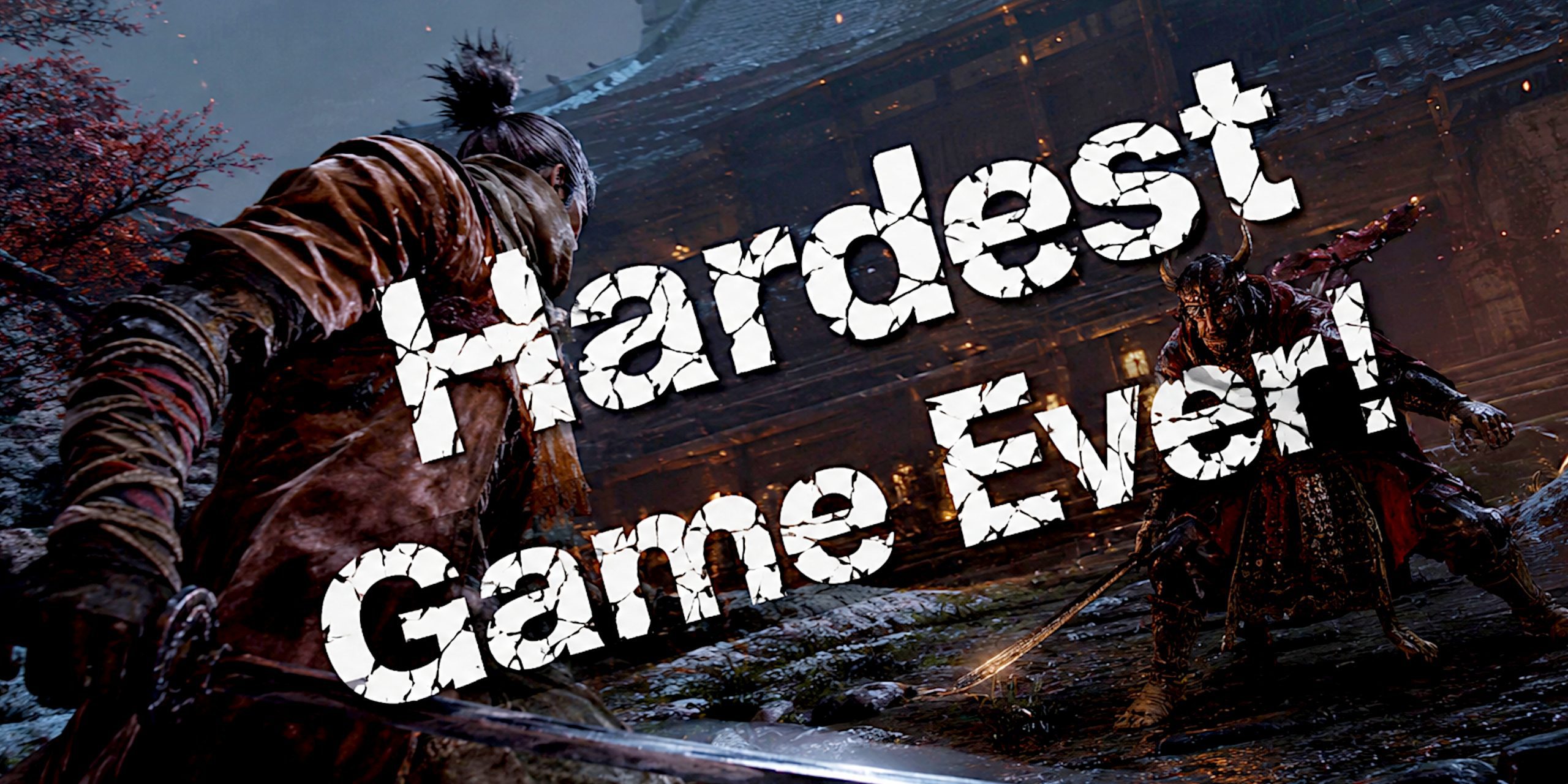
Sekiro: Shadows Die Twice remains one of the most punishing modern action games, but calling it the hardest game ever is surprisingly difficult. Difficulty is deeply subjective. A player who breezes through rhythm games might struggle with strategy titles. Someone who dominates Souls games might hit a wall in Sekiro because it demands an entirely different mindset.
What makes Sekiro fascinating is that it refuses to let you solve its challenges by grinding levels or summoning help. For many players, that makes it feel harder than anything else they have ever played. For others, once the combat finally clicks, it becomes one of the fairest games ever designed.
Every few years a game arrives that develops a reputation long before many people even play it. Sekiro: Shadows Die Twice earned that status almost immediately. Stories spread across gaming forums about impossible bosses, broken controllers and players celebrating after defeating a single enemy that had blocked their progress for days.
Then you actually play it.
For the first hour, it almost feels unfair. Every instinct learned from Dark Souls or Elden Ring seems completely wrong. Dodging gets you killed. Playing defensively gets you killed. Running away often gets you killed too.
Then something strange happens.
One perfectly timed deflection turns into another. Enemy attacks suddenly make sense. Bosses that once looked impossible become carefully choreographed duels. You realise the game was teaching you all along, just in a particularly brutal way.
So, is Sekiro the hardest game ever made? It depends on what you mean by “hard.”
Why Sekiro Feels So Different
Most difficult games allow players to compensate for limited skill.
You can level up.
You can summon allies.
You can search for stronger equipment.
You can change your build.
Sekiro strips almost all of those options away.
Your sword remains largely the same throughout the adventure. Health upgrades are limited, attack increases are carefully controlled and every major boss expects you to master the combat system rather than overpower it.
That design philosophy creates a simple message.
“You improve.”
Not your character.
You.
That is both brilliant and terrifying.
The Combat System Demands Precision
The core mechanic is posture.
Instead of reducing an opponent’s health bar as quickly as possible, the goal is usually to overwhelm their posture through relentless pressure and perfectly timed deflections.
That changes everything.
Success depends on:
- Reading attack animations
- Timing deflections within narrow windows
- Maintaining aggression
- Recognising perilous attacks
- Choosing the correct response between jumping, dodging or using the Mikiri Counter
It almost resembles a rhythm game hidden inside a samurai action game.
Many players initially try to survive fights.
Sekiro wants you to dominate them.
Why Dark Souls Veterans Often Struggle
This is probably the funniest part.
Players who completed every Dark Souls game often expect Sekiro to feel familiar.
Instead, they spend the opening hours getting thoroughly humbled.
Dark Souls rewards patience.
Sekiro rewards confidence.
Rolling constantly is almost muscle memory for Souls veterans, but in Sekiro that habit often leads straight into another sword swing.
It is one of the few games where previous experience can actually slow down your learning.
Watching experienced Souls players panic-roll into defeat is strangely comforting.
Bosses That Defined Modern Gaming
Few games have a boss roster as consistently memorable.
Every major encounter teaches a new lesson while demanding mastery of previous mechanics.
Genichiro Ashina
For many players, this is the moment the game finally clicks.
He tests almost every mechanic introduced so far and refuses to let sloppy play succeed.
Once you defeat Genichiro, you usually understand what Sekiro has been trying to teach from the beginning.
Guardian Ape
A giant ape with unpredictable movement sounds difficult enough.
Then the fight changes completely.
Without spoiling too much, this battle remains one of the biggest surprises in modern gaming.
Owl
Fighting your own mentor creates one of the game’s most technical duels.
There are very few safe opportunities to attack, meaning every mistake feels expensive.
Isshin, the Sword Saint
Few final bosses enjoy quite the same reputation.
Multiple phases.
Near perfect execution required.
An enormous move set.
Minimal room for panic.
Many players consider him one of the greatest boss fights ever created because every mechanic learned throughout the game becomes essential.
Winning feels completely earned.
Can You Make Sekiro Easier?
To a point.
Players can:
- Upgrade healing capacity
- Increase vitality through Prayer Beads
- Raise attack power after defeating major bosses
- Unlock useful combat arts
- Experiment with Prosthetic Tools
- Use consumable buffs before difficult fights
These advantages certainly help.
What they cannot do is replace skill.
Eventually every player reaches an encounter that demands better timing, better positioning and better reactions.
There is no shortcut around that.
How Sekiro Compares With Other Difficult Games
Dark Souls
Dark Souls offers enormous freedom.
Different weapons, armour, magic builds and cooperative multiplayer allow players to approach problems creatively.
Sekiro offers far fewer alternatives.
Its difficulty is narrower but often more demanding mechanically.
Elden Ring
Elden Ring can certainly be harder in specific encounters.
However, it also provides countless ways to reduce that challenge through Spirit Ashes, exploration, powerful builds and optional content.
Sekiro remains far less forgiving.
Bloodborne
Bloodborne encourages aggression, but still revolves around dodging and stamina management.
Sekiro replaces those systems with posture and deflections, making it feel faster and more precise.
Ninja Gaiden Black
This is perhaps Sekiro’s strongest competitor.
Ninja Gaiden Black demands exceptional execution from beginning to end and remains infamous for its relentless combat.
Many long-time action game fans still place it alongside Sekiro at the top of the difficulty ladder.
Cuphead
Cuphead focuses on memorisation and mechanical precision.
While brutally difficult, each fight is shorter and follows clearer patterns than many of Sekiro’s extended sword duels.
Why Some Players Think Sekiro Is Actually Fair
Calling Sekiro “hard” is accurate.
Calling it unfair is much harder.
Almost every death can be explained.
You attacked too early.
You missed the deflection.
You reacted slowly.
You became greedy.
That consistency is one reason so many players eventually fall in love with the game.
The rules rarely change.
Once you understand them, victory feels achievable even against enemies that once looked impossible.
The Psychological Battle
Sekiro is as much about confidence as mechanics.
Many players defeat a boss immediately after taking a break.
Why?
Because frustration causes hesitation.
Hesitation leads to defensive play.
Defensive play usually leads to defeat.
The game quietly encourages calm, decisive action.
That mental battle becomes just as important as fast reflexes.
Does Difficulty Make Sekiro Better?
Not automatically.
Some players simply do not enjoy repeated failure, and there is nothing wrong with that.
Others find enormous satisfaction in overcoming challenges that initially seemed impossible.
Sekiro belongs firmly in the second category.
Its reputation exists because success feels earned rather than given.
Very few games create such dramatic improvement in the player themselves.
By the end, enemies that once seemed impossible become routine.
Looking back at your first hours almost feels embarrassing.
Almost.
Verdict: Is Sekiro the Hardest Game Ever?
There is no single hardest game ever made.
Classic arcade games, precision platformers and older action titles all have legitimate claims.
However, Sekiro deserves to be part of that conversation.
It combines unforgiving combat, limited progression, demanding boss encounters and a refusal to let players bypass its core mechanics.
More importantly, it transforms frustration into mastery in a way very few games achieve.
That is why its reputation has endured years after release.
Whether it is objectively the hardest game ever is impossible to prove.
Whether it is one of the finest examples of difficult game design ever created is far easier to argue.
For many players, Sekiro does not simply test their skill.
It changes how they think about action games altogether.