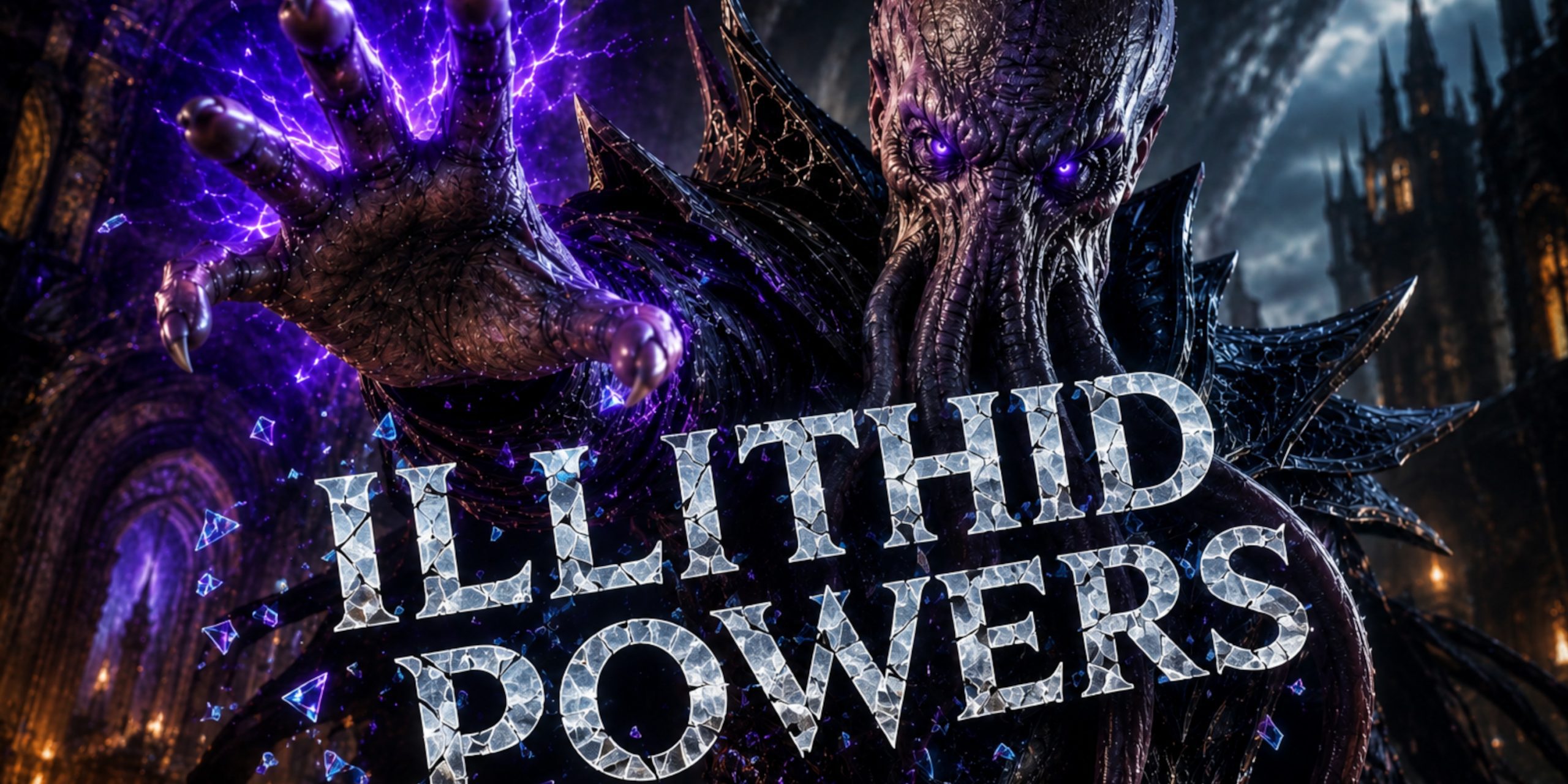
If there is one mechanic in Baldur’s Gate 3 that perfectly captures the game’s whole “power at a terrible emotional cost” vibe, it is Illithid Powers. The first time the tadpole menu appears, most players react in one of two ways.
Either:
“Absolutely not. My character has standards.”
Or:
“Oho. Bonus actions and psychic explosions? Hand me the worms immediately.”
Honestly, both reactions are fair.
Illithid Powers can turn an already strong build into something hilariously dangerous. They also come with some of the game’s creepiest narrative implications. Half the fun is deciding how far your character is willing to go before they start sounding like a smug squid philosopher.
This guide breaks down how Illithid Powers work, which ones are actually worth using, the best combinations for each class, and whether the transformation path is worth the price.
How Illithid Powers Work
Illithid Powers are unlocked by consuming tadpoles collected throughout the game. These parasites are found in key story moments, on True Souls, and in various containers across Acts 1 through 3.
Once consumed, they unlock a branching skill tree filled with passive bonuses, reactions, mobility tools, and psychic attacks.
The system is divided into three stages:
| Tier | Description |
|---|---|
| Basic Illithid Powers | Standard abilities unlocked with tadpoles |
| Advanced Powers | Stronger abilities deeper in the tree |
| Half-Illithid Powers | Unlocked after a major Act 3 decision |
The deeper you go, the more powerful your character becomes. Also, the more your face starts looking like it has not slept properly in several centuries.
A fair trade, depending on your priorities.
Are Illithid Powers Worth Using?
Mechanically, yes. Absolutely.
Narratively, that depends on your character.
The Illithid tree contains some of the strongest utility abilities in the entire game. Certain powers completely reshape combat encounters, especially on Tactician and Honour Mode.
The biggest advantages include:
- Free mobility
- Powerful crowd control
- Bonus action economy
- Critical hit manipulation
- Survivability boosts
- Battlefield repositioning
- Massive AoE psychic damage
There are very few real gameplay downsides unless you fully commit to the Half-Illithid transformation path.
If you are roleplaying a deeply moral paladin who thinks tadpoles are spiritually disgusting, then sure, resist temptation. If you are playing a power-hungry sorcerer who already licks suspicious artefacts for fun, you probably crossed this line hours ago.
Best Early Illithid Powers
Favourable Beginnings
This is arguably the best opening power in the entire tree.
It grants a bonus to your first attack roll or ability check against a target. It sounds simple, but it is absurdly effective throughout the whole game.
Perfect for:
- Rogues
- Paladins
- Great Weapon builds
- Dialogue-focused characters
Missing important attacks in Baldur’s Gate 3 feels awful. This reduces those painful moments significantly.
Luck of the Far Realms
An incredibly strong reaction ability that lets you turn a successful hit into a critical hit.
Paladins become terrifying with this power. Smite crits already hit like a collapsing cathedral. Adding guaranteed crit manipulation turns boss fights into brief public executions.
Best used with:
- Divine Smite
- Sneak Attack
- High damage spell attacks
- Action Surge builds
Cull the Weak
One of the most satisfying passive abilities in the game.
Enemies below a certain hit point threshold instantly die and explode with psychic damage.
Large fights become chain reactions of collapsing goblins, cultists, and assorted unfortunate people who made the mistake of standing too close together.
It scales brilliantly into late game.
Psionic Backlash
A reaction that deals psychic damage when enemies cast spells.
This ability quietly becomes amazing during later acts where enemy spellcasters appear constantly. Watching hostile mages damage themselves while trying to cast is deeply therapeutic.
Especially useful on:
- Frontline characters
- Tanks
- Characters with unused reactions
Best Mid and Late Game Illithid Powers
Black Hole
This is where things become slightly unfair.
Black Hole pulls enemies into a concentrated area while slowing them. Combined with AoE spells, it becomes devastating.
Classic combinations include:
- Black Hole + Fireball
- Black Hole + Hunger of Hadar
- Black Hole + Spirit Guardians
- Black Hole + Cloudkill
It turns chaotic encounters into organised suffering.
Wizards and Sorcerers adore this ability.
Mind Blast
A cone attack that deals psychic damage and can stun enemies.
Mind Blast is one of the strongest crowd-control abilities available to any build. Stunned enemies effectively lose turns, which is priceless in difficult encounters.
The animation also has serious “anime villain finally stops holding back” energy.
Fly
Unlocked through the Half-Illithid path, Fly completely changes traversal and combat positioning.
No spell slots. No concentration. Just permanent flight.
Suddenly every battlefield becomes your playground.
Archers gain better sightlines, melee fighters close gaps instantly, and exploration becomes dramatically easier.
It is honestly difficult to go back after using it.
Displacer Beast Shape
One of the most entertaining abilities in the game.
Transforming into a Displacer Beast grants mobility, survivability, and battlefield disruption tools that work surprisingly well even in difficult encounters.
Also, there is something very funny about terrifying cosmic body horror being used to shove enemies off cliffs.
Best Illithid Powers for Each Class
Paladin
Best Powers:
- Luck of the Far Realms
- Cull the Weak
- Fly
- Psionic Dominance
Paladins benefit massively from guaranteed crits and mobility. The class already hits incredibly hard, so Illithid Powers mainly remove limitations.
A flying paladin with crit smites feels less like a knight and more like divine artillery.
Rogue
Best Powers:
- Favourable Beginnings
- Luck of the Far Realms
- Freecast
- Fly
Rogues thrive on positioning and burst damage. Guaranteed crits paired with Sneak Attack can erase enemies instantly.
Also, Fly makes rooftop combat feel genuinely ridiculous in the best way possible.
Sorcerer and Wizard
Best Powers:
- Black Hole
- Mind Blast
- Psionic Backlash
- Freecast
Spellcasters arguably gain the most overall value from the Illithid tree.
Black Hole alone can define encounters. Freecast allowing a free spell cast without resource cost becomes absurd with high-level magic.
Nothing says “balanced gameplay” quite like collapsing an entire battlefield into one Fireball-shaped problem.
Barbarian
Best Powers:
- Cull the Weak
- Psionic Backlash
- Fly
- Stage Fright
Barbarians benefit from aggressive passive effects and mobility tools.
A flying enraged barbarian descending onto enemies from the sky looks exactly as stupidly glorious as it sounds.
Should You Become Half-Illithid?
This is the major decision point.
In Act 3, players can embrace the Astral-Touched Tadpole and evolve further.
Benefits include:
- Permanent Fly
- Stronger psychic abilities
- Better mobility
- Access to elite powers
The downside is mostly narrative and visual.
Your character develops visible veins and altered features. Companions react differently. Some players love the corrupted aesthetic. Others immediately reload saves after seeing their Tav resemble an exhausted underwater prophet.
Mechanically, it is extremely strong.
Roleplay-wise, your mileage may vary dramatically.
Best Overall Illithid Powers Ranked
| Power | Why It’s Strong |
|---|---|
| Black Hole | Incredible crowd control |
| Luck of the Far Realms | Guaranteed crits are absurd |
| Cull the Weak | Passive execution effect scales brilliantly |
| Fly | Changes traversal and positioning completely |
| Mind Blast | Excellent AoE stun |
| Favourable Beginnings | Consistently useful throughout the game |
| Psionic Backlash | Punishes spellcasters efficiently |
| Freecast | Free high-level spells are ridiculous |
Seven Swords Takeaway
Illithid Powers are one of the smartest systems in Baldur’s Gate 3 because they tempt both the player and the character simultaneously.
You know absorbing parasites is probably a terrible idea. The game repeatedly hints that this may end badly. Then it offers permanent flight, critical hit manipulation, and psychic nukes.
And suddenly morality becomes negotiable.
That tension is what makes the system work so well. Mechanically, the powers are fantastic. Narratively, they constantly force players to question how much power they are willing to trade for a slightly more concerning eye colour.
Classic Baldur’s Gate, really.