What a Longhouse Really Was
The Viking longhouse was a world contained within timber walls. A place where people slept, worked, argued, celebrated, and occasionally endured each other through very long winters.
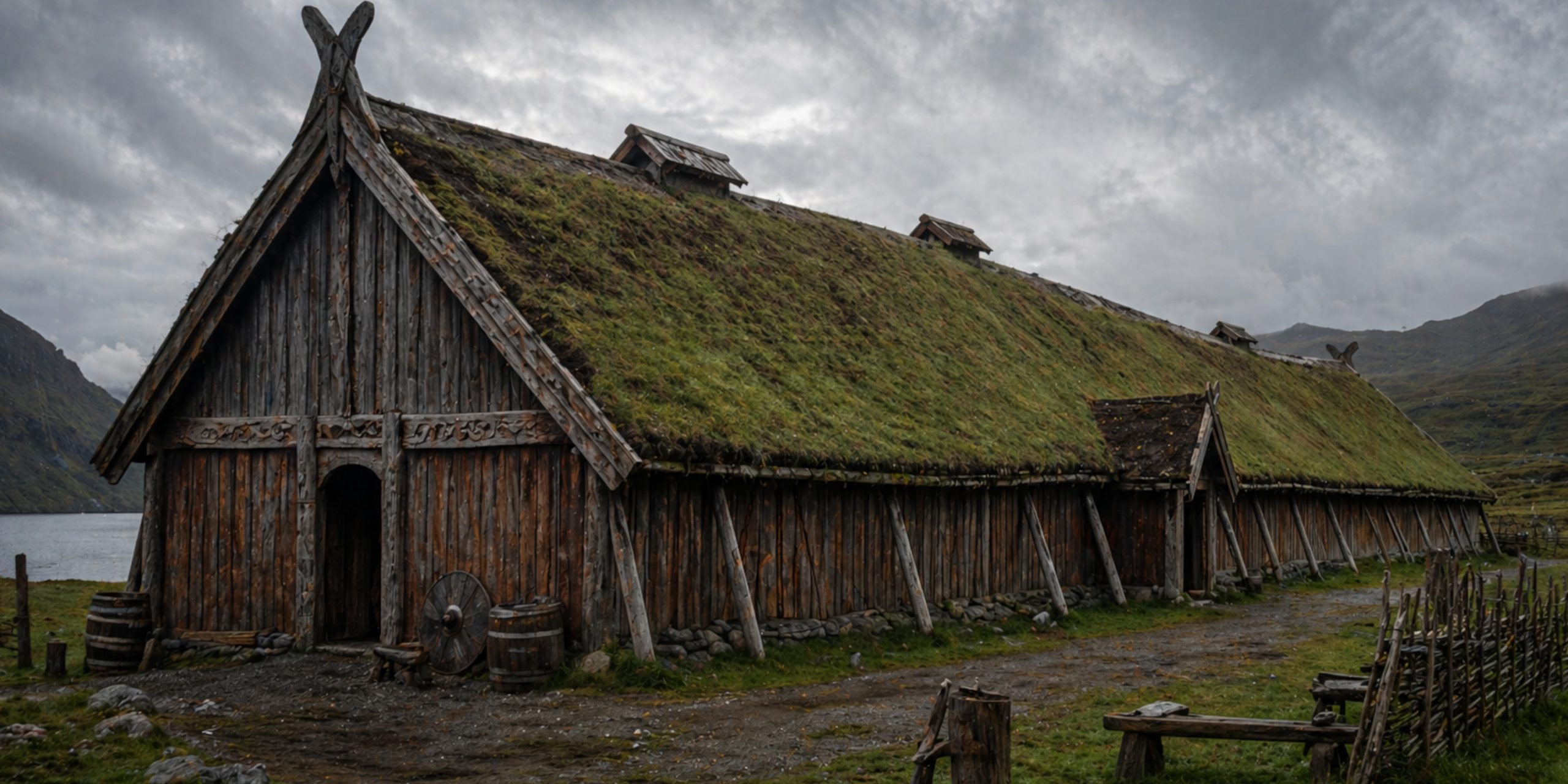
Across Scandinavia, from rural Norway to the settlements of Iceland, these structures formed the backbone of daily life. The scale could vary, from modest farm dwellings to impressive halls belonging to chieftains. Yet the core idea remained consistent. One long rectangular building, often between 20 and 60 metres in length, with a single shared interior space.
Privacy was not part of the design brief. Community was.
Structure and Materials
Longhouses were built with practicality in mind. Timber frames formed the skeleton, while walls were made from planks, wattle and daub, or even turf in harsher climates. Roofs were often layered with sod, which gave them insulation and a rather earthy smell when wet.
The structure relied on rows of internal posts that ran down the length of the building. These supported the roof and divided the space subtly, though not enough to create proper rooms.
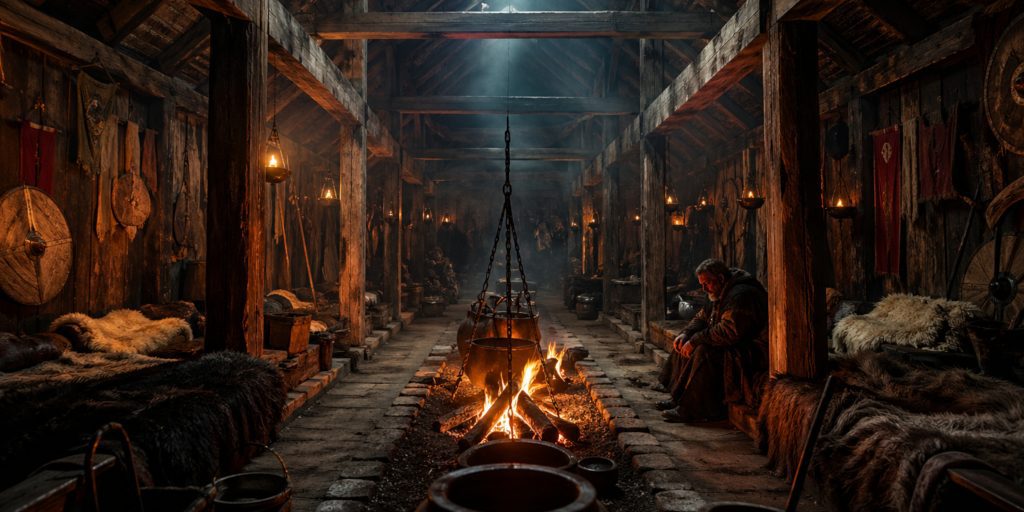
The central aisle was left open, dominated by a long hearth. On either side, raised platforms served as seating during the day and beds at night. Animals might be kept at one end, especially in colder regions. It was efficient, if not particularly aromatic.
The Hearth, Heart of the Home
The hearth was the centre of everything. Cooking, warmth, light, and social life all revolved around it. A long strip of fire ran down the middle of the hall, fed constantly with wood or peat.
There was no chimney in the modern sense. Smoke drifted upward and escaped through vents in the roof, or simply seeped out through the thatch. This meant interiors were often hazy, with soot-darkened beams and eyes that probably watered more than anyone admitted.
Still, the fire created a rhythm to daily life. Meals were prepared in iron cauldrons, bread baked on flat stones, and stories shared while the flames flickered. It must have been both comforting and exhausting in equal measure.
Daily Life Inside
A longhouse was always busy. Women spun wool, wove cloth, and managed food stores. Men repaired tools, carved wood, or prepared for seasonal work. Children learned by watching, which likely meant getting in the way until they were useful.
Sleeping arrangements were communal. People lay on benches along the walls, often sharing space and warmth under furs. There was little separation between work and rest. The same bench might host a meal, a conversation, and a night’s sleep within a few hours.
Light came from the hearth and simple oil lamps. Winters would have felt particularly long, with darkness pressing in and the world beyond the walls reduced to cold and silence.
Status and Space

Not all spaces within a longhouse were equal. Status mattered, and it was visible.
At one end of the hall stood the high seat, reserved for the household leader. This area often featured carved pillars and symbolic decoration. Guests of importance were seated nearby, while others found their place further down the hall.
In larger halls, especially those tied to regional power centres like Hedeby, the building itself became a statement. Feasts were held, alliances negotiated, and reputations built or broken over shared drink.
It is worth noting that generosity was a form of power. A chieftain who hosted well strengthened loyalty. One who did not might find his hall noticeably quieter over time.
Light, Sound, and Atmosphere
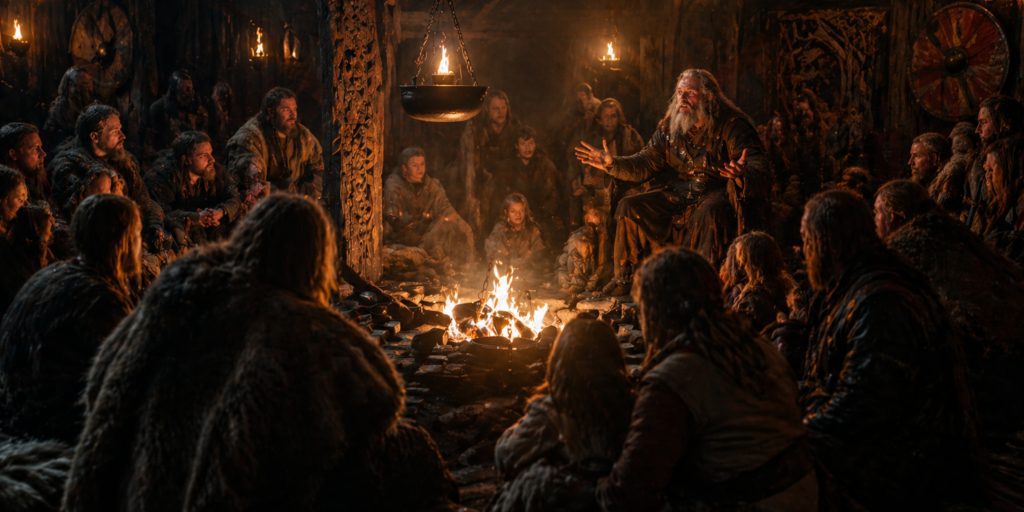
Modern reconstructions often look tidy. Real longhouses would have felt far more alive.
The air carried the scent of smoke, animals, damp wool, and cooking. Light shifted constantly, casting long shadows across carved beams. Conversations overlapped, punctuated by laughter, arguments, and the occasional clang of metalwork.
It was not peaceful in the way we tend to imagine historical interiors. It was active, noisy, and deeply human. If anything, the lack of quiet might have been reassuring. Silence, especially in winter, could feel far more unsettling.
Archaeology and What We Know
Our understanding of longhouses comes largely from archaeology. Post holes reveal the outline of structures, while hearth remains mark the centre of activity. Artefacts such as tools, pottery, and textile fragments help fill in the details.
Sites across Scandinavia and beyond, including settlements in York, have provided valuable insight. The Viking presence there, often referred to as Jorvik, offers a rare glimpse of urban life shaped by similar architectural principles.
Reconstruction is always a careful balance between evidence and interpretation. We know enough to sketch the outline with confidence. The finer details, the exact arrangement of daily life, still leave room for debate.
Which, as a historian, I find both frustrating and oddly satisfying.
A Personal Reflection
There is something about the Viking longhouse that resists romanticisation once you look closely. It was warm but smoky, communal but crowded, efficient but rarely comfortable by modern standards.
And yet, it worked. It created a shared space where survival depended on cooperation, where stories were passed down, and where identity was shaped collectively rather than individually.
I suspect that if one of us were dropped into a longhouse for a winter, we would last perhaps three days before complaining about the smoke and the lack of personal space. Possibly less.
Still, there is a certain appeal in the idea of it. A single fire, a single room, and a sense that everyone within those walls belonged to the same story.