Few Roman commanders carry the same weight of consequence as Scipio Aemilianus. He did not merely win wars, he ended them with a finality that reshaped the Mediterranean. Carthage was erased under his command. Numantia followed, stubborn to the last and then gone.
There is a certain cold clarity to his career. Where others fought for victory, he fought for conclusion. As a historian, I find him difficult to admire in a comfortable way. His discipline and resolve are undeniable, yet his legacy carries the uneasy sense of a man who understood exactly what total war required, and chose to see it through.
Origins and Rise to Power
Born into the Cornelii Scipiones and adopted into the line of Scipio Africanus, Aemilianus inherited both prestige and expectation. Roman politics was rarely gentle, and his ascent was not purely ceremonial.
He first gained attention during the Third Macedonian War, showing composure and initiative that marked him out early. Later, in North Africa, he displayed a steadiness under pressure that contrasted sharply with the failures of other Roman commanders during the early phases of the Third Punic War.
Rome did not promote him by accident. It promoted him because it needed someone who could finish what others had mishandled.
Arms and Armour
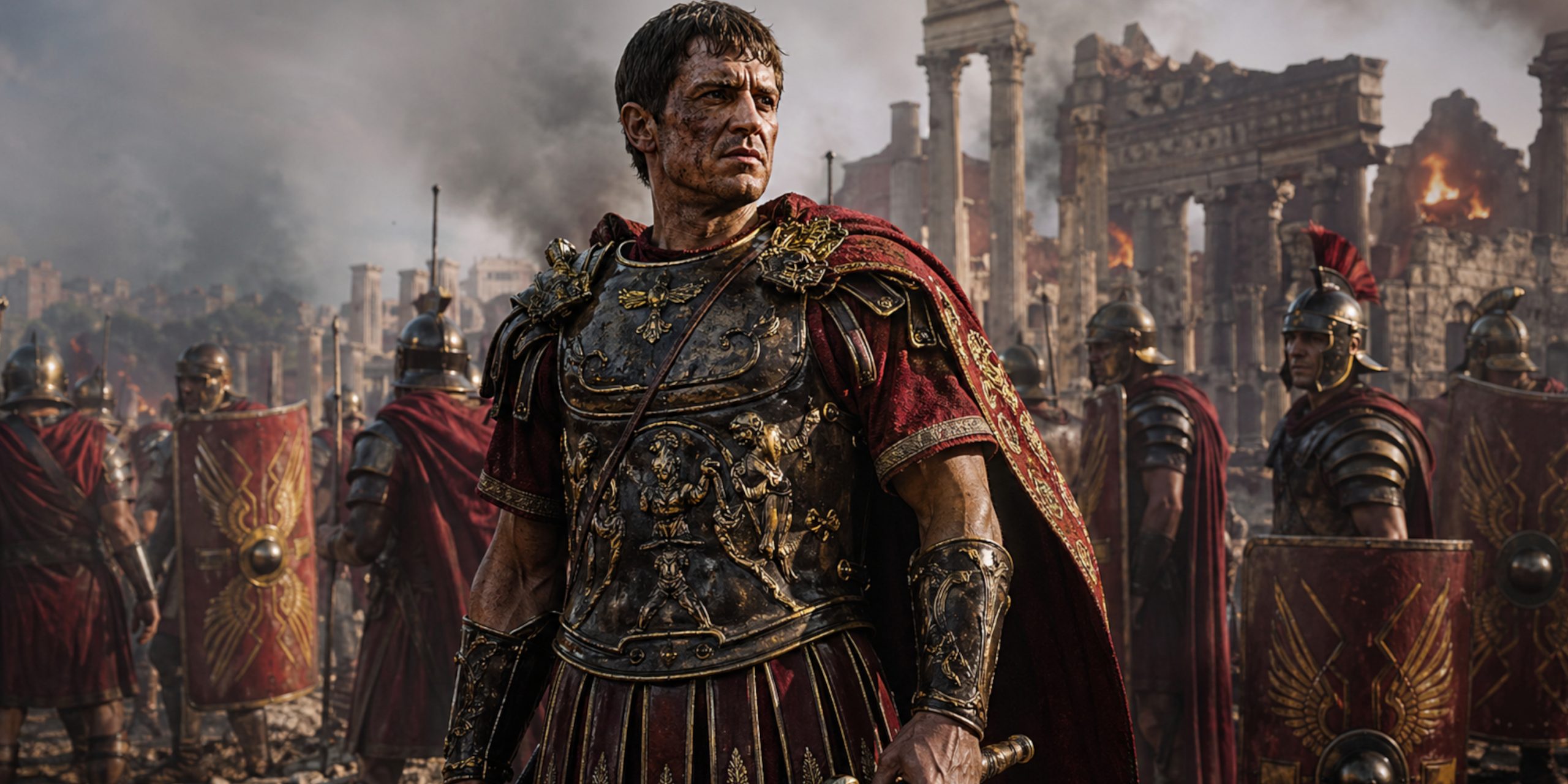
Roman commanders of Aemilianus’ standing were not ornamental figures. They fought, inspected, enforced discipline, and often shared the physical burden of campaign life.
Typical Equipment of Scipio Aemilianus
- Helmet, likely a high quality bronze or iron Montefortino or early Imperial style
- Body armour, either a finely made cuirass or mail shirt reserved for elite officers
- Cloak, often dyed or marked to signify rank
- Sword, a gladius suited for close combat, though rarely used recklessly
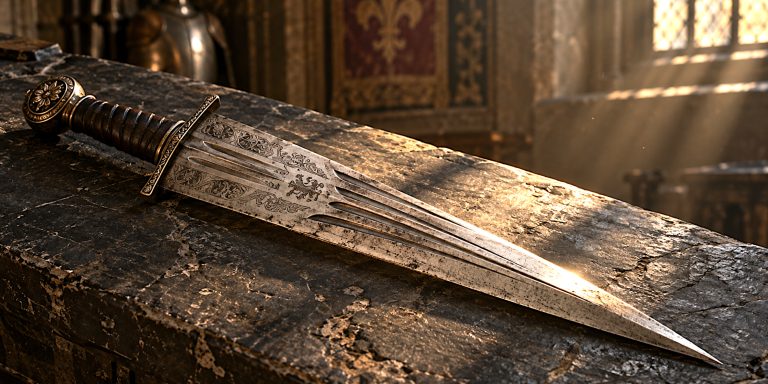
- Dagger, a pugio carried as both weapon and symbol of status
- Shield, though not always carried in battle, used when necessary
His appearance would have balanced authority with practicality. Roman commanders who appeared too lavish risked losing the respect of hardened legionaries.
Roman Legionary Equipment Under His Command
- Gladius, short stabbing sword ideal for formation fighting
- Scutum, large rectangular shield for protection and formation cohesion
- Pilum, heavy javelin designed to disrupt enemy shields and lines
- Mail armour or lighter protection depending on role
- Helmets adapted for visibility and protection
Aemilianus’ armies were not innovative in equipment, but in discipline and execution. That is where his strength lay.
The Destruction of Carthage
The Third Punic War had stalled before Aemilianus took command. Roman forces lacked cohesion and urgency. Carthage, though weakened, resisted with determination.
Aemilianus changed the tempo immediately.
He imposed strict discipline, reorganised the army, and tightened the siege. His approach was methodical. Supply lines were secured, positions fortified, and pressure applied without pause.
The final assault on Carthage was brutal. Street fighting dragged on, house by house. Ancient accounts describe fire spreading through the city, collapsing structures, and relentless Roman advance.
When it ended, Carthage was no longer a rival. It was a memory marked by ash.
There is a famous moment where Aemilianus is said to have wept as the city burned, reflecting on the fate that might one day befall Rome itself. Whether entirely true or embellished, it captures the strange duality of the man. Ruthless in action, reflective in consequence.
The Numantine War
If Carthage was a test of siege warfare, Numantia was a test of patience.
The Celtiberian stronghold had resisted Roman forces repeatedly. Aemilianus arrived to find an army demoralised and ineffective.
His solution was not immediate assault. Instead, he encircled Numantia completely, cutting off all supplies. Fortifications were built around the city, sealing it in.
The result was slow and grim. Starvation and despair took hold within the city. Eventually, resistance collapsed, not through defeat in battle but through exhaustion of every possible resource.
This campaign reveals more about Aemilianus than any single battlefield victory. He understood that sometimes the surest path to victory is not glory, but inevitability.
Military Acumen
Aemilianus’ reputation rests on more than victories. It rests on how he achieved them.
Key Strengths
- Discipline enforcement, restoring order in failing armies
- Strategic patience, especially in siege warfare
- Adaptability, adjusting methods to enemy resistance
- Psychological pressure, using time and isolation as weapons
- Personal authority, commanding respect without theatrics
He did not chase dramatic engagements when they were unnecessary. Instead, he shaped conditions until victory became unavoidable.
In modern terms, he understood operational control rather than just tactical success. That distinction matters.
Personality and Intellectual Life
Unlike many Roman generals, Aemilianus moved in intellectual circles. He was associated with Greek scholars and showed interest in philosophy.
This does not soften his actions, but it adds texture. He was not a blunt instrument of war. He was a thinking commander, one who understood history, culture, and the fragility of power.
There is something quietly unsettling in that combination. Violence guided by intellect can be far more precise, and far more final.
Artefacts and Where to See Them
Direct artefacts tied personally to Aemilianus are rare, which is not unusual for Roman commanders. However, material culture from his campaigns survives in several key locations.
Key Sites and Museums
- Rome, Capitoline Museums
Sculptures, inscriptions, and military artefacts linked to the late Republic - Carthage Archaeological Site, Tunisia
Remains of the destroyed city, including fortifications and urban layers burned during the siege - Numantia Archaeological Site, Spain
Defensive structures, settlement remains, and evidence of the Roman encirclement - National Archaeological Museum of Spain, Madrid
Artefacts from Celtiberian contexts, offering insight into the Numantine resistance
These locations offer a tangible connection to his campaigns. Standing in Numantia, in particular, gives a sense of the slow tightening grip of the Roman siege.
Archaeology and Recent Findings
Archaeology has added depth to the historical narrative, particularly in Carthage and Numantia.
Carthage
Excavations have revealed:
- Burn layers consistent with large scale destruction
- Collapsed urban structures from prolonged fighting
- Evidence of final occupation phases under siege conditions
These findings align with written accounts, though they often show a more chaotic and human reality beneath the formal histories.
Numantia
Work at Numantia has uncovered:
- Defensive walls and internal structures showing prolonged resistance
- Roman siege works surrounding the city
- Signs of starvation and collapse in the final phase
What stands out is the scale of Roman engineering. The encirclement was not symbolic. It was comprehensive.
Archaeology strips away the rhetoric and leaves the reality of methodical warfare.
Legacy
Aemilianus left behind a reshaped Mediterranean world.
Carthage’s destruction removed Rome’s greatest rival. Numantia’s fall reinforced Roman authority in Hispania. His campaigns demonstrated that Rome could not only win wars, but end them decisively.
Yet his legacy is not simple. He represents a turning point where Roman warfare became more absolute. There is less room for negotiated endings, more emphasis on total submission.
As a historian, I find his career compelling precisely because it resists easy judgement. He was effective, intelligent, and disciplined. He was also responsible for acts that still carry weight when viewed through a modern lens.
Perhaps that is why he remains relevant. He forces us to confront the cost of certainty in war.
Takeaway
Scipio Aemilianus was not the most flamboyant Roman general, nor the most celebrated in popular memory. But he was one of the most consequential.
He understood that wars are not truly won until the enemy can no longer stand, and he acted accordingly. That clarity defined his career and shaped Rome’s expansion.
There is a certain unease in writing about him. Admiration comes easily for his skill. Acceptance of his methods takes longer.