The Macedonian Dynasty ruled the Byzantine Empire during one of the most remarkable periods in medieval history. Between 867 and 1056, Constantinople transformed from the capital of a pressured defensive state into the centre of a wealthy, aggressive, intellectually vibrant empire.
Despite the dynasty’s name, its founder Basil I probably came from an Armenian background rather than Macedonia itself. Byzantine history has a habit of making simple labels wonderfully inconvenient.
This era produced soldier emperors, scholar rulers, brilliant administrators, ruthless palace intrigue, and some of the finest art of the Middle Ages. It was a period when Byzantium reminded both Europe and the Islamic world that the Roman Empire had not disappeared. It had simply moved east, changed language, and become extremely good at surviving.
As a historian, I find this period fascinating because Byzantium feels so familiar and yet completely different. It had Roman law, Greek culture, Christian theology, imperial ceremony, and enough political scheming to make any royal court look amateur.
Background: Byzantium Before the Macedonians
By the mid 9th century, the Byzantine Empire had survived centuries of crisis.
It had endured:
- Arab expansion after the 7th century
- Loss of Egypt, Syria, and much of the eastern Mediterranean
- Iconoclasm, a bitter religious conflict over sacred images
- Pressure from Bulgars, Slavs, and Islamic powers
- Internal rebellions and succession struggles
Yet Byzantium remained resilient.
The empire still controlled:
- Constantinople
- Greece
- Western Asia Minor
- Parts of southern Italy
- Important Aegean territories
The economy recovered, the army adapted, and the government remained far more sophisticated than most medieval states.
When Basil I seized power in 867, he inherited a state ready for expansion.
Rise of Basil I (867 to 886)
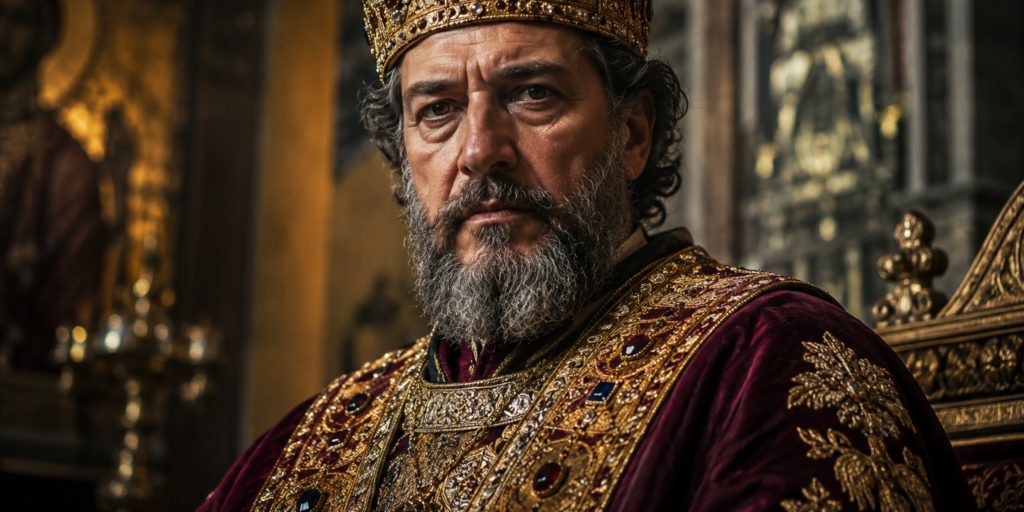
From Stable Boy to Emperor
The founder of the dynasty, Basil I, had one of the most dramatic careers in Byzantine history.
Born into a modest family, he rose through:
- Physical strength
- Political intelligence
- Useful connections
- A talent for surviving court politics
He entered the service of Emperor Michael III and eventually became his favourite. Unfortunately for Michael, Byzantine favouritism could be hazardous to your health.
In 867, Basil arranged Michael’s assassination and took the throne.
It was not exactly a gentle career change.
Basil I’s Achievements
Despite his violent rise, Basil became a capable emperor.
His reign focused on:
- Restoring imperial authority
- Reforming law
- Strengthening administration
- Expanding Byzantine influence
His greatest domestic achievement was legal reform.
He began updating the Roman legal tradition inherited from Justinian, eventually leading to the famous Basilika legal code completed under later emperors.
Basil presented himself as a restorer of Roman order, a theme that defined the dynasty.
The Macedonian Renaissance
The dynasty is famous for a major revival in learning, art, and scholarship often called the Macedonian Renaissance.
Literature and Scholarship
Byzantine scholars preserved and studied classical Greek and Roman works.
Important developments included:
- Copying ancient manuscripts
- Historical writing
- Encyclopaedic collections
- Scientific studies
- Religious scholarship
Without Byzantine scribes, many ancient Greek texts might not have survived.
A medieval monk carefully copying Aristotle may not sound exciting, but historians quietly owe those people a very large thank you.
Art and Architecture
After the end of Iconoclasm, Byzantine art flourished.
Features included:
- Gold-background mosaics
- Religious icons
- Elaborate manuscript decoration
- Church construction
- Imperial portraiture
The art of this period influenced:
- Orthodox Christianity
- Medieval Russia
- Balkan culture
- Italian religious art
Byzantine artists were masters of controlled magnificence. Nothing said imperial authority quite like covering a wall in gold and explaining that it was actually theological symbolism.
Leo VI the Wise (886 to 912)
Leo VI continued the intellectual reputation of the dynasty.
Known as “the Wise”, he was:
- A scholar
- Writer
- Legal reformer
- Theological thinker
His reign saw the completion of the Basilika, a massive Greek-language adaptation of Roman law.
Military Challenges
Leo’s reign was less successful militarily.
Problems included:
- Arab naval attacks
- The sack of Thessalonica in 904
- Conflict with Bulgaria under Simeon I
The Bulgarian wars showed that Byzantium’s greatest threats were not always from the east. The Balkans could be just as dangerous.
Constantine VII Porphyrogennetos (913 to 959)
Constantine VII was one of Byzantium’s great scholar emperors.
His nickname meant “born in the purple”, referring to children born while their father was already emperor.
Writings and Government
Constantine produced major works on:
- Diplomacy
- Administration
- Court ceremony
- Foreign peoples
His works include:
- De Administrando Imperio
- De Ceremoniis
- Theophanes Continuatus
These texts provide priceless information about medieval Europe and the Byzantine world.
Constantine may not have been the strongest battlefield emperor, but he understood something just as powerful: information.
The Age of Conquest
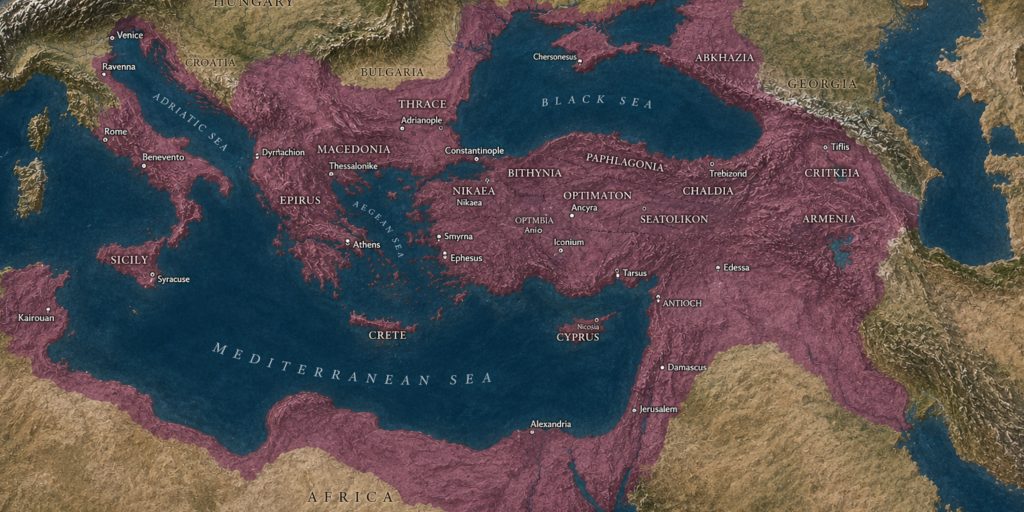
During the 10th century, Byzantium went from defence to attack.
This military revival was driven by:
- Professional armies
- Wealthy military families
- Improved tactics
- Strong leadership
The empire expanded into territories lost centuries earlier.
Byzantine Army Under the Macedonians
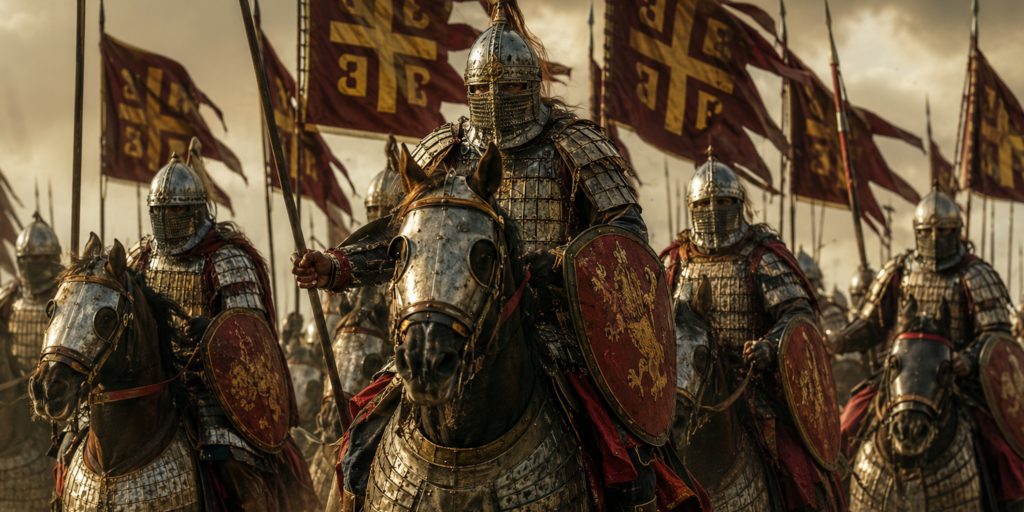
The Macedonian military system was among the strongest of medieval Europe.
Organisation
Key elements included:
| Unit | Role |
|---|---|
| Themes | Provincial military districts |
| Tagmata | Professional imperial troops |
| Varangian Guard | Elite foreign bodyguard developed later in the period |
| Cataphracts | Heavy armoured cavalry |
| Infantry formations | Defensive and siege operations |
| Navy | Protected trade and challenged Arab fleets |
Arms and Armour
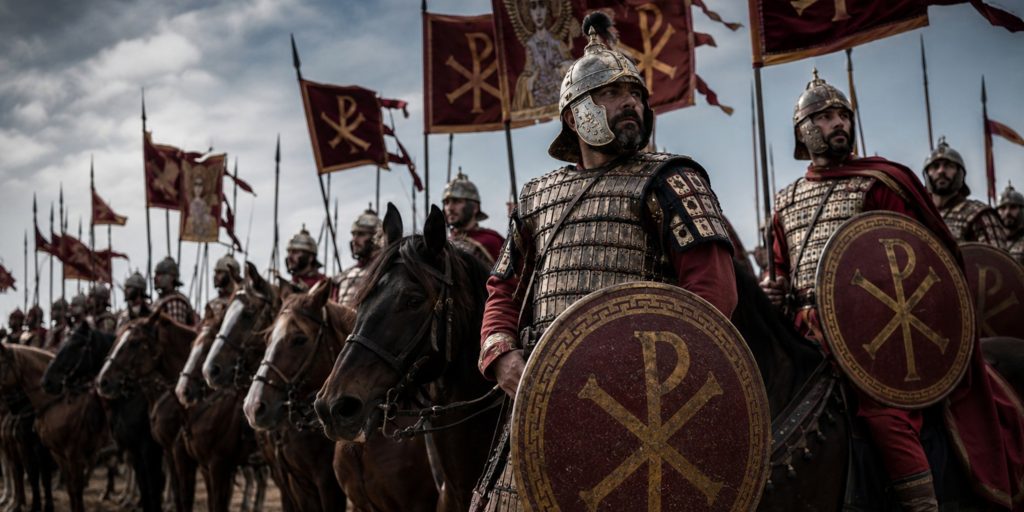
Byzantine soldiers combined Roman tradition with influences from steppe peoples and neighbouring powers.
Common equipment included:
Weapons
- Spathion, a straight double-edged sword descended from Roman cavalry swords
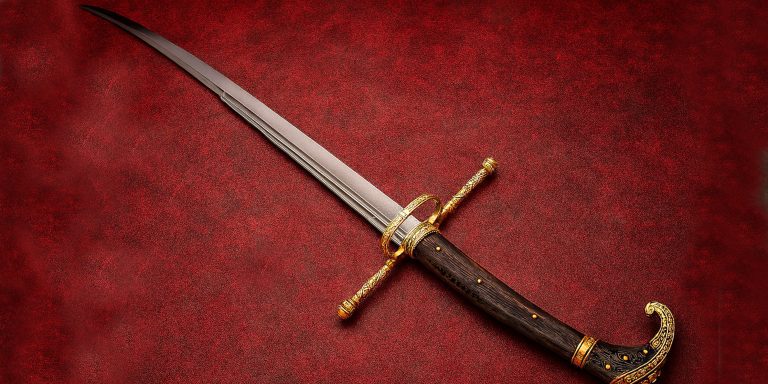
- Paramerion, a curved sabre-like sword influenced by eastern warfare
- Kontarion spear
- Maces
- Composite bows
- Javelins
- Siege weapons
Armour
- Lamellar armour
- Scale armour
- Mail shirts
- Klibanion body armour
- Conical helmets
- Kite and round shields
The Byzantine soldier was practical. If a weapon worked, Byzantium adopted it. Pride was useful, but staying alive was better.
Nikephoros II Phokas (963 to 969)
Nikephoros II Phokas was one of Byzantium’s greatest military emperors.
Before taking the throne, he was already a legendary commander.
Victories
His campaigns included:
- Reconquest of Crete from Muslim forces
- Expansion into Syria
- Capture of Cilicia
- Pressure against the Hamdanid emirates
Nikephoros was admired as a warrior but criticised as emperor.
He was:
- Brilliant militarily
- Personally austere
- Deeply religious
- Politically unpopular
He eventually died in a palace conspiracy led by his nephew John Tzimiskes and his own wife Theophano.
Byzantine imperial bedrooms were sometimes more dangerous than battlefields.
John I Tzimiskes (969 to 976)
John I Tzimiskes continued military expansion.
His achievements included:
- Defeating the Rus’ invasion of Bulgaria
- Campaigning successfully in the east
- Extending Byzantine power into Syria
He combined military skill with stronger political instincts than Nikephoros.
Basil II: The Bulgar Slayer (976 to 1025)
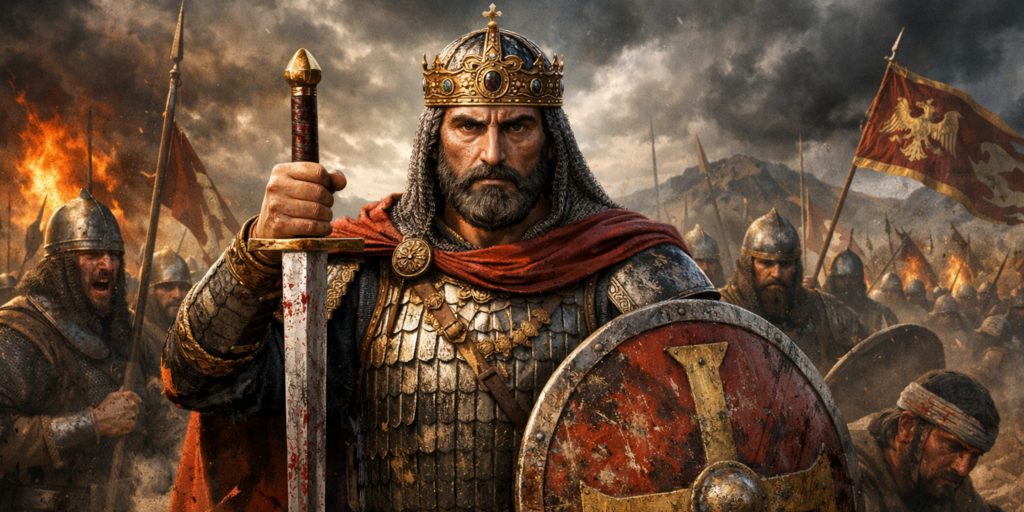
Basil II was the most famous Macedonian emperor.
His reign lasted nearly 50 years and represented the peak of medieval Byzantine power.
Military Campaigns
Basil fought against:
- Bulgaria
- Arab states
- Georgian kingdoms
- Internal aristocratic rebellions
His greatest victory came against Bulgaria.
After decades of warfare, he defeated Tsar Samuel’s Bulgarian Empire. His later nickname “Bulgar Slayer” reflects medieval traditions surrounding this conflict.
Leadership Style
Basil II was:
- Disciplined
- Relentless
- Suspicious of aristocrats
- Focused on military affairs
He never married and left no children.
For an emperor obsessed with protecting his empire, forgetting to secure succession was a rather unfortunate oversight.
Byzantine Economy and Society
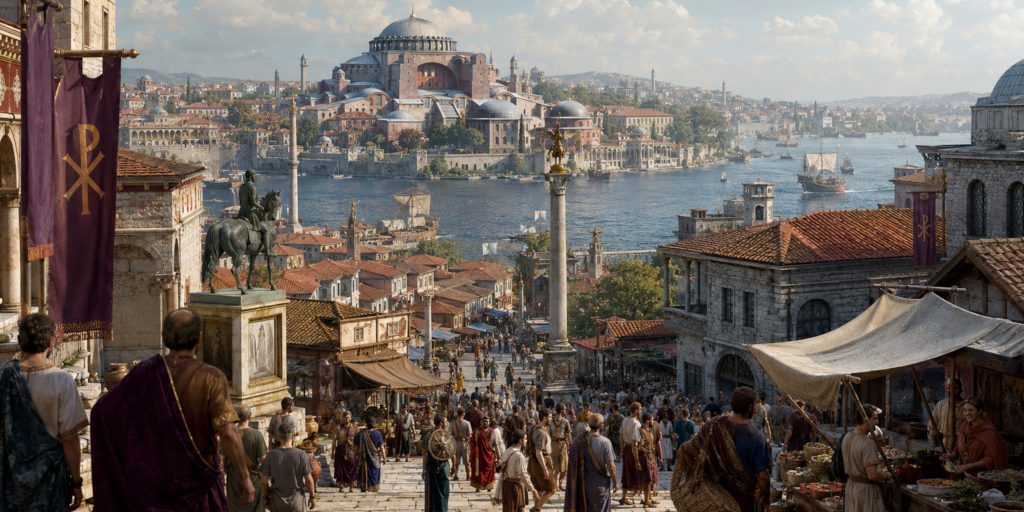
The Macedonian period brought enormous prosperity.
The empire benefited from:
- Strong taxation systems
- Agricultural wealth
- Mediterranean trade
- Imperial monopolies
- Skilled craftsmen
Constantinople was one of the richest cities in the world.
Visitors described:
- Huge defensive walls
- Great churches
- Markets filled with luxury goods
- Imperial ceremonies of extraordinary complexity
Religion and the Orthodox World
The Macedonian period helped define Eastern Orthodox civilisation.
Important events included:
- Missionary activity among Slavic peoples
- Growth of Byzantine religious influence
- Development of Orthodox traditions
The conversion of Kievan Rus’ under Vladimir the Great in 988 was especially significant.
Through religion and culture, Byzantium achieved influence far beyond its borders.
The Beginning of Decline (1025 to 1056)
After Basil II died, the empire struggled.
The problem was not immediate collapse. Byzantium remained wealthy and powerful.
The issue was leadership.
Problems included:
- Weak emperors
- Court competition
- Military neglect
- Aristocratic rivalries
- Financial pressure
The Macedonian line ended with Empress Theodora in 1056.
Within decades, Byzantium faced severe challenges from:
- Normans in Italy
- Pechenegs in the Balkans
- Seljuk Turks in Anatolia
The disaster at Manzikert in 1071 came after the dynasty had ended, but many weaknesses had already begun.
Legacy of the Macedonian Dynasty
The Macedonian Dynasty represents the height of medieval Byzantine civilisation.
Its achievements included:
- Military expansion
- Revival of Roman imperial power
- Preservation of classical knowledge
- Legal reform
- Artistic brilliance
- Religious influence across Eastern Europe
At its height under Basil II, Byzantium stretched from southern Italy to Armenia and from the Balkans deep into the eastern Mediterranean.
The empire was not a frozen relic of ancient Rome. It was adaptive, sophisticated, occasionally ruthless, and remarkably durable.
The Macedonian emperors built a civilisation that could produce battlefield commanders, philosophers, theologians, diplomats, and spies with equal enthusiasm. Few medieval states balanced the sword and the manuscript quite so effectively.