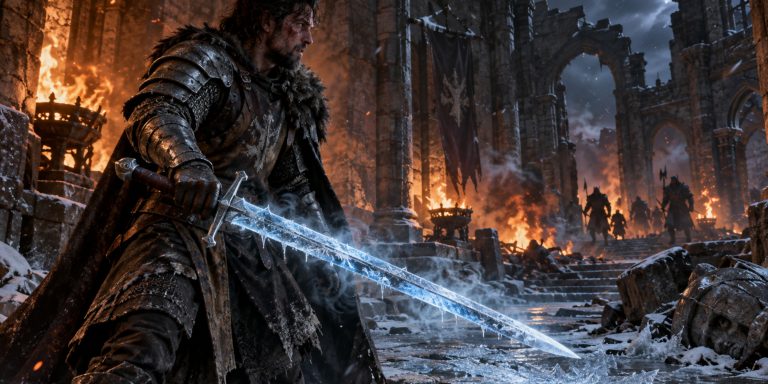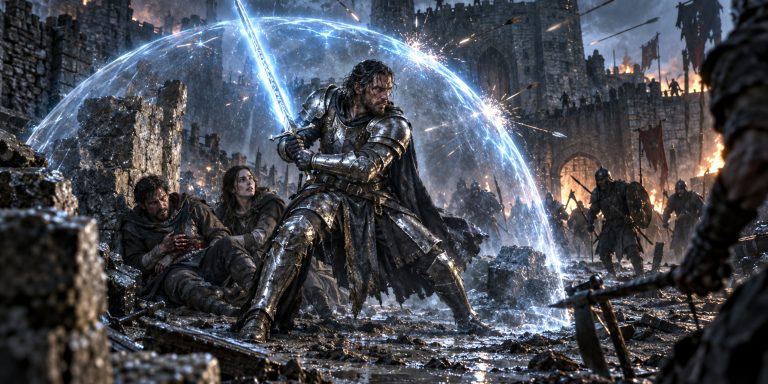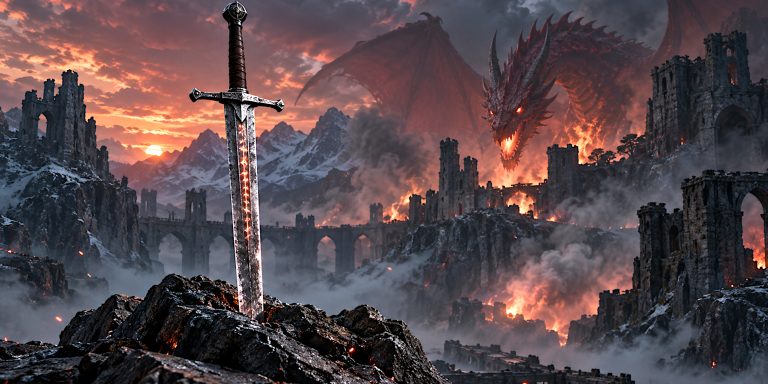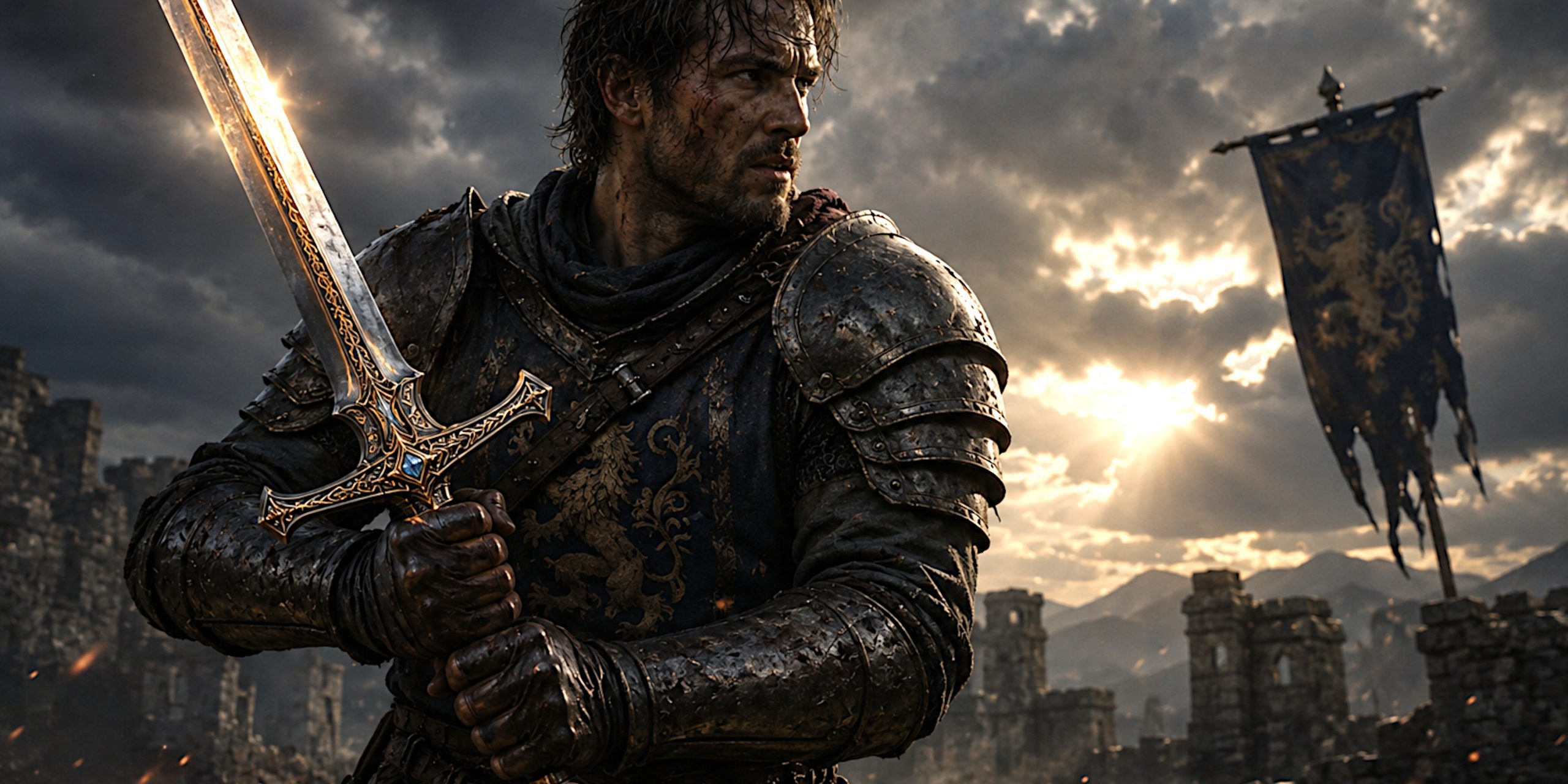
The Luck Blade is one of those magical weapons that instantly makes every Dungeons & Dragons player sit up a little straighter. At first glance it looks like a beautifully enchanted sword with a handy bonus to attacks. Then someone notices the words Wish spell in its description, and suddenly the entire party starts discussing whether they can rewrite reality.
It is a weapon wrapped in mystery, temptation and enough magical power to make even ancient dragons think twice. Unlike many legendary swords that rely purely on brute force, the Luck Blade is all about possibility. It rewards careful thinking as much as heroic swordplay, and in the wrong hands it can cause as much chaos as any villain.
Perhaps that is fitting. Luck has always been a little unpredictable.
What Is the Luck Blade?
The Luck Blade is a legendary magical sword found in Dungeons & Dragons Fifth Edition. While it can appear as several different sword types, it is most commonly depicted as an elegant longsword decorated with precious metals, celestial motifs and gemstones that shimmer with subtle magical energy.
Its defining feature is simple.
It grants extraordinary luck to its wielder.
More importantly, some Luck Blades contain one or more charges capable of casting the legendary Wish spell, arguably the most powerful spell in all of D&D.
That single detail elevates the weapon from “very good magical sword” to “campaign changing artefact.”
Luck Blade Statistics
| Feature | Details |
|---|---|
| Item Rarity | Legendary |
| Weapon Type | Usually Longsword (varies by campaign) |
| Requires Attunement | Yes |
| Attack Bonus | +1 |
| Damage | Weapon’s normal damage |
| Special Ability | +1 bonus to saving throws |
| Signature Power | Wish spell charges (if present) |
Even without Wish, these passive bonuses make the Luck Blade a dependable magical weapon throughout high level adventures.
Magical Abilities
+1 Magical Weapon
The blade grants a +1 bonus to attack and damage rolls.
While that may seem modest compared to legendary weapons dealing radiant explosions or summoning storms, consistency matters. Reliable bonuses are never wasted.
Luck
Perhaps the blade’s most appropriate enchantment is its bonus to all saving throws.
This magical protection represents fate itself quietly nudging disaster away from its owner.
Failed poison save?
Maybe not today.
Dragon breath?
That fire somehow misses just enough.
It is difficult to notice in a single encounter, but over an entire campaign those extra successful saves can become lifesavers.
Wish Charges
This is the ability everyone talks about.
A Luck Blade may contain one to three charges. Each charge allows the wielder to cast Wish.
Once used, the charge is permanently gone.
That permanence creates one of the best dilemmas in D&D.
Do you save it?
Do you use it now?
Or do you spend three sessions arguing while the wizard insists they have “the perfect moment”?
Veteran groups know that moment somehow never arrives.
Why Wish Is So Powerful
Wish is often described as the ultimate spell.
It can duplicate almost any lower level spell without material components, but its true strength lies in allowing players to attempt effects beyond normal magical limits.
Examples include:
- Reversing catastrophic events
- Escaping impossible situations
- Creating priceless objects
- Restoring lost allies
- Undoing devastating magical effects
- Permanently altering reality, at the Dungeon Master’s discretion
The spell is intentionally open ended, making it both exciting and terrifying.
Dungeon Masters are famous for interpreting poorly worded wishes in unexpectedly creative ways.
As the old saying goes, always read the small print. If reality had lawyers, Wish would absolutely keep them employed.
History of the Luck Blade
Unlike iconic artefacts such as Blackrazor or the Sword of Kas, the Luck Blade has never been tied to a single legendary hero.
Instead, it exists as an exceptionally rare magical treasure whose origins differ between campaign settings.
Some legends claim they were forged by celestial smiths who understood the hidden threads of fate.
Others suggest they were crafted by ancient archmages seeking to imprison fragments of Wish magic inside physical weapons.
In worlds where luck itself is considered a divine force, the blade may even represent the blessing of fortune deities who occasionally decide that mortals deserve an impossibly lucky day.
Or perhaps an impossibly dangerous one.
The Luck Blade Across D&D Editions
The weapon has appeared in multiple editions of Dungeons & Dragons, although its exact mechanics have evolved.
| Edition | Features |
|---|---|
| AD&D | Powerful magical sword with Wish capabilities |
| 3rd Edition | Expanded magical options and variable enchantments |
| 4th Edition | Different magical item structure |
| 5th Edition | Legendary sword with saving throw bonus and Wish charges |
Its reputation has remained remarkably consistent.
If someone discovers a Luck Blade, everyone at the table immediately wants to know one thing.
“How many Wishes are left?”
Best Classes for the Luck Blade
Although nearly any martial character benefits from the weapon, some gain particular advantages.
Fighter
A Fighter combines reliable weapon attacks with improved survivability, making excellent use of the passive bonuses.
Paladin
Paladins appreciate the defensive boost while adding Divine Smite to every successful strike.
The combination feels appropriately legendary.
Hexblade Warlock
Hexblades already thrive with magical weapons, and gaining access to Wish creates fascinating tactical possibilities.
Bard
College of Swords Bards gain both combat effectiveness and a story worthy of every tavern in the kingdom.
Roleplaying the Luck Blade
The weapon works best when treated as more than a collection of statistics.
Imagine carrying a sword that quietly bends probability around its owner.
Coins always seem to land correctly.
Locked doors are somehow already unlocked.
The enemy commander trips at exactly the wrong moment.
Whether these are genuine miracles or mere coincidence becomes a question every adventuring party eventually debates.
Until the Wish spell appears.
Then coincidence becomes a much harder argument.
Comparison with Other Legendary D&D Swords
| Weapon | Greatest Strength | Weakness |
|---|---|---|
| Luck Blade | Wish spell and defensive bonuses | Limited Wish charges |
| Holy Avenger | Exceptional against fiends and undead | Best suited to Paladins |
| Blackrazor | Incredible offensive power | Dangerous personality |
| Sword of Kas | Immense magical abilities | Strong connection to dark lore |
| Moonblade | Powerful family heirloom | Restricted to worthy wielders |
The Luck Blade is arguably the most flexible of them all.
Rather than dominating combat alone, it gives players tools capable of reshaping an entire campaign.
Tips for Dungeon Masters
Introducing a Luck Blade requires careful planning.
Because Wish has enormous narrative potential, the weapon should feel like an extraordinary reward rather than routine treasure.
Good practices include:
- Place it near the end of a campaign
- Consider giving it only one remaining Wish charge
- Encourage creative rather than destructive uses
- Make every Wish feel meaningful
- Treat each use as a memorable story event
Handled well, the Luck Blade becomes one of the most unforgettable items in any campaign.
Cultural Legacy
The Luck Blade has become one of Dungeons & Dragons’ most recognisable legendary weapons despite lacking a famous canonical owner.
Its reputation comes entirely from gameplay.
Players remember the impossible escape.
The desperate Wish that saved an entire kingdom.
The hilariously misphrased request that accidentally created three new plotlines.
Very few magical items can completely change the direction of a campaign with a single sentence.
The Luck Blade can.
That uncertainty is exactly why players continue dreaming about finding one in the next treasure hoard.
Even if they promise they definitely will not waste the Wish.
The Dungeon Master has heard that promise before.
Frequently Asked Questions
Is the Luck Blade the strongest sword in D&D?
Not necessarily. In direct combat, weapons such as the Holy Avenger or Blackrazor may outperform it. However, the ability to cast Wish gives the Luck Blade unmatched narrative potential.
How many Wishes does a Luck Blade have?
A newly created Luck Blade may contain between one and three Wish charges. Once spent, those charges are gone permanently.
Does every Luck Blade cast Wish?
No. The number of remaining charges varies. Some ancient blades may have already exhausted all of their Wishes.
Can any character use the Luck Blade?
Any character capable of attuning to the weapon can benefit from its magical abilities, although martial classes usually gain the greatest advantage.
Is the Luck Blade worth using without Wish?
Absolutely. Even without Wish charges, its magical weapon bonus and saving throw enhancement make it a valuable legendary item.
Takeaway
The Luck Blade perfectly captures what makes Dungeons & Dragons special. It is not simply about dealing more damage or collecting increasingly powerful gear. It is about possibility.
A sword that can literally grant wishes encourages creativity in a way few other magic items can. Every decision becomes more meaningful because players know they possess a resource that might solve almost any problem, provided they are clever enough to use it wisely.
That balance between power, restraint and imagination has kept the Luck Blade among D&D’s most iconic magical weapons for decades. It remains a legendary prize because its greatest strength is not hidden in its blade, but in the stories it helps create.