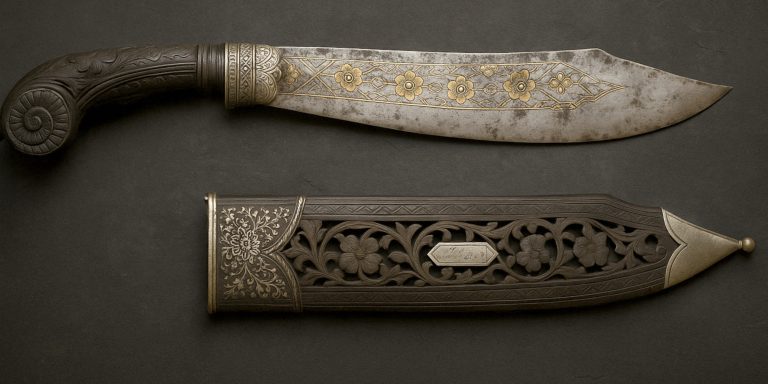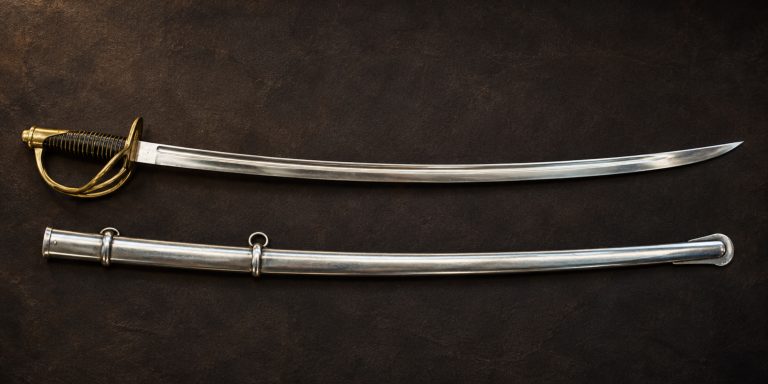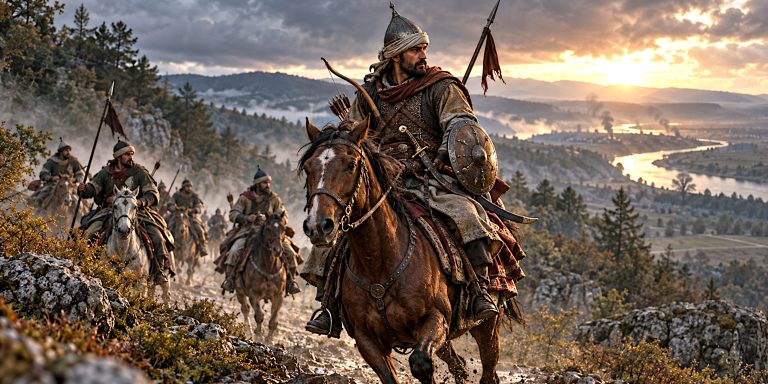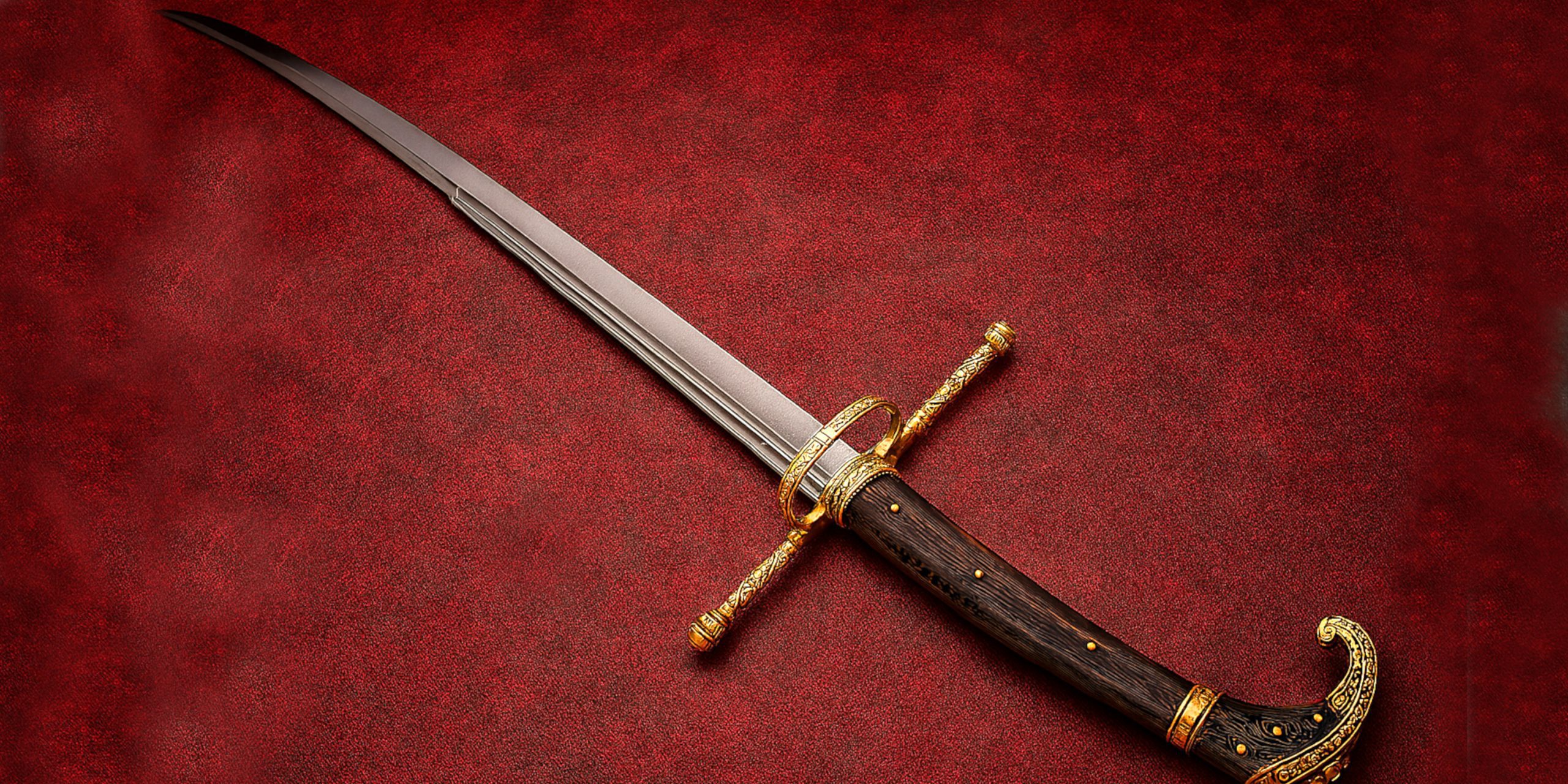
The Kriegsmesser, or “war knife”, was a large, single-edged European sword used primarily in the German-speaking regions during the late Middle Ages and Renaissance. Unlike traditional swords forged with crossguards and pommels, the Kriegsmesser was constructed in the style of a large knife, often mounted with a slab grip and side rings. It was favoured by mercenaries and lower nobility for its brutal cutting power, functional design, and affordability compared to knightly longswords.
Specification
| Feature | Description |
|---|---|
| Type | Single-edged sword (war knife) |
| Blade length | Typically 70–100 cm |
| Total length | Around 100–140 cm |
| Weight | 1.5 to 2.5 kg |
| Blade profile | Curved or straight, single-edged, clipped tip |
| Hilt | Wooden slabs riveted to full tang |
| Guard | Often with side rings or nagel for hand protection |
| Use | Two-handed, primarily for slashing |
History and Evolution
The Kriegsmesser evolved from utilitarian large knives used by peasants and foot soldiers during the 14th and 15th centuries. As warfare became more mobile and brutal, the need for affordable yet effective cutting weapons rose. The Kriegsmesser was a natural development, bridging the gap between civilian blades and military swords.
It saw widespread use among the Landsknechts, German mercenaries known for their flamboyant style and aggressive combat. The Messer family of weapons, including the Langes Messer (long knife), shares construction principles, but the Kriegsmesser was distinguished by its size and battlefield focus.
Key historical moments:
- 15th century: Earliest confirmed use in German principalities.
- 16th century: Popularity among Landsknechts; more refined hilts with side rings appear.
- 17th century: Decline in military use as firearms and pikes dominate.
Advantages and Disadvantages
Advantages
- Strong cutting power against lightly armoured foes
- Durable full-tang construction
- Accessible to non-noble soldiers
- Versatile in fencing and close combat
- Easier to produce than double-edged swords
Disadvantages
- Less effective for thrusting than arming or longswords
- Poor performance against plate armour
- Cruder appearance compared to knightly swords
- Less balance and reach than dedicated two-handed swords
Comparison with Similar Weapons
| Feature | Kriegsmesser | Longsword | Falchion |
|---|---|---|---|
| Blade type | Single-edged | Double-edged | Single-edged |
| Hilt construction | Slab/grip-riveted | Tang with guard/pommel | Tang with guard/pommel |
| Primary function | Cutting | Cutting and thrusting | Cutting |
| Popularity | Common in Germany | Pan-European | Western Europe |
| Social status | Mercenaries, footmen | Nobility, knights | Peasants and infantry |
Legacy
The Kriegsmesser left a notable mark in martial arts treatises, such as those of Johannes Lecküchner, who adapted longsword techniques to the Messer. While it fell out of favour in battlefield use by the 17th century, it remains a point of study within Historical European Martial Arts (HEMA).
Its brutal aesthetic and direct utility have given it a minor cultural resurgence among weapon collectors, reenactors, and martial artists. Modern reproductions and academic reconstructions keep its legacy alive.
Where to See
- Deutsches Historisches Museum (Berlin): Features several original Messers and Kriegsmessers.
- Kunsthistorisches Museum (Vienna): Hosts a collection of Landsknecht weaponry.
- Wien Museum (Austria): Displays civilian and martial blades from late medieval Germany.
- Royal Armouries (Leeds, UK): May contain similar single-edged swords from the same era.
Collector’s Guide
What to look for
- Full-tang construction with riveted slab grips
- Side ring or nagel hand protection
- Broad, slightly curved blades
- Provenance from Germany or Austria
- Original fittings and clear patina
Modern reproductions are common among HEMA practitioners. These are functional but lack antique value.
Auction prices
| Condition | Estimated Price (GBP) |
|---|---|
| Museum-grade original | £8,000–£15,000 |
| Mid-tier antique (damaged) | £3,000–£6,000 |
| Modern replica (custom) | £300–£900 |
| HEMA-grade sparring model | £150–£400 |
Rarity and intactness of hilt fittings significantly affect valuation.
If you’re looking to add a Kriegsmesser to a collection or study its use through martial practice, it’s both a fascinating artefact of late medieval warfare and a brutally functional weapon with roots in the hands of common soldiers rather than knights.