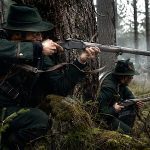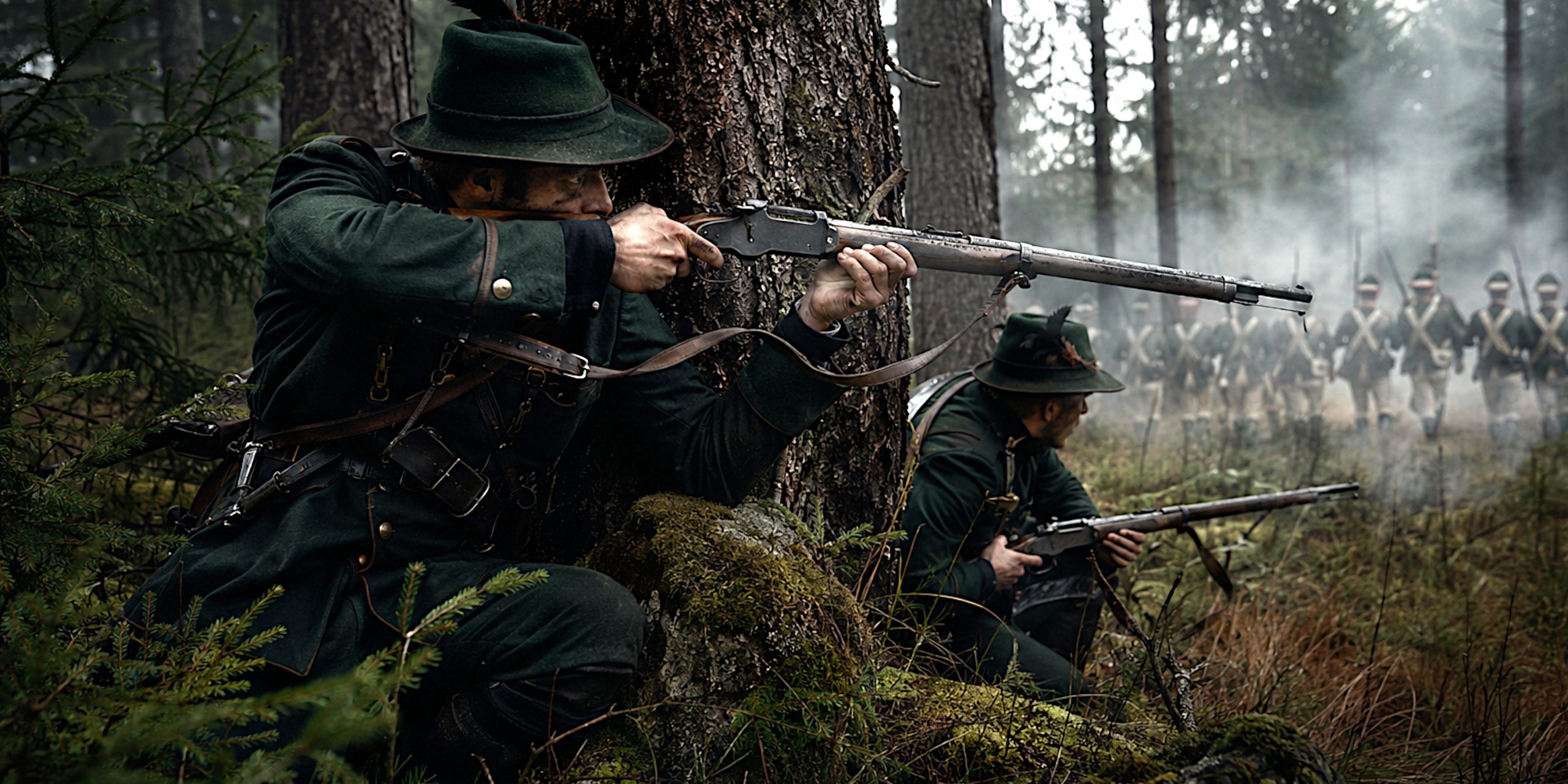
Few military formations have earned a reputation quite like the Jaegers. They were neither towering heavy cavalry nor glittering palace guards. Instead, they excelled through patience, marksmanship, initiative and an uncanny ability to disappear into forests before reappearing exactly where an enemy least wanted them.
The word Jäger simply means “hunter” in German, and that tells you almost everything about their origins. Long before governments considered them elite soldiers, they were professional foresters, gamekeepers and hunters whose everyday lives demanded exceptional shooting skills, fieldcraft and an intimate understanding of the landscape.
Traditional line infantry marched in bright uniforms and fought shoulder to shoulder. Jaegers did almost the opposite. They moved independently, took cover, selected individual targets and relied upon discipline rather than rigid drill. Modern infantry tactics owe an enormous debt to these men, even if they rarely receive the attention given to Napoleon’s Imperial Guard or Wellington’s redcoats.
Who Were the Jaegers?
Jaegers emerged across the German-speaking states during the eighteenth century before becoming common throughout Europe.
Rather than recruiting ordinary civilians, rulers actively sought experienced hunters and foresters. These men already possessed skills that armies desperately needed.
A typical hunter understood:
- Accurate rifle shooting
- Woodland navigation
- Camouflage
- Tracking
- Independent decision making
- Patience under pressure
Military commanders quickly realised these talents could not easily be taught to conventional infantry.
Prussia became especially famous for its Jaeger units, although Austria, Bavaria, Hanover, Hesse, Saxony, Denmark, Russia and numerous smaller German states all developed their own formations.
By the Napoleonic Wars, Jaegers had become among Europe’s finest light infantry.
Origins of the Jaegers
The seventeenth century saw armies becoming increasingly professional, but warfare remained dominated by dense formations armed with smoothbore muskets.
These weapons were devastating in volleys but notoriously inaccurate beyond relatively short distances.
Meanwhile, professional hunters relied upon rifled hunting weapons capable of remarkable precision.
Military reformers eventually recognised that skilled marksmen could perform valuable roles beyond the battle line.
Early Jaeger companies began appearing during the late seventeenth century before expanding considerably throughout the eighteenth century.
Frederick the Great appreciated their value, although even he sometimes struggled with their independent mindset. Hunters were accustomed to thinking for themselves, something that did not always fit comfortably inside an eighteenth century parade ground.
Recruitment and Training
Joining a Jaeger unit usually required far higher standards than ordinary infantry service.
Many recruits came directly from:
- Foresters
- Estate gamekeepers
- Hunters
- Professional woodsmen
- Skilled riflemen
Training focused on practical military skills rather than endless parade drill.
Jaegers learned to:
| Skill | Military Value |
|---|---|
| Precision shooting | Eliminate officers and artillery crews |
| Concealment | Avoid enemy observation |
| Navigation | Operate behind enemy lines |
| Independent action | Fight without constant supervision |
| Skirmishing | Delay larger forces |
| Reconnaissance | Gather intelligence |
Unlike ordinary infantry, Jaegers often operated in pairs or small detachments.
Officers expected initiative rather than blind obedience.
That was rather revolutionary for the period.
The Role of Jaegers in Battle
Jaegers rarely formed part of the main infantry line.
Instead they fought ahead of the army.
Their duties included:
- Reconnaissance
- Screening advancing forces
- Delaying enemy attacks
- Ambushing patrols
- Protecting artillery
- Counter skirmishing
- Eliminating enemy officers
- Securing bridges and woodland
When opposing armies met, Jaegers frequently exchanged fire long before the main battle began.
These engagements often shaped the battlefield hours before line infantry arrived.
Organisation
Jaeger formations varied considerably between states.
A typical battalion included:
| Rank | Function |
|---|---|
| Battalion commander | Overall leadership |
| Company officers | Tactical command |
| Senior NCOs | Discipline and battlefield control |
| Riflemen | Skirmishing and reconnaissance |
| Horn players | Communication |
Unlike drummers used by conventional infantry, Jaegers frequently employed hunting horns.
Different horn calls conveyed tactical orders across woodland where visual signals proved unreliable.
It sounds wonderfully romantic until you remember someone had to remember dozens of different calls while bullets were flying.
Arms and Armour
Perhaps nothing defined the Jaeger more than his equipment.
Every item reflected mobility rather than parade ground appearance.
Rifles
The Jaeger rifle represented one of Europe’s finest military firearms before the widespread adoption of rifled muskets.
Common characteristics included:
- Rifled barrel
- Exceptional accuracy
- Slower loading
- Heavy calibre
- Shorter overall length than many muskets
Experienced Jaegers could consistently strike targets at ranges impossible for ordinary musketeers.
Swords
Although firearms dominated their role, Jaegers remained armed with swords for close combat.
Common examples included:
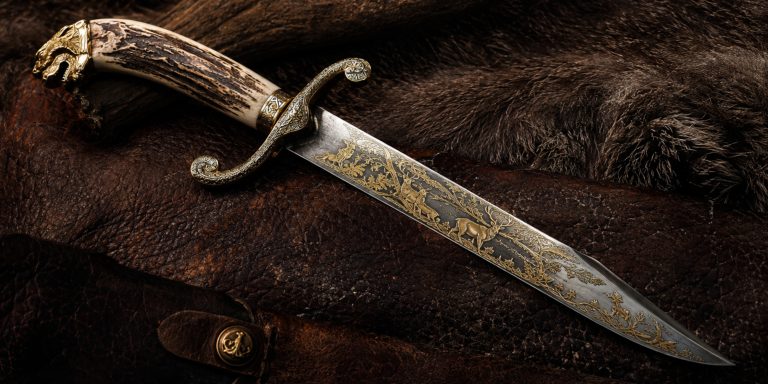
Hirschfänger
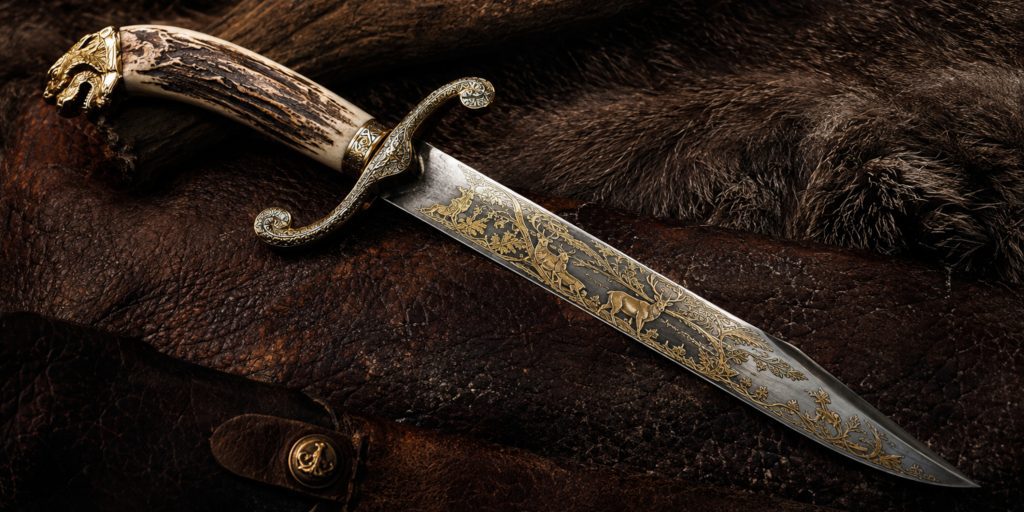
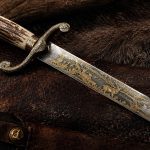
The iconic Hirschfänger, or hunting sword, became closely associated with Jaegers.
Originally a hunting weapon, it featured:
- Broad straight blade
- Single edge
- Brass hilt
- Stag horn grips on many examples
- Blade length typically between 50 and 70 cm
The weapon proved effective against wounded game and equally useful in close fighting.
Jaeger Side Sword
Many states issued specialised infantry side swords designed specifically for rifle troops.
These generally possessed:
- Straight single edged blades
- Brass or iron hilts
- Durable military construction
- Compact size for woodland movement
Infantry Hangers
Some Jaegers carried short infantry hangers rather than full swords.
These lighter weapons interfered less with movement through dense woodland.
Bayonets
Many Jaeger rifles accepted sword bayonets.
Unlike standard socket bayonets, these functioned as both knife and short sword.
Uniform
Typical features included:
- Dark green coats
- Black leather equipment
- Short boots
- Felt hats or shakos
- Minimal bright decoration
Green uniforms offered genuine camouflage decades before concealment became standard military doctrine.
Famous Jaeger Units
Prussian Jaegers
Probably the best known.
Prussian Jaegers gained an outstanding reputation throughout the Seven Years’ War and Napoleonic Wars.
Austrian Kaiserjäger
Among Austria’s elite formations, these soldiers served with distinction across numerous nineteenth century conflicts.
Hessian Jaegers
Perhaps best known outside Europe because of the American Revolutionary War.
British commanders greatly valued Hessian Jaegers for reconnaissance and skirmishing.
American officers quickly learned to respect them as dangerous opponents.
Russian Jaegers
Russia developed large Jaeger formations from the late eighteenth century.
By the Napoleonic era they formed an important part of Russian infantry doctrine.
Jaegers During the Napoleonic Wars
The Napoleonic Wars represented the high point of Jaeger service.
Every major army employed light infantry, but German Jaegers retained an enviable reputation.
At battles including:
Jaegers screened advances, occupied villages, defended woods and disrupted enemy formations.
Their work rarely produced dramatic paintings.
Instead they quietly shaped battles before historians reached the exciting cavalry charges.
Jaegers in the American Revolutionary War
Thousands of German troops fought in North America.
Among them were elite Jaeger companies recruited primarily from Hesse-Cassel.
Armed with rifles, these soldiers performed:
- Long range skirmishing
- Reconnaissance
- Counter sniper operations
- Frontier patrols
American riflemen often found themselves facing opponents possessing remarkably similar skills.
The woodland battlefields of North America suited Jaeger tactics perfectly.
Archaeology
Archaeological discoveries continue to deepen our understanding of Jaeger equipment and battlefield activity.
Recovered finds include:
- Rifle barrels
- Brass trigger guards
- Powder flasks
- Hirschfänger swords
- Uniform buttons
- Lead rifle balls
- Bayonets
- Hunting horn fittings
Battlefield archaeology from sites including Leipzig, Waterloo and numerous Napoleonic engagements has identified concentrations of rifle ammunition distinct from musket ball distributions.
This evidence helps reconstruct skirmishing positions occupied by light infantry.
Excavated Hirschfänger swords also demonstrate considerable regional variation in blade length and hilt design.
Many surviving examples show heavy practical use rather than ceremonial wear.
Contemporary Quotes
Several observers commented upon the effectiveness of Jaeger troops.
Frederick the Great remarked:
“The Jägers are useful where intelligence and skill are required.”
British officer Sir John Moore praised trained riflemen in language equally applicable to Jaeger doctrine:
“A soldier should think.”
French officers frequently acknowledged the difficulty posed by enemy riflemen who targeted officers and artillery crews rather than simply firing into dense formations.
Napoleonic memoirs repeatedly describe woodland fighting against skilled German marksmen as frustrating and costly.
Why Were Jaegers So Effective?
Several factors combined to create their success.
First came recruitment.
Armies selected men who already possessed specialist skills.
Second was equipment.
Rifles dramatically increased individual accuracy.
Third was training.
Jaegers learned to exploit terrain rather than simply occupy it.
Finally, leadership encouraged initiative.
Small units could react rapidly without waiting for detailed orders.
Modern infantry doctrine still reflects these principles.
Legacy
The influence of the Jaegers extends far beyond the eighteenth and nineteenth centuries.
Their tactical philosophy helped shape:
- Modern rifle regiments
- Military reconnaissance units
- Sniper doctrine
- Ranger forces
- Light infantry formations
- Special operations units
Many European armies continue using the title “Jäger” today.
Although modern soldiers carry assault rifles instead of hunting rifles and satellite navigation instead of woodland experience, the underlying principles remain remarkably familiar.
Move quickly.
Think independently.
Shoot accurately.
Know the terrain better than your opponent.
That combination has never really gone out of fashion.
Where Can You See Jaeger Artefacts?
Many museums preserve original Jaeger equipment.
Highlights include:
- Deutsches Historisches Museum, Berlin
- Bavarian Army Museum, Ingolstadt
- Heeresgeschichtliches Museum, Vienna
- Royal Armouries, Leeds
- National Army Museum, London
Collections commonly include original rifles, Hirschfänger swords, uniforms, powder horns and campaign equipment.
Frequently Asked Questions
What does Jaeger mean?
It means “hunter” in German.
Were Jaegers elite soldiers?
Yes. Most armies considered them specialist light infantry recruited for exceptional fieldcraft and shooting ability.
What sword did Jaegers carry?
The most iconic was the Hirschfänger hunting sword, although many also carried military side swords or infantry hangers depending on the army.
Did Jaegers use rifles?
Yes. Their rifled firearms provided significantly greater accuracy than standard smoothbore muskets.
Do Jaegers still exist?
Several modern European armies continue using the title Jäger for light infantry units, although their equipment and battlefield roles have naturally evolved.
Takeaway
The Jaegers demonstrated that intelligence, initiative and precision could outweigh sheer numbers. At a time when armies prized uniformity above almost everything else, these hunter soldiers proved that flexibility could be just as powerful as discipline. Their rifles, Hirschfänger swords and green uniforms became symbols of a new approach to warfare, one that valued the individual soldier’s judgement as much as his ability to stand in line.
Looking back, it is easy to see the Jaegers as a bridge between the rigid armies of the eighteenth century and the adaptable infantry of the modern world. They were products of the forest as much as the parade ground, and history is considerably richer for having both.