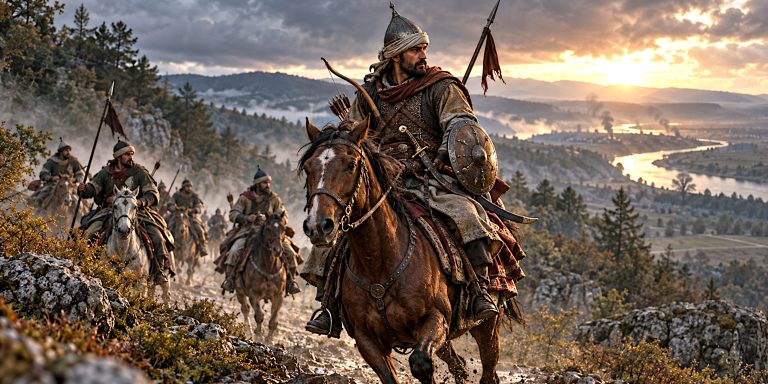
The Xiongnu horse archers were among the most formidable mounted warriors of the ancient world. Long before Attila’s Huns terrified Europe or Genghis Khan united the Mongol tribes, the Xiongnu dominated the eastern Eurasian Steppe through mobility, discipline and remarkable horsemanship.
To the Han Chinese, they were a constant military challenge. To modern historians, they remain one of history’s most fascinating nomadic confederations. Their origins continue to provoke debate, their language remains uncertain and their influence may have stretched far beyond Mongolia.
One fact, however, is beyond dispute. They changed the military balance of East Asia for centuries.
Who Were the Xiongnu?
The Xiongnu emerged during the third century BCE across what is now Mongolia, southern Siberia and parts of northern China.
Rather than forming a single ethnic group, they appear to have been a confederation of tribes united under powerful rulers known as Chanyu. Membership probably shifted over time, with Turkic, Mongolic, Yeniseian and other peoples potentially contributing to the federation.
Their greatest early leader was Modu Chanyu, who transformed scattered tribes into an organised military power around 209 BCE.
Under his leadership, the Xiongnu expanded rapidly by defeating rival nomads and threatening the newly established Han Dynasty.
For the next three centuries, the Han emperors devoted enormous resources to containing them.
That alone says something about how seriously they took the threat.
Origins of the Xiongnu
Exactly where the Xiongnu came from remains one of the great puzzles of Eurasian history.
Current evidence suggests they developed from earlier Bronze and Iron Age pastoral communities that inhabited the Mongolian Steppe.
Recent archaeological discoveries and ancient DNA studies indicate considerable ethnic diversity within Xiongnu society. Elite burials reveal individuals from different genetic backgrounds, suggesting political unity mattered more than ancestry.
Their culture blended local steppe traditions with influences acquired through trade, diplomacy and conquest.
Rise Under Modu Chanyu

Everything changed under Modu Chanyu.
Chinese chroniclers describe him as an exceptionally ruthless and capable ruler. According to the Shiji, he secured power by eliminating rivals before turning outward to conquer neighbouring peoples.
The Xiongnu soon absorbed or defeated numerous steppe tribes, creating a vast empire stretching across Mongolia and into Central Asia.
The Han Dynasty suddenly found itself facing an organised military state rather than scattered raiders.
This forced China to rethink its frontier strategy entirely.
Society and Organisation
The Xiongnu maintained a highly mobile society centred upon pastoralism.
Their wealth came primarily from:
- Horses
- Sheep
- Goats
- Cattle
- Camels
Seasonal migration allowed them to exploit grazing lands efficiently while avoiding overuse.
Political authority rested with the Chanyu, supported by powerful nobles and subordinate tribal leaders.
The military and political hierarchy were closely linked.
A successful commander usually became an influential noble. A poor commander generally stopped being influential rather quickly.
Xiongnu Horse Archers in Battle
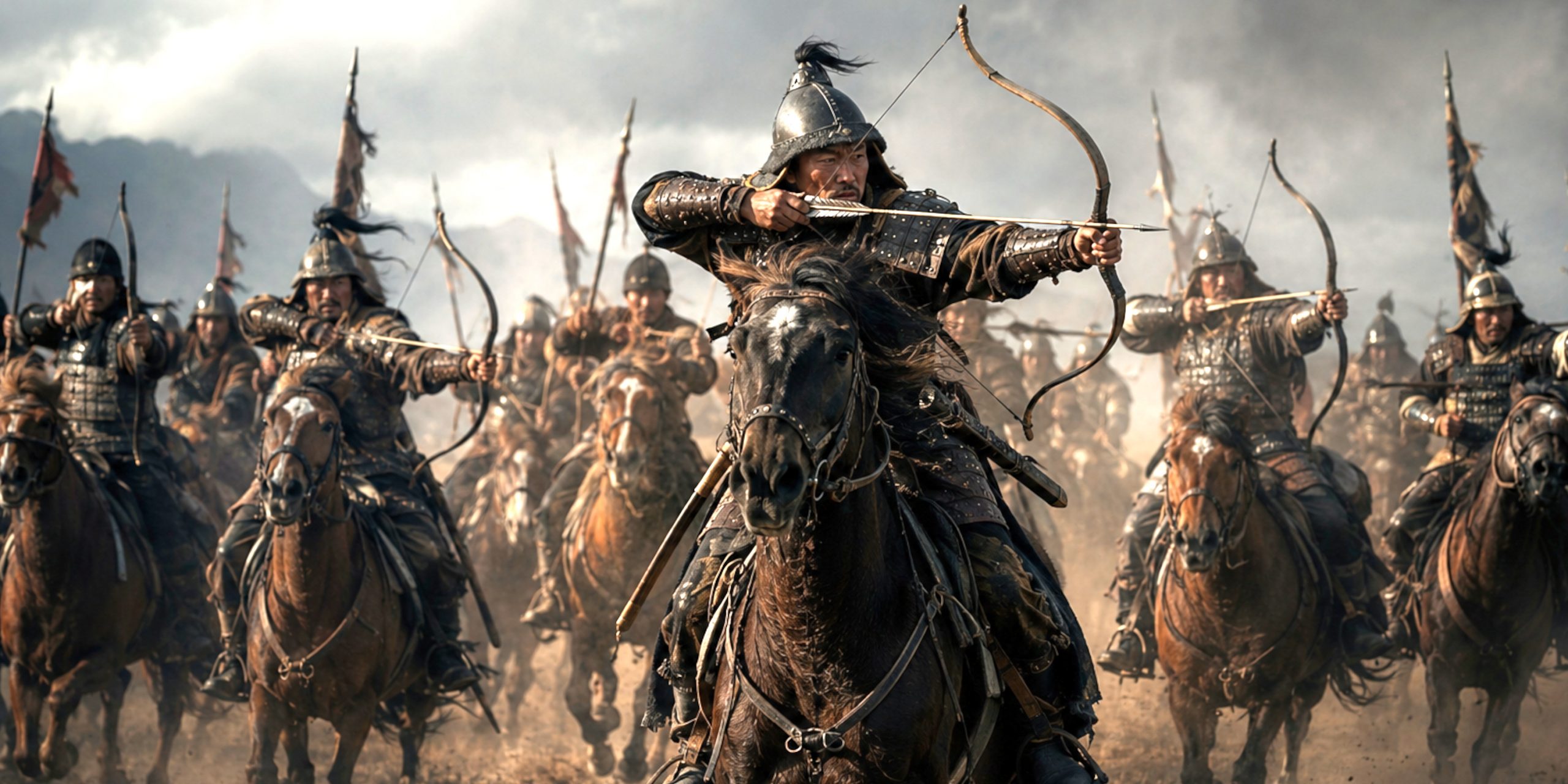
Mounted archery defined Xiongnu warfare.
Children learned riding almost as soon as they could walk.
Chinese observers repeatedly commented upon their extraordinary skill in controlling horses while shooting accurately in every direction.
Rather than relying on heavily armoured formations, Xiongnu warriors exploited:
- Speed
- Surprise
- Long range missile attacks
- Encirclement
- Feigned retreat
- Constant manoeuvre
Their aim was to exhaust opponents before committing to decisive combat.
This approach frustrated conventional infantry armies that struggled to bring them into close engagement.
Many later nomadic empires adopted remarkably similar methods.
Military Tactics
The Xiongnu rarely fought according to their enemy’s expectations.
Typical tactics included:
| Tactical Method | Purpose |
|---|---|
| Feigned retreat | Lure pursuers into ambushes |
| Encirclement | Attack exposed flanks and rear |
| Hit and run raids | Wear down larger armies |
| Continuous harassment | Deny rest and supplies |
| Rapid concentration | Assemble unexpectedly for major battles |
Chinese commanders gradually adapted by improving cavalry forces and logistics.
The long struggle between Han and Xiongnu became an arms race in mobility.
Horses
The horse was the foundation of Xiongnu power.
Steppe horses were:
- Small
- Tough
- Sure footed
- Capable of travelling great distances
- Well adapted to harsh climates
Most warriors likely maintained several mounts, allowing rapid movement over enormous distances.
Fresh horses meant fresh armies.
That simple advantage repeatedly outmatched slower agricultural states.
Arms and Armour
Although famous for their bows, Xiongnu warriors carried a range of secondary weapons suited to close combat.
Composite Bow
The composite reflex bow was their principal weapon.
Constructed from:
- Wood
- Horn
- Animal sinew
- Glue
It generated exceptional power while remaining compact enough for mounted use.
Chinese records repeatedly praise the effectiveness of Xiongnu archery.
Swords
Several sword types have been recovered from Xiongnu burials.
| Sword Type | Description |
|---|---|
| Straight iron sword | Double edged blade suited to cutting and thrusting |
| Ring pommel sword | Distinctive iron weapon with circular pommel, increasingly common during the late Xiongnu period |
| Long iron cavalry sword | Designed for mounted combat, providing greater reach |
The ring pommel sword deserves particular attention.
Its design spread widely across Inner Asia before influencing weapons used by later nomadic peoples and eventually appearing across China, Korea and beyond.
Some earlier bronze swords also remained in circulation, although iron gradually became dominant.
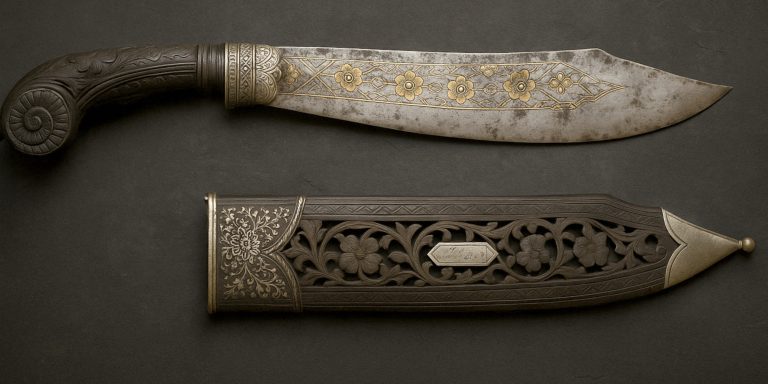
Daggers
Iron daggers were common sidearms.
These served as:
- Utility tools
- Backup weapons
- Personal defence
Many examples feature elegant craftsmanship despite their practical role.
Spears and Lances
Mounted warriors also employed:
- Spears
- Throwing spears
- Lances
These became especially useful once enemy formations had been weakened by arrows.
Armour
Most ordinary warriors probably wore little or no armour.
Mobility remained their greatest protection.
Elite warriors occasionally possessed:
- Lamellar armour
- Scale armour
- Leather armour
- Reinforced helmets
Archaeological finds suggest iron lamellar armour became increasingly common among high status individuals during the later Xiongnu period.
Shields
Evidence for shields exists but suggests they played a secondary role compared with mounted archery.
The bow remained the true defensive weapon.
If your opponent never reaches sword range, carrying a heavy shield becomes considerably less urgent.
Major Conflicts with the Han Dynasty
Conflict between the Han Dynasty and the Xiongnu dominated East Asian politics for generations.
Important phases included:
| Date | Event |
|---|---|
| 200 BCE | Battle of Baideng, Han Emperor Gaozu surrounded |
| Second century BCE | Heqin marriage alliances and tribute diplomacy |
| Reign of Emperor Wu | Major Han offensives against the Xiongnu |
| First century BCE | Internal divisions weaken the confederation |
| First century CE | Northern and Southern Xiongnu emerge |
The Han eventually shifted from defensive diplomacy towards sustained military campaigns that reduced Xiongnu dominance.
Even then, complete victory proved elusive.
Daily Life
Outside warfare, the Xiongnu lived surprisingly sophisticated lives.
Activities included:
- Animal husbandry
- Hunting
- Metalworking
- Textile production
- Trade
- Diplomacy
Luxury goods from China, Central Asia and beyond reached elite households through exchange and tribute.
Silks found in Xiongnu burials illustrate extensive long distance connections.
Archaeology
Modern archaeology has transformed our understanding of the Xiongnu.
Large cemeteries across Mongolia continue to reveal extraordinary discoveries.
Important finds include:
- Horse burials
- Iron weapons
- Ring pommel swords
- Composite bow components
- Gold ornaments
- Chinese lacquerware
- Imported silk
- Bronze mirrors
- Saddlery equipment
Excavations at elite tombs demonstrate significant social inequality, with wealthy nobles buried alongside valuable imported goods.
Some graves also contain sacrificed horses, emphasising the central importance of cavalry.
Recent excavations using isotope analysis and ancient DNA have shown remarkable diversity within Xiongnu communities, reinforcing the idea of a multi ethnic imperial confederation rather than a single tribal people.
Contemporary Descriptions
Much of what survives comes from Chinese historians.
Sima Qian wrote in the Shiji:
“Their children are able to ride sheep and shoot birds with bows.”
This observation reflects the emphasis placed upon mounted skills from an early age.
The Book of Han also observed:
“They make warfare their occupation.”
Although clearly written from the perspective of an enemy civilisation, such accounts consistently acknowledge the Xiongnu’s exceptional military ability.
Modern historians naturally approach these texts with caution, recognising both their immense value and their political bias.
Decline
Several factors contributed to Xiongnu decline.
These included:
- Internal succession disputes
- Han military pressure
- Economic disruption
- Fragmentation of tribal alliances
- Rise of competing steppe powers
Eventually the confederation divided into northern and southern branches.
Some groups entered Han service, while others disappeared into the wider populations of Central Asia.
Whether later Huns descended directly from the Xiongnu remains debated.
There are intriguing similarities but no universally accepted conclusion.
Legacy
The Xiongnu established many features that became hallmarks of later nomadic empires.
These included:
- Large mounted armies
- Composite bow warfare
- Highly mobile logistics
- Flexible command structures
- Political confederations spanning enormous distances
Their influence can be traced through later peoples including the Xianbei, Rouran, Göktürks and Mongols.
Even the Han Dynasty’s frontier policy, cavalry development and sections of the Great Wall evolved largely in response to the Xiongnu challenge.
Few nomadic peoples shaped Chinese military history so profoundly.
What We Still Do Not Know
Several important questions remain unanswered.
Scholars continue to debate:
- Their primary language
- Their precise ethnic origins
- The relationship between the Xiongnu and the Huns
- The full extent of their western expansion
Each new archaeological discovery helps refine the picture.
The Xiongnu remain one of ancient Eurasia’s most intriguing historical mysteries, reminding us that the greatest powers are not always those that leave behind cities of stone. Sometimes they leave hoofprints across an entire continent.
Frequently Asked Questions
Were the Xiongnu the same as the Huns?
Possibly, but there is no scholarly consensus. Some evidence suggests connections, while other evidence points to separate developments.
What weapons did Xiongnu horse archers use?
Their primary weapon was the composite reflex bow. They also carried iron swords, ring pommel swords, daggers, spears and lances.
Did the Xiongnu wear armour?
Most warriors probably relied on speed rather than heavy protection. Elite fighters sometimes wore lamellar or scale armour with iron helmets.
Where did the Xiongnu live?
Their heartland lay across modern Mongolia, with influence extending into northern China, southern Siberia and parts of Central Asia.
Why were they so successful?
Exceptional horsemanship, disciplined mounted archery, strategic mobility and strong political leadership enabled relatively small forces to challenge much larger settled empires.