Imagine inheriting your family’s priceless magical sword only for it to reject you in front of everyone. Family dinners probably become a little uncomfortable after that.
The Moonblade is one of the most iconic weapons in the Forgotten Realms setting. Closely tied to the moon elves of Evermeet and Faerûn, it represents honour, sacrifice, and centuries of elven history. Unlike most magical weapons, every Moonblade develops its own personality and magical abilities through the generations, making no two exactly alike.
What Is the Moonblade?
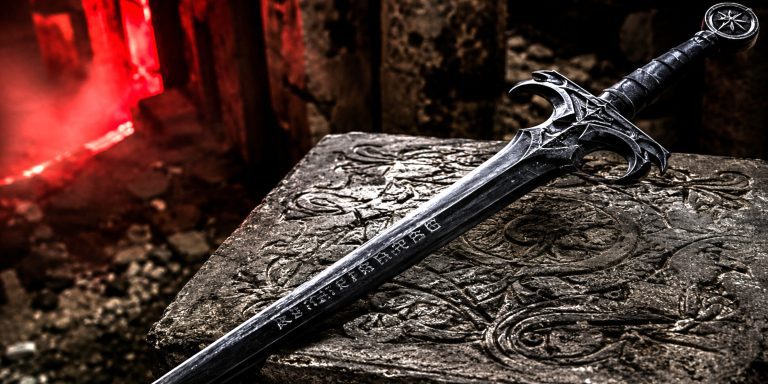
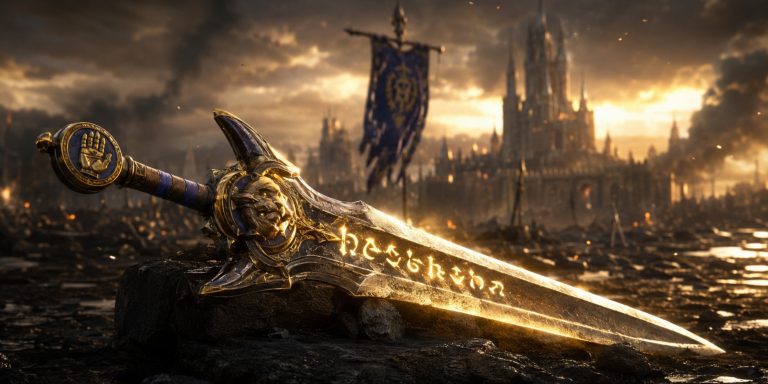
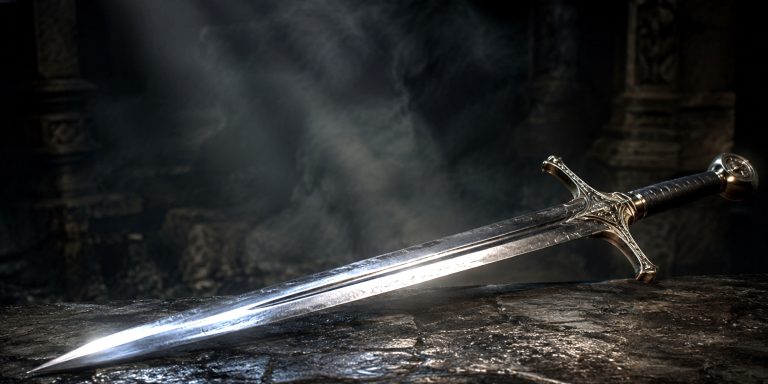
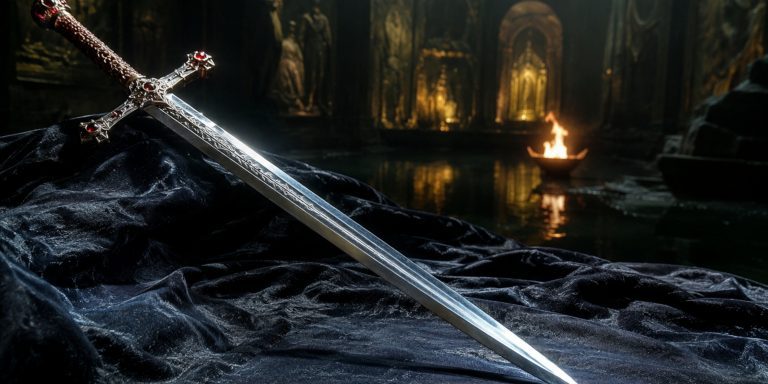
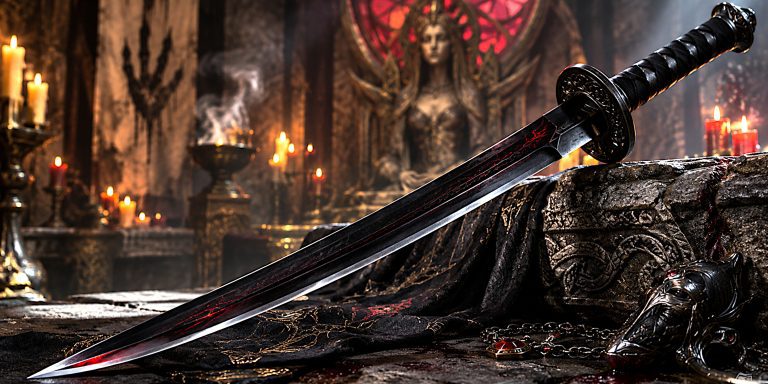
A Moonblade is a sentient magical longsword created by the moon elves during one of the darkest periods of elven history. Rather than simply forging powerful weapons, ancient elven High Mages crafted blades capable of choosing worthy successors from specific noble bloodlines.
Each Moonblade becomes an evolving family heirloom.
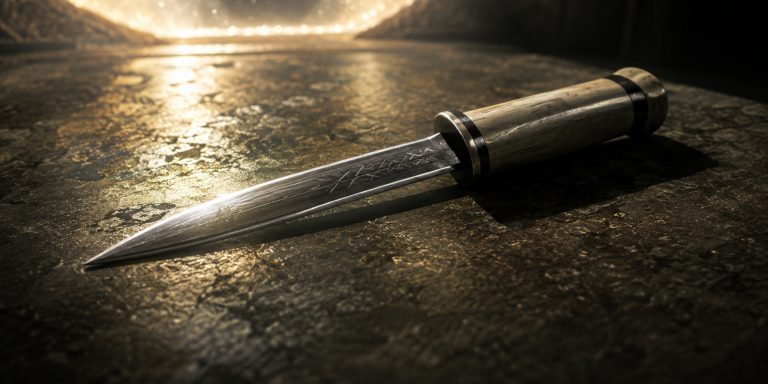
Whenever a worthy wielder accepts the blade, it gains another magical rune. Every rune represents that individual’s achievements, virtues, and legacy. Over thousands of years, a Moonblade may accumulate an impressive collection of magical abilities.
If an unworthy heir attempts to claim it, the sword often responds with lethal force.
That certainly keeps succession disputes brief.
The Origins of the Moonblades
Moonblades were forged during the Crown Wars, a devastating series of conflicts that nearly destroyed elven civilisation.
The ancient High Mages realised that kingdoms could fall and libraries could burn, but worthy bloodlines and honourable traditions deserved preservation.
Each Moonblade became both weapon and judge.
Rather than allowing political ambition or family status to determine succession, the blade itself would decide who deserved to continue its legacy. The result was one of the most fascinating magical creations in Forgotten Realms lore.
Every decision the blade makes reflects centuries of accumulated wisdom.
At least, that is the theory. Some rejected heirs might disagree.
How Does a Moonblade Choose Its Wielder?
The defining feature of every Moonblade is its ability to judge character.
Potential wielders must usually belong to the blade’s associated noble family, although exceptional circumstances occasionally allow outsiders to earn acceptance.
The blade considers qualities including:
- Courage
- Honour
- Wisdom
- Selflessness
- Leadership
- Personal sacrifice
- Dedication to elven ideals
Being powerful is not enough.
A talented warrior driven by greed or ambition is far less likely to succeed than someone willing to place others before themselves.
If rejected, the consequences vary.
Some simply find the sword impossibly heavy.
Others are blasted backwards by magical energy.
The truly unfortunate may be killed instantly by the Moonblade’s defensive magic.
The sword has remarkably high standards.
The Magical Runes
Every accepted wielder adds a rune to the blade.
Each rune grants a permanent magical ability, creating a weapon that grows stronger across centuries.
Common Moonblade runes include:
| Rune | Ability |
|---|---|
| Defender | Improves defensive capabilities |
| Spell Turning | Reflects hostile magic |
| Speed | Grants additional attacks |
| Flame | Surrounds the blade with magical fire |
| Frost | Covers the blade in supernatural ice |
| Keen | Increases cutting effectiveness |
| Elfshadow | Enhances stealth and concealment |
| Dragon Slayer | Increases effectiveness against dragons |
| Spell Storing | Holds magical spells for later use |
| Holy Power | Channels radiant energy against evil |
Since every Moonblade accumulates a unique combination of runes, each develops its own strengths.
Some become exceptional duelling weapons.
Others specialise in defending kingdoms or destroying particular enemies.
Famous Moonblades in Forgotten Realms
The Moonblade of House Alenuath
Perhaps the most famous Moonblade in the Forgotten Realms belongs to House Alenuath.
Over centuries it passed between numerous worthy wielders, accumulating an extraordinary number of magical runes.
Its history reflects the triumphs and tragedies of an entire elven dynasty.
Every bearer leaves both magical and historical marks upon the weapon.
The Blade of Alias
One of the most famous appearances of a Moonblade occurs during the Forgotten Realms novels involving Alias.
The weapon becomes central to questions surrounding destiny, identity, inheritance, and the responsibilities that accompany immense power.
Like much of the best Forgotten Realms storytelling, the sword itself often becomes as interesting as the people carrying it.
Sentience and Personality
Moonblades are not merely enchanted objects.
Most possess genuine intelligence and awareness.
A Moonblade communicates through emotions, visions, magical impulses, and occasionally direct telepathy with its wielder.
Older blades often display strong personalities shaped by centuries of accumulated memories.
Some encourage diplomacy.
Others remain fiercely protective of elven traditions.
Many quietly judge every decision their wielder makes.
Imagine carrying around an opinionated ancestor who also happens to be an incredibly sharp sword.
Moonblade Statistics in Dungeons & Dragons
Across different editions of Dungeons & Dragons, Moonblades have remained among the game’s most prestigious magical weapons.
Common characteristics include:
- Sentient magical longsword
- Restricted to worthy wielders
- Progressive magical abilities
- Powerful defensive enchantments
- High Intelligence and Wisdom
- Alignment that generally reflects noble elven values
- Ability to reject or destroy unsuitable users
Because each Moonblade is unique, Dungeon Masters often customise individual blades to suit their campaigns.
No two legendary weapons need tell the same story.
Symbolism Within the Forgotten Realms
The Moonblade represents far more than magical strength.
It embodies:
- Legacy over personal ambition
- Responsibility rather than privilege
- Honour earned through action
- The endurance of elven civilisation
- Family memory carried across generations
That philosophy explains why Moonblades remain compelling decades after their introduction.
The weapon is never simply a reward waiting inside a treasure chest.
It is something characters must prove themselves worthy of receiving.
Moonblade Compared With Other Legendary Fantasy Swords
| Sword | Setting | Defining Trait |
|---|---|---|
| Moonblade | Forgotten Realms | Chooses its rightful wielder |
| Excalibur | Arthurian Legend | Symbol of legitimate kingship |
| Blackrazor | Dungeons & Dragons | Devours souls to empower itself |
| Frost Brand | Dungeons & Dragons | Exceptional protection against fire |
| Stormbringer | Elric Saga | Sentient sword driven by chaos |
| Glamdring | Middle-earth | Ancient Elven sword wielded by Gandalf |
The Moonblade stands apart because its greatest power is arguably not magical at all.
Its true strength lies in preserving character across generations.
Why the Moonblade Remains So Popular
Many legendary weapons become little more than collections of magical bonuses.
The Moonblade feels different.
It creates stories before the adventure even begins.
Every rune represents another chapter.
Every bearer becomes part of an ever-growing family history.
That makes each blade deeply personal, even if two campaigns use the same rules.
It also solves a classic fantasy problem.
Instead of asking, “How powerful is this sword?”
Players often ask, “Am I worthy of carrying it?”
That is a far more interesting question.
The Moonblade’s Legacy
Few magical weapons capture the imagination quite like the Moonblade.
Its combination of evolving powers, sentient judgement, and centuries of history makes it one of Forgotten Realms’ defining artefacts.
Whether encountered in novels, tabletop campaigns, or video games inspired by Dungeons & Dragons, the Moonblade continues to represent the very best of heroic fantasy.
Power alone never earns the blade’s respect.
Character does.
That may sound like something an impossibly wise elf would say before disappearing dramatically into the forest.
For once, they actually have a point.