Piracy in the Caribbean was never a single era or a neat collection of names. It was a rolling continuum of outcasts, profit seekers, state sponsored raiders, escaped servants, former soldiers and the occasional dreamer who discovered the sea cared little for their fantasies. The Caribbean offered opportunities that did not exist in Europe. Harsh work on plantations, shifting imperial borders and crowded trade routes created a kind of pressure cooker. Some responded by becoming pirates.
Across the seventeenth and early eighteenth centuries, these men and women shaped one of the most studied outlaw cultures in world history. I have always found the region fascinating because its pirates reveal so much about the chaotic intersection of empire, wealth and human ambition. Below is an account of the many figures who carved their names, or at least scratched them, into the maritime history of the Caribbean.
Buccaneers and the First Wave
The Brethren of the Coast
A loose fraternity of French and English raiders who began as hunters on Hispaniola and Tortuga. Their name makes them sound deeply organised but in truth they were held together by shared hardship and shared enemies.
Alexandre Exquemelin
A Dutchman turned French surgeon whose book, The Buccaneers of America, became one of the most important historical sources for the age. He sailed with several buccaneers, including Morgan, and wrote with a dry bluntness that makes his accounts strangely refreshing.
François L’Olonnais
A name often whispered with discomfort even among pirates. His cruelty was so notorious that even the Brethren found him unsettling. His violent career ended when he was killed by Indigenous Kuna inhabitants.
Pierre Le Grand
One of the earliest French buccaneers to capture a Spanish galleon. His life is a brief flash in the record, which only makes the feat more striking.
Michel le Basque
A capable and confident raider who struck Spanish settlements along the coast of South America. He rarely receives the same attention as Morgan or Teach but his operations were bold and well coordinated.
The Privateer Kings
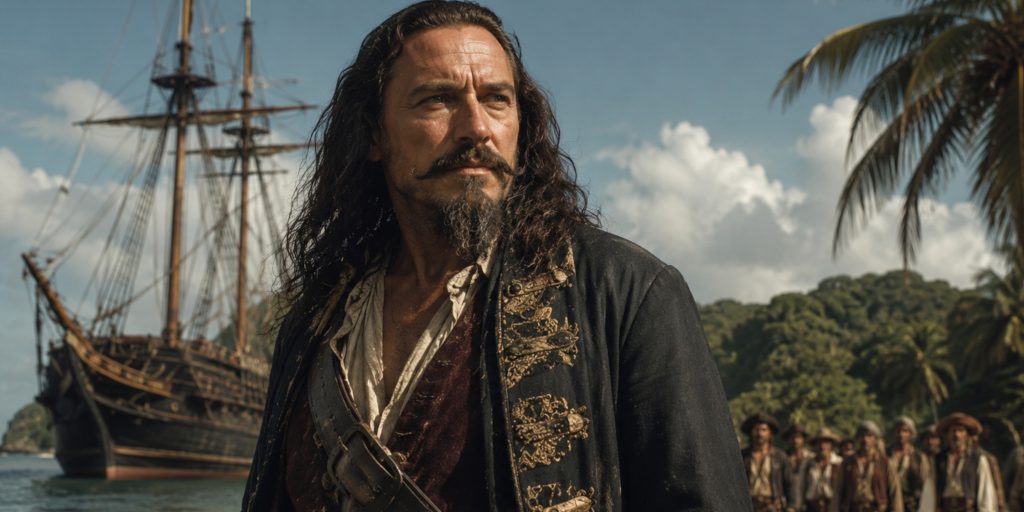
Henry Morgan
A privateer who operated with something close to military discipline. His raids on Portobelo and Panama City remain some of the most audacious attacks in Caribbean history. His later promotion to Lieutenant Governor of Jamaica is one of the better examples of the British habit of forgiving a pirate once he became politically useful.
Christopher Myngs
An English privateer who carried out brutal raids on Spanish towns in the 1650s and 1660s. Myngs was ambitious and effective, encouraged by a government that wanted Spain weakened but preferred to avoid direct war.
Laurens de Graaf
A Dutchman who became one of the Caribbean’s most accomplished privateer captains. The Spanish called him El Grande Grifo. Some considered him the equal of Morgan. He led complex operations against Spanish strongholds and was respected even among rivals.
Jan Willems, known as Yankey
A privateer who later slipped into full piracy. He cooperated often with de Graaf and participated in the sack of Veracruz.
The Golden Age Icons
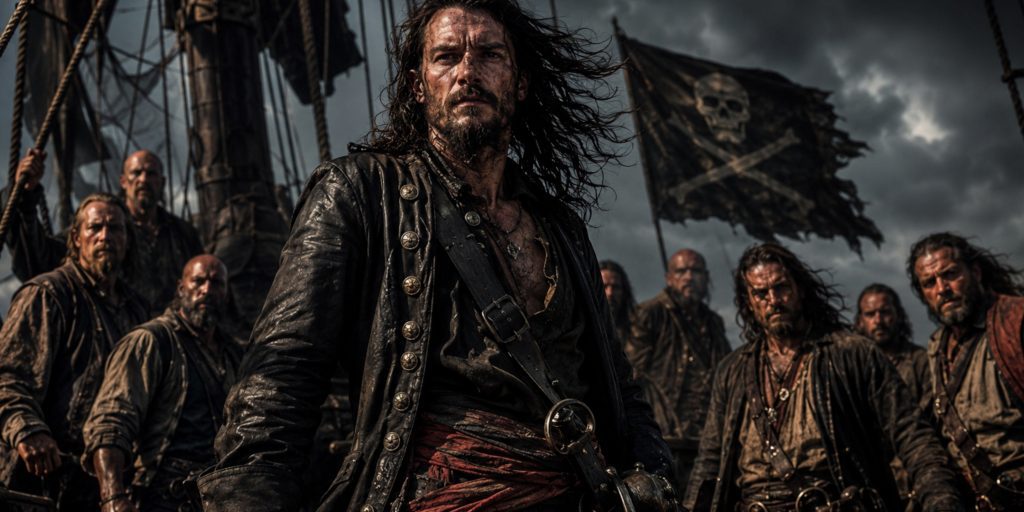
Edward Teach, Blackbeard
Tall, imposing and theatrical. Teach used fear with almost artistic precision. His blockade of Charleston and his dramatic final battle remain some of the most studied episodes in pirate history. For all his fame, he was not the reckless killer often imagined. His power rested on image and intimidation.
Charles Vane
A stubborn and aggressive pirate whose refusal to accept the King’s Pardon set him on a path to his own downfall. Vane’s violent temper regularly undermined his victories.
Calico Jack Rackham
Best known for his love of flamboyant dress and his association with Anne Bonny and Mary Read. Rackham had limited maritime skill but he certainly knew how to attract memorable crew members.
Anne Bonny
Born in Ireland, raised in the New World and unwilling to accept the restrictions placed on women. Bonny’s fierce loyalty and presence in battle unsettled the authorities who arrested her. She remains one of the most compelling figures of the age because her life exposes the rigid social expectations she refused to obey.
Mary Read
A soldier turned pirate whose entire life seems an act of defiance. Read fought on land and sea with a steadiness that impressed her comrades. Her story stands as a reminder that women participated in the Caribbean’s violent seascape even when the records barely acknowledged them.
Stede Bonnet
The Gentleman Pirate whose comfortable Barbados life apparently became intolerably dull. Bonnet purchased a sloop, hired a crew and set out to live like a pirate. His lack of seamanship made him reliant on Teach, who treated him as a mild inconvenience.
Israel Hands
Blackbeard’s trusted second, wounded in a curious incident after Teach fired a pistol beneath his table to prove a point. Hands later captured a ship off Newfoundland and remains one of the better documented lieutenants of the period.
Edward England
A pirate remembered for his unusual leniency. England spared enemies when others demanded executions. This compassion eventually angered his crew who expected a more ruthless approach. He was deposed and marooned, where he died in poverty.
Howell Davis
A Welshman who preferred trickery over bloodshed. Davis captured ships by masquerading as an official vessel. His career ended when a ruse in Principe was exposed and he was ambushed.
The Titans of Late Golden Age
Bartholomew Roberts, Black Bart
The most successful pirate in sheer number of ships captured. Roberts commanded large fleets and enforced a strict code aboard his vessels. His death in 1722 marked the effective end of the great age of Caribbean piracy.
George Lowther
A former officer turned pirate whose discipline made him an effective commander. Lowther’s sea battles were well organised, though his life ended in a suicide attempt after he was cornered on an island.
Francis Spriggs
Once a subordinate of Lowther. Spriggs’s Jolly Roger, featuring a burning heart, is one of the more memorable flags of the era.
John Phillips
A cobbler turned pirate. Phillips kept detailed rules for his crew which gives historians a rare look at shipboard governance.
Richard Worley
Not as well known today, though he briefly terrorised shipping near the Carolinas. The colonial press recorded that he flew a black flag with a white skeleton, making him one of the earliest to use a recognisable pirate emblem.
Spanish American and Portuguese Pirates
Benito de Soto
One of the last major Atlantic pirates, active in the 1820s. Brutal and feared, he operated near Madeira and the Caribbean. His eventual execution drew considerable public attention.
Amaro Pargo
A Canarian corsair who operated legally under Spanish authority. Although not strictly a Caribbean pirate, his actions in the region influenced trade and privateering patterns.
Alonso de Contreras
A Spanish soldier and privateer who wrote vivid memoirs. His career across the Caribbean and Mediterranean gives an unusually personal window into seventeenth century raiding.
Privateers Turned Rogues
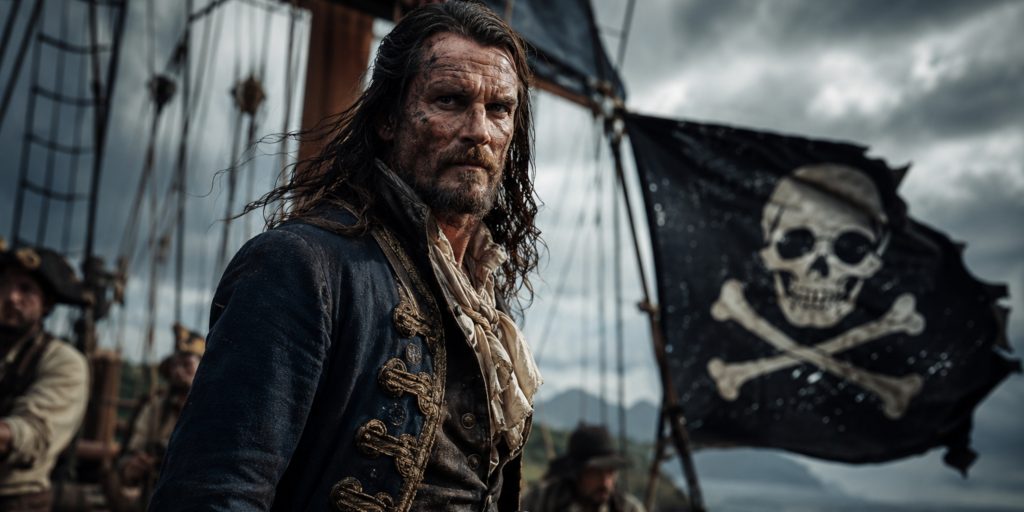
William Kidd
Although his name belongs more to the Atlantic world, Kidd operated partly in the Caribbean and often stopped at its islands. His transformation from privateer to accused pirate remains a subject historians continue to argue about.
Thomas Tew
A privateer whose successful raid in the Red Sea inspired many Caribbean captains to consider the longer, more profitable voyages toward Mughal shipping. His influence on pirate imagination far exceeded the length of his career.
John Quelch
One of the first men hanged under the English Piracy Act. Quelch’s crew believed they were acting under a legal commission. The case revealed how easily the line between privateering and piracy could vanish.
Fearsome Figures on the Margins
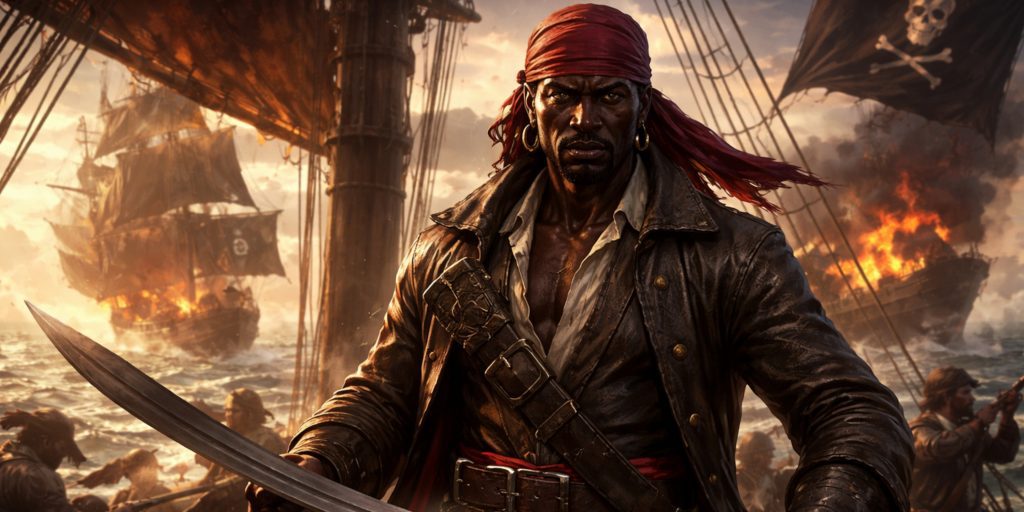
Roche Braziliano
Famous for his brutality and fondness for rum. He terrorised Spanish shipping and settlements and became the subject of exaggerated tales.
Black Caesar
A powerful African pirate said to have escaped enslavement and built a reputation near the Florida Keys. He later served with Blackbeard, showing how fluid pirate alliances could be.
Hendrick Jacobsz
A Dutch privateer known for his operations around Cuba and Puerto Rico. The Spanish considered him a persistent threat.
Richard Hawkins
A privateer who skirted the edges of piracy. His knowledge of Caribbean waters made him valuable and occasionally dangerous.
Diego Lucifer
A figure who appears in colonial records as a raider active along Cuba. Fragmentary but intriguing, he demonstrates how many pirates simply vanish into the paperwork.
Wreckers, Renegades and the Fading Echo
The Florida Wreckers
Some were legitimate salvagers, others were opportunistic looters who took advantage of storms and unfortunate sailors. They do not fit the classic pirate mould yet they lived off the same dangerous environment.
Nicholas Brown
A Jamaican pirate active in the early eighteenth century whose operations targeted both English and Spanish vessels. His brother John also sailed with him, and both were hunted relentlessly by colonial authorities.
Daniel Montbars, The Exterminator
A French pirate whose hatred of Spain bordered on obsession. Montbars killed with chilling fervour which made him a dark legend among buccaneers.
Gasparilla
A semi mythical figure from later folklore, said to have roamed the Gulf of Mexico. Evidence for his existence is thin, yet he is included here because Caribbean piracy often blurs the line between history and legend.
A Historian’s Closing Thoughts
The Caribbean pirates came from everywhere. Wales, Ireland, West Africa, the Canary Islands, Holland, France and the Indigenous populations of the region. Their world was shaped by shifting treaties, long sea lanes and imperial ambitions that collided like storm fronts. What fascinates me most is how each pirate, whether infamous or half forgotten, reflected the instability of their age.
Their lives were not glamorous. They faced brutal heat, cramped quarters, disease, poor food and the constant threat of hanging. Even the most successful rarely enjoyed long retirements. Yet they created one of the most enduring mythologies in global history. Beneath the legends sits a raw and complicated human story, the sort that draws historians back again and again to the Caribbean’s rolling blue horizon.
Watch the real Pirates of the Caribbean: