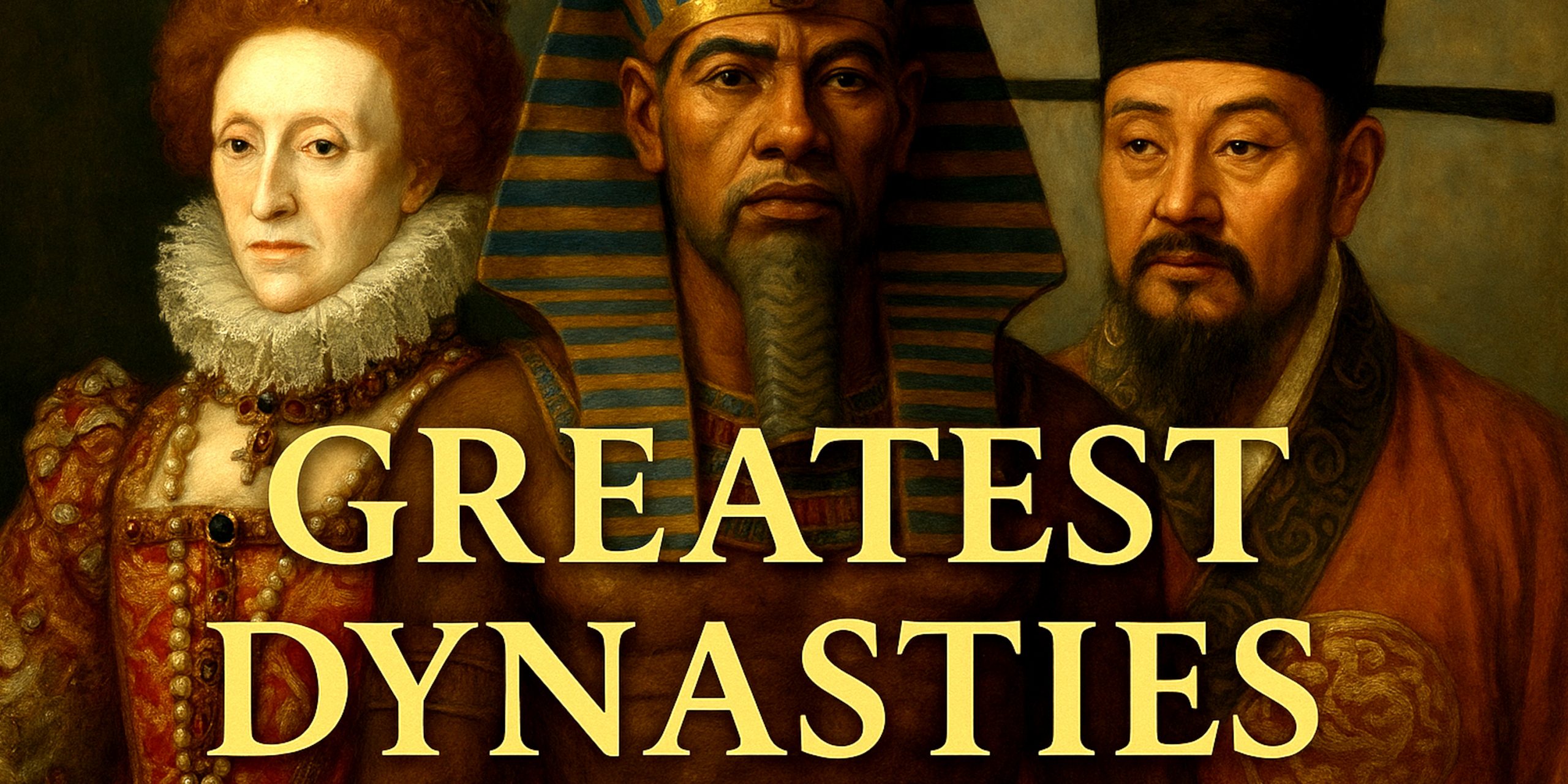
Across the long sweep of human history, a few ruling families managed to shape their age with unusual force. Dynasties rose from war, marriage, devotion or sheer accident, then stamped their character on the lands they ruled. Some lasted for centuries, others burned brightly before collapsing under their own contradictions. What binds them together is influence, the ability to steer culture, politics and belief across generations. Studying these families offers a sharper sense of how power actually worked, not in abstract systems but in bloodlines, ambitions and decisions that changed the direction of whole civilisations.
50. Qajar Dynasty, Persia (1789 to 1925)
The Qajars held Iran together during an era when European empires sharpened their appetite for influence across the Middle East. They were not the strongest rulers Persia ever had, but they maintain a peculiar charm in Iranian history. Their courts mixed archaic ceremony with the first flickers of modernity.
Significant rulers:
Fath Ali Shah, famous for both his enormous beard and enormous number of children.
Naser al Din Shah, an early moderniser who introduced photography and rail concepts.
Agha Mohammad Khan, founder of the dynasty and a ruthless unifier.
Their weakness lay in the speed of global change. They adapted slowly, and events simply outpaced them.
49. Hohenzollern Dynasty, Prussia and Germany (1415 to 1918)
A dynasty that hammered a patchwork of German lands into an industrial and military powerhouse. There is a harshness to the Hohenzollerns that you can feel even in their palaces, which tend to favour discipline over beauty. Yet their efficiency shaped modern Europe.
Significant rulers:
Frederick William the Great Elector, architect of Prussian strength.
Frederick the Great, a man who preferred the flute but excelled at war.
Wilhelm I, the monarch who presided over German unification.
Their legacy is controversial but historically immense.
48. House of Kamehameha, Hawaii (1795 to 1874)
The Kamehameha dynasty unified the Hawaiian Islands into a centralised kingdom for the first time. Their story has a mythic quality, helped by the imposing presence of Kamehameha I himself, a leader remembered for both diplomacy and sheer determination.
Significant rulers:
Kamehameha I, the unifier.
Kamehameha III, who established constitutional governance.
Their downfall came through foreign pressure that no island kingdom could realistically resist.
47. Nguyễn Dynasty, Vietnam (1802 to 1945)
The Nguyễn rulers tried to balance Confucian traditions with the onrush of French colonialism. This tension defined their entire existence. You can almost feel their frustration in the surviving records, as the world shifted faster than their institutions could manage.
Significant rulers:
Gia Long, founder of the dynasty.
Minh Mang, reformer and centraliser.
Tu Duc, ruler during the most difficult colonial pressures.
Vietnamese culture, architecture and administrative memory still carry their imprint.
46. Monomotapa Dynasty, Southern Africa (c. 1430 to 1760)
Linked to the builders of Great Zimbabwe, the Monomotapa dynasty controlled crucial gold routes that fed into the Indian Ocean economy. Their rulers held authority over vast mineral wealth, which drew the attention of Portuguese merchants and adventurers.
Significant rulers:
Nyatsimba Mutota, founder.
Matope, who expanded influence across the region.
Their place in African history is secure, though still under studied by mainstream historians.
45. Trần Dynasty, Vietnam (1225 to 1400)
One of the dynasties that stood up to the Mongols, and did so repeatedly. The Trần court combined literary refinement with battlefield pragmatism. The Mongols expected an easy victory, yet the Vietnamese turned the landscape itself into a weapon.
Significant rulers:
Trần Thái Tông, founder.
Trần Nhân Tông, Buddhist philosopher king.
Trần Hưng Đạo, the brilliant commander who humbled Kublai Khan’s armies.
Their achievement remains one of the finest defensive efforts in world history.
44. Almoravid Dynasty, North Africa and Spain (1040 to 1147)
The Almoravids began as a strict religious movement in the Sahara before evolving into a ruling dynasty that controlled Morocco and extended into al Andalus. Their reign brought stability and uniformity, though sometimes at the cost of artistic freedom.
Significant rulers:
Yusuf ibn Tashfin, the most capable Almoravid ruler.
Ali ibn Yusuf, who maintained the empire’s momentum.
They were eventually replaced by the more philosophically minded Almohads.
43. Almohad Dynasty, North Africa and Spain (1121 to 1269)
The Almohads built upon the regions the Almoravids left behind yet with a very different ideological base. They believed in a purifying vision of Islam and reshaped law, architecture and urban planning across the Maghreb.
Significant rulers:
Abd al Mumin, founder.
Yaqub al Mansur, who presided over the dynasty at its cultural height.
Their cities, especially in Morocco, still retain the clean monumental style they favoured.
42. Ghana Kings, West Africa (c. 700 to 1240)
One of the earliest structured dynastic systems in sub Saharan Africa. Ghana’s rulers managed trans Saharan trade routes with sophistication that rarely receives enough praise in global histories. They also built urban centres that impressed visiting Muslim chroniclers.
Significant rulers:
Kaya Magan Cissé, early founder.
Tunka Manin, known for his wealth and administrative skill.
Ghana’s decline came from shifting trade routes and external pressures from rising neighbours.
41. The Aztec Triple Alliance (1428 to 1521)
Technically a confederation rather than a pure dynasty, yet its ruling houses functioned dynastically and shaped central Mexico. Their empire grew fast, and perhaps too fast, creating internal resentment that the Spanish exploited with deadly efficiency.
Significant rulers:
Itzcoatl, early architect of the alliance.
Moctezuma I, expansionist statesman.
Ahuitzotl, builder of Tenochtitlan’s great temple.
Moctezuma II, whose reign ended with conquest.
The Aztec world was vibrant, structured and deeply ritualistic, and its fall still feels abrupt.
40. The Sapa Inca Dynasty, Peru (c. 1438 to 1533)
The Inca rulers created a remarkable imperial structure that functioned across some of the most challenging terrain on Earth. Mountain passes, deserts, dense forests and river valleys were woven into an administrative network that still impresses modern planners. Their roads and relay runners ensured brisk communication, while their terrace farming reflects ingenuity born from necessity.
Significant rulers:
Pachacuti, who transformed a local kingdom into an empire through strategic conquest and reform.
Topa Inca Yupanqui, an expansionist who extended the realm along the Andes.
Huayna Capac, whose death triggered the civil war that weakened the empire just as the Spanish arrived.
The tragedy of the Inca lies in how swiftly the empire fell once disease and internal conflict eroded its foundations.
39. Tokugawa Shogunate, Japan (1603 to 1868)
The Tokugawa family brought order after centuries of civil conflict. Their shogunate isolated Japan from the outside world, creating a stable society with rigid social classes and a carefully managed economy. The arts flourished under their watch, from kabuki theatre to woodblock printing.
Significant rulers:
Tokugawa Ieyasu, the victor of Sekigahara and architect of the new shogunal structure.
Tokugawa Hidetada, who strengthened central control.
Tokugawa Yoshimune, a reformer who attempted to modernise administration.
Eventually, global pressures forced Japan to reopen, and the shogunate, unable to adapt quickly enough, gave way to the Meiji Restoration.
38. House of Saud, Arabia (1744 to present)
A modern ruling family with deep regional roots. The House of Saud reshaped the political landscape of the Arabian Peninsula and used oil wealth to project influence far beyond its borders. Their alliances, rivalries and reforms define much of Middle Eastern politics today.
Significant rulers:
Muhammad bin Saud, founder of the first Saudi state.
King Abdulaziz (Ibn Saud), who unified the peninsula and created modern Saudi Arabia.
King Faisal, known for his diplomatic skill and modernisation efforts.
The dynasty remains powerful, though its future direction is still being written.
37. Komnenian Dynasty, Byzantium (1081 to 1185)
A dynasty that pulled the empire back from the brink. When the Komnenoi took power, Byzantium faced invasions, civil disorder and financial ruin. Through military campaigns, careful marriages and administrative tightening, they restored much of the realm’s strength.
Significant rulers:
Alexios I Komnenos, whose reign began the recovery.
John II, often overlooked but highly competent.
Manuel I, a charismatic ruler with bold ambitions.
Their success delayed the empire’s decline and shaped the Crusader world.
36. Solomonic Dynasty, Ethiopia (1270 to 1974)
Few dynasties match the longevity of the Ethiopian Solomonic line. Their claim of descent from the union of Solomon and the Queen of Sheba shaped Ethiopian identity. They presided over cycles of centralisation and fragmentation yet always revived themselves.
Significant rulers:
Yekuno Amlak, restorer of the dynasty.
Zara Yaqob, a scholar king known for religious reforms.
Menelik II, moderniser and victor at Adwa.
Haile Selassie, one of the most recognisable African rulers of the twentieth century.
This dynasty’s legacy still resonates in Ethiopian culture and politics.
35. Askia Dynasty, Songhai Empire (1493 to 1591)
The Askia rulers brought order and centralisation to Songhai, transforming it into one of Africa’s largest pre modern empires. Under their rule, Timbuktu became a centre of Islamic scholarship, attracting scholars from across the Sahel.
Significant rulers:
Askia Mohammad I, a statesman who reformed administration and taxation.
Askia Dawud, who ruled during the empire’s prosperous height.
Their empire fell only when Moroccan forces armed with gunpowder arrived, forever altering West African politics.
34. Keita Dynasty, Mali Empire (c. 1235 to 1645)
The Keita family created a state whose fame reached Europe and the Middle East. Chroniclers struggled not to exaggerate the wealth of rulers like Mansa Musa, who made a pilgrimage that still enters conversations about the richest individuals in history.
Significant rulers:
Sundiata Keita, the legendary founder whose story forms the backbone of the Epic of Sundiata.
Mansa Musa, who elevated Mali’s prestige across the Islamic world.
Mansa Suleyman, a steady and competent ruler.
The decline came slowly as regional powers fractured Mali’s vast territory.
33. Yamato Dynasty, Japan (c. 250 to present, ceremonial since 1868)
The oldest continuous hereditary monarchy in the world. The Yamato rulers shaped early Japanese statehood and maintained their symbolic role even when real power passed to regents, shoguns or modern parliaments.
Significant rulers:
Emperor Sujin, early state consolidator.
Emperor Tenji, reforming architect of administrative shifts.
Emperor Meiji, who oversaw Japan’s transformation into a modern state.
Their continuity is perhaps their greatest achievement.
32. Joseon Dynasty, Korea (1392 to 1910)
The dynasty that gave Korea much of its cultural and institutional identity. Confucian governance shaped schools, bureaucracy and social norms. The Hangul alphabet, created under Sejong the Great, remains one of the clearest examples of deliberate, elegant language planning.
Significant rulers:
Taejo, founder and stabiliser.
Sejong the Great, patron of science, literature and Hangul.
Yeongjo, reformist ruler who aimed to balance factionalism.
Joseon weathered invasions, internal strife and economic shifts with remarkable endurance.
31. Khmer Dynasty of Angkor, Cambodia (802 to 1431)
The builders of Angkor created one of the most impressive pre modern urban systems anywhere in the world. Their hydraulic engineering supported massive populations, and their temples, especially Angkor Wat and Bayon, combine religious symbolism with technical brilliance.
Significant rulers:
Jayavarman II, who established the Angkorian state.
Suryavarman II, builder of Angkor Wat.
Jayavarman VII, known for Mahayana Buddhist influence and major construction projects.
Their fall came from environmental strain, shifting trade routes and invasion.
30. Ptolemaic Dynasty, Egypt (305 to 30 BC)

A dynasty born from the fallout of Alexander’s empire. Macedonian kings ruling an ancient Egyptian population created one of history’s most intriguing cultural blends. Greek language and scholarship thrived in Alexandria, while traditional Egyptian forms continued in temples deep in the Nile Valley. The kingdom endured longer than many expect, thanks to careful diplomacy and a keen sense of spectacle.
Significant rulers:
Ptolemy I Soter, companion of Alexander and founder of the dynasty.
Ptolemy II Philadelphus, builder of the Library of Alexandria’s prestige.
Cleopatra VII, the last ruler, remembered more vividly than almost any ancient monarch.
Their end came with Roman annexation, yet their cultural legacy still shapes how the world imagines antiquity.
29. New Kingdom Dynasties, Egypt (c. 1550 to 1070 BC)
The New Kingdom was Egypt at its confident peak. Pharaohs commanded armies across the Levant, Nubia and the Mediterranean. The period produced monumental architecture, religious upheaval and rulers who remain household names to this day. The shift from the warrior kings of the Eighteenth Dynasty to the grandiose builders of the Nineteenth makes this era rich with contrasts.
Significant rulers:
Hatshepsut, one of history’s most capable queens.
Thutmose III, often called the Napoleon of Egypt for his campaigns.
Akhenaten, religious reformer whose experiment almost broke the state.
Ramses II, builder of vast temples and long reigning symbol of Egyptian power.
Their decline came with invasions, internal strain and economic disruption.
28. Sassanian Dynasty, Persia (224 to 651)
The Sassanians forged a Persian empire that stood shoulder to shoulder with Rome. Their art, reliefs and royal ideology shaped the identity of Iran long after the dynasty fell. They fielded heavy cavalry, managed vast territories and elevated Zoroastrianism as a state religion. To understand late antiquity, you must understand the Sassanians.
Significant rulers:
Ardashir I, founder and restorer of Persian unity.
Shapur I, conqueror who captured the Roman emperor Valerian.
Khosrow I, philosopher king famed for justice and reform.
Their fall to the early Islamic caliphate reshaped the entire Near East.
27. Achaemenid Dynasty, Persia (550 to 330 BC)
One of the most influential empires in world history. The Achaemenids mastered administration across cultures and languages. Their road systems, satrapies and tolerance for local customs set new standards for imperial governance. Even classical writers who disliked Persia ended up admiring elements of its organisation.
Significant rulers:
Cyrus the Great, founder and model monarch.
Darius I, organiser and builder of Persepolis.
Xerxes I, whose wars with Greece became legendary.
Their empire fell to Alexander the Great, yet many of their institutions influenced those who followed.
26. Umayyad Dynasty, Middle East (661 to 750)
The first great Islamic dynasty to rule a vast interconnected empire. From India to Spain, the Umayyads expanded quickly, establishing Arabic as an administrative language and creating coinage that circulated across continents. Their caliphate was energetic, occasionally ruthless and always ambitious.
Significant rulers:
Muawiya I, founder with formidable political skill.
Abd al Malik, who centralised coinage and administration.
Hisham, ruler during the empire’s later military struggles.
Though their rule ended abruptly, their achievements provided the foundation for later caliphates.
25. Umayyads of Cordoba (756 to 1031)
A rival Umayyad line in Iberia, founded by a survivor of the eastern collapse. They transformed Córdoba into one of the great urban centres of medieval Europe. Scholars, poets, philosophers and physicians gathered there, producing a cultural climate that influenced both Christian and Islamic worlds.
Significant rulers:
Abd al Rahman I, founder who established legitimacy far from Damascus.
Abd al Rahman III, who declared himself Caliph and elevated Córdoba to its height.
Al Hakam II, patron of libraries and scholars.
Their unity unravelled after the collapse of central authority, leading to the era of the taifa kingdoms.
24. Abbasid Dynasty, Middle East (750 to 1258, later ceremonial)
The Abbasids presided over one of the most dazzling intellectual ages in world history. Baghdad became a crossroads of Greek, Persian, Indian and Arabic knowledge. The House of Wisdom and the translation movement laid foundations for developments in mathematics, science and philosophy.
Significant rulers:
Al Mansur, founder of Baghdad.
Harun al Rashid, whose court became legendary in Arabic literature.
Al Ma’mun, champion of scholarship and scientific inquiry.
The Mongol sack of Baghdad ended their temporal rule, but their cultural shine did not fade.
23. Safavid Dynasty, Persia (1501 to 1736)
The Safavids shaped the religious identity of Persia, establishing Twelver Shiism as the state faith. Their court culture blended Persian aesthetics with Turkic traditions, producing art and architecture that still draw admiration. Isfahan, in particular, reflects their vision of urban beauty.
Significant rulers:
Shah Ismail I, charismatic founder.
Shah Tahmasp I, stabiliser during difficult years.
Shah Abbas I, architect of Safavid golden age and patron of grand construction.
Their decline came from succession instability and increased foreign pressure.
22. Ottoman Dynasty, Turkey and three continents (1299 to 1922)
A dynasty remarkable both for its longevity and adaptability. The Ottomans built a state that drew from European, Middle Eastern and Central Asian influences. Their administrative flexibility kept them relevant far longer than many other medieval powers. Their armies, janissaries and naval forces shaped geopolitics for centuries.
Significant rulers:
Osman I, founder.
Mehmed II, conqueror of Constantinople.
Suleiman the Magnificent, master of law, arts and empire building.
Even in decline, the dynasty remained a major player in world affairs.
21. Mughal Dynasty, India (1526 to 1857)
The Mughals forged a rich cultural synthesis of Persian, Indian and Central Asian traditions. Their courts became centres of literature, architecture and refined ceremony. The Taj Mahal alone stands as a reminder of how art flourished under their patronage, though their administrative system was equally impressive.
Significant rulers:
Babur, founder with an unusually poetic temperament.
Akbar, visionary of religious tolerance and strong governance.
Shah Jahan, builder of imperial splendour.
Aurangzeb, under whom the empire reached its greatest territorial extent.
Their decline arose from overextension, succession disputes and the rise of colonial power.
20. Gupta Dynasty, India (c. 320 to 550)
Often described as a golden age of Indian civilisation. Poetry, mathematics, astronomy and philosophical thought found fertile ground under Gupta patronage. Their political structure blended central authority with local autonomy, creating a sense of stability that encouraged innovation.
Significant rulers:
Chandragupta I, founder and consolidator.
Samudragupta, military strategist and unifier.
Chandragupta II, patron of the arts.
The dynasty fell to Hun invasions and internal fragmentation, but their intellectual legacy endured.
19. Maurya Dynasty, India (322 to 185 BC)
The Maurya Empire emerged with startling speed. Chandragupta seized power when northern India was fractured, then built an administration that impressed even Greek observers. The dynasty’s fame, though, often circles around Ashoka, whose transformation after the Kalinga War remains one of the most striking moral shifts in ancient political history.
Significant rulers:
Chandragupta Maurya, founder who established centralised rule.
Bindusara, often underrated but essential for consolidation.
Ashoka, whose edicts preserved across the subcontinent reveal a ruler wrestling openly with conscience.
The empire unravelled after Ashoka as regions drifted from central authority.
18. Chola Dynasty, South India (c. 300 BC to 1279 AD)
The Cholas maintained influence across a staggering span of centuries. Their medieval resurgence turned them into a naval force that reached as far as Southeast Asia. Temples built under their patronage are among the most striking sacred structures in India, combining spiritual gravity with sculptural precision.
Significant rulers:
Rajaraja I, who reasserted Chola power and commissioned monumental temples.
Rajendra I, noted for his naval expeditions across the Bay of Bengal.
Kulothunga I, whose reign stabilised the empire.
Their decline followed conflicts with rival South Indian powers and a gradual erosion of territorial control.
17. Macedonian Dynasty, Byzantium (867 to 1056)

A dynasty that revitalised the Byzantine Empire through military victories, legal reforms and cultural patronage. Despite the name, most rulers were culturally Greek. The period marked a flowering of literature and scholarship, while the empire expanded under generals who wielded discipline with impressive precision.
Significant rulers:
Basil I, founder with a talent for consolidation.
Leo VI, legal reformer known as Leo the Wise.
Constantine VII, a scholar emperor who recorded valuable administrative knowledge.
Basil II, feared general whose campaigns reshaped the Balkans.
The dynasty’s steady rule produced resilience rarely matched in Byzantine history.
16. Severan Dynasty, Rome (193 to 235)
The Severans emerged from the army and ruled with a sense of immediacy that reflected their origins. Their era included major reforms, expansion in the East and the rise of a more militarised imperial state. Their story also contains enough internal drama to fill several volumes of Roman biography.
Significant rulers:
Septimius Severus, founder and capable commander.
Caracalla, known for both brutality and granting citizenship across the empire.
Alexander Severus, whose attempts at reform collapsed into chaos.
Their fall ushered in the Crisis of the Third Century.
15. Flavian Dynasty, Rome (69 to 96)
Emerging from a year of civil war, the Flavians provided a badly needed sense of direction. Their reign produced the Colosseum along with strong fiscal reforms. They ruled with a rather workmanlike approach, which Roman historians sometimes criticised, although stability mattered far more than elegance at the time.
Significant rulers:
Vespasian, pragmatic founder.
Titus, remembered for compassion during disasters like Vesuvius.
Domitian, stern autocrat whose rule still divides opinion.
Their brief dynasty left a disproportionately large imprint on Roman architecture and governance.
14. Julio Claudian Dynasty, Rome (27 BC to AD 68)
The first imperial family of Rome, and perhaps the most dramatic. Their story includes brilliant administration, paranoid excess, political brilliance and occasional disaster. Augustus alone would earn the dynasty a high ranking. His successors ranged from steady to chaotic, yet together they shaped Rome’s imperial identity.
Significant rulers:
Augustus, architect of the imperial system.
Tiberius, austere ruler with strong administrative skill.
Claudius, surprising scholar emperor.
Nero, whose reign ended the dynasty amid turmoil.
Despite the turbulence, the Julio Claudians built the foundations of empire.
13. Bourbon Dynasty, France and Spain (1589 to 1792, later restored)
The Bourbons presided over grand courts, military triumphs and at times spectacular mismanagement. They expanded colonial holdings and refined absolutist ideology, yet the gap between splendour and everyday reality widened until revolution cracked their authority.
Significant rulers:
Henry IV, pragmatic restorer of stability after religious wars.
Louis XIV, whose long reign defines European absolutism.
Charles III of Spain, a reforming enlightened monarch.
Their story shows how a dynasty can dominate an era, then be swept aside by forces it helped to create.
12. Capetian Dynasty, France (987 to 1848, with branches)
The Capetians played the long game. Their early kings had little direct power, yet through patience, strategic marriages and careful expansion, they created one of Europe’s strongest monarchies. Their branches ruled in France, Navarre, Portugal and elsewhere, forming a vast dynastic web.
Significant rulers:
Hugh Capet, almost modest founder whose dynasty outlived every rival.
Philip II, who broke Angevin power and strengthened royal authority.
Louis IX, admired for both piety and wise governance.
Their influence shaped medieval and early modern statecraft.
11. Carolingian Dynasty, Western Europe (751 to 987)
The Carolingians forged a political and cultural revival across Western Europe. Charlemagne’s empire encompassed much of the continent, and his court encouraged scholarship that preserved classical learning. Although short lived, the empire’s administrative ideas echoed into the medieval period.
Significant rulers:
Pepin the Short, founder.
Charlemagne, emperor whose achievements still appear in debates about European identity.
Louis the Pious, who struggled to hold the empire together but maintained religious reform.
Their fragmentation after Louis mirrored the difficulty of sustaining vast pre modern polities.
10. Stuart Dynasty, England and Scotland (1371 to 1714)
The Stuarts ruled through union, civil war, restoration and eventual dynastic eclipse. Their reign is filled with personalities who provoke strong opinions. Some ruled with cultural sophistication, others with disastrous stubbornness. Yet they oversaw moments that shaped the British Isles irreversibly.
Significant rulers:
James VI and I, unifier of the crowns.
Charles I, whose conflict with Parliament led to civil war.
Charles II, whose restoration brought a lively and often scandal filled court.
The dynasty ended quietly but left a political and cultural legacy still felt today.
9. Tudor Dynasty, England (1485 to 1603)
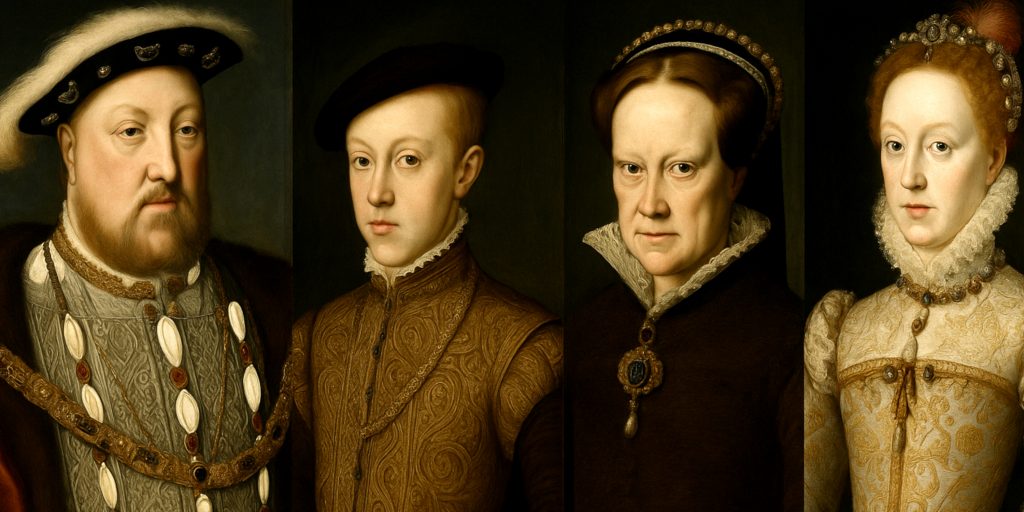
The Tudors remain one of the most recognisable dynasties in world history. Their portraits stare out of school textbooks with a confidence that feels almost rehearsed. They ruled during England’s transition from medieval kingdom to an early modern state with growing naval ambition. The period produced religious upheaval, cultural transformation and a sense of national identity that still colours British history.
Significant rulers:
Henry VII, careful founder who stitched together stability after the Wars of the Roses.
Henry VIII, reformer and destroyer in equal measure, whose decisions reshaped English religion.
Elizabeth I, a politically astute queen whose long reign remains one of the high points of English governance.
The Tudors left no direct heirs, yet something about their era retains a magnetic pull on public imagination.
8. Plantagenet Dynasty, England (1154 to 1399)
Fierce, ambitious and prone to family feuds, the Plantagenets ruled an empire that at times stretched from the Scottish borders to the Pyrenees. Their rulers excelled in law making, castle building and, perhaps most of all, waging war. The dynasty’s internal conflicts often undermined its achievements, yet the legal and administrative foundations they laid shaped English governance for centuries.
Significant rulers:
Henry II, whose reforms remain visible in common law traditions.
Richard I, crusading king and formidable commander.
Edward I, conqueror of Wales and reformer of parliament.
Their fall came with the deposition of Richard II, but their legacy saturates medieval English history.
7. Song Dynasty, China (960 to 1279)
The Song oversaw one of the most intellectually vibrant periods in Chinese history. Their military fortunes were uneven, yet their contributions to science, art, philosophy and technology were profound. Printing, gunpowder refinements, nautical advances and landscape painting flourished in their cities.
Significant rulers:
Taizu, founder who shaped early administrative structures.
Renzong, patron of culture and bureaucracy.
Gaozong, who reestablished stability in the Southern Song period.
The dynasty eventually fell to the Mongols, but its cultural achievements remained deeply influential.
6. Tang Dynasty, China (618 to 907)
The Tang created a world connected through trade, diplomacy and ideas. Chang’an became one of the world’s largest and most diverse cities. Poets, scholars and monks moved across borders carrying stories and beliefs. The dynasty’s early rulers combined military strength with administrative drive, giving China an outward looking confidence rare in other periods.
Significant rulers:
Taizong, one of China’s finest emperors, admired for both governance and strategy.
Xuanzong, whose court epitomised cultural sophistication before later turmoil.
Empress Wu Zetian, the only woman to rule China in her own name, and a forceful political presence.
Their decline began with rebellion, but their cultural resonance never faded.
5. Zhou Dynasty, China (c. 1046 to 256 BC)
The Zhou ruled for centuries, long enough to be divided into Western and Eastern periods. Their early kings wielded real power, while later rulers presided over a patchwork of fractious states. Yet their importance lies in providing the philosophical soil from which Confucianism, Daoism and Legalism grew. The era shaped Chinese political thought in ways that followed long after the dynasty collapsed.
Significant rulers:
King Wu, founder who overthrew the Shang.
King Cheng, whose reign stabilised the early state.
King Kang, associated with prosperity and order.
The Zhou fragmented into the Warring States period, a time of conflict that nonetheless produced remarkable intellectual activity.
4. Ming Dynasty, China (1368 to 1644)
The Ming restored Han Chinese rule after the Mongol Yuan dynasty and built a state characterised by strong bureaucracy and monumental architecture. Their construction efforts, from the Forbidden City to major sections of the Great Wall, still define global images of China. The early Ming court also launched large scale maritime expeditions that projected influence across the Indian Ocean.
Significant rulers:
Hongwu, founder whose reforms shaped Ming governance for generations.
Yongle, energetic ruler who moved the capital to Beijing and sponsored Zheng He’s voyages.
Wanli, whose long reign saw both brilliance and frustrating stagnation.
The dynasty fell to internal strife and external pressure from the Manchus.
3. Qing Dynasty, China (1644 to 1912)
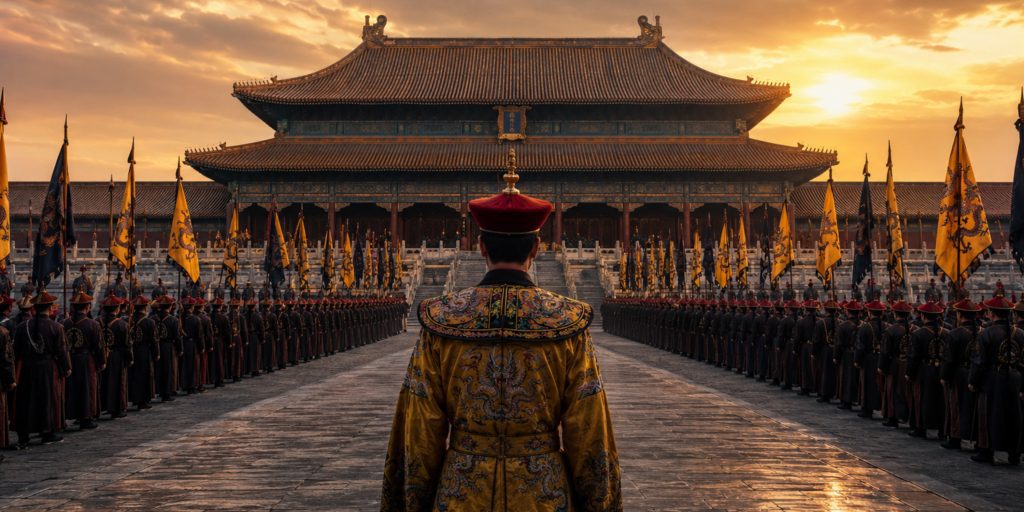
A multiethnic empire that absorbed vast territories and managed populations with remarkable administrative structure. The Qing presided over a period of expansion, cultural synthesis and economic development, though also heavy conservatism. Their courts, especially under the early emperors, maintained a disciplined and scholarly environment.
Significant rulers:
Kangxi, a ruler whose skills ranged from military campaigns to scholarly pursuits.
Yongzheng, administrator committed to efficiency and discipline.
Qianlong, whose long reign blended artistic patronage with territorial consolidation.
The nineteenth century brought pressures the dynasty struggled to manage, leading to its eventual collapse.
2. Han Dynasty, China (206 BC to AD 220)
The Han created the enduring structure of Chinese imperial rule. Their bureaucratic machinery, merit based examinations (in early form), and consolidation of Confucian state philosophy set the standard for nearly two millennia. Their influence extended along the Silk Road, carrying Chinese goods, ideas and diplomatic networks across Asia.
Significant rulers:
Emperor Wen, stabiliser and economic reformer.
Emperor Jing, who strengthened central authority.
Emperor Wu, expansionist ruler who extended China’s influence deep into Central Asia.
Emperor Guangwu, restorer of the Later Han.
The dynasty’s eventual breakdown set the stage for centuries of division, yet its legacy became foundational.
1. The Roman Imperial Line, Foundational Dynasties (27 BC to AD 235)
This position covers the successive early Roman dynasties that shaped the Principate, including the Julio Claudians, Flavians and the Nervan Antonine line. Together they transformed Rome from a Mediterranean power into a continental empire with far reaching administrative, legal and cultural influence. They shaped infrastructure, law, architecture and even modern ideas of citizenship.
Significant rulers:
Augustus, founder whose political ingenuity stabilised Rome.
Trajan, whose campaigns created the empire at its widest extent.
Hadrian, consolidator, builder and protector of borders.
Marcus Aurelius, philosopher emperor ruling during times of difficulty.
Their combined legacy forms one of the central pillars of world history.