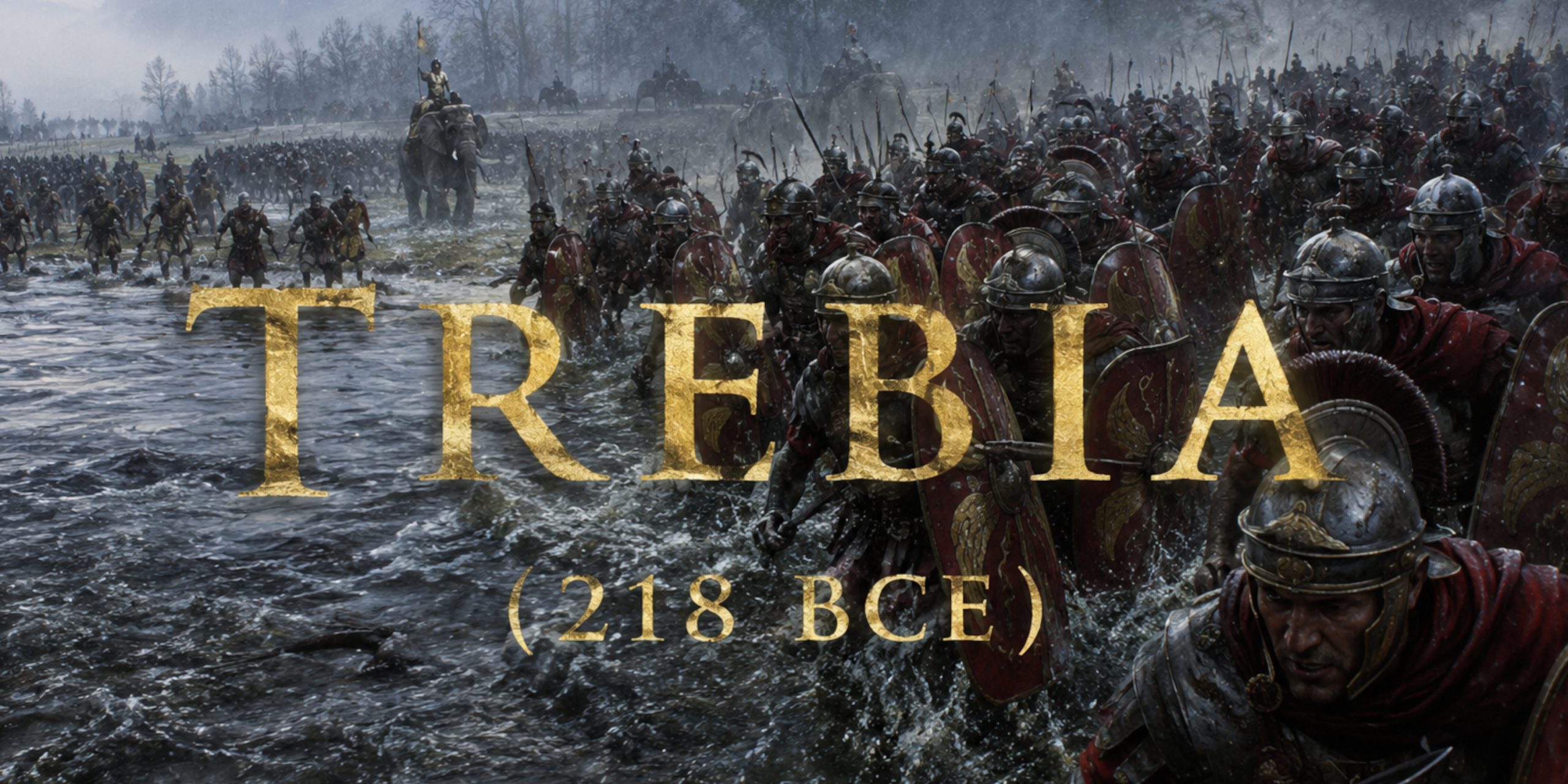
The Battle of the Trebia in 218 BCE was the moment Rome discovered that Hannibal Barca was not simply another ambitious enemy general. He was something far more dangerous, a commander who understood psychology, terrain, deception and timing as well as he understood warfare.
Fought near the Trebia River in northern Italy during the early stages of the Second Punic War, the battle saw a Roman army under Tiberius Sempronius Longus drawn into a carefully prepared trap. Hannibal’s exhausted Carthaginian force had already crossed the Alps, losing thousands of men and animals in the process, yet within weeks he delivered one of the most elegant tactical victories of the ancient world.
It was also a brutal reminder that confidence and courage are useful qualities in war, but crossing a freezing river before breakfast because your enemy wants you to is rarely a promising start.
Background: Hannibal Brings The War To Italy
After the outbreak of the Second Punic War in 218 BC, Hannibal chose a strategy few Romans expected. Rather than wait for Rome to attack Carthaginian territory, he marched from Iberia, crossed the Alps and invaded Italy directly.
The journey was devastating:
- Thousands of soldiers were lost during the Alpine crossing
- Many horses and pack animals died
- Only a fraction of his famous war elephants survived
- His army arrived tired, reduced and isolated
Yet Hannibal’s presence in northern Italy created a political crisis for Rome. Local Gallic tribes, recently conquered by the Romans, began to see him as a possible liberator and provided valuable reinforcements.
Rome sent two consular armies north. After Publius Cornelius Scipio was wounded at the Battle of Ticinus, command increasingly shifted to the more aggressive Tiberius Sempronius Longus.
Hannibal quickly recognised that Sempronius wanted a decisive battle. He gave him exactly what he wanted.
Forces At The Battle Of The Trebia
Commanders And Army Composition
| Side | Commander | Estimated Strength | Composition |
|---|---|---|---|
| Carthage | Hannibal Barca | Around 30,000 to 40,000 | African infantry, Iberian warriors, Gallic infantry, Numidian cavalry, heavy cavalry, elephants |
| Rome | Tiberius Sempronius Longus | Around 35,000 to 40,000+ | Roman legions, allied Italian infantry, Roman cavalry, allied cavalry |
Ancient numbers vary, especially through Roman sources. Polybius provides the most influential account, though exact figures remain debated by historians.
Carthaginian Army
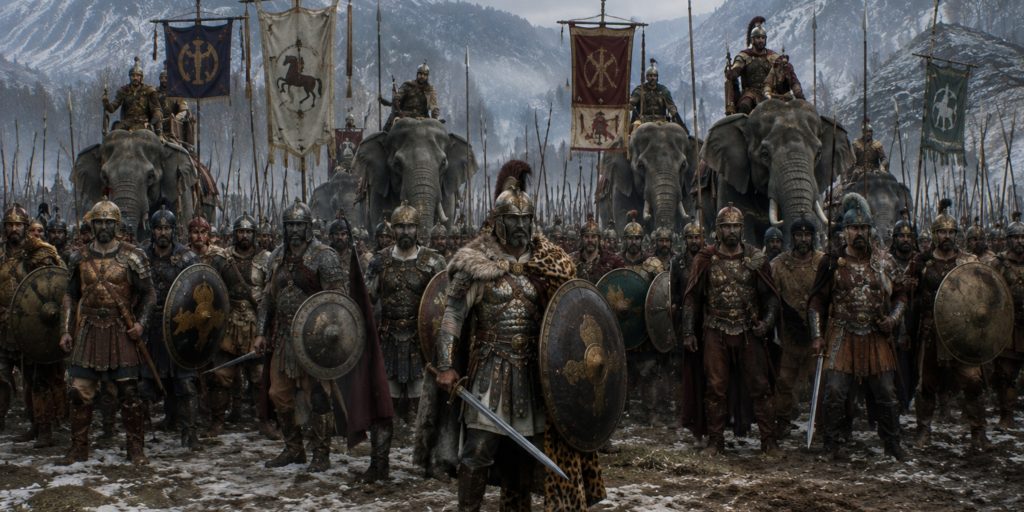
Leaders
Hannibal Barca
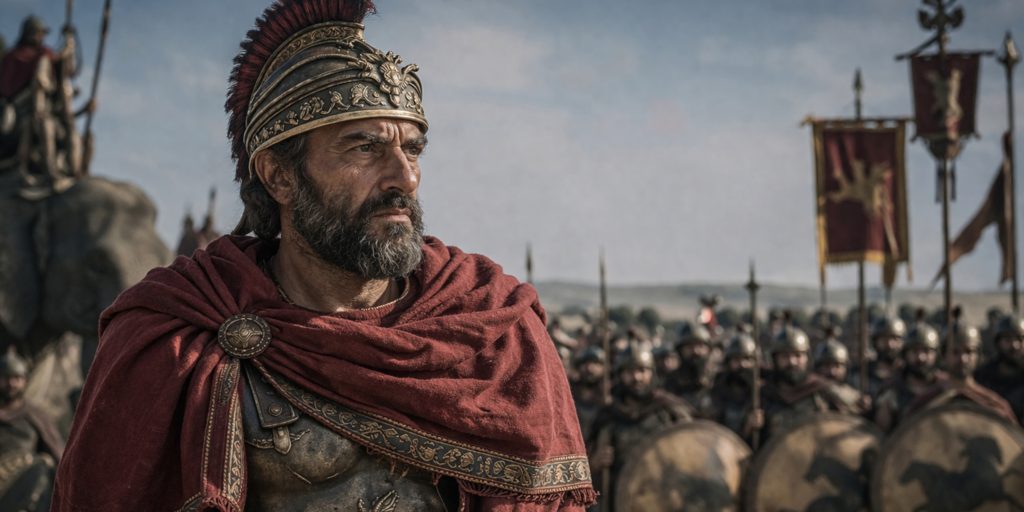
- Overall commander
- Specialist in battlefield deception and manoeuvre warfare
- Personally led a multinational army across extreme terrain
Mago Barca
- Hannibal’s younger brother
- Commanded the hidden ambush force
- Played the decisive role in breaking Roman cohesion
Troop Composition
- African heavy infantry
- Iberian swordsmen
- Gallic warriors
- Balearic slingers
- Numidian light cavalry
- Iberian and Gallic heavy cavalry
- Remaining war elephants
The strength of Hannibal’s army was not uniform equipment or culture. It was his ability to combine very different fighting styles into one flexible force.
Roman Army

Leaders
Tiberius Sempronius Longus
- Roman consul
- Aggressive commander seeking a decisive victory before his term ended
Publius Cornelius Scipio
- Previously wounded at Ticinus
- Favoured caution after witnessing Hannibal’s cavalry strength
Troop Composition
- Roman citizen legionaries
- Allied Italian infantry
- Velites (light infantry skirmishers)
- Equites (Roman cavalry)
- Allied cavalry contingents
Rome possessed discipline, manpower and organisation. What it lacked on this particular morning was patience.
Arms And Armour At The Battle Of The Trebia
Roman Equipment
Swords
- Early Roman short sword influenced by Iberian designs
- Effective for thrusting and close formation fighting
- Longer than later Imperial Roman gladii
- Designed to exploit gaps after shield contact
The adoption of Iberian-style swords showed Rome’s willingness to absorb successful foreign military ideas, one of the reasons it survived disasters that destroyed other powers.
Other Weapons
- Pilum: Heavy throwing spear designed to disrupt enemy shields
- Hasta: Spear still used by some troops
- Pugio: Military dagger
- Scutum: Large curved shield
- Montefortino helmet: Common bronze helmet type
- Mail armour (lorica hamata): Increasingly used, especially among wealthier soldiers
Carthaginian Equipment
Swords
- Used by Iberian warriors in Hannibal’s army
- Curved, powerful cutting weapon
- Capable of delivering devastating blows at close range
Iberian Straight Sword
- A major influence on the Roman gladius
- Valued for both cutting and thrusting
- Used by Gallic allies
- Longer blades suited for slashing attacks
- Often paired with large oval shields
Other Weapons
- Long thrusting spears
- Javelins
- Balearic slings
- Oval shields
- Linen, leather and captured armour
- Numidian light cavalry equipment
Carthage’s army looked less standardised than Rome’s, but that variety gave Hannibal a tactical toolbox few ancient commanders could match.
Battle Timeline
Before Dawn: Hannibal Sets The Trap
Hannibal ordered his Numidian cavalry to cross the river and provoke the Romans.
Sempronius, eager for battle, ordered his troops forward.
The Romans advanced:
- Without eating properly
- Through freezing winter conditions
- Across the cold Trebia River
By the time they reached Hannibal, they were already suffering.
Morning: The Armies Clash
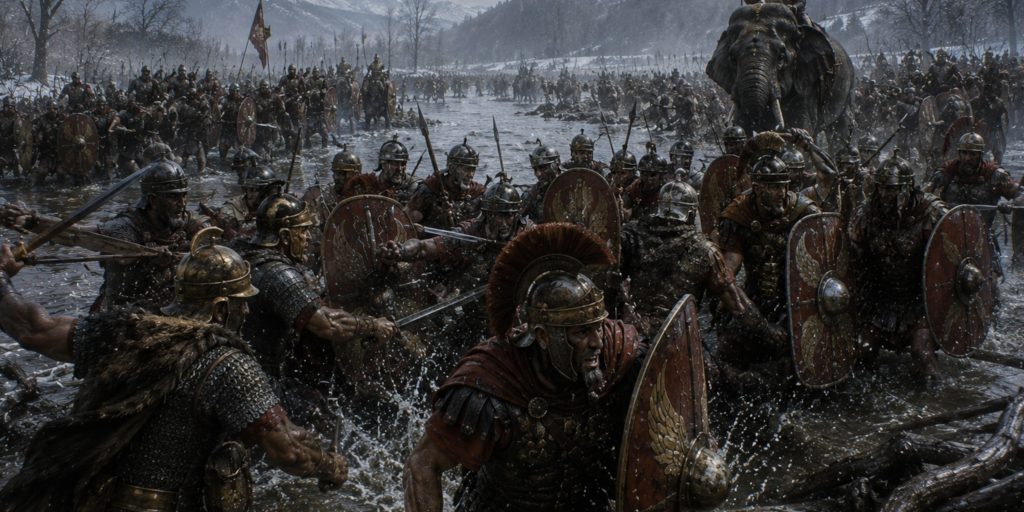
The Roman infantry pushed strongly in the centre.
Their heavy formations initially performed well, driving into Hannibal’s line. Roman legionaries were still among the finest close-combat troops in the Mediterranean.
However, the battle was developing exactly as Hannibal planned.
Cavalry Battle: Hannibal Gains The Flanks
Carthage had a major advantage in cavalry.
Numidian and heavy cavalry forces defeated the Roman horsemen, leaving the Roman infantry exposed.
This allowed Hannibal’s cavalry to attack from the sides.
Mago’s Ambush
The decisive moment came when Mago Barca emerged with around 2,000 hidden troops from concealed positions.
They attacked the Roman rear.
The Romans were now trapped:
- Infantry pressure from the front
- Cavalry attacks from the sides
- Mago attacking from behind
Hannibal had effectively surrounded a larger Roman force.
Roman Breakthrough And Retreat
Not all Roman troops collapsed.
Around 10,000 infantry reportedly broke through the Carthaginian centre and escaped towards Placentia.
The rest of the army suffered heavy losses from combat, exhaustion and exposure.
Casualties And Outcome
| Side | Estimated Losses |
| Rome | Possibly 20,000 or more killed, captured or scattered |
| Carthage | Significantly lower, though exact numbers unknown |
The victory gave Hannibal control of the initiative in Italy.
It also encouraged more Gallic tribes to join his campaign, strengthening an army that Rome hoped would collapse after crossing the Alps.
Archaeology And The Battlefield Today
Unlike some ancient battles, the exact battlefield of the Trebia remains debated.
The fighting occurred near the Trebia River in modern Emilia-Romagna, close to Piacenza in northern Italy. However, changes in river courses, agriculture and settlement patterns make identifying precise positions difficult.
Archaeological challenges include:
- Limited confirmed battlefield artefacts
- Uncertain ancient landscape reconstruction
- Difficulty separating battle remains from centuries of later activity
Finds from the broader region help historians understand the military world of the period, including:
- Celtic La Tène weapons
- Roman Republican military equipment
- Iberian-style sword influences
- Carthaginian-era material culture
The lack of a neat archaeological footprint is frustrating, although ancient armies rarely considered the needs of future historians before scattering evidence everywhere.
Contemporary Ancient Sources And Quotes
Polybius
The Greek historian Polybius provides the most valuable surviving account of the battle.
On Hannibal’s planning, Polybius emphasised his ability to use conditions and terrain:
“Hannibal had taken every precaution that could secure success.”
Polybius admired Hannibal’s tactical ability, although he wrote with access to Roman perspectives.
Livy
The Roman historian Livy later described the disaster as a result of Roman overconfidence and Hannibal’s deception.
His writings present Hannibal as both brilliant and dangerous, a recurring Roman theme. They feared him, but they also could not avoid respecting him.
Military Analysis: Why Hannibal Won
Hannibal’s Strengths
- Forced Rome to fight on his terms
- Used weather as a weapon
- Hid reserves effectively
- Maximised cavalry superiority
- Predicted enemy behaviour accurately
Roman Mistakes
- Allowed themselves to be provoked
- Entered battle hungry and cold
- Failed to properly scout terrain
- Underestimated Hannibal’s use of deception
The Trebia was not won by a single clever trick. It was a chain of small advantages created before the first sword was drawn.
Legacy Of The Battle Of The Trebia
The Battle of the Trebia was Hannibal’s first major victory on Italian soil and prepared the way for even greater Roman disasters at Lake Trasimene and Cannae.
For Hannibal, it confirmed his reputation as one of history’s greatest battlefield commanders.
For Rome, it was painful but educational. The Republic adapted, replaced armies, changed commanders and continued fighting. That resilience became Rome’s greatest weapon.
The Trebia remains a fascinating clash because it shows two different approaches to warfare. Rome trusted discipline and endurance. Hannibal trusted imagination, timing and human weakness.
On that freezing morning in 218 BCE, imagination won.