A Sword That Feels Older Than the Story
Some television swords are there to look impressive. Albion feels like it has opinions.
From its first appearance in Robin of Sherwood, it carries a strange weight. Not just visually, but narratively. It does not behave like a tool. It behaves like something that has been waiting. Patiently. Slightly suspicious of whoever picks it up.
The show never treats it lightly, and that tone seeps into everything around it.
What Albion Is Supposed to Be
Albion is presented as a sacred blade tied to the will of Herne the Hunter and the deeper, older spirit of Britain itself.
It is not inherited in the usual sense. It is found, accepted, and sometimes rejected.
The sword passes between:
- Robin of Loxley
- Robert of Huntingdon
Each time, it feels less like a handover and more like a test.
If you are expecting a loyal companion, Albion is not that. It chooses. And it can un-choose.
Design and Physical Characteristics
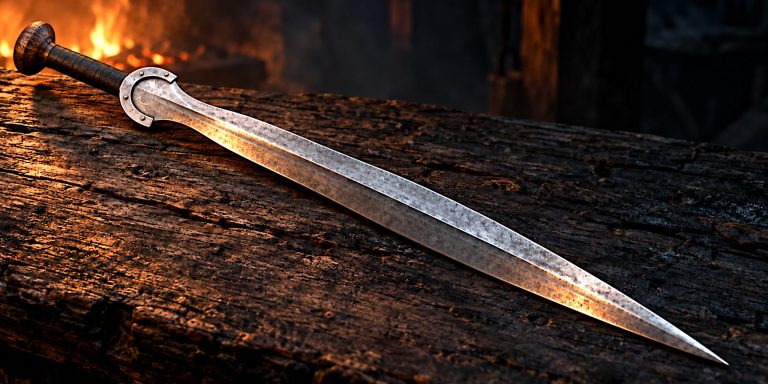
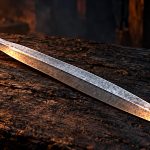
Albion looks like it has been through something. Possibly several centuries of something.
Key features:
- Broad, double-edged blade with a visibly uneven finish
- Fuller that appears irregular rather than precisely cut
- Minimalist crossguard, slightly asymmetrical
- Grip that prioritises function over decoration
- A general sense that perfection was never the goal
It feels closer to an artefact dug up from the ground than a weapon presented in a royal court.
Historical Influences
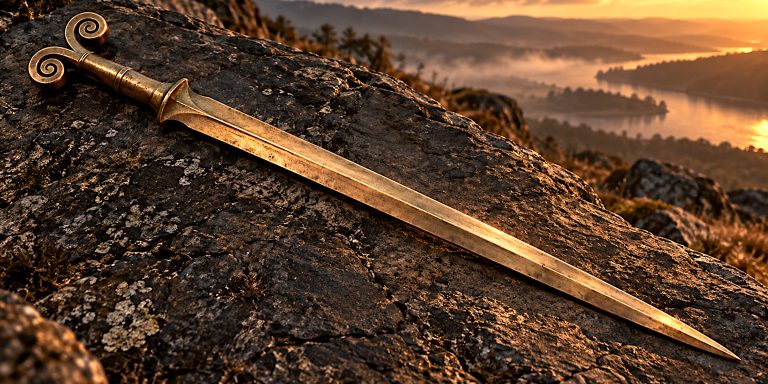
There is no clean historical template for Albion, but you can see echoes of early medieval blades.
- Migration-era swords with broad cutting profiles
- Early Viking forms with simple hilts
- Pre-standardised European designs before later medieval refinement
The interesting part is where it breaks away. The asymmetry and roughness are pushed further than history would usually allow. That is deliberate. It moves the sword out of history and into myth.
The Seven Swords of Wayland
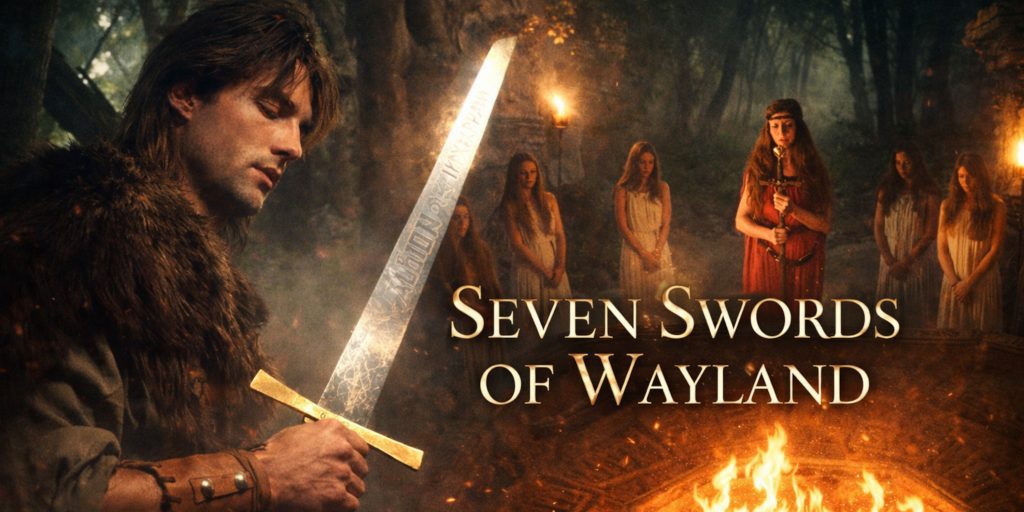
The series hints at a wider mythology beyond the single blade. The idea of the Seven Swords of Wayland is not always spelled out neatly, but it lingers in the background like an unfinished story.
The concept suggests:
- Albion is one of several ancient blades tied to Britain’s fate
- Each sword may represent a different aspect of power or guardianship
- The blades are connected to older forces, not organised religion
It adds a layer of scale. Suddenly Albion is not unique. It is part of a network of relics that feel almost geological, as if they belong to the land itself.
There is something slightly unsettling about that. One powerful sword is manageable. Seven implies a system. And systems tend to come with rules that are not always explained.
Pagan Folk Magic and the World of Herne
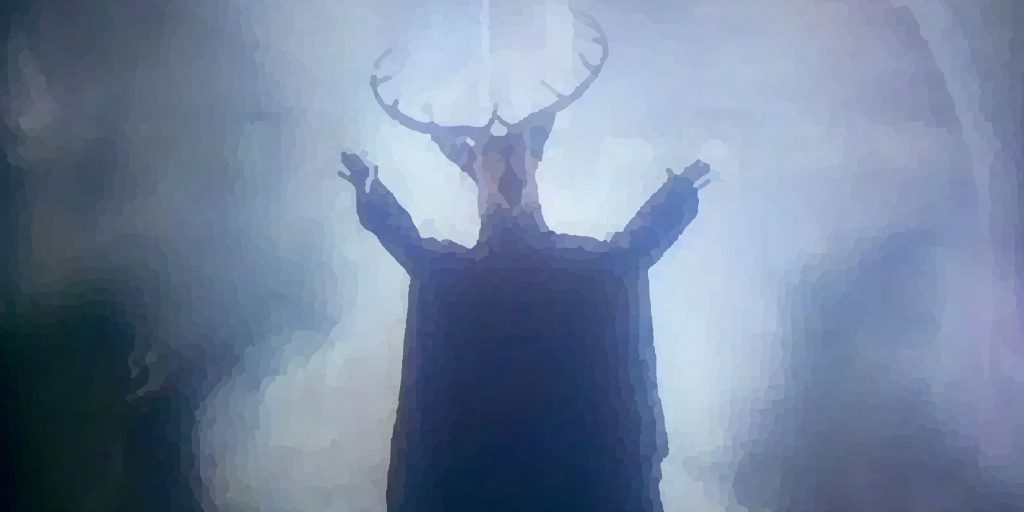
Albion only really makes sense when placed within the show’s pagan framework.
Herne the Hunter is not treated as metaphor. He is present, active, and very clearly not interested in modern ideas of fairness.
The magic surrounding Albion reflects older folk traditions:
- Power drawn from the land rather than institutions
- Rituals tied to forests, seasons, and sacrifice
- A blurred line between guidance and manipulation
This is not tidy fantasy magic. It feels closer to folklore where outcomes are uncertain and often come at a cost.
At times, Albion acts like a conduit for this world. It connects Robin to something larger, but that connection is not always comfortable.
Albion in the Story
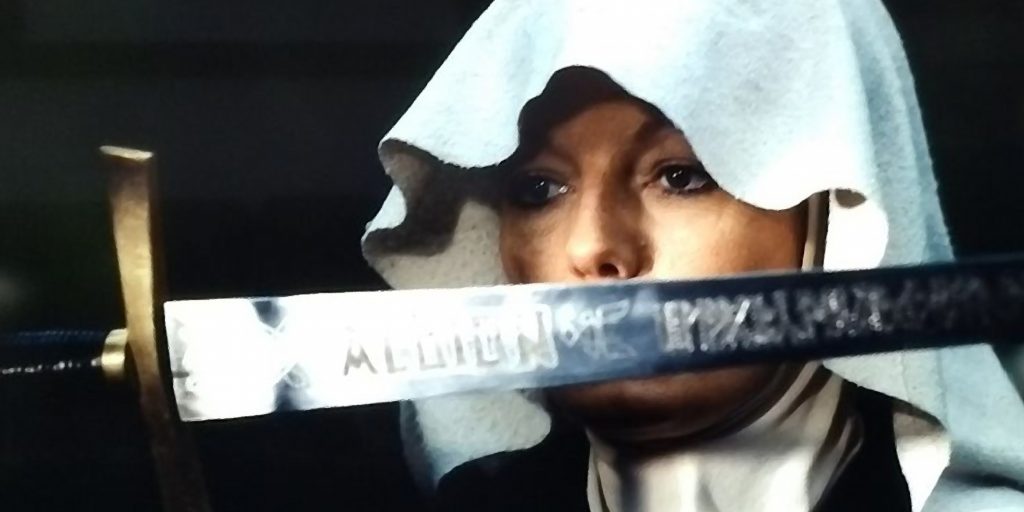
The sword shapes the series more than any single character.
It influences:
- Who becomes Robin
- How authority is defined
- The tone of key moments, especially those involving visions or ritual
There are scenes where drawing Albion feels like stepping into something irreversible. The show understands that weight and leans into it.
You rarely get the sense that Robin is fully in control when the sword is involved. That tension is part of its appeal.
Strengths and Weaknesses as a Weapon
If you strip away the mysticism and just look at the blade itself, Albion is interesting but not perfect.
Strengths:
- Broad edge suited for powerful cuts
- Solid construction in theory
- Intimidating presence in close combat
Weaknesses:
- Irregular geometry may affect handling
- Balance is likely less refined than later medieval swords
- Limited thrusting efficiency
It feels like a weapon that would favour force over finesse.
Comparison with Other Fictional Swords
Albion sits slightly apart from the usual lineup.
Excalibur tends to symbolise divine right in a polished, almost ceremonial way. Albion feels older and less polite.
Andúril represents restoration and clarity. Albion represents uncertainty and testing.
Most modern screen swords aim for symmetry and visual perfection. Albion looks like it was never interested in either.
Legacy and Cultural Impact
Robin of Sherwood built a following that still feels quietly devoted, and Albion is central to that.
Its legacy shows up in:
- Fantasy designs that embrace age and imperfection
- A stronger link between weapons and landscape or myth
- Continued interest from collectors who want something that feels different
It never became a mass-market icon, but that almost works in its favour. It feels like something you discover rather than something you are sold.
Collector Interest and Replicas
Albion replicas exist, though you have to look a bit harder than usual.
Typical market details:
- Often produced in limited runs or by independent makers
- Prices usually between £200 and £800
- Noticeable variation due to the original’s uneven design
Collectors who understand the sword tend to prefer versions that keep its rough character intact. A perfectly polished Albion would feel slightly wrong.
Takeaway
Albion does not try to be likeable. It is not elegant, not especially refined, and not entirely trustworthy.
That is exactly why it works.
It feels tied to something older than the story, older than the characters, maybe older than the idea of Robin Hood itself. A sword that does not just serve the hero, but quietly judges them.
And if you watch closely, you start to wonder whether anyone in the series ever truly owns it at all.