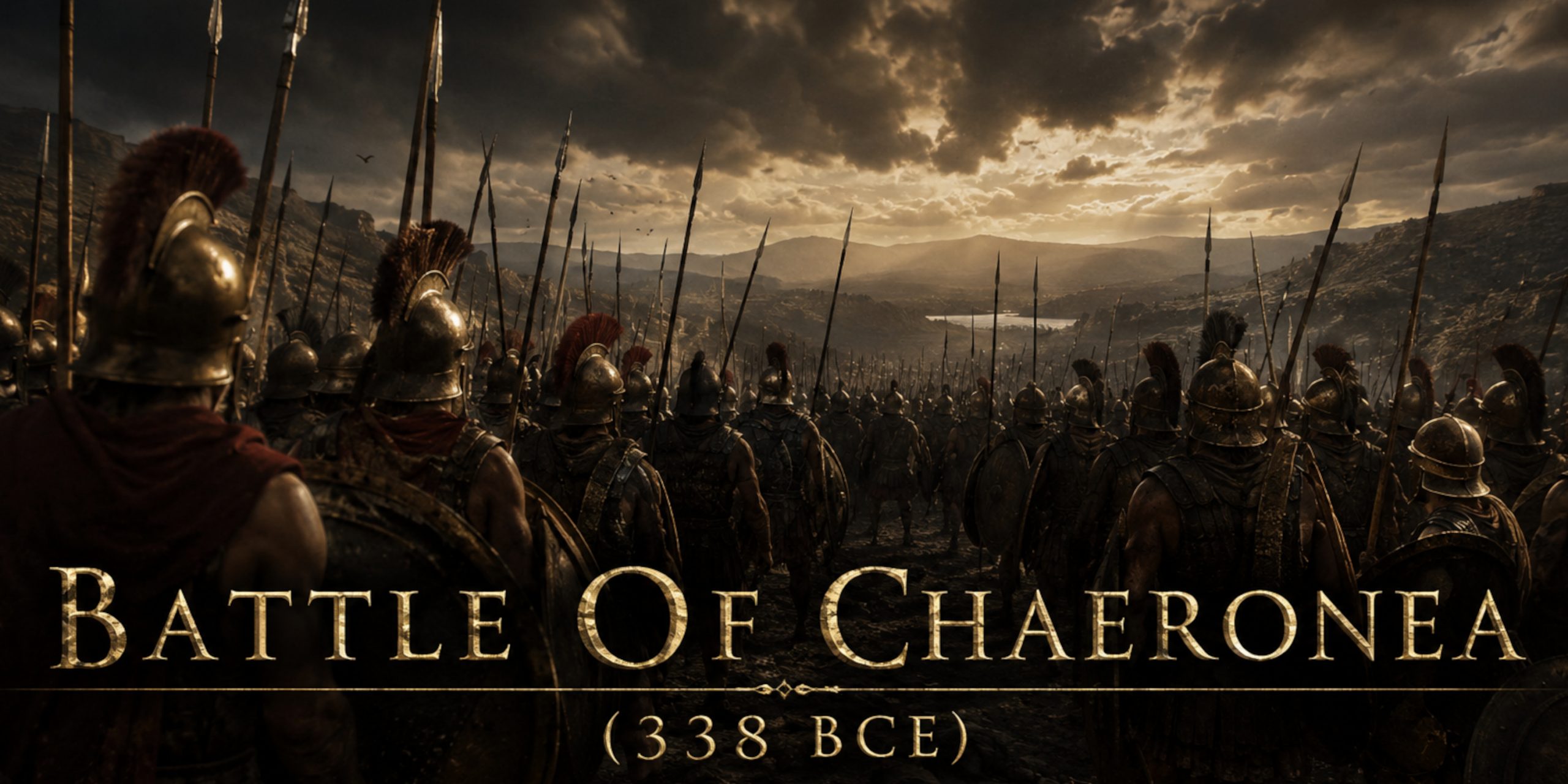
The Battle of Chaeronea in 338 BCE was one of the defining military moments of the ancient world. Fought between the rising kingdom of Macedon under Philip II and an alliance of Greek city-states led by Athens and Thebes, the battle marked the end of the classical Greek era of independent city politics and the beginning of Macedonian dominance.
It was also the first great appearance of a young Alexander, later known as Alexander the Great, who commanded part of the Macedonian army while still a teenager. Not many eighteen-year-olds get trusted with leading elite cavalry into one of history’s decisive battles. Most are still trying to organise their own rooms.
Chaeronea was not simply a clash of armies. It was a collision between two military systems. On one side stood the proud tradition of Greek hoplite warfare. On the other stood Philip’s reformed Macedonian army, a professional force built around coordination, flexibility, and devastating battlefield timing.
Background To The Battle
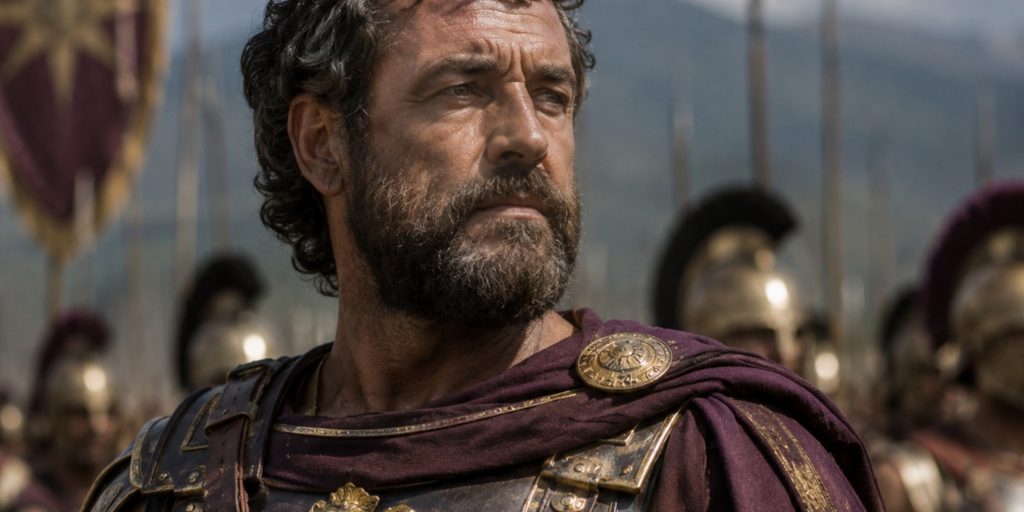
During the 4th century BCE, Greece was weakened by decades of conflict. The Peloponnesian War, Spartan dominance, Theban expansion, and constant rivalry between city-states left the region politically divided.
Philip II of Macedon saw opportunity. After becoming king in 359 BCE, he transformed Macedon from a vulnerable northern kingdom into the strongest military power in Greece.
His reforms included:
- A professional standing army
- The introduction of the Macedonian phalanx with the long sarissa pike
- Better coordination between infantry and cavalry
- Siege technology improvements
- Stronger logistical organisation
Athens and Thebes eventually recognised the danger. Encouraged by the Athenian statesman Demosthenes, they formed an alliance to stop Philip’s expansion south.
The confrontation came near Chaeronea in Boeotia.
Forces At The Battle Of Chaeronea
Ancient numbers vary, but modern historians generally estimate both armies were relatively similar in size.
| Army | Estimated Strength | Main Units | Commander |
|---|---|---|---|
| Macedonian Kingdom | Around 30,000 infantry, 2,000 cavalry | Macedonian phalanx, Companion cavalry, light troops | Philip II |
| Greek Alliance | Around 35,000 infantry, limited cavalry | Athenian hoplites, Theban hoplites, Sacred Band of Thebes | Chares, Lysicles, Theagenes |
The numbers alone do not explain the result. The Greek army was experienced and brave, but Philip had created something different: an army where each section supported the next.
The Macedonians fought like a machine. The Greek coalition fought like a collection of excellent individual parts.
Leaders And Troop Composition
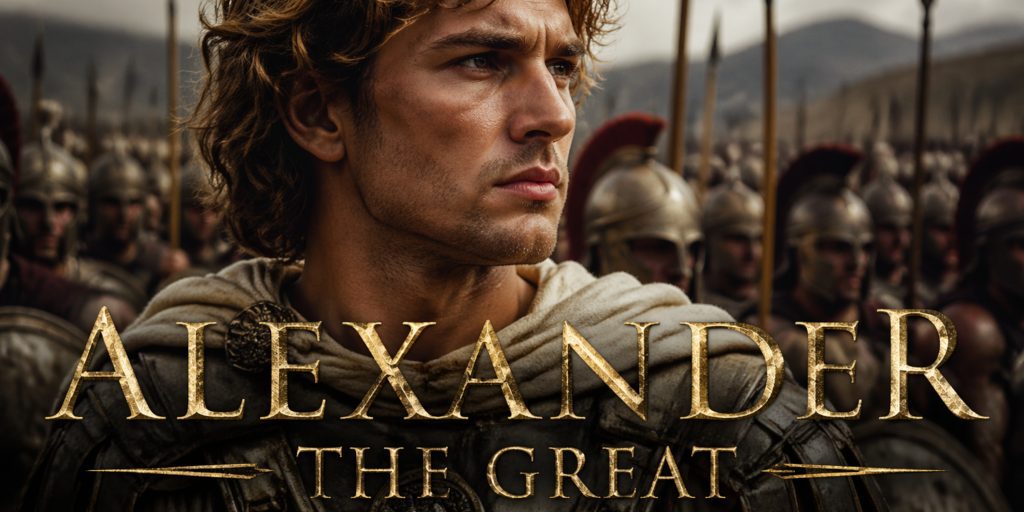
Macedonian Army
| Leader | Role | Forces Commanded |
| Philip II of Macedon | King and overall commander | Main army, right wing |
| Alexander | Macedonian prince | Left wing assault force, likely including elite cavalry |
| Experienced Macedonian generals | Senior officers | Phalanx formations and support troops |
Main units:
- Macedonian phalangites armed with sarissas
- Hypaspists acting as flexible elite infantry
- Companion cavalry used for decisive charges
- Thessalian cavalry
- Archers, javelin troops, and skirmishers
Greek Allied Army
| Leader | City-State | Role |
| Chares | Athens | Senior Athenian commander |
| Lysicles | Athens | Athenian general |
| Theagenes | Thebes | Commander associated with Theban forces |
Main units:
- Athenian citizen hoplites
- Theban heavy infantry
- Sacred Band of Thebes
- Allied Greek contingents
The Sacred Band deserves particular attention. This elite Theban formation had a fearsome reputation and had helped break Spartan dominance earlier in the century. At Chaeronea, they faced an opponent who had learned from Theban tactics and then refined them.
Arms And Armour At Chaeronea
The battle demonstrated the changing nature of Greek warfare. The traditional hoplite remained dangerous, but Macedonian combined arms tactics were becoming the future.
Macedonian Equipment
| Weapon / Armour | Details |
| Sarissa | Long Macedonian pike, often around 4 to 6 metres in length |
| Xiphos sword | Short double-edged sword used when formations broke |
| Kopis sword | Forward-curving cutting sword, particularly effective from horseback |
| Javelins | Used by lighter infantry and cavalry |
| Linothorax armour | Layered linen armour still common among Greek warriors |
| Bronze cuirass | Used by wealthier soldiers and officers |
| Phrygian and Boeotian helmets | Common helmet styles among Macedonian troops |
| Aspis-style shields | Smaller shields adapted for Macedonian formations |
The sarissa changed infantry warfare. A traditional hoplite approaching a Macedonian phalanx first had to deal with several rows of spear points before getting close enough to use his own weapon.
Greek Equipment
| Weapon / Armour | Details |
| Doru spear | Traditional Greek thrusting spear |
| Xiphos sword | Standard Greek secondary weapon |
| Kopis sword | Used by some Greek cavalry and infantry |
| Large hoplite shield (aspis) | Heavy round shield central to hoplite tactics |
| Bronze helmets | Corinthian-inspired, Chalcidian, and other regional designs |
| Bronze greaves | Protection for the lower legs |
| Muscle cuirass | Used by wealthier warriors |
The Greek hoplite was far from outdated. A disciplined hoplite line was still terrifying. The problem was that Philip had created an army designed specifically to control and exploit such formations.
The Battle Timeline
Before The Battle
359 to 339 BCE
Philip II strengthens Macedon, reforms the army, and expands influence across northern Greece.
339 BCE
Tensions increase between Macedon and several Greek city-states.
338 BCE
Athens and Thebes form an alliance against Philip.
The Battle

Opening Phase
The armies meet near Chaeronea. The Greeks position themselves defensively, with Athenians on one side and Thebans on the other.
Philip’s Controlled Withdrawal
Philip’s wing gradually pulls back, drawing the Athenians forward. Whether this was a planned deception or controlled battlefield adaptation remains debated, but the effect was devastating.
Alexander’s Attack
Alexander leads a powerful assault against the Greek line, targeting the Theban position.
Collapse Of The Greek Army
The Macedonian breakthrough causes the allied army to fragment. The Sacred Band of Thebes is surrounded and destroyed.
The Sacred Band’s Last Stand
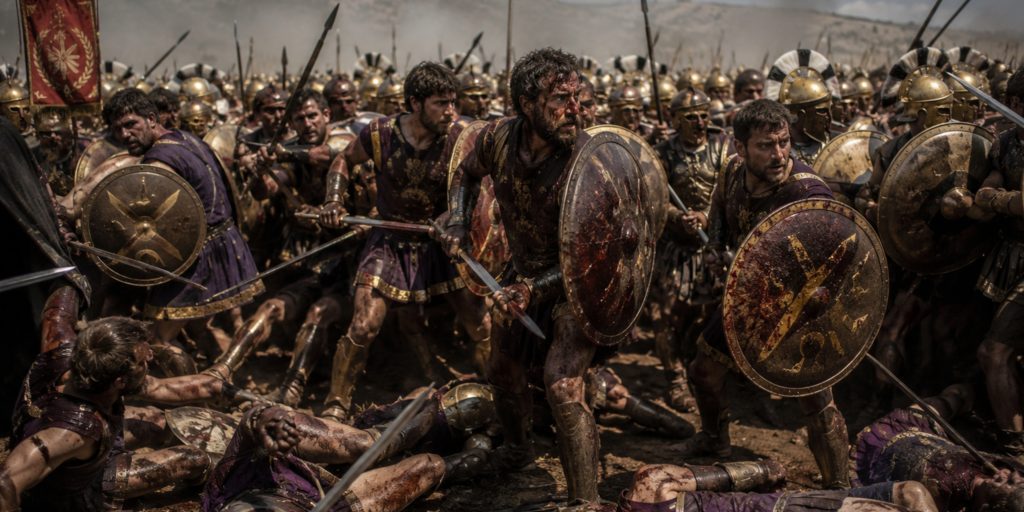
One of the most famous episodes of Chaeronea was the destruction of the Sacred Band of Thebes.
According to later tradition, Philip viewed their bodies after the battle and admired their courage. Plutarch records him reacting emotionally to those who mocked them:
“Perish any man who suspects that these men either did or suffered anything unseemly.”
The exact wording comes from a later writer rather than an eyewitness account, but it reflects the reputation the Sacred Band carried in antiquity.
Archaeology Of Chaeronea
The battlefield remains one of the more important archaeological landscapes connected with classical Greek warfare.
Key discoveries include:
- The Lion of Chaeronea monument, traditionally linked with the burial place of the Sacred Band
- A mass burial containing remains of Theban warriors
- Evidence of battle injuries consistent with close combat
- Weapon fragments and military material from the wider region
The Lion monument is especially powerful. Unlike many ancient victory monuments celebrating the winners, this one remembers defeated soldiers who refused to break.
Ancient battlefields often require caution because later tradition can become mixed with reality, but Chaeronea provides rare physical evidence alongside literary accounts.
Contemporary And Ancient Quotes
Demosthenes, who strongly opposed Macedonian expansion, warned Athens about Philip’s growing power:
“The man is always doing something.”
It was meant as criticism, but unintentionally captures Philip’s greatest strength. He was relentless.
The historian Diodorus Siculus later described the significance of the battle:
“The finest of the Greeks were defeated.”
Ancient accounts must always be read carefully, as writers had their own political views. Greek authors often struggled with the uncomfortable fact that Macedon, a kingdom many had dismissed, had mastered Greek warfare better than the traditional powers.
Aftermath And Consequences
The consequences of Chaeronea were enormous.
Philip II:
- Became the dominant power in Greece
- Created the League of Corinth
- Prepared a campaign against Persia
- Established the military foundation Alexander would inherit
Athens survived and was treated relatively leniently. Thebes suffered harsher consequences due to its stronger resistance.
Philip never completed his planned invasion of Persia. He was assassinated in 336 BCE, leaving the campaign to Alexander.
Within a few years, the army tested at Chaeronea would defeat the Persian Empire.
Why Chaeronea Matters
The Battle of Chaeronea was not the end of Greek military excellence. It was proof that warfare had changed.
The age of independent hoplite armies was fading. The future belonged to professional forces, combined tactics, and commanders who could coordinate infantry, cavalry, and specialists together.
Philip II rarely receives the same attention as Alexander, but Chaeronea shows why he deserves recognition as one of antiquity’s greatest military innovators. Alexander inherited an extraordinary weapon, but Philip was the man who forged it.
The battlefield at Chaeronea was where Greece discovered that Macedon was no longer watching history from the edge of the map. It was about to write the next chapter.