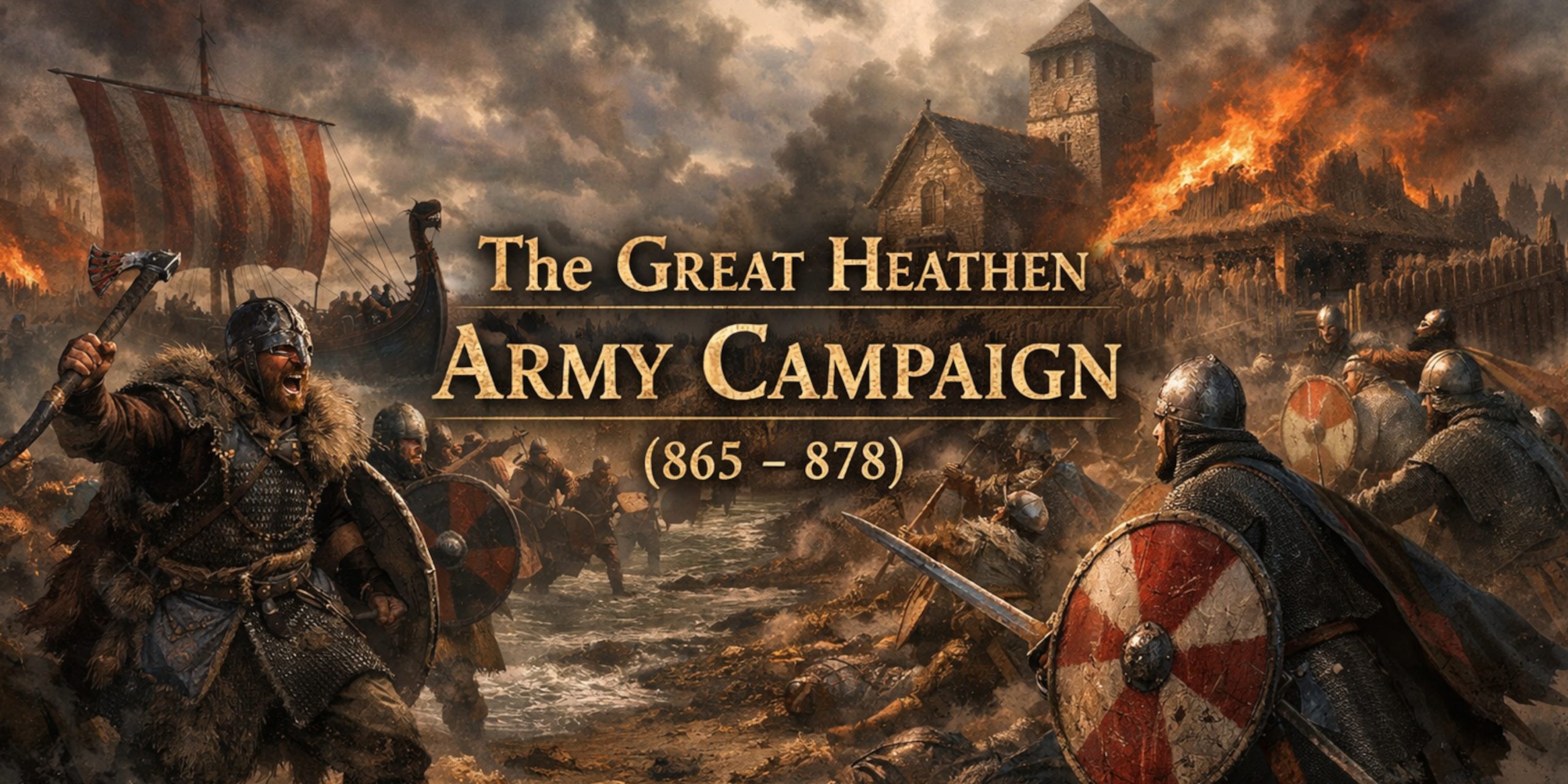
When the Great Heathen Army landed in England in 865, it was unlike the Viking raids that had come before. Earlier Viking attacks had usually been sharp, brutal affairs. A monastery was plundered, a town burned, and the raiders disappeared over the horizon before anyone could gather their wits, let alone an army.
The Great Heathen Army came for something else entirely.
This was not a summer raid carried out by a few ambitious ship captains. It was a coalition of warbands, probably drawn from Denmark, Norway, the Irish Sea, Frisia and the Scandinavian settlements around Dublin. They arrived with horses, siege skills, experienced leaders and, perhaps most importantly, a plan.
For thirteen years they marched across England, overthrowing kingdoms, killing kings and forcing the Anglo-Saxons to pay for the privilege of not being immediately attacked again. By the end of the campaign Northumbria, East Anglia and much of Mercia had fallen. Only Wessex remained standing.
That Wessex survived at all says as much about Alfred the Great as it does about the Vikings.
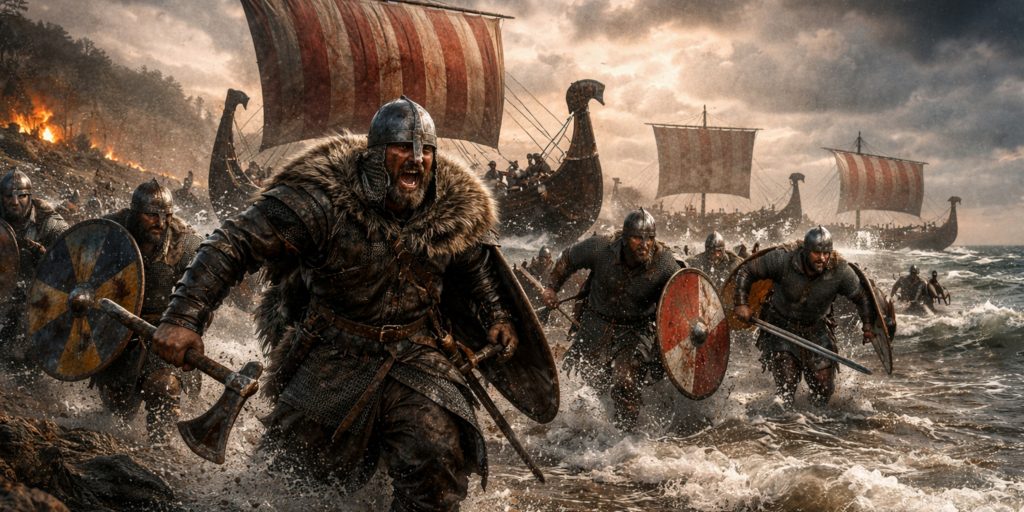
Who Were the Great Heathen Army?
The term comes from the Anglo-Saxon Chronicle, which describes the invaders as the “micel hæþen here”, the great heathen army.
Modern historians debate the size of the force. Medieval writers often imagined a vast flood of warriors sweeping across England. The reality was probably smaller but no less dangerous. Most estimates range from 1,000 to 4,000 fighting men at any one time, reinforced periodically by fresh arrivals from Scandinavia.
That may not sound enormous, yet in ninth-century England it was enough to overwhelm individual kingdoms. Anglo-Saxon rulers rarely kept large standing armies. They relied on local levies which could take time to assemble and usually preferred not to campaign in winter. The Vikings, by contrast, marched and fought year-round.
They were not one united nation. They were a coalition held together by ambition, profit and several powerful war leaders.
Leaders of the Great Heathen Army
| Leader | Role in the Campaign | Fate |
|---|---|---|
| Ivar the Boneless | Probably the principal strategist in the early years. Led the invasions of Northumbria and East Anglia. | Likely died in 873, possibly connected with Repton. |
| Halfdan Ragnarsson | Led operations in Northumbria, Mercia and Wessex. Later settled Northumbria. | Killed in Ireland in 877. |
| Ubba | Associated with the East Anglian campaign and later operations in Devon. | Killed at the Battle of Cynwit in 878. |
| Bagsecg | Led the Great Summer Army that reinforced the Vikings in 871. | Killed at Ashdown. |
| Guthrum | Later commander of the southern army. Fought Alfred repeatedly. | Defeated at Edington and baptised in 878. |
| Oscetel and Anwend | Senior Viking commanders under Guthrum. | Vanish from the record after the late 870s. |
The famous story that the army was led by the sons of Ragnar Lothbrok may contain a grain of truth, although it also has the distinct smell of later saga writers making history more dramatic. Medieval chroniclers loved a revenge story. The claim that Ivar, Halfdan and Ubba invaded England to avenge Ragnar’s death at the hands of King Ælla of Northumbria is impossible to prove, though it certainly made for better campfire conversation.
Forces
Great Heathen Army
- Estimated strength: 1,000 to 4,000 warriors at different stages
- Reinforced in 871 by the Great Summer Army
- Predominantly Danish, with Norwegians, Swedes, Frisians and Hiberno-Norse warriors
- Travelled with horses after arriving in East Anglia
- Included veteran fighters who had campaigned in Francia and Ireland
Anglo-Saxon Kingdoms
| Kingdom | Principal Leaders | Estimated Strength |
| Northumbria | Ælla, Osberht | Several thousand local levies |
| Mercia | Burgred, later Ceolwulf | Several thousand |
| East Anglia | Edmund | Likely a few thousand |
| Wessex | Æthelred, Alfred | Largest and most effective English army |
The Anglo-Saxon kingdoms rarely fought together for long. Mercia distrusted Wessex. Northumbria spent much of its time fighting itself. The Vikings must have looked at this with the same expression one reserves for an unlocked front door.
Arms and Armour
Viking Weapons
The Great Heathen Army used a mixture of traditional Scandinavian weapons and equipment acquired abroad.
- Spears were the most common weapon
- Axes ranged from light hand axes to heavier Danish axes
- Round wooden shields with iron bosses
- Seaxes, used both as knives and fighting weapons
- Bows for skirmishing and hunting
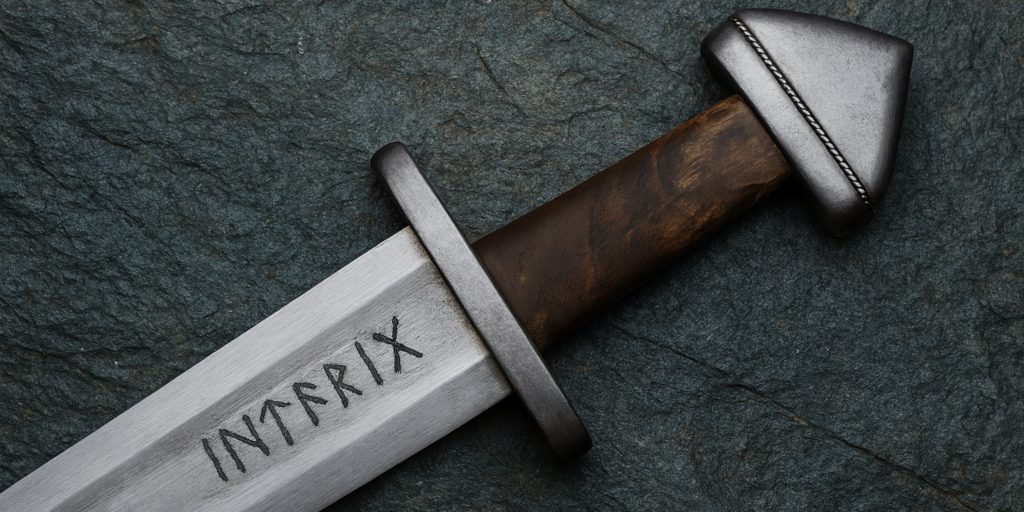
Viking Sword Types
| Sword Type | Description |
| Petersen Type H | Broad, heavy sword common in the mid ninth century |
| Petersen Type K | Elegant sword with decorated hilt, often used by wealthier warriors |
| Carolingian sword | High-quality Frankish blade imported or captured from the continent |
| Pattern-welded Viking sword | Older style blade with distinctive twisted metal pattern |
Many of the finest Viking swords were Frankish in origin. The Franks tried repeatedly to ban their export to Scandinavia. This was sensible. Selling expensive swords to Vikings had obvious drawbacks, rather like selling ladders to burglars.
Anglo-Saxon Weapons
- Spears and shield walls formed the backbone of Anglo-Saxon warfare
- Wealthier thegns carried swords
- Long seaxes remained common
- Axes and throwing spears were widely used
Anglo-Saxon Sword Types
| Sword Type | Description |
| Anglo-Saxon ring sword | Elite weapon with a decorative ring set into the pommel |
| Pattern-welded sword | Traditional early medieval sword used by nobles |
| Late ninth-century straight crossguard sword | Simpler but practical sword becoming more common |
Armour
Most ordinary warriors fought without heavy armour.
- Mail shirts were rare and expensive
- Conical helmets were worn by elite fighters
- Leather and padded clothing were more common
- Shields were usually more important than armour
The Campaign Begins, 865
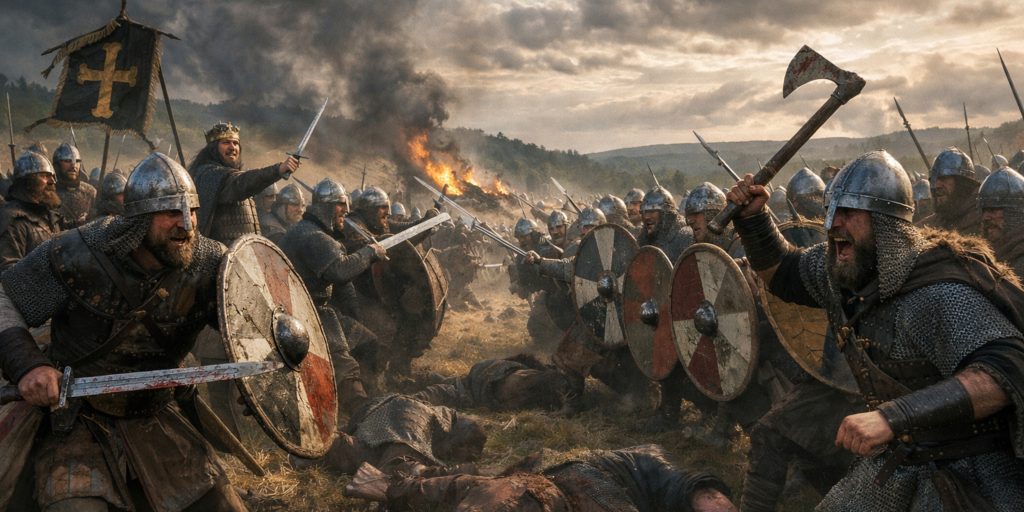
The Great Heathen Army first appeared in East Anglia in late 865.
The East Anglians wisely chose not to fight immediately. Instead, they supplied the Vikings with horses and provisions. The Vikings spent the winter there, gathering strength.
This decision often looks weak in hindsight, but it was probably sensible. A single kingdom facing the army alone had little chance. East Anglia bought time. Unfortunately, it also gave the Vikings exactly what they needed.
The Conquest of Northumbria, 866 to 867
In 866 the army marched north into Northumbria.
At precisely the wrong moment, Northumbria was in the middle of a civil war between King Ælla and King Osberht. The Vikings seized York in November 866 with remarkable speed.
The rival Northumbrian kings briefly put aside their quarrel and attempted to retake the city in March 867.
They failed.
Both kings were killed outside York, and Northumbria effectively collapsed. The Vikings installed a puppet ruler and gained control of one of the richest kingdoms in England.
“York was attacked, and much booty was taken from it.”
Fragmentary Annals of Ireland
Mercia and the Siege of Nottingham, 867 to 868
After Northumbria, the army moved into Mercia and captured Nottingham.
King Burgred of Mercia appealed to Wessex for help. Æthelred and his younger brother Alfred arrived with a combined army and besieged Nottingham.
The Vikings refused to leave their fortifications. The English refused to storm them.
Eventually, Mercia paid the Vikings to go away.
This would become a familiar pattern. The Vikings demanded money, the English paid it, and everyone pretended this counted as peace.
The Destruction of East Anglia, 869 to 870
The Great Heathen Army returned to East Anglia in 869.
King Edmund finally chose to resist. He was defeated and killed.
Later medieval writers turned Edmund into a martyr and saint. According to one account, he was tied to a tree and shot with arrows before being beheaded.
“They struck him with spears until he was covered with them like a hedgehog’s bristles.”
Abbo of Fleury, writing on the death of Edmund
The death of Edmund ended the independent kingdom of East Anglia.
The War with Wessex, 870 to 871
By 870 only Wessex remained unconquered.
The Vikings invaded with fresh reinforcements, including the Great Summer Army under Bagsecg.
A series of fierce battles followed:
The most famous was Ashdown in January 871.
According to later accounts, King Æthelred spent so long at prayer before the battle that Alfred had to begin the attack without him. It is one of those stories historians repeat with a raised eyebrow. Even so, the battle ended in a rare English victory and Bagsecg was killed.
“Then Alfred, though only second in command, boldly advanced against the enemy.”
Asser, Life of Alfred
Despite Ashdown, Wessex suffered repeated defeats later in the year. Alfred eventually made peace after becoming king.
Repton and the Division of the Army, 873 to 874
In 873 the Great Heathen Army established winter quarters at Repton in Derbyshire.
This was one of the most important moments in the campaign. Repton became the centre of Viking power in Mercia.
From here the Vikings drove King Burgred into exile and replaced him with Ceolwulf, a ruler whom the Anglo-Saxon Chronicle dismisses rather cruelly as little more than a puppet.
The army then split.
- Halfdan led one force north into Northumbria
- Guthrum, Oscetel and Anwend led another south towards Wessex
This was no longer simply an army on campaign. Part of it had become a settler community.
Alfred and the Final Campaign, 875 to 878
Guthrum’s army launched a series of attacks on Wessex.
They seized Wareham, Exeter and finally Chippenham in January 878. Alfred was forced into hiding in the marshes of Athelney.
For a time it looked as though Wessex would fall.
Then Alfred gathered his forces and met Guthrum at the Battle of Edington.
The battle was a decisive English victory.
After Edington, Guthrum accepted baptism and peace was agreed.
The campaign of the Great Heathen Army was over.
Battle Timeline
| Year | Event |
| 865 | Great Heathen Army lands in East Anglia |
| 866 | March into Northumbria and capture of York |
| 867 | Deaths of Ælla and Osberht, fall of Northumbria |
| 868 | Capture of Nottingham in Mercia |
| 869 | Invasion of East Anglia |
| 870 | Death of King Edmund |
| 871 | Battles in Wessex including Ashdown and Wilton |
| 873 | Winter camp established at Repton |
| 874 | Mercia conquered and army divided |
| 878 | Alfred defeats Guthrum at Edington |
Archaeology
Archaeology has transformed our understanding of the Great Heathen Army.
Repton
Excavations at Repton uncovered:
- A large Viking winter camp
- Weapons and personal objects
- A mass grave containing at least 264 individuals
- Scandinavian-style burial goods
One grave contained a high-status warrior buried with a sword, Thor’s hammer pendant and boar tusk. Some historians have suggested, cautiously, that this could have been an important leader, perhaps even Ivar the Boneless. Others disagree. Archaeologists are usually more careful than saga writers, which is probably why archaeology conferences contain fewer blood feuds.
Torksey
The winter camp at Torksey in Lincolnshire has revealed one of the largest Viking military sites ever found in Britain.
Finds include:
- Silver ingots and hacked-up coins
- Gaming pieces
- Arrowheads and axe heads
- Evidence of metalworking and repair
These discoveries show that the Great Heathen Army was not merely a band of raiders. It was a mobile society with craftsmen, traders and families following behind the warriors.
Legacy of the Great Heathen Army
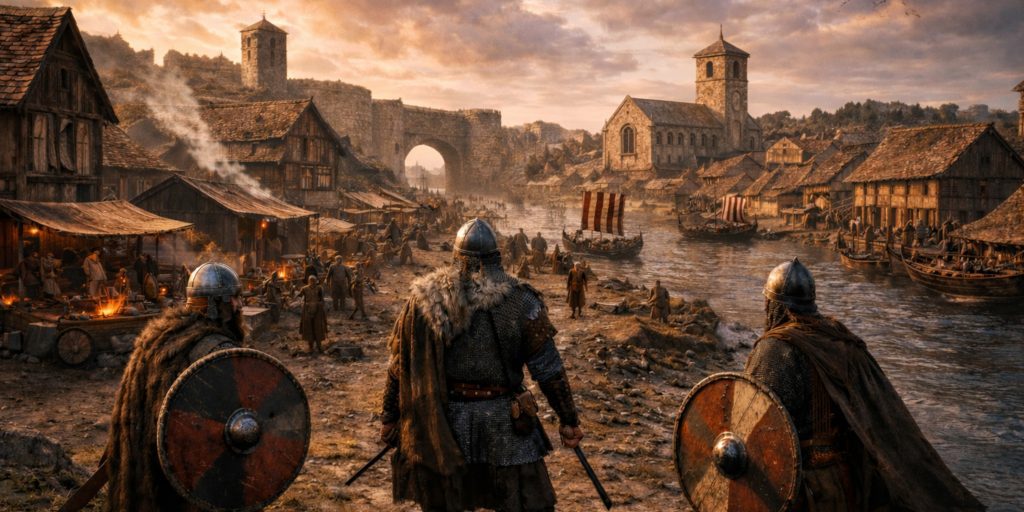
The campaign changed England permanently.
Before 865 England was divided into several Anglo-Saxon kingdoms. After 878 there were effectively two powers: Wessex and the Danelaw.
The Vikings left their mark on:
- Language
- Place names
- Law
- Trade
- Settlement patterns
Cities such as York became major Viking centres. Hundreds of English place names ending in -by, -thorpe and -thwaite still reflect Scandinavian settlement.
Perhaps most importantly, the campaign created the conditions for the eventual unification of England under Alfred and his successors.
Without the Great Heathen Army there might never have been an England in the form we recognise today.
That is an awkward legacy. The invaders who came to conquer England helped create it.
Contemporary Quotes
“A great heathen army came into England.”
Anglo-Saxon Chronicle, entry for 865
“The pagans had possession of the place of slaughter.”
Anglo-Saxon Chronicle, after the battle of York
“Then the Christians made peace with the heathens.”
Asser, Life of Alfred
“The army afterwards shared out the land of the Northumbrians and began to plough and support themselves.”
Anglo-Saxon Chronicle
Takeaway
The Great Heathen Army was a turning point in the history of Britain.
Its leaders were ruthless, opportunistic and often highly capable. They took advantage of divided kingdoms, weak alliances and kings who still seemed to believe that paying Vikings once would somehow prevent them returning.
Yet the campaign also produced one of the great survival stories in English history. Alfred’s resistance prevented the complete conquest of Wessex and eventually laid the foundations for a united kingdom.
The Great Heathen Army nearly destroyed England.
Instead, it helped create it.