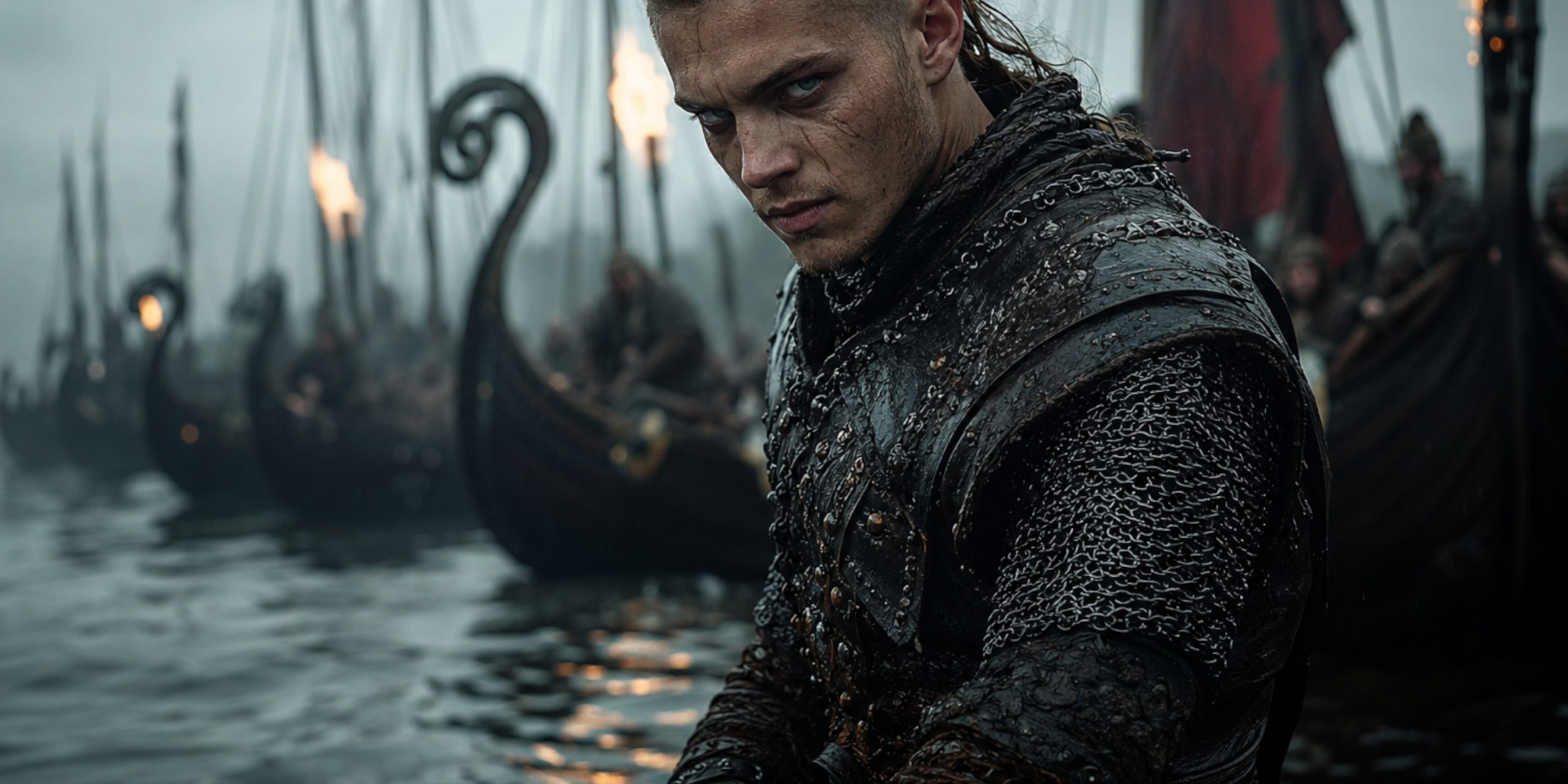
Few figures from the Viking Age occupy the strange space between history and legend quite like Ivar the Boneless. He appears in medieval chronicles as a ruthless conqueror, in Norse sagas as the son of Ragnar Lothbrok, and in modern popular culture as one of the most fascinating Vikings ever to live.
The difficulty is that the real Ivar is buried beneath centuries of storytelling.
As a historian, I have always found Ivar particularly intriguing because he seems to sit at the point where the Viking Age became impossible for Christian Europe to ignore. Earlier raids shocked kingdoms. Ivar helped lead campaigns that changed them.
Whether he was a crippled genius, a feared warlord, or something in between, his impact on Britain and Ireland remains unmistakable.
Who Was Ivar the Boneless?
Ivar the Boneless was a Viking leader active during the ninth century, most famously associated with the Great Heathen Army that invaded Anglo-Saxon England in AD 865.
According to Norse tradition, he was one of the sons of Ragnar Lothbrok and Aslaug. While Ragnar’s historical existence remains debated, Ivar himself is widely accepted as a genuine historical figure because he appears in several independent contemporary and near-contemporary sources.
English chronicles describe Viking leaders who devastated kingdoms across Britain, while Irish records mention a powerful Norse ruler named Ímar, who many historians believe was the same individual.
If this identification is correct, Ivar was not merely a raider. He was one of the architects of a Viking political empire stretching across parts of Britain and Ireland.
The Mystery Behind the Name “Boneless”
No aspect of Ivar’s life generates more discussion than his unusual nickname.
Several theories exist.
Physical Disability
The most famous explanation comes from later Icelandic sagas, which describe Ivar as having weak or malformed legs. Some historians have suggested conditions such as osteogenesis imperfecta, a disorder that affects bone strength.
This theory became particularly popular after television adaptations portrayed him as physically disabled.
The problem is that the earliest historical sources say nothing about such a condition.
Metaphorical Meaning
Some scholars believe “Boneless” may have referred to flexibility, agility, or unusual physical skill.
Nicknames in the Viking world often carried symbolic meanings rather than literal descriptions.
A Reputation for Strategy
Another possibility is that the nickname reflected his preference for cunning over brute force. Medieval writers repeatedly emphasise his intelligence and leadership.
This interpretation is attractive because Ivar’s campaigns reveal remarkable strategic planning.
The truth remains unknown.
Like many Viking mysteries, certainty remains frustratingly out of reach.
The Viking World Into Which Ivar Was Born
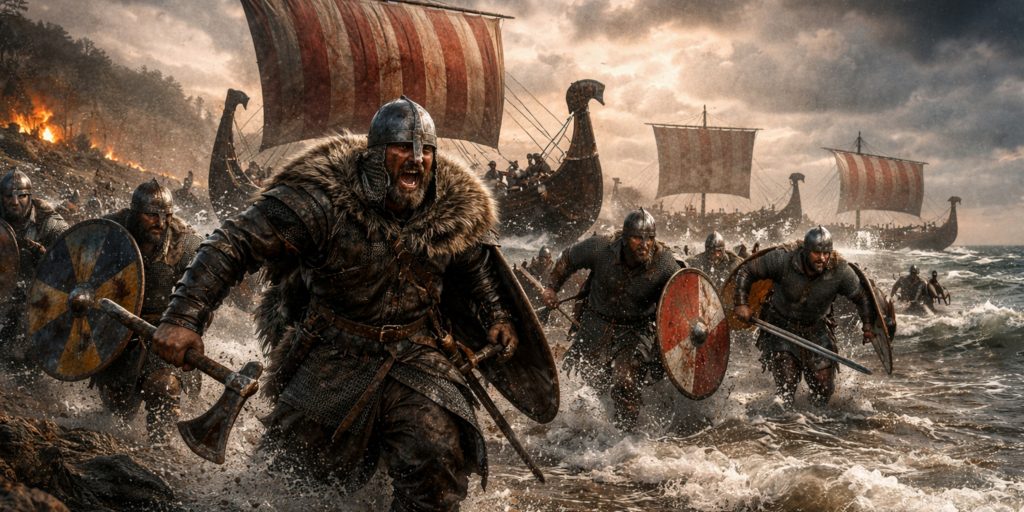
Ivar emerged during a period of dramatic expansion.
By the mid-ninth century, Scandinavian warriors were raiding across Europe. Viking fleets appeared along the coasts of England, Francia, Ireland, and the Baltic.
Most earlier raids were seasonal.
The Great Heathen Army represented something different.
This force arrived not simply to plunder but to conquer territory and establish permanent control.
Ivar appears to have been one of its principal leaders.
The Great Heathen Army
In AD 865 a massive Viking force landed in East Anglia.
The Anglo-Saxon Chronicle refers to this army as a “great heathen army”, a phrase that captures the fear it inspired among Christian kingdoms.
Unlike earlier Viking bands, this force demonstrated organisation, coordination, and long-term objectives.
Over the following years it attacked and defeated several Anglo-Saxon kingdoms.
Among its achievements were:
- Conquest of Northumbria
- Capture of York
- Defeat of Mercian forces
- Destruction of East Anglian resistance
- Expansion of Viking influence throughout England
Ivar appears repeatedly as one of the leading commanders behind these successes.
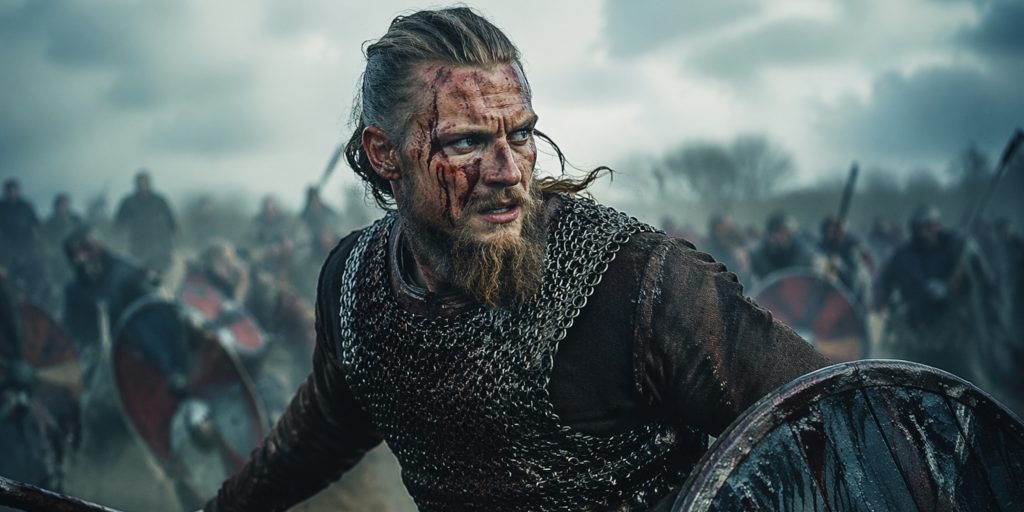
Ivar’s Greatest Battles and Campaigns
The Capture of York (866)
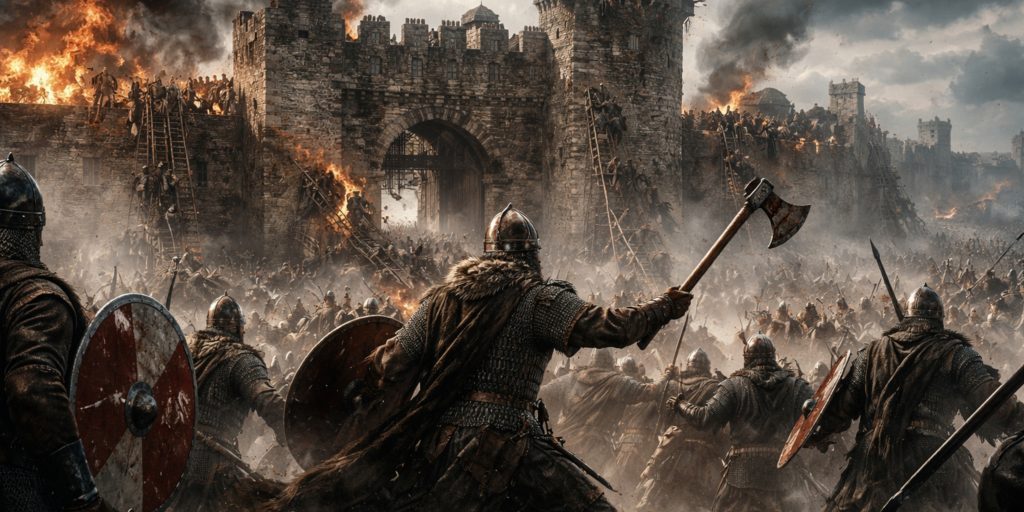
The seizure of York was one of the most significant victories of the Viking Age.
Northumbria was already weakened by internal conflict when Viking forces struck.
The Vikings captured the city and established it as a major centre of power.
When rival Northumbrian kings attempted to retake York, they were defeated and killed.
The victory gave the Vikings a permanent foothold in northern England.
The Defeat of Northumbria
The destruction of Northumbria’s leadership ranks among Ivar’s greatest achievements.
Rather than simply conducting raids, the Vikings dismantled the kingdom’s political structure.
This campaign demonstrated a sophisticated understanding of power and governance.
Campaigns in East Anglia
East Anglia initially bought peace by supplying horses.
The arrangement did not last.
The kingdom eventually fell under Viking domination, extending Norse control across eastern England.
Operations in Ireland
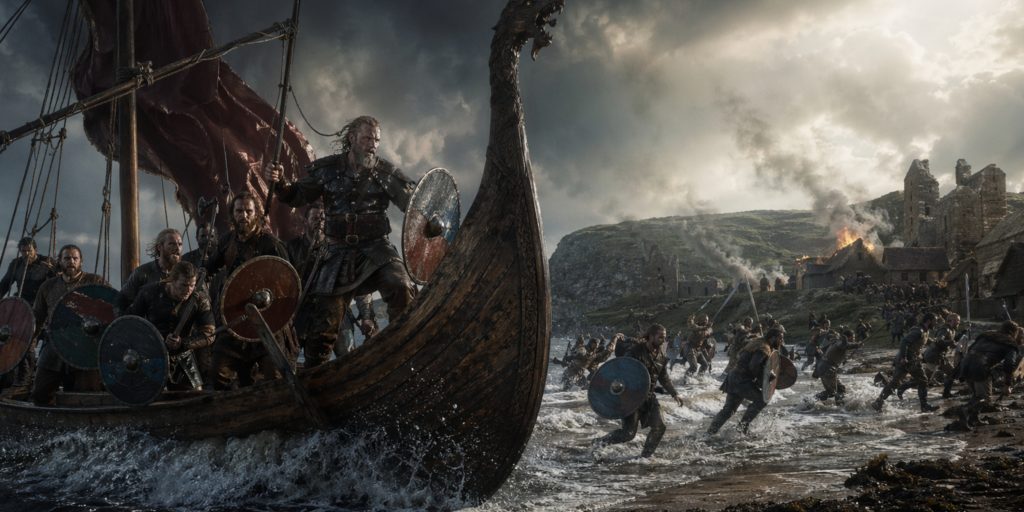
Many historians identify Ivar with Ímar, a ruler recorded in Irish annals.
If correct, he participated in campaigns around Dublin and maintained influence across the Irish Sea.
This would make him one of the most powerful Scandinavian rulers of the ninth century.
Military Acumen and Leadership
What stands out most about Ivar is not physical strength but strategic intelligence.
Many Viking leaders excelled as warriors.
Ivar appears to have excelled as a commander.
His campaigns suggest several strengths:
- Effective coalition building among Viking leaders
- Ability to exploit political divisions among enemies
- Long-term planning beyond seasonal raiding
- Coordination of large military forces
- Adaptability during extended campaigns
As I read the contemporary sources, I often come away with the impression that Ivar understood warfare as politics by other means. He attacked vulnerable kingdoms, exploited rivalries, and transformed military victories into territorial control.
That was far harder than winning a battle.
Arms and Armour
No surviving artefact can be definitively linked to Ivar personally. However, archaeological discoveries allow us to reconstruct the equipment likely used by him and his warriors.
Weapons
Likely Viking weapons included:
- Viking swords of Petersen Types H, K, and X
- Spears, the most common battlefield weapon
- Broad-bladed battle axes
- Seaxes used as sidearms
- Throwing spears and javelins
- Long knives
Among Viking weapons, the spear remained king. Swords attracted attention and status, but spears won battles.
Armour
High-status leaders such as Ivar probably possessed:
- Iron helmets
- Mail shirts
- Round wooden shields
- Heavy woollen cloaks
- Leather belts and equipment harnesses
Mail armour remained expensive and prestigious. A wealthy warlord could afford equipment beyond the reach of ordinary warriors.
Naval Equipment
Ivar’s power depended heavily upon ships.
His fleets likely utilised:
- Longships for warfare
- Cargo vessels for supplies
- River-capable vessels for inland operations
Control of waterways gave Viking armies remarkable mobility.
Death and Burial
The Anglo-Saxon Chronicle records the death of Ivar in AD 873.
Irish annals similarly report the death of Ímar around the same period.
His death marked the end of one of the most successful Viking careers of the age.
A medieval tradition later claimed that Ivar was buried near the English coast and that his burial protected Viking territories from invasion.
The story almost certainly belongs to legend rather than history, but it illustrates the reputation he acquired after death.
Archaeology and Evidence
Archaeology has transformed our understanding of the Viking Age in recent decades.
Although no grave can be conclusively identified as belonging to Ivar, several discoveries illuminate the world he inhabited.
The Great Heathen Army Camps
Excavations at Repton in Derbyshire uncovered evidence associated with the Great Heathen Army’s winter camp.
Finds include:
- Mass graves
- Weapons
- Personal items
- Scandinavian-style artefacts
These discoveries provide tangible evidence for the army that Ivar helped command.
York (Jórvík)
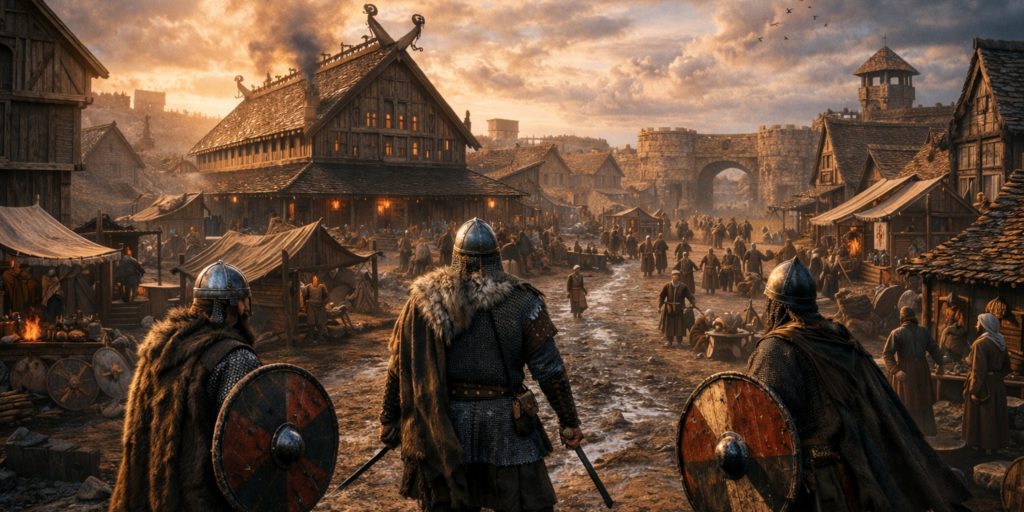
Archaeological work in York has revealed extensive evidence of Viking settlement.
Excavations uncovered:
- Buildings
- Tools
- Weapons
- Jewellery
- Trade goods
The discoveries demonstrate how Viking conquerors transformed York into a thriving urban centre.
Dublin Excavations
Excavations in Dublin have uncovered rich evidence of Viking occupation.
Weapons, ships, trade goods, and domestic objects reveal the scale of Scandinavian influence during the period associated with Ímar and his dynasty.
Where to See Artefacts Connected to Ivar’s Era
Visitors interested in Ivar’s world can see important Viking artefacts at several museums.
JORVIK Viking Centre, York
One of the finest introductions to Viking England.
Highlights include:
- Artefacts from Viking York
- Reconstructions of daily life
- Evidence from ninth-century excavations
Yorkshire Museum, York
Houses significant Viking finds from northern England.
Visitors can view weapons, jewellery, and objects associated with Scandinavian settlement.
British Museum, London
Contains extensive collections of Viking artefacts from Britain.
Items include weapons, silver hoards, and objects illustrating Viking expansion.
National Museum of Ireland, Dublin
One of Europe’s premier collections of Viking artefacts.
The museum displays weapons, ornaments, and objects connected to Viking Dublin.
Latest Archaeological Developments
Recent research continues to reshape our understanding of the Great Heathen Army and Viking expansion.
Advances in:
- DNA analysis
- Isotope testing
- Radiocarbon dating
- Battlefield archaeology
have helped identify the origins and movements of Viking populations more accurately than ever before.
Studies at Repton have refined dating evidence and strengthened links between excavated remains and the Great Heathen Army.
Meanwhile, ongoing excavations in York and Dublin continue to reveal new details about the societies established by Viking conquerors.
What fascinates me most is how archaeology repeatedly shows the Vikings as more than raiders. They were traders, settlers, rulers, and state builders. Ivar appears to have understood that reality earlier than many of his contemporaries.
Legacy
Ivar the Boneless occupies a unique place in Viking history.
Some Viking leaders won spectacular battles.
Others founded kingdoms.
Ivar appears to have done both.
Whether he was truly Ragnar’s son may never be known. Whether he suffered from a physical disability remains uncertain. Yet the historical record leaves little doubt that he was one of the most influential Scandinavian leaders of the ninth century.
His campaigns helped reshape Britain. His reputation endured for more than a thousand years. Even today, the name “Ivar the Boneless” remains one of the most memorable in medieval history.
That, perhaps, is the greatest testament to his achievement. Most warriors are forgotten within a generation. Ivar became legend.