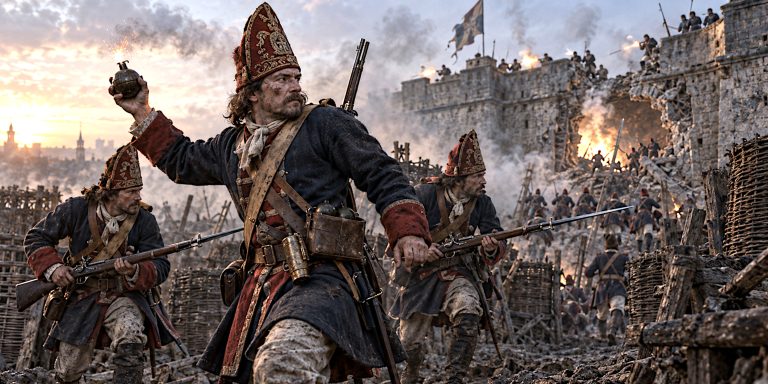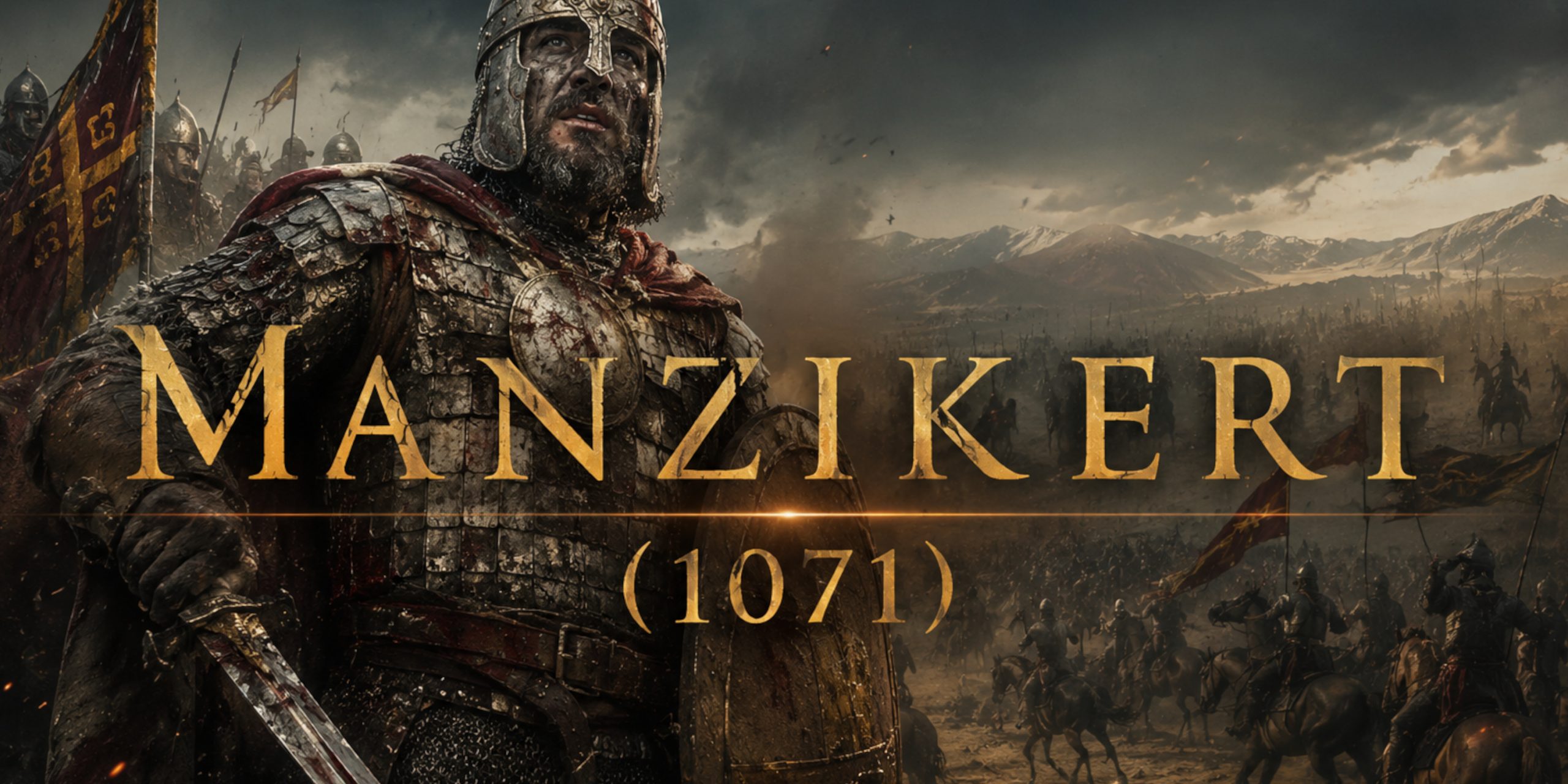
The Battle of Manzikert has acquired a reputation somewhere between tragedy and political farce, which is fitting because it was both. Fought in 1071 between the Byzantine Empire and the Seljuk Turks under Alp Arslan, the battle did not immediately destroy Byzantium. Empires are stubborn things. Yet it opened the door to something far worse: the slow loss of Anatolia, the empire’s military heartland.
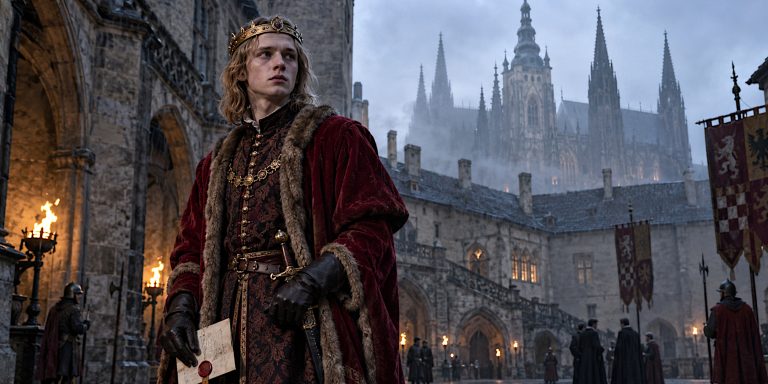
Modern retellings often paint Manzikert as a simple clash between East and West. It was not. It was a deeply Byzantine disaster, packed with court rivalries, mistrust, mercenaries who vanished at unfortunate moments, and aristocrats who seemed more interested in sabotaging rivals than defeating enemies. One almost feels sorry for Emperor Romanos IV Diogenes. Almost.
The battle remains one of the most important turning points of the medieval world. Without Manzikert, there may have been no First Crusade, no Turkish Anatolia, and perhaps no final fall of Constantinople centuries later.
Background to the Battle
By the mid-11th century, the Byzantine Empire was under pressure on several fronts. In the west, Norman adventurers gnawed at imperial territories in Italy. In the Balkans, Pechenegs raided repeatedly. In the east, the Seljuk Turks advanced deeper into Armenia and Anatolia.
The Byzantine army itself had weakened after decades of political infighting and budget cuts. Earlier emperors had relied on disciplined thematic troops raised from Anatolian lands. By 1071, many of those systems had decayed. Mercenaries increasingly filled the gaps.
Romanos IV became emperor partly because the empire needed a soldier on the throne. He understood the eastern threat and launched campaigns against the Seljuks in an attempt to stabilise the frontier. His final expedition in 1071 aimed to reassert Byzantine authority in Armenia and secure the fortress city of Manzikert near Lake Van.
Opposing him was Alp Arslan, the Seljuk Sultan, an energetic and highly capable commander whose empire was rapidly expanding across Persia and the Near East.
Forces
Estimating troop numbers at Manzikert is notoriously difficult because medieval chroniclers treated arithmetic with the same care some modern football pundits treat defending.
Most historians now favour more restrained estimates.
Byzantine Empire
| Component | Estimated Numbers | Notes |
|---|---|---|
| Byzantine regular infantry | 15,000 to 20,000 | Included eastern thematic troops |
| Byzantine cavalry | 5,000 to 10,000 | Heavy cataphracts and elite guards |
| Mercenaries | 10,000+ | Normans, Franks, Pechenegs, Turks and others |
| Total estimated force | 35,000 to 45,000 | Highly mixed army |
Seljuk Turks
| Component | Estimated Numbers | Notes |
|---|---|---|
| Mounted archers | 20,000 to 30,000 | Highly mobile cavalry |
| Elite guard cavalry | Smaller contingent | Better armoured retainers |
| Tribal auxiliaries | Unknown | Fast-moving light cavalry |
| Total estimated force | 30,000 to 40,000 | Flexible and mobile army |
Leaders and Troop Composition
Byzantine Command
- Emperor Romanos IV Diogenes
- Nikephoros Bryennios
- Theodore Alyates
- Andronikos Doukas
- Joseph Tarchaneiotes
Byzantine Troops
- Cataphract cavalry
- Armenian infantry
- Varangian Guard contingents
- Frankish and Norman mercenaries
- Turkic mercenaries
- Pecheneg cavalry
Seljuk Command
- Sultan Alp Arslan
- Sav Tegin
- Various tribal emirs and mounted commanders
Seljuk Troops
- Mounted horse archers
- Light cavalry raiders
- Elite ghulam cavalry
- Tribal auxiliaries
Arms and Armour
The battle represented a fascinating clash between two military traditions.
Byzantine Arms and Armour
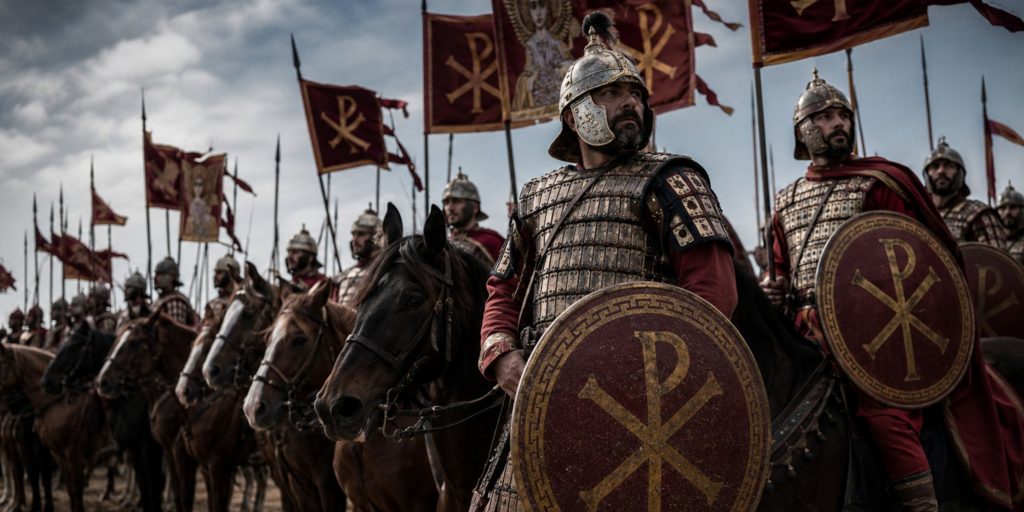
The Byzantine army retained echoes of late Roman military sophistication. Heavy cavalry remained central to imperial warfare.
Common Byzantine Weapons
- Kontarion lance
- Composite bows
- Maces
- Spears
- Axes used by Varangians
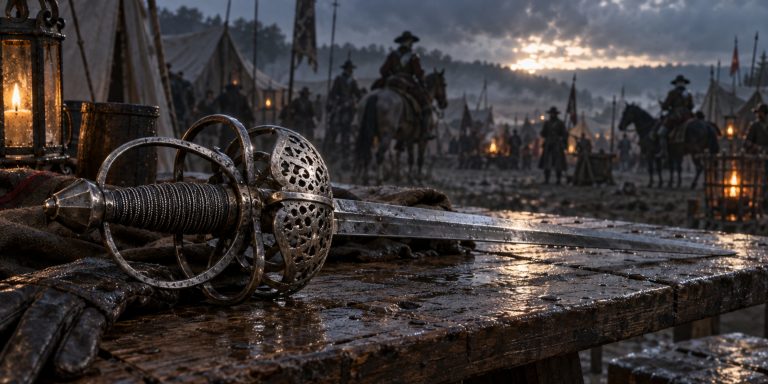
Specific Sword Types Used
- Spathion
- Paramerion
- Straight double-edged cavalry swords
- Norse longswords carried by Varangian guardsmen
Armour
- Lamellar cuirasses
- Mail hauberks
- Scale armour
- Conical helmets with mail aventails
- Large kite shields
The Byzantine cataphract was still an intimidating battlefield presence. Unfortunately, intimidating stationary targets for horse archers was not entirely the tactical ideal Romanos probably hoped for.
Seljuk Arms and Armour
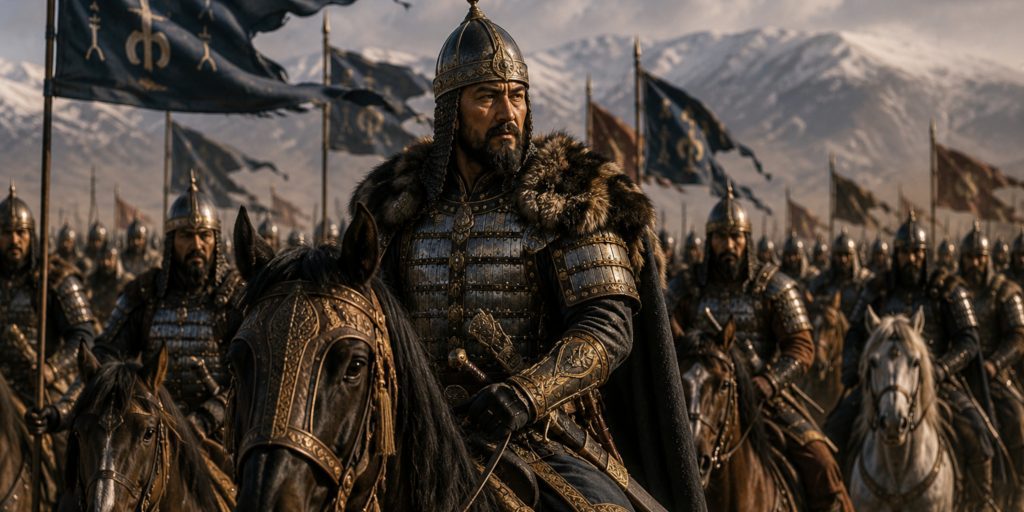
The Seljuks relied on speed, flexibility, and relentless mounted archery.
Common Seljuk Weapons
- Composite recurved bows
- Light lances
- Spears
- Maces
- Curved sabres
Specific Sword Types Used
- Early Turkic kilij-style sabres
- Straight steppe cavalry swords
- Persian-influenced blades
Armour
- Lamellar armour
- Quilted coats
- Mail shirts for elite troops
- Fur-lined helmets
- Small round shields
The Seljuk composite bow was the true terror of the battlefield. Fired from horseback with remarkable accuracy, it allowed Turkish cavalry to harass slower armies endlessly.
The Battle Timeline
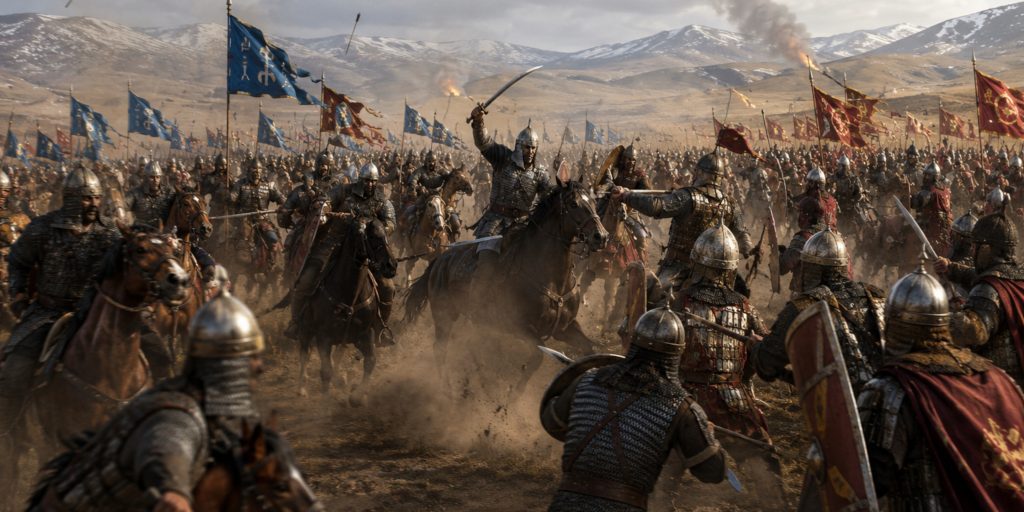
Early 1071
Romanos IV gathers a major imperial expedition and marches east toward Armenia.
Summer 1071
The Byzantine army advances toward Manzikert. The force becomes divided during operations, weakening overall cohesion.
August 24-25, 1071
Seljuk scouts shadow Byzantine movements. Alp Arslan rapidly redirects forces north after securing peace with the Fatimids.
August 26, Morning
Initial Byzantine advances push Seljuk forces back. Romanos believes the enemy may be retreating.
August 26, Afternoon
Seljuk mounted archers intensify harassment attacks. Byzantine formations begin stretching and losing cohesion.
August 26, Evening
Romanos orders a withdrawal back toward camp. Confusion spreads during the manoeuvre.
The Turning Point
Andronikos Doukas, commanding reserve forces, reportedly withdraws instead of supporting the emperor. Rumours spread that Romanos has been killed.
Panic erupts.
Final Collapse
Seljuk cavalry surrounds fragmented Byzantine units. Romanos fights on but is eventually captured.
The Byzantine army disintegrates.
The Capture of Romanos IV
One of the most remarkable aspects of the battle was its aftermath.
Alp Arslan reportedly treated the captured emperor with surprising respect. Medieval chroniclers describe the Seljuk ruler placing his boot upon Romanos before quickly lifting him up and speaking courteously.
According to later accounts, Alp Arslan asked:
“What would you do if I were brought before you as a prisoner?”
Romanos allegedly replied:
“Perhaps I would kill you. Or exhibit you in Constantinople.”
The Sultan reportedly answered:
“My punishment is far heavier. I forgive you.”
Whether every word is authentic is impossible to know. Medieval chroniclers occasionally polished conversations for dramatic effect. Historians do it too, though usually with less poetry.
Contemporary Quotes
The Byzantine historian Michael Attaleiates, who may have witnessed the campaign personally, wrote:
“The whole Roman army was utterly defeated and destroyed.”
The chronicler Matthew of Edessa described the disaster in bleak terms:
“The Christian forces were consumed by blood.”
Later Byzantine writers viewed Manzikert almost as a national catastrophe sent by fate itself.
Archaeology and the Battlefield
The precise battlefield location remains debated today. The terrain around modern Malazgirt in eastern Turkey has changed considerably over centuries.
Archaeological work in the region has uncovered:
- Medieval arrowheads
- Fortification remains
- Byzantine and Seljuk pottery fragments
- Military camp traces
- Burial evidence linked to regional conflicts
Direct battlefield archaeology remains difficult because of shifting settlement patterns and agricultural activity. Unlike places such as Towton or Visby, Manzikert has not yielded a neatly preserved killing field.
Even so, the landscape still carries immense historical weight. Standing near Lake Van, one can understand why armies manoeuvred so cautiously there. It is beautiful country, though not especially forgiving to exhausted infantry being circled by mounted archers.
Why Manzikert Mattered
The battle itself did not instantly destroy Byzantine control of Anatolia. The real damage came afterwards.
Civil war erupted almost immediately after Romanos returned from captivity. Rival factions in Constantinople undermined imperial recovery efforts while Turkish groups steadily occupied Anatolian territory.
Within decades:
- Byzantine recruitment systems collapsed
- Anatolian cities fell or became isolated
- Turkish migration accelerated
- The empire increasingly relied on western mercenaries
- Alexios I Komnenos later appealed to the West for military aid
That appeal helped spark the First Crusade.
Manzikert therefore shaped not only Byzantine history, but crusading history, Islamic history, and the future map of the eastern Mediterranean.
Legacy of the Battle
Modern Turkish historical memory often views Manzikert as the symbolic beginning of Turkish Anatolia. Byzantine historians, meanwhile, tend to treat it as the start of imperial decline.
Both perspectives contain truth, though history is rarely so tidy.
The Byzantine Empire survived for nearly four centuries after Manzikert. Yet the battle exposed weaknesses that could no longer be concealed. Political division, reliance on mercenaries, and strategic overstretch had hollowed out imperial power.
Romanos IV deserves a slightly kinder reputation than he often receives. He recognised the danger facing the empire and attempted to confront it directly. Unfortunately for him, courage and competent logistics are not always supported by palace politics.
Where to Learn More
Several chroniclers remain vital for understanding the battle:
- Michael Attaleiates
- Michael Psellos
- Matthew of Edessa
- Anna Komnene
Modern historians continue debating troop numbers, tactics, and the exact consequences of the battle. What nobody disputes is its importance.
Manzikert remains one of the medieval world’s great hinge moments, the sort historians adore because everyone afterwards insists they saw it coming.
Most of them absolutely did not.