Vikings: Valhalla has the slightly unfair advantage of drawing its characters from a period when the real history was already fairly outrageous.
Harald Hardrada really did fight his way across Europe before becoming King of Norway. Leif Erikson really did sail to North America centuries before Columbus. Emma of Normandy married two kings of England and became one of the most politically important women of the 11th century. Canute really did build a Scandinavian empire encompassing England.
The series does not need to invent everything. It does, however, rearrange an enormous amount.
The biggest problem is chronology. Several of the show’s central characters belonged to different generations and probably never met. Others are known primarily through sagas written centuries after their supposed exploits.
So rather than asking whether Vikings: Valhalla is simply “accurate”, there is a more interesting question: who were these people when Netflix wasn’t writing their dialogue?
| Character | Historical person? | Broad accuracy |
|---|---|---|
| Leif Erikson | Yes | Mixed |
| Freydís Eiríksdóttir | Probably | Heavily dramatised |
| Harald Sigurdsson | Yes | Mixed |
| Canute the Great | Yes | Fairly strong |
| Emma of Normandy | Yes | Fairly strong |
| Olaf Haraldsson | Yes | Mixed |
| Godwin | Yes | Heavily compressed |
| Edmund Ironside | Yes | Broadly historical |
| Sweyn Forkbeard | Yes | Historical figure, altered chronology |
| Ulf Jarl | Yes | Mixed |
| Erik the Red | Yes | Based heavily on saga tradition |
| William of Normandy | Yes | Historical |
Leif Erikson: The Viking Who Reached North America
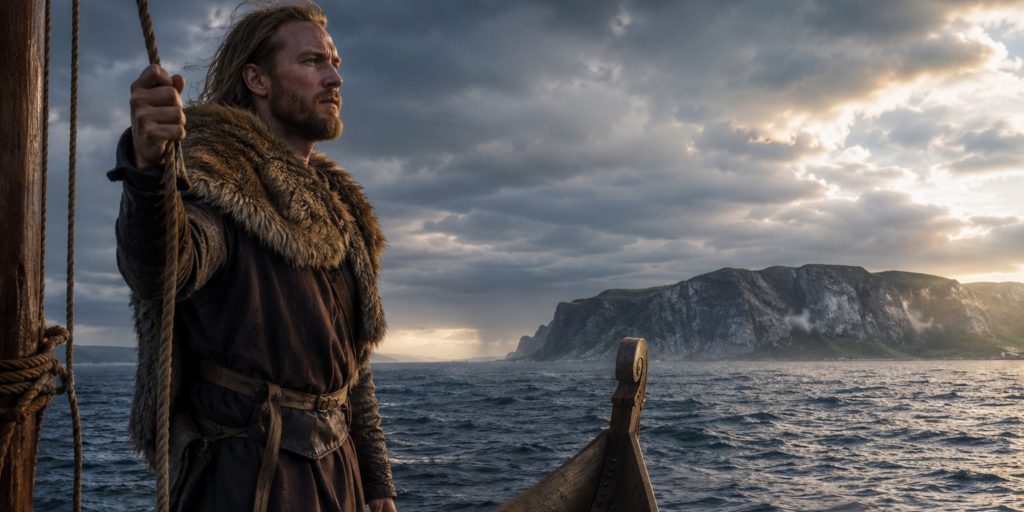
Leif Erikson is one of the few Viking Age figures whose name has escaped specialist history entirely. He is usually identified as the first known European to reach North America, around five centuries before Christopher Columbus.
The son of Erik the Red, Leif grew up within the Norse settlement of Greenland. His adventures are principally described in two medieval Icelandic texts, the Saga of the Greenlanders and the Saga of Erik the Red.
They disagree on some fairly important details.
In one tradition, Leif deliberately sails west after hearing of land sighted beyond Greenland. In the other, he reaches the region after being blown off course while returning from Norway.
Either way, the Norse called part of the territory Vinland.
For centuries, Vinland could be dismissed as saga geography. Archaeology changed that.
The Norse settlement at L’Anse aux Meadows in Newfoundland provides physical evidence that Europeans reached North America around AD 1000. We cannot simply declare it “Leif Erikson’s house”, tempting though that would be, but the archaeological evidence confirms the broader reality behind the saga tradition.
What the show changes
Valhalla turns Leif into an action hero, warrior, navigator and increasingly scientific thinker.
The navigator part is sensible. The extensive fighting is much harder to demonstrate.
There is also no historical evidence that Leif travelled to Constantinople as the series eventually has him do. Nor is there good evidence that he enjoyed a close friendship with Harald Hardrada.
That relationship is one of the show’s most useful inventions because it gives two famous Viking stories a reason to occupy the same television series.
History was inconsiderate enough not to arrange itself around casting requirements.
Freydís Eiríksdóttir: Warrior, Explorer or Saga Anti-Hero?
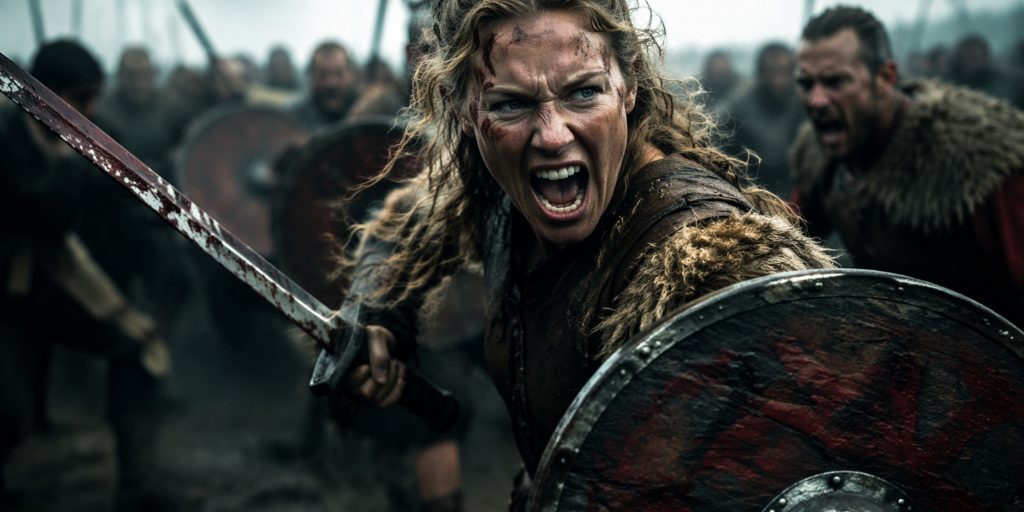
Freydís is considerably more difficult.
She appears in the Vinland sagas as a daughter of Erik the Red and sister or half-sister of Leif Erikson, depending on how the traditions are interpreted.
What happens next depends entirely on which saga you believe.
The heroic Freydís
In the Saga of Erik the Red, Freydís joins an expedition to Vinland. During a confrontation with the Indigenous inhabitants, the Norse retreat.
Freydís, who is pregnant, does not.
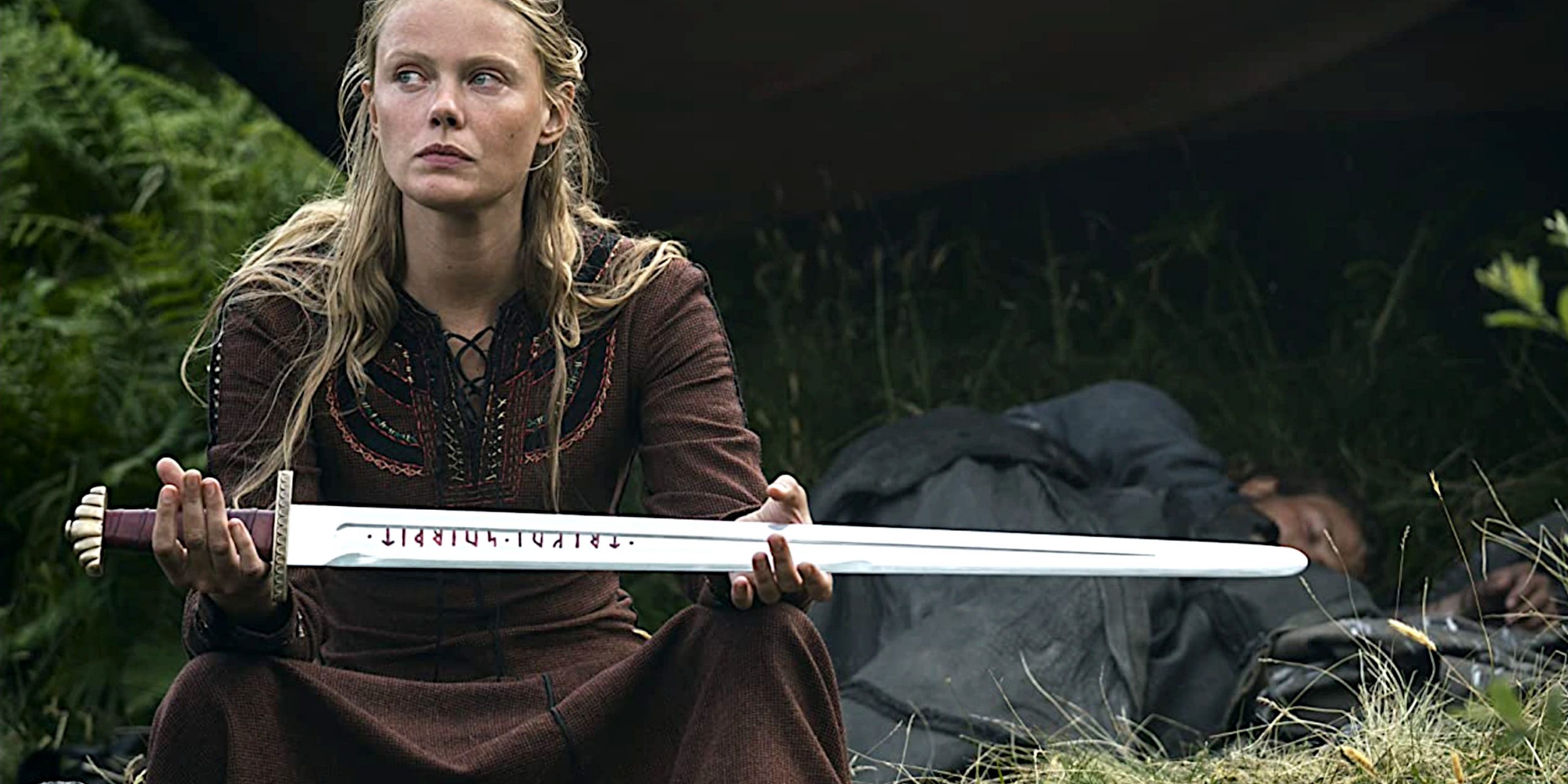
According to the saga, she takes up a sword and confronts the attackers in an extraordinary display of defiance. It is one of the most memorable scenes involving a woman anywhere in Old Norse literature.
The considerably less heroic Freydís
The Saga of the Greenlanders offers something rather different.
Here Freydís becomes involved in another expedition to Vinland and engineers the deaths of fellow Norse settlers after a dispute.
It is brutal, calculating and difficult to reconcile with the heroic figure of the other saga.
That contradiction matters.
We should be careful about treating either version as straightforward biography. These accounts were written long after the events they describe and belong to a literary tradition where history, family memory and storytelling happily occupy the same longhouse.
What the show changes
Netflix takes elements of the saga character and builds Freydís into a defender of traditional Norse paganism.
Her role as the “Last Daughter of Uppsala”, her relationship with Harald and much of her religious mission belong to the television story.
The real Freydís is stranger because we cannot neatly pin her down. Warrior, murderer, explorer, literary creation or some mixture of all four remain possible interpretations.
Harald Sigurdsson: The Future Harald Hardrada
Of all the show’s characters, Harald is perhaps the one who needed the least embellishment.
Harald Sigurdsson, later known as Harald Hardrada, lived the sort of life that would be rejected from a historical novel for being slightly excessive.
Born around 1015, Harald was the half-brother of King Olaf II of Norway. As a teenager, he fought at the Battle of Stiklestad in 1030, where Olaf was defeated and killed.
Harald escaped.
That was merely the opening act.
He travelled east into the lands of the Rus and eventually reached Constantinople, where he served in the famous Varangian Guard of the Byzantine emperors.
Harald campaigned extensively before returning to Scandinavia enormously wealthy. He eventually became King of Norway in 1046 or 1047 and spent years attempting to extend his power.
Then came England.
In 1066 Harald invaded with a substantial Norwegian army and defeated English forces at Fulford.
A few days later, King Harold Godwinson caught him at Stamford Bridge.
Harald was killed.
The Norwegian invasion collapsed, only for Harold Godwinson to march south and face William of Normandy at Hastings less than three weeks later.
If someone had written 1066 as fiction, an editor might have asked them to calm down.
What the show gets right
The series correctly captures Harald’s:
- ambition
- royal connections
- military ability
- travels east
- service in the Byzantine world
- determination to obtain a throne
His relationship with Freydís is fictional, as is much of his early association with Leif.
The broad trajectory, however, leads towards one of the best documented Viking careers of the 11th century.
King Canute: The Man Who Actually Built a Viking Empire
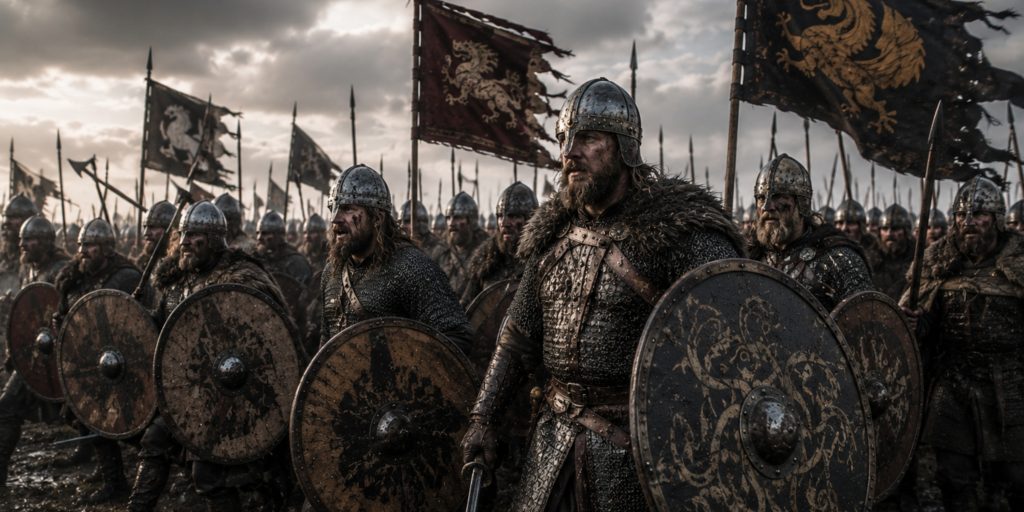
Canute the Great, also written Cnut or Knut, was considerably more than a Viking warlord.
He became King of England in 1016, later ruling Denmark and Norway and exercising influence across a huge portion of northern Europe.
Historians sometimes call his territories the North Sea Empire, although Canute himself would not have used that term.
The interesting thing about Canute is how quickly conquest turned into government.
He worked with existing English political institutions, cultivated the Church and presented himself as a legitimate Christian monarch rather than simply a foreign occupier.
He even travelled to Rome in 1027.
Did Canute really order the tide to stop?
The famous story of Canute commanding the sea is routinely misunderstood.
The tale was recorded long after his death and probably was not intended to portray him as an idiot who had unexpectedly discovered tides.
Instead, Canute supposedly ordered the sea to stop to demonstrate that even a king’s power had limits before God.
If anything, the story is about humility.
The poor man has spent centuries being mocked for making precisely the opposite point.
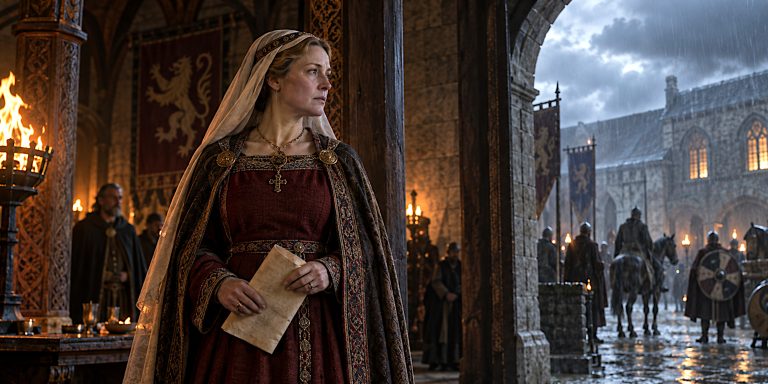
Emma of Normandy: The Queen Who Survived Everyone
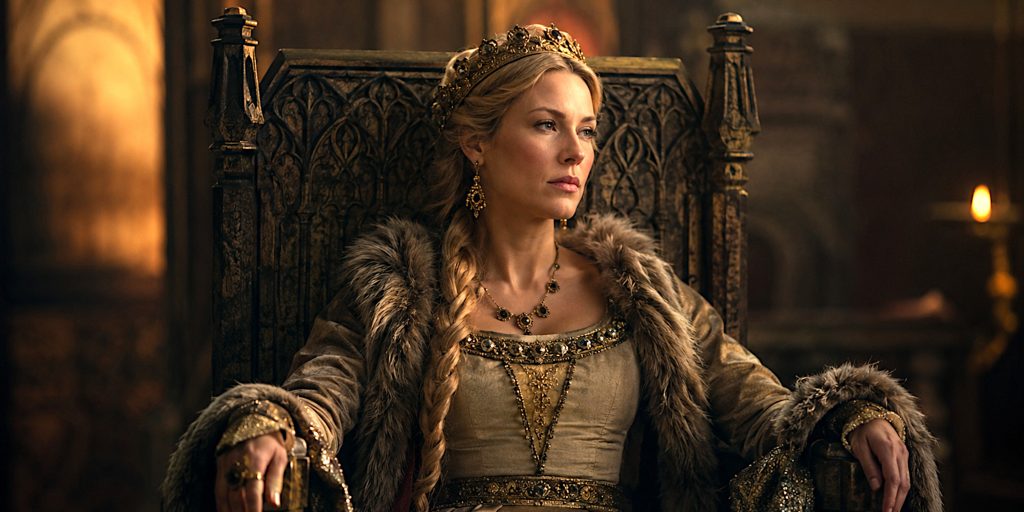
Emma of Normandy deserves considerably more attention than she normally receives in Viking stories.
She was born into the Norman ruling dynasty and married Æthelred II of England in 1002.
After Æthelred’s death and the Danish conquest of England, she married Canute.
That meant Emma became queen to rulers from opposing dynasties.
More remarkably, she remained politically relevant through both.
Her children and stepchildren included or were connected to several kings, while her Norman family would eventually produce William the Conqueror.
Emma therefore sits right in the middle of the political web connecting Anglo-Saxon England, Scandinavia and Normandy.
How accurate is Valhalla’s Emma?
The show’s emphasis on Emma as an intelligent political operator is broadly justified.
We even possess an extraordinary source connected directly to her: the Encomium Emmae Reginae, a work commissioned in her lifetime which presents events from a distinctly Emma-friendly perspective.
Calling it unbiased would be generous.
Calling it medieval political PR would be rather closer.
Yet its existence alone tells us something important. Emma was not simply standing beside powerful men. She was actively involved in shaping how royal power, legitimacy and memory were presented.
Olaf Haraldsson: Viking Warrior Turned Saint
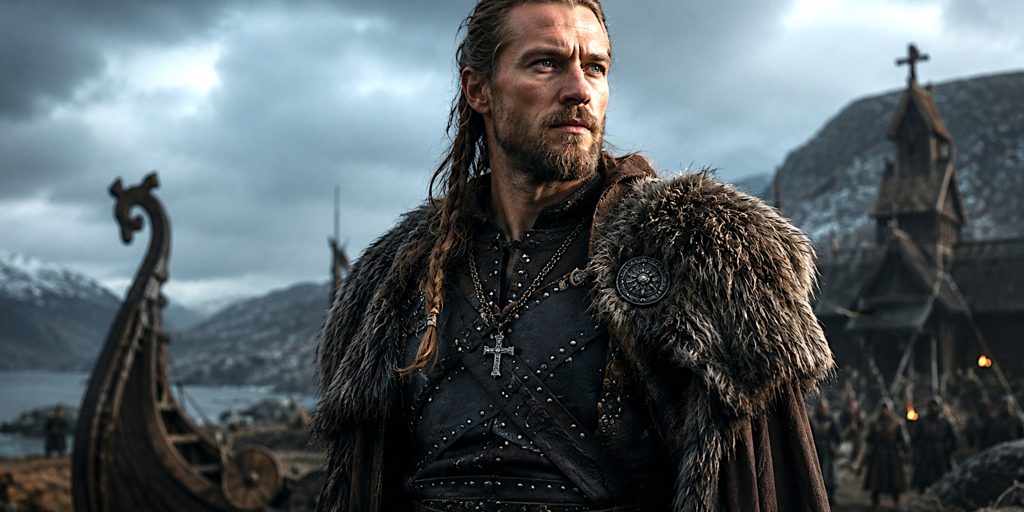
Olaf Haraldsson presents another wonderful Viking Age contradiction.
He was a warrior and king who became one of medieval Scandinavia’s most important Christian saints.
Olaf became King of Norway around 1015 and worked aggressively to strengthen royal authority and Christianity.
Traditional accounts often portray the Christianisation of Norway as a clean conversion from paganism to Christianity.
Reality was messier.
Political authority, religious conversion, local rivalries and royal violence were all tangled together.
Olaf was eventually driven from Norway and attempted to regain his kingdom in 1030.
He was killed at the Battle of Stiklestad.
After his death, something remarkable happened.
Stories of miracles developed around his burial, and Olaf was rapidly transformed from defeated king into Saint Olaf, eventually becoming Norway’s patron saint.
The show’s combination of religious conviction and political ruthlessness therefore has a genuine historical foundation, even if individual events are dramatised.
Godwin of Wessex: The Survivor Behind a Dynasty
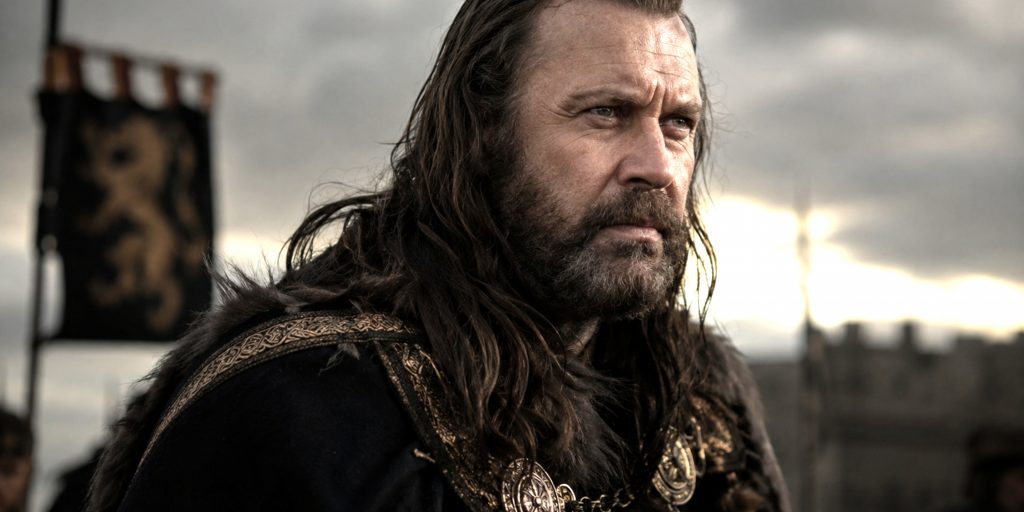
Godwin is one of the most important figures in the final decades of Anglo-Saxon England.
His origins remain debated, but he rose dramatically under Canute and became Earl of Wessex, making him one of England’s most powerful nobles.
His real talent appears to have been survival.
Godwin navigated the reigns of Canute, Harold Harefoot, Harthacnut and Edward the Confessor while steadily increasing his family’s power.
His children included:
- Harold Godwinson
- Tostig Godwinson
- Edith of Wessex
Edith married Edward the Confessor.
Harold eventually became King of England.
Tostig allied himself with Harald Hardrada against his own brother.
This family could have saved medieval historians a great deal of work by simply getting along.
What Valhalla changes
The series brings Godwin into events earlier and more intimately than the evidence allows.
Yet the central idea is convincing. Godwin really was an exceptionally successful political operator whose family came within touching distance of establishing a lasting English royal dynasty.
Then 1066 happened.
Edmund Ironside: England’s Warrior King
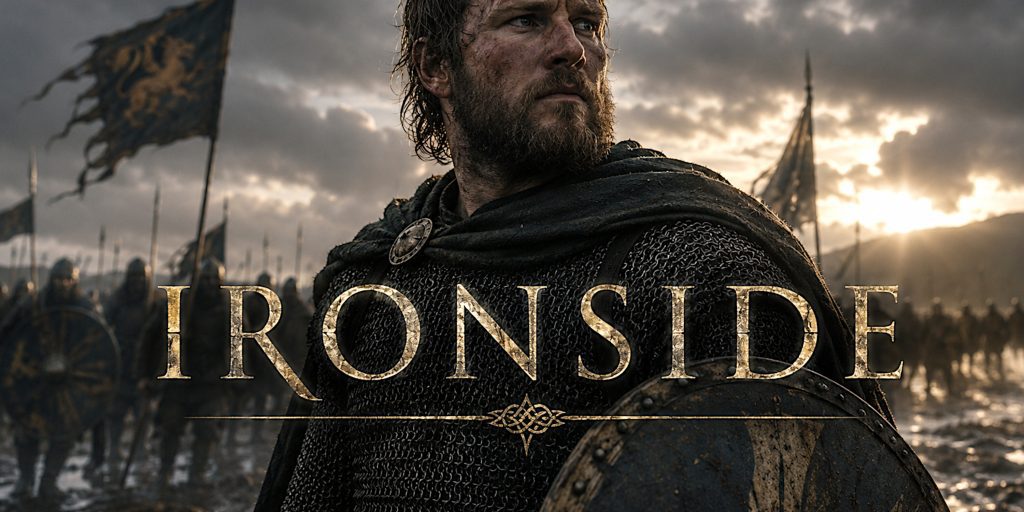
Edmund II earned the name Ironside because of his resistance to the Danish invasion led by Canute.
When Æthelred died in 1016, Edmund continued the war.
The struggle culminated at the Battle of Assandun, where Canute won a decisive victory.
The two rulers subsequently agreed to divide England between them.
Then Edmund died in November 1016.
The circumstances remain uncertain.
Later stories produced predictably colourful murder theories, but firm evidence for assassination is lacking.
His death allowed Canute to become king of the whole country.
The television version accelerates and reshapes the political drama, but Edmund’s position as Canute’s determined Anglo-Saxon opponent is firmly historical.
Sweyn Forkbeard: The Viking Who Conquered England
A king called Sweyn Forkbeard sounds suspiciously like someone invented after three pints.
He was entirely real.
Sweyn was King of Denmark, father of Canute and one of the central figures behind the Scandinavian attacks on England during Æthelred’s reign.
In 1013 his campaign succeeded spectacularly.
Æthelred fled to Normandy and Sweyn effectively became King of England.
Then, after only a few weeks, Sweyn died in February 1014.
Æthelred returned.
Canute subsequently completed what his father had begun.
The chronology problem
This is where Valhalla cheerfully folds time.
The series uses Sweyn alongside people and events whose historical timelines do not fit neatly together.
It works dramatically.
As a calendar, less so.
Ulf Jarl: Canute’s Dangerous Brother-in-Law
Ulf Jarl was a Danish nobleman married to Canute’s sister Estrid.
He became an important political and military figure but eventually fell out with the king.
According to later tradition, relations deteriorated dramatically after a quarrel associated with a board game.
Canute ultimately ordered Ulf’s killing at Roskilde around 1026.
The exact details are difficult to establish, but the murder itself reflects the dangerous politics surrounding Scandinavian kingship.
Family connections could get you very close to the throne.
They could also get you very efficiently killed.
Erik the Red: Father of Leif and Freydís
Erik Thorvaldsson, better known as Erik the Red, belongs to an earlier generation than many of Valhalla’s political characters.
According to the Icelandic saga tradition, Erik’s family left Norway for Iceland. Erik himself was later outlawed following killings and sailed west.
There he explored Greenland and helped establish Norse settlements during the late 10th century.
His nickname probably referred to his red hair or beard, although we cannot know for certain.
The sagas portray him as violent, charismatic and exceptionally difficult to live beside, which admittedly describes quite a few saga protagonists.
He was also the father of Leif Erikson and Freydís.
The historical Erik therefore represents the generation that established the Greenland communities from which the Vinland voyages emerged.
William the Conqueror: The Viking Legacy Comes Full Circle
The appearance of a young William of Normandy towards the end of Vikings: Valhalla is more than fan service for people who enjoy dates involving 1066.
William was descended from the Scandinavian rulers who had established themselves in Normandy.
By his lifetime, the Norman elite was Christian, French-speaking and culturally distinct from its Viking ancestors, but the Scandinavian connection remained part of the duchy’s history.
William became Duke of Normandy as a child.
In 1066 he invaded England, defeated Harold Godwinson at the Battle of Hastings and became king.
There is a rather satisfying historical symmetry here.
The Viking Age in England is often said to end with Harald Hardrada’s defeat at Stamford Bridge. Weeks later, a ruler descended from Scandinavian settlers conquered the kingdom anyway.
History occasionally has a sense of humour.
The Biggest Historical Change in Vikings: Valhalla
The greatest liberty taken by the series is not armour, religion or even invented romances.
It is time.
The show brings together famous figures whose lives do not comfortably overlap.
Leif Erikson’s famous voyage to Vinland probably occurred around AD 1000.
Harald Hardrada was born around 1015.
Harald’s invasion of England happened in 1066.
Freydís belongs to the Vinland saga tradition associated with the early 11th century, while Godwin’s great period of political influence belongs to the decades that followed Canute’s conquest.
The programme effectively compresses the final generations of the Viking Age into one interconnected cast.
That is historically misleading if taken literally, but understandable as storytelling.
Without it, Leif might have finished his plot before Harald was old enough to pick up a particularly small axe.
Vikings: Valhalla Fact vs Fiction
| Storyline | Historical verdict |
|---|---|
| Leif Erikson reached North America | Supported by saga tradition and wider archaeological evidence for Norse presence |
| Freydís travelled to Vinland | Described in the sagas |
| Freydís was a great pagan religious leader | Fictionalised |
| Harald and Freydís were lovers | Fiction |
| Harald Hardrada served in Byzantium | Historical |
| Harald knew Leif Erikson | No reliable evidence |
| Canute conquered England | Historical |
| Canute ruled Denmark and Norway | Historical |
| Emma married Æthelred and Canute | Historical |
| Olaf became a Christian saint | Historical |
| Godwin became Earl of Wessex | Historical |
| Edmund Ironside resisted Canute | Historical |
| Sweyn Forkbeard conquered England | Historical |
| William of Normandy descended from Scandinavian settlers | Historical |
| All these people were contemporaries interacting together | Definitely not |
How Historically Accurate Is Vikings: Valhalla?
I would describe Vikings: Valhalla as historically inspired rather than historically accurate.
That distinction matters.
The writers clearly know the period. Canute, Emma, Harald, Olaf, Leif, Freydís and Godwin have recognisable connections to their historical or literary counterparts. Major political developments are often genuine as well.
The problem comes when the series joins them together.
Chronology is compressed. Relationships are invented. Saga traditions are turned into biography. Characters who probably never met become friends, enemies and lovers.
Yet there is something I rather like about the approach.
The show introduces viewers to a period that is far more complicated than the familiar image of Vikings charging out of longships. By the 11th century, Scandinavian warriors were serving Byzantine emperors, ruling England, travelling to North America, converting to Christianity and becoming entangled in dynastic politics stretching from Greenland to Constantinople.
The real late Viking world was remarkably international.
On that point, Valhalla gets something important right.
Where the Historical Evidence Comes From
Reconstructing these lives means combining several very different types of evidence.
For Leif, Freydís and Erik the Red, much of the narrative comes from Icelandic sagas written generations after the events they describe.
For rulers such as Canute, Emma, Edmund and Godwin, historians have chronicles, charters, coins and other contemporary or near-contemporary evidence.
For Harald Hardrada, Byzantine, Scandinavian and other medieval traditions can be compared.
Archaeology then provides an entirely different test. The discovery of Norse occupation at L’Anse aux Meadows proved that voyages to North America were not simply medieval fantasy.
This is why labels such as “real Viking character” need a little caution. Canute is documented very differently from Freydís.
One was a king issuing charters and minting coins.
The other emerges from saga literature.
Both are fascinating. They simply require different levels of historical confidence.