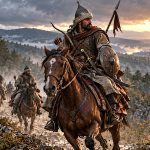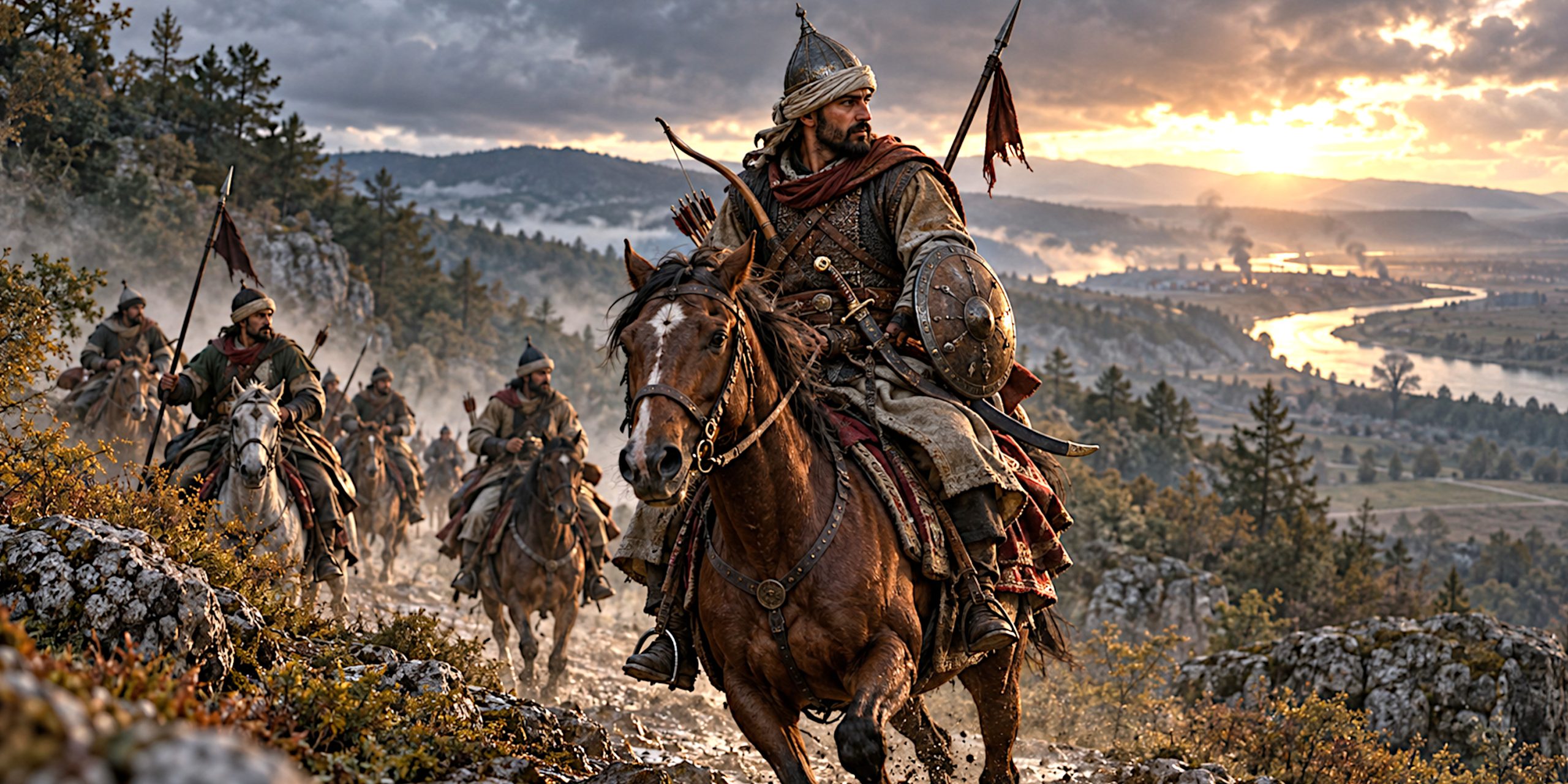
The akıncı were among the fastest, most feared and most frequently misunderstood horsemen of the Ottoman world. Operating mainly along the empire’s European frontiers, they scouted ahead of armies, raided deep into hostile territory, disrupted communications, seized captives and livestock, and turned uncertainty into a weapon.
They were not the armoured sipahis of the provincial cavalry, nor salaried palace troops, nor a shapeless mob that happened to own horses. The mature akıncı organisation had registers, commanders, recognised families and defined military functions. Yet its members lived largely from their own resources and the profits of raiding. That combination of government direction and personal gain made them useful, dangerous and morally uncomfortable. History is rarely improved by pretending otherwise.
Their great age stretched from the Ottoman expansion into the Balkans during the fourteenth century through the sixteenth century. They belong to both the late medieval and Renaissance military worlds, moving across a landscape in which castles, firearms, dynastic politics and slave-taking all existed together.
Akıncı at a glance
| Detail | Evidence-based summary |
|---|---|
| Name | Akıncı, from akın, meaning a raid or incursion |
| Common English spellings | Akinji, akindji, akingi |
| Period of greatest importance | Fourteenth to sixteenth centuries |
| Main theatre | Ottoman frontiers in the Balkans and central Europe |
| Military type | Irregular or semi-regular light cavalry under recognised command |
| Principal duties | Reconnaissance, advance-guard work, raiding, screening and disruption |
| Typical weapons | Composite bow, sabre or pala, lance, mace, knife and shield |
| Typical protection | Light clothing, quilted protection, mail or helmet according to wealth and role |
| Payment | Generally no regular salary; profit came largely from booty and captives |
| Famous lineages | Mihaloğlu, Evrenosoğlu, Turahanoğlu and Malkoçoğlu |
| Major decline | After the disastrous Danube crossing of 1595, although the name survived |
What does akıncı mean?
The Turkish noun akın means a raid, rush or incursion. An akıncı was therefore a person who carried out such a raid. The plural is akıncılar, although English writing commonly uses “akıncı” collectively or adopts spellings such as “akinji”.
The word describes a function more neatly than a fixed uniform. An akıncı was expected to move quickly, live with limited logistical support and penetrate ground on which heavier troops would be slower or more conspicuous. His value rested upon his horse, local knowledge, nerve and ability to return with useful intelligence. Returning was rather important, although heroic literature has always been rather more interested in the riding out.
It is tempting to translate akıncı simply as “raider”. That is broadly correct, but incomplete. They could form the forward screen of a campaigning army and perform operational reconnaissance. A raid might also prepare a region for conquest by testing routes, frightening defenders, damaging food supplies and exposing political weakness.
Origins on the Ottoman frontier
The akıncı emerged from the frontier society in which the early Ottoman state expanded through north-western Anatolia and then into south-eastern Europe. Warriors gathered around frontier lords, attracted by faith, patronage, land, status and plunder in combinations that varied from person to person. Any explanation that assigns one pure motive to all of them is best treated with suspicion.
Later Ottoman tradition associated the beginnings of the institution with Köse Mihal, a frontier lord presented as a Byzantine Christian who entered Ottoman service and converted to Islam. The historical details of Köse Mihal’s identity are debated, and parts of the story may have been reshaped by later family tradition. The uncertainty matters. Frontier societies were mixed, and the ancestry claimed for a prominent house was political property as much as family memory.
Evrenos Bey, who died in 1417, was credited with helping to give the raiders a more durable organisation. By the reign of Murad I, and especially after the creation of central standing forces, akıncı activity became increasingly concentrated on the frontier. Important hereditary houses developed regional followings:
- The Evrenosoğulları were associated particularly with Macedonia and Albania.
- The Turahanoğulları became prominent in Thessaly and the Morea.
- The Mihaloğulları operated around frontier zones including Sofia and the Danubian lands.
- The Malkoçoğulları were strongly connected with Silistra and the lower Danube.
These were not merely colourful surnames attached to galloping men. The great raider families founded mosques, bridges, soup kitchens and religious endowments. They were agents of settlement and provincial power as well as warfare.
Were the akıncı irregular soldiers?
They were irregular in the sense that they did not normally belong to the salaried standing army. The state did not routinely provide their barracks, horses, weapons or wages. Most lived near the frontier, maintained themselves in peacetime and assembled for operations under recognised leaders.
Yet “irregular” should not be mistaken for “unorganised”. Surviving descriptions of akıncı registers show that recruits could be recorded by name, parentage, residence and physical description. A candidate was expected to provide a guarantor, such as a village headman, imam or another respectable person. Copies of registers were retained locally and centrally.
The command structure was decimal in principle. An onbaşı commanded ten, a subaşı one hundred and a binbaşı one thousand. The state appointed leading commanders, although senior positions remained closely associated with powerful frontier families and often passed within their networks.
Akıncı were generally exempted from certain taxes in return for service. Some successful officers and troops later received revenue assignments. The institution therefore sat between private enterprise, inherited frontier obligation and government control. Medieval administration was perfectly capable of being organised and untidy at the same time.
What did the akıncı do?
Reconnaissance and screening
On major campaigns, akıncı might ride several days ahead of the main army. They examined roads, bridges, river crossings and mountain passes. They captured people for questioning, watched enemy movements and tried to prevent intelligence or supplies reaching the opposing force.
They could also screen the Ottoman army’s approach. Clouds of mobile riders made it difficult for an enemy commander to know where the main body was, how quickly it was moving or which route it intended to take.
Raiding
Raids varied in scale. Ottoman terminology distinguished a çete or potera, involving fewer than one hundred riders, from a larger haramilik. A major akın was conducted under an akıncı commander himself.
These expeditions sought movable wealth, captives, animals and intelligence. They could devastate farms and undefended settlements, weaken confidence in local rulers and force an opponent to disperse troops across a wide frontier. The aim was rarely to capture a substantial fortress. Light horsemen without siege equipment had other talents.
Strategic disruption
Before or during an invasion, raiders could burn supplies, cut communications and draw defenders away from a chosen axis of advance. The psychological effect was enormous. A modest body of fast cavalry might create rumours of a much larger army, especially when refugees carried news faster than officials could verify it.
Pursuit and exploitation
After a victory, light cavalry was suited to pursuit. It could overtake fugitives, collect abandoned equipment and prevent defeated troops from regrouping. This was profitable work, which doubtless sharpened everyone’s enthusiasm.
Arms and armour
There was no single regulation akıncı kit across three centuries. Equipment depended on date, region, wealth, family connection and individual role. The governing principle was mobility.
Swords and sabres
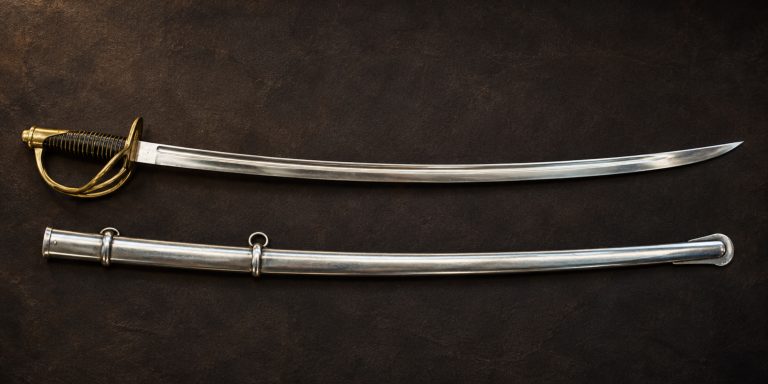
The principal sidearm was a curved cutting sword, but several forms should be distinguished.
Early Turkish sabres: Fourteenth and fifteenth-century horsemen used relatively slender, curved blades suited to cuts from horseback. Surviving Ottoman and Balkan examples vary, and modern collectors sometimes apply later labels too casually.
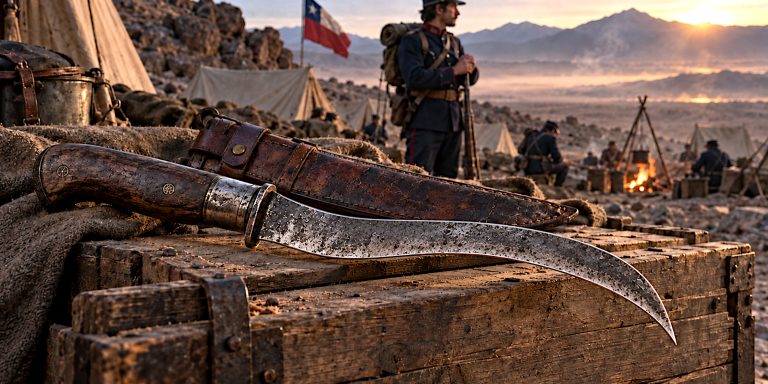
Kilij: The Ottoman kılıç, commonly written as kilij in English, developed into a strongly associated Ottoman sabre type. Many examples have a curved single-edged blade and a broadened cutting section near the point known in modern collecting language as a yelman. Not every akıncı sword had this feature, and the massive, dramatically flared kilij familiar from later museum pieces should not be projected backwards onto every fifteenth-century rider.
Pala: Ottoman sources and later terminology use pala for a broad, curved sword or sabre. It offered formidable cutting power, although blade forms changed considerably over time. The Turkish encyclopaedic account of the akıncı specifically lists both kılıç and pala among their weapons.
Straight and locally acquired swords: Frontier equipment did not respect the tidy categories beloved by modern catalogues. Captured Hungarian, Balkan or Venetian blades could be reused, traded or rehilted. A rider’s sword might therefore reflect access and fortune rather than a centrally approved pattern.
Composite bow
The reflex composite bow was one of the most important Ottoman cavalry weapons. Built from horn, wood, sinew and adhesive, it combined power with a short form manageable on horseback. An experienced rider could shoot while advancing, passing or withdrawing.
The bow enabled akıncı to harass a formation without accepting a close fight. It was also useful in pursuit and ambush. Firearms became increasingly important during the sixteenth century, but the mounted bow remained practical where speed and repeated movement mattered.
Lance and spear
Light lances gave reach against other horsemen and vulnerable infantry. They could be used in a charge, during pursuit or thrown where appropriate. A lance did not turn an akıncı into a heavily armoured western man-at-arms. The weapon served a different style of combat, often based on a sudden approach and equally sudden departure.
Mace and knife
The mace, including forms called bozdoğan, was effective at close quarters and resistant to the indignities of campaign use. Knives and daggers were practical secondary weapons. They were also tools, because life on campaign contains far more cutting of rope, food and tack than heroic art admits.
Shields
Akıncı used relatively light shields. Ottoman round shields known as kalkan could be made from woven cane, wood, hide, metal fittings and textile components. Their low weight suited mounted use. Decoration and quality ranged from serviceable pieces to splendid elite objects.
Armour and clothing
Many akıncı rode with little heavy protection, relying upon speed. Quilted garments, mail shirts, mail-and-plate defences, vambraces and helmets were nevertheless available to wealthier men or commanders. Conical helmets, sometimes fitted with mail neck protection, appear in Ottoman material and art.
The familiar image of every raider wearing wings, pelts or extravagant feathers belongs partly to descriptions of later frontier troops and to artistic convention. Some individuals certainly dressed for display and intimidation, but the akıncı should not be given a fantasy uniform assembled from three centuries of Ottoman military fashion.
Horses, endurance and fieldcraft
The horse was the true centre of akıncı warfare. Riders needed animals capable of covering long distances, surviving on limited forage and recovering quickly. Some men took spare mounts, which extended operational range and provided transport for captured goods.
Training was not confined to riding. Accounts describe swimming, negotiating difficult terrain and using weapons from the saddle. Local geography mattered as much as individual skill. Frontier families accumulated knowledge of river levels, seasonal roads, markets, estates and defensible crossings. A commander who knew which bridge flooded in spring possessed information more useful than a very impressive moustache, though he probably cultivated both.
Akıncı avoided prolonged combat when conditions were poor. Feigned retreat, dispersal, ambush and rapid concentration all suited light cavalry. Their tactical intelligence lay in refusing the sort of battle their opponents wanted.
The human cost of the raids
Ottoman frontier poetry and chronicles could present the akıncı as heroic ghazis, warriors advancing the power and faith of the dynasty. Communities exposed to their raids naturally remembered something else.
Settlements were burned, crops destroyed, property seized and civilians taken captive. Prisoners might be ransomed, sold or absorbed into Ottoman households and institutions. Under the pençik system, the state claimed a fifth share from certain categories of captives. Violence against non-combatants was not an accidental side effect of frontier raiding. It could be part of its economic and strategic purpose.
This does not make the akıncı uniquely cruel by the standards of late medieval warfare. Hungarian, Habsburg, Venetian, Wallachian and Balkan forces also raided, burned and enslaved across contested borders. It does mean that romantic portraits of carefree riders need correcting. Speed looked glorious from the saddle and quite different from the village below.
Akıncı in major Ottoman campaigns
Akıncı activity accompanied Ottoman expansion across the Balkans. Frontier lords played prominent roles in Thrace, Macedonia, Albania, Bulgaria, Serbia, Bosnia, Wallachia and the Morea. Their raids also reached Habsburg lands, Hungary, Croatia, Carniola, Styria and beyond.
During the fifteenth century, commanders such as Turahan Bey combined raiding with regional conquest, diplomacy and settlement. Under Mehmed II and Bayezid II, akıncı operations could reach deep into enemy territory. Mihaloğlu Ali Bey became one of the best-known commanders of the later fifteenth century and the subject of an Ottoman gazavatname, a literary account of holy war and heroic campaigning.
In the sixteenth century they continued to serve as advance troops and raiders during campaigns in Hungary and the Habsburg borderlands. Their strategic value was greatest where open routes allowed mounted columns to disperse and recombine. Fortified frontiers, disciplined firearm troops and increasingly controlled military zones made deep raiding more hazardous, but did not make it immediately obsolete.
Contemporary voices
The surviving voices require care. Ottoman writers often praised frontier commanders, while Christian chroniclers recorded attacks from the receiving end. Neither perspective is neutral, and neither should be discarded.
The fifteenth-century Ottoman chronicler Aşıkpaşazade repeatedly uses the language of akın, reporting that frontier forces “made a raid” into enemy country. The phrase sounds plain in translation, almost administrative, but it may conceal weeks of movement, violence and negotiation.
The Serbian-born Konstantin Mihailović, whose memoir describes the Ottoman world of the fifteenth century, called such troops “raiders” in modern English translations and explained their position ahead of the main force. His testimony is valuable because it recognises a military function rather than treating every mounted incursion as random banditry.
The poet Sûzî Çelebi’s account of Mihaloğlu Ali Bey presents the frontier commander in the elevated language of the ghazi. Its celebration of courage, speed and victory tells us how the raider elite wished to be remembered. It is literature, not a neutral field report. Then again, commanders rarely commission poems so that posterity can hear about late forage deliveries.
Western reports frequently describe “Turks” appearing suddenly, burning settlements and carrying people away. Their terminology is often loose, and it cannot always prove that the troops concerned belonged to registered akıncı formations. This is an important restraint. “Ottoman raider” and “akıncı” overlap, but they are not automatically identical.
Archaeology and material evidence
There is no simple archaeological layer that can be labelled “akıncı”. Mobile cavalry left fewer distinctive remains than a garrisoned fortress, and most weapon types associated with the akıncı were also used by other Ottoman soldiers. Attribution usually depends upon context, inscriptions, documentary connections and comparison with art.
Weapons and horse equipment
Sabre blades, arrowheads, stirrups, bits, spurs and fragments of armour recovered from Ottoman-period sites help reconstruct the material world in which the akıncı operated. On their own, such objects rarely identify a specific troop category. A curved blade found on a frontier site is evidence for a weapon, not a tiny metal identity card.
Museum collections preserve Ottoman composite bows, quivers, maces, helmets and kalkan shields, although many well-preserved examples date later than the akıncı’s fifteenth-century ascendancy. They remain valuable when dated carefully and compared with contemporary depictions.
Frontier buildings and inscriptions
The strongest material evidence for akıncı elites often comes from architecture rather than battlefields. Mosques, bridges, baths, tombs, caravanserais and charitable foundations associated with the Mihaloğlu, Evrenosoğlu, Turahanoğlu and Malkoçoğlu families show how raider commanders embedded themselves in conquered landscapes.
Gazi Evrenos’s monuments at Yenice-i Vardar, now Giannitsa in Greece, and buildings connected with the Mihaloğlu family at Edirne and in the Balkans reveal patronage, wealth and permanent settlement. Foundation deeds and funerary inscriptions can supply names, genealogies and titles that chronicles confuse or embellish.
Registers as material records
The akıncı registers are archival rather than archaeological evidence, but they are essential. They show individuals attached to communities and administrative systems. The best-known surviving records date mainly from the later life of the institution and cannot be projected unchanged onto its beginnings. Even so, they thoroughly undermine the idea that the akıncı were merely anonymous bands beyond state supervision.
Battlefield caution
Archaeology can illuminate landscapes used during Ottoman campaigns, but identifying a particular arrowhead or horseshoe as akıncı equipment is often impossible. Responsible interpretation must tolerate that uncertainty. “Possibly associated” may be less thrilling than a confident label, but it is much more useful.
Akıncı, sipahi and deli: what was the difference?
| Troop type | Main character | Support and status | Typical role |
|---|---|---|---|
| Akıncı | Frontier light cavalry | Self-equipped, often tax-privileged and organised under frontier houses | Raiding, scouting and advance operations |
| Timarlı sipahi | Provincial cavalryman holding a revenue assignment | Supported through a timar and bound to formal provincial service | Main cavalry force in field armies |
| Kapıkulu cavalry | Central household cavalry | Salaried and attached to the sultan’s standing establishment | Elite battlefield and court service |
| Deli | Bold frontier cavalry, especially prominent later | Attached to governors or commanders | Shock, escort and conspicuous frontline service |
| Tatar cavalry | Forces supplied especially by the Crimean khans | Allied or tributary military structure | Raiding, reconnaissance and mobile warfare |
These categories changed over time and could overlap in equipment or battlefield behaviour. The clearest differences concern institutional connection rather than costume.
The disaster of 1595 and the decline of the akıncı
The event conventionally treated as the breaking point came during the Long Turkish War. In 1595, Ottoman forces operating against Michael the Brave of Wallachia withdrew across the Danube. A large body of akıncı was reportedly trapped or destroyed when the crossing failed amid the retreat. Later tradition attached enormous losses in men and horses to the disaster.
Exact figures should be treated cautiously. Claims involving tens of thousands of horses may express the perceived scale of catastrophe as much as an audited count. The essential point remains sound: the akıncı organisation suffered a blow from which it did not fully recover.
Its decline had broader causes. Ottoman expansion had slowed, frontier warfare was becoming more heavily fortified, and other forces could perform reconnaissance and raiding. Crimean Tatar cavalry assumed many mobile functions, while serhad kulu troops served the frontier fortresses. Firearms and changing logistics altered the balance further.
Akıncı did not vanish on a single afternoon. Reduced groups and the name continued into later centuries, and the designation was formally abolished with other old military institutions in 1826. The celebrated classical organisation, however, belonged chiefly to the frontier world of the fourteenth, fifteenth and sixteenth centuries.
Myth, memory and popular culture
In Turkish memory, the akıncı became a symbol of daring, speed and sacrifice. Poetry and popular history often picture riders disappearing beyond the frontier on near-suicidal missions. Balkan and central European traditions more often remember Ottoman raiders as agents of devastation and captivity.
Both memories grew from real experience, but each selects its preferred view. The heroic version can hide the captives. The victim-centred version can obscure organisation, reconnaissance and political purpose. A convincing history has to hold both in view.
Nor should every flamboyant Ottoman horseman in an illustration be called an akıncı. Images of deli cavalry, Crimean Tatars and later irregulars are repeatedly recycled under the name. Feathers are apparently irresistible to picture editors.
Why the akıncı mattered
The akıncı helped turn Ottoman frontier pressure into expansion. They gathered intelligence, made roads unsafe, strained defensive systems and exposed regions to the arrival of the main army. Their commanders also helped establish Ottoman rule through buildings, endowments and settlement.
They demonstrate that late medieval warfare cannot be understood only through pitched battles. Armies depended upon information, movement, forage and fear. The akıncı attacked all four.
Their story also resists comfortable labels. They were organised without being a conventional standing corps, celebrated as holy warriors while pursuing profit, and admired for military skill while inflicting terrible damage on civilians. That contradiction is not an inconvenience to edit out. It is the history.
Frequently asked questions
Were the akıncı elite troops?
Some commanders and veteran riders were highly skilled and prestigious, but the akıncı were not a uniform palace elite. They ranged from powerful frontier households to ordinary registered riders who supplied their own equipment.
Were akıncı paid by the Ottoman state?
They did not normally receive a regular salary. They supported themselves, benefited from tax privileges and profited from booty and captives. Some later received land-revenue assignments.
Did akıncı use guns?
Firearms spread through Ottoman warfare during the period in which the akıncı flourished. Individual raiders may have carried them, especially in the sixteenth century, but bows, swords and lances suited their mobile role and remained central to their image and practice.
Did they wear heavy armour?
Usually not. Speed and endurance favoured light equipment. Wealthier riders and commanders could own helmets, mail or mail-and-plate defences, but a fully armoured force would have sacrificed much of the mobility that made it valuable.
Were they the same as the bashi-bazouks?
No. “Bashi-bazouk” is a much later term commonly associated with nineteenth-century Ottoman irregulars. Applying it to fifteenth-century akıncı collapses very different institutions into one vague stereotype.
What happened to the akıncı?
Their organisation declined after severe losses in 1595 and as the military frontier changed. Crimean Tatar cavalry and frontier garrison troops increasingly fulfilled related functions. The name lingered long after the classical corps had lost its former importance.
Sources and further reading
- Abdülkadir Özcan, “Akıncı”, TDV İslâm Ansiklopedisi.
- Caroline Finkel, Osman’s Dream: The Story of the Ottoman Empire 1300–1923.
- Halil İnalcık, The Ottoman Empire: The Classical Age 1300–1600.
- Rhoads Murphey, Ottoman Warfare 1500–1700.
- Konstantin Mihailović, Memoirs of a Janissary, translated by Benjamin Stolz.
- Pál Fodor, studies of Ottoman frontier warfare, raiding and military organisation.
- Aşıkpaşazade, Tevârîh-i Âl-i Osman, in modern editions and translations.
- Sûzî Çelebi, Gazavatnâme-i Mihaloğlu Ali Bey.
- Fahameddin Başar, “Mihaloğulları” and “Malkoçoğulları”, TDV İslâm Ansiklopedisi.
- Feridun Emecen, “Turahan Bey”, TDV İslâm Ansiklopedisi.