The Druzhina stood at the heart of medieval Rus society. They were not simply soldiers but companions, advisers, diplomats, tax collectors and, when necessary, the sharp end of princely authority. Their loyalty was personal rather than institutional, tied to a prince rather than a kingdom. That relationship shaped the politics, warfare and expansion of Kievan Rus for centuries.
They fought Vikings, steppe nomads, Byzantine armies, rival princes, pagan tribes and eventually the Mongols. Along the way they developed into one of medieval Europe’s most capable military elites, combining Scandinavian traditions with Slavic resilience and Byzantine sophistication.
Their story is often overshadowed by the more familiar image of the Viking raider. That is unfortunate, because the Druzhina evolved into something far more interesting. They became professional warriors whose influence reached from the Baltic Sea to the Black Sea, helping create one of the largest states in medieval Europe.
Who Were the Rus Druzhina?
The word Druzhina derives from the Old Slavic word for “companions” or “friends”. It perfectly reflected their role.
A prince’s Druzhina was his personal household and military retinue. Members swore loyalty directly to him, receiving wealth, land, prestige and influence in return.
Unlike many western feudal knights, early Druzhinniki were not simply landowners fulfilling military obligations. Many lived permanently with their prince, forming a professional military household that travelled wherever he went.
The system developed during the ninth century as Scandinavian rulers established control over trade routes linking the Baltic and Constantinople. By the High Medieval period, roughly the eleventh to early thirteenth centuries, the Druzhina had become a sophisticated military institution blending Norse, Slavic and Byzantine influences.
Origins of the Druzhina
The earliest Druzhina emerged alongside the Varangian founders of Kievan Rus.
According to the Primary Chronicle, Scandinavian leaders such as Rurik and Oleg gathered loyal followers who helped establish authority over numerous Slavic and Finnic peoples.
As generations passed, these Scandinavian origins gradually blended into local culture.
By the eleventh century many Druzhina members were ethnically Slavic, although Scandinavian traditions remained visible in weapon styles, military organisation and personal names.
The growing wealth of cities such as Kiev, Novgorod, Smolensk and Chernihiv allowed princes to maintain increasingly professional forces.
Organisation
The Druzhina was generally divided into two groups.
| Rank | Role |
|---|---|
| Senior Druzhina (Boyars) | Military commanders, advisers, governors and wealthy nobles |
| Junior Druzhina | Professional warriors, household guards and mounted retainers |
Senior members often advised princes on diplomacy, taxation and succession disputes.
Junior members formed the military core during campaigns.
As princes gained power, successful warriors could rise through the ranks. Military skill mattered enormously, although family connections certainly helped. Medieval politics has never been entirely free from favouritism.
Recruitment
Membership came from several backgrounds.
Sources of recruitment included:
- Sons of established Druzhina families
- Scandinavian adventurers
- Slavic nobles
- Mercenary warriors
- Foreign soldiers from neighbouring kingdoms
- Distinguished local fighters
A successful prince attracted talented warriors through generosity.
An unsuccessful prince often discovered remarkable enthusiasm among his followers for serving someone else.
Battlefield Role
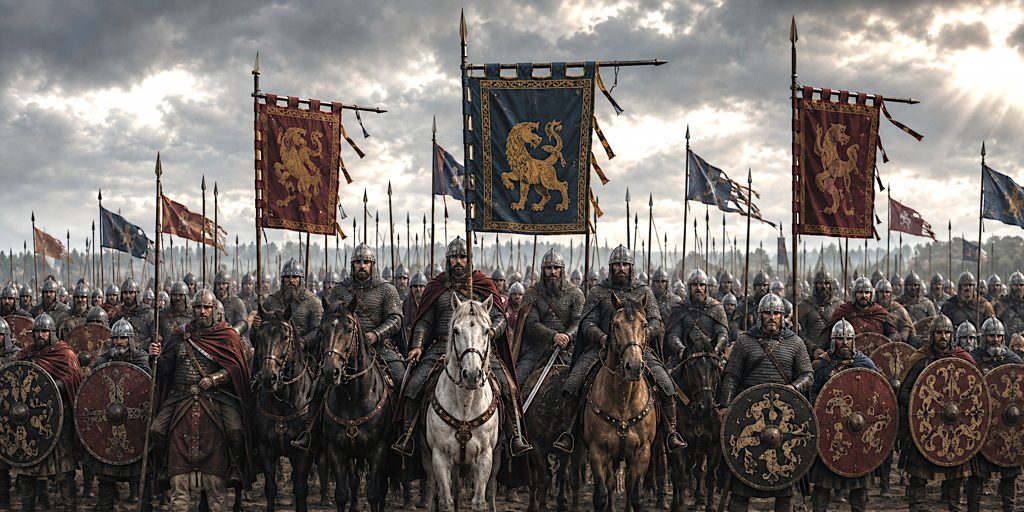
The Druzhina provided Kievan Rus with its professional striking force.
They served as:
- Heavy cavalry
- Elite infantry
- Royal bodyguards
- Battlefield commanders
- Siege specialists
- River warfare troops
Campaigns often combined Druzhina professionals with local militias known as voi.
The professionals led attacks while militias provided numbers.
Against nomadic cavalry they relied upon disciplined formations and heavy armour.
Against infantry they frequently fought mounted before dismounting when terrain demanded.
Tactics and Battlefield Doctrine
Rus warfare adapted continually to changing enemies.
Typical battlefield methods included:
- Heavy cavalry charges
- Shield wall formations
- Coordinated infantry advances
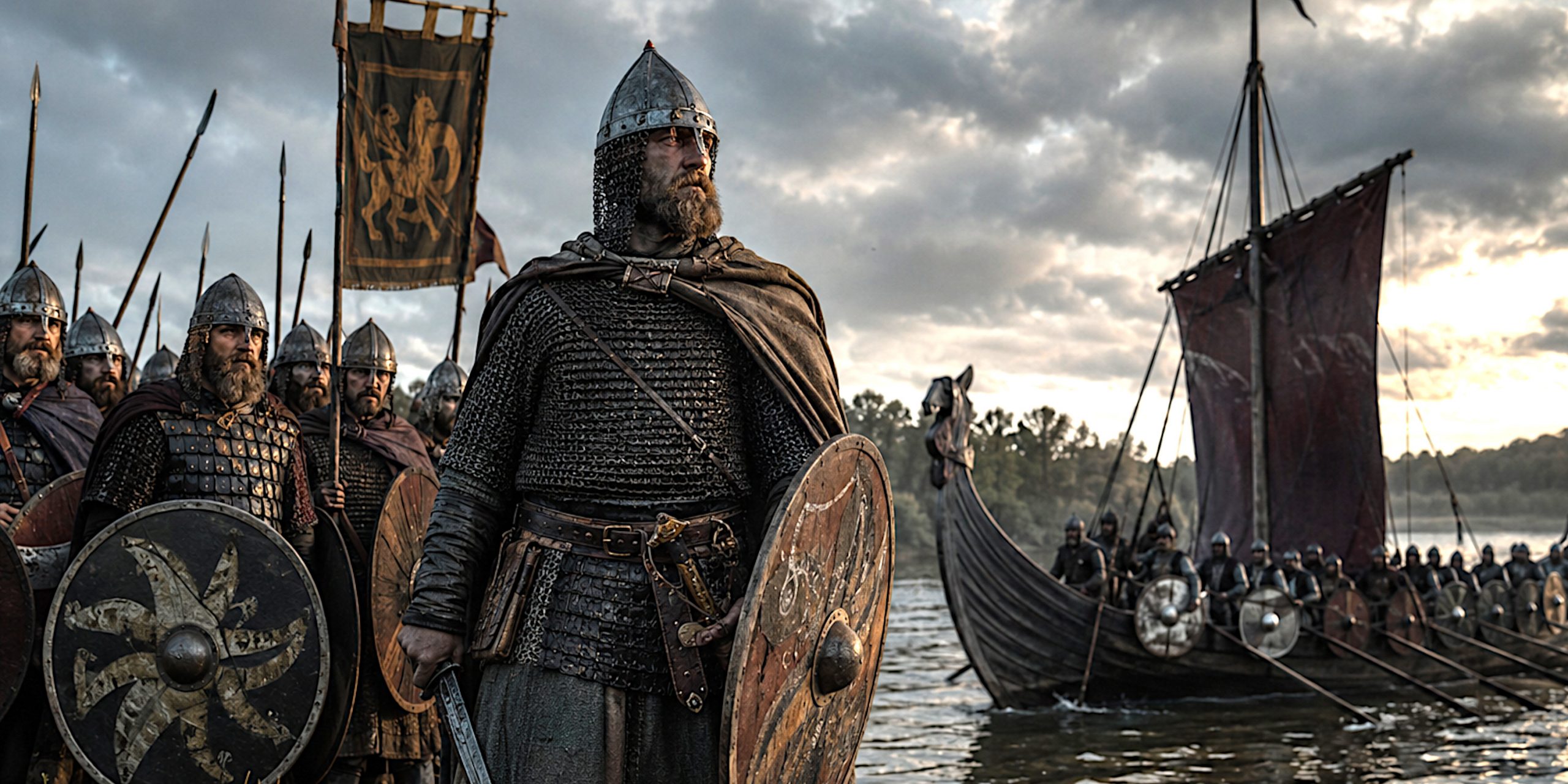
- River assaults using longships
- Ambushes in forests
- Defensive fighting around fortified towns
Campaigns against the Pechenegs and Cumans demanded mobility.
Wars against rival Rus princes often resembled western medieval battles dominated by heavily armed cavalry.
When facing Byzantine armies, commanders learned valuable lessons about logistics and siege warfare.
Famous Campaigns
Several major conflicts showcased the Druzhina.
| Campaign | Date | Significance |
|---|---|---|
| Campaigns against Byzantium | 10th to 11th centuries | Demonstrated Rus naval and military power |
| Battle of the Alta River | 1068 | Defeat against the Cumans exposed tactical weaknesses |
| Internal Rus Civil Wars | 11th to 12th centuries | Druzhina often fought other Druzhina forces |
| Campaigns against Volga Bulgars | Various | Expanded influence along trade routes |
| Battle of the Kalka River | 1223 | Catastrophic defeat against the Mongols |
The Battle of the Kalka River revealed how devastating disciplined Mongol horse archers could be against armies accustomed to different styles of warfare.
Arms and Armour
The Druzhina possessed some of the finest equipment in eastern Europe.
Weapons reflected both Scandinavian heritage and continental influences.
Swords
The sword symbolised elite status.
Common sword types included:
- Petersen Type X
- Petersen Type S
- Petersen Type T
- Geibig Type 10
- Early medieval arming swords
- Ulfberht swords imported from the Rhineland
- Pattern-welded Viking swords
Many surviving blades bear famous inscriptions such as +ULFBERHT+, indicating exceptional Frankish manufacture.
Imported blades were often mounted with locally crafted hilts decorated in Scandinavian or Rus artistic styles.
Other Weapons
Druzhina warriors also carried:
- Spears
- Heavy thrusting spears
- Throwing spears
- Dane axes
- Bearded axes
- War hammers
- Maces
- Long knives
- Seaxes
- Composite bows
- Javelins
The spear remained the most common battlefield weapon despite the prestige associated with swords.
A sword announced status.
A spear quietly won battles.
Armour
Typical armour included:
- Riveted mail hauberks
- Lamellar armour influenced by Byzantium
- Scale armour
- Iron helmets with nasal guards
- Conical helmets
- Spectacle helmets
- Kite shields
- Round wooden shields with iron bosses
- Leather belts reinforced with bronze fittings
- Iron greaves for wealthier warriors
By the twelfth century helmets increasingly incorporated face protection and reinforced construction.
Horses and Cavalry Equipment
Mounted warfare became increasingly important during the High Medieval period.
Elite horses wore:
- Decorative bridles
- Iron bits
- Bronze fittings
- Saddle blankets
- High-backed saddles
Stirrups allowed powerful lance attacks while improving stability during close combat.
Archaeology
Archaeological discoveries have transformed our understanding of the Druzhina.
Important finds come from:
- Gnezdovo
- Staraya Ladoga
- Novgorod
- Kiev
- Shestovytsia
- Chernihiv
Excavations have uncovered:
- Rich warrior burials
- Imported Frankish swords
- Byzantine coins
- Mail armour
- Lamellar plates
- Axes
- Arrowheads
- Horse equipment
- Decorative belt fittings
- Silver jewellery
The Gnezdovo cemetery alone has produced hundreds of burial mounds revealing strong Scandinavian influences during the early development of Rus society.
Many graves contain both weapons and luxury goods, highlighting the wealth accumulated through trade as much as warfare.
Contemporary Accounts
Several medieval writers described the warriors of Rus.
The Byzantine emperor Constantine VII wrote:
“The Ros come down from outer Russia to Constantinople.”
His account highlights the military and commercial importance of the Rus fleets operating along the great rivers.
The Arab traveller Ahmad ibn Fadlan observed:
“I have never seen more perfect physical specimens.”
Although writing primarily about Volga Rus merchants, his description reflects the impressive appearance of elite northern warriors.
The Primary Chronicle records Prince Sviatoslav’s famous declaration before battle:
“I am coming against you.”
The phrase became synonymous with direct, uncompromising warfare. It is admirably concise by medieval diplomatic standards.
Daily Life
Life within the Druzhina involved more than warfare.
Members participated in:
- Hunting expeditions
- Court ceremonies
- Diplomatic missions
- Tax collection
- Judicial proceedings
- Military training
- Religious festivals after Christianisation
Large feasts reinforced loyalty between prince and followers.
Gift giving formed an essential part of this relationship.
A generous prince usually enjoyed remarkable popularity.
A miserly one tended to discover just how mobile professional warriors could be.
Religion
The earliest Druzhina followed Norse and Slavic pagan traditions.
Following the conversion of Prince Vladimir in 988, Christianity spread rapidly throughout the ruling elite.
Church patronage became increasingly important.
Nevertheless, archaeological evidence suggests older beliefs persisted alongside Christianity for generations.
Decline
The Mongol invasions fundamentally changed eastern European warfare.
Many Druzhina formations were destroyed during the invasions of the 1230s and 1240s.
Others adapted by serving Mongol rulers or evolving into new military elites under the successor principalities of Vladimir-Suzdal, Novgorod and eventually Moscow.
Although the institution disappeared, its traditions survived.
The concept of a loyal military household remained central to Russian military organisation for centuries.
Legacy
The Druzhina helped create one of medieval Europe’s great states.
Their military professionalism protected trade routes connecting Scandinavia, Byzantium and the Islamic world.
Their blend of Scandinavian, Slavic and Byzantine traditions produced a distinctive military culture unlike anything found elsewhere in Europe.
Modern historians increasingly recognise them as more than Viking descendants. They were the architects of medieval Rus power, adapting constantly to changing political realities and increasingly dangerous enemies.
Their greatest achievement may not have been winning battles alone, but sustaining a vast and culturally diverse realm across forests, rivers and endless steppe. That required discipline, diplomacy and endurance in equal measure.
The sword may capture our imagination, but the institutions built around those swords proved far more enduring.
Frequently Asked Questions
What was the Rus Druzhina?
The Druzhina was the elite military retinue that served the princes of Kievan Rus between the ninth and thirteenth centuries.
Were the Druzhina Vikings?
Early Druzhina contained many Scandinavian warriors, but by the High Medieval period they were largely a blend of Slavic, Norse and other eastern European peoples.
What swords did the Druzhina use?
Elite warriors commonly carried Petersen Type X, S and T swords, Geibig Type 10 swords, Frankish Ulfberht blades, pattern-welded Viking swords and early medieval arming swords.
Did the Druzhina fight as cavalry?
Yes. By the High Medieval period many Druzhina warriors served as heavily armoured cavalry while remaining capable infantry when required.
What happened to the Druzhina?
The institution declined following the Mongol invasions during the thirteenth century, although many of its traditions survived in later Russian principalities.