Fantasy is full of magical swords. Some burn with fire. Some glow blue whenever trouble appears. Others are so ridiculously overpowered that you wonder why the villain even bothered turning up.
Heartsbane is different.
Tad Williams created a weapon that feels genuinely ancient. It carries history rather than spectacle, sorrow rather than glory. Like much of Memory, Sorrow and Thorn, Heartsbane is less interested in flashy magic than the weight of memory, loss and difficult choices.
That is exactly what makes it fascinating.
Among the legendary Great Swords of Osten Ard, Heartsbane occupies a unique place. It is feared, respected and surrounded by stories that blur the line between myth and history. Every appearance reminds readers that legendary weapons are rarely blessings. More often, they are burdens wrapped in beautiful steel.
Quick Facts
| Feature | Details |
|---|---|
| Weapon | Heartsbane |
| Series | Memory, Sorrow and Thorn |
| Author | Tad Williams |
| Type | Legendary longsword |
| Material | Enchanted ancient steel |
| Origin | Forged during the elder ages of Osten Ard |
| Known For | One of the Great Swords tied to the fate of the realm |
| Themes | Memory, sacrifice, grief and destiny |
What Is Heartsbane?
Heartsbane is one of the legendary swords whose histories stretch back long before the main events of Memory, Sorrow and Thorn.
Unlike ordinary weapons forged for war alone, Heartsbane has become part of the mythology of Osten Ard itself. Kings, heroes and ancient peoples have all contributed to its reputation, transforming it from a sword into a symbol.
Its name immediately hints at its role.
“Heartsbane” is hardly the sort of name you give a sword intended for cheerful village festivals. It suggests suffering, heartbreak and the painful cost of victory. Tad Williams has always enjoyed meaningful names, and this is one of his strongest.
The Origins of Heartsbane
The earliest history of Heartsbane disappears into the deep past.
It belongs to an era when humans, Sithi and other ancient races shaped the history of Osten Ard. As centuries passed, the truth became tangled with legend. Different cultures remembered the sword in different ways, while songs and stories slowly replaced reliable history.
This uncertainty is intentional.
Williams writes history much like real medieval chroniclers did. Contradictions exist because history is rarely neat. Heroes become larger than life, villains gain impossible powers and every generation quietly edits events to suit itself.
Heartsbane benefits enormously from this approach. Its mystery feels earned rather than manufactured.
Appearance
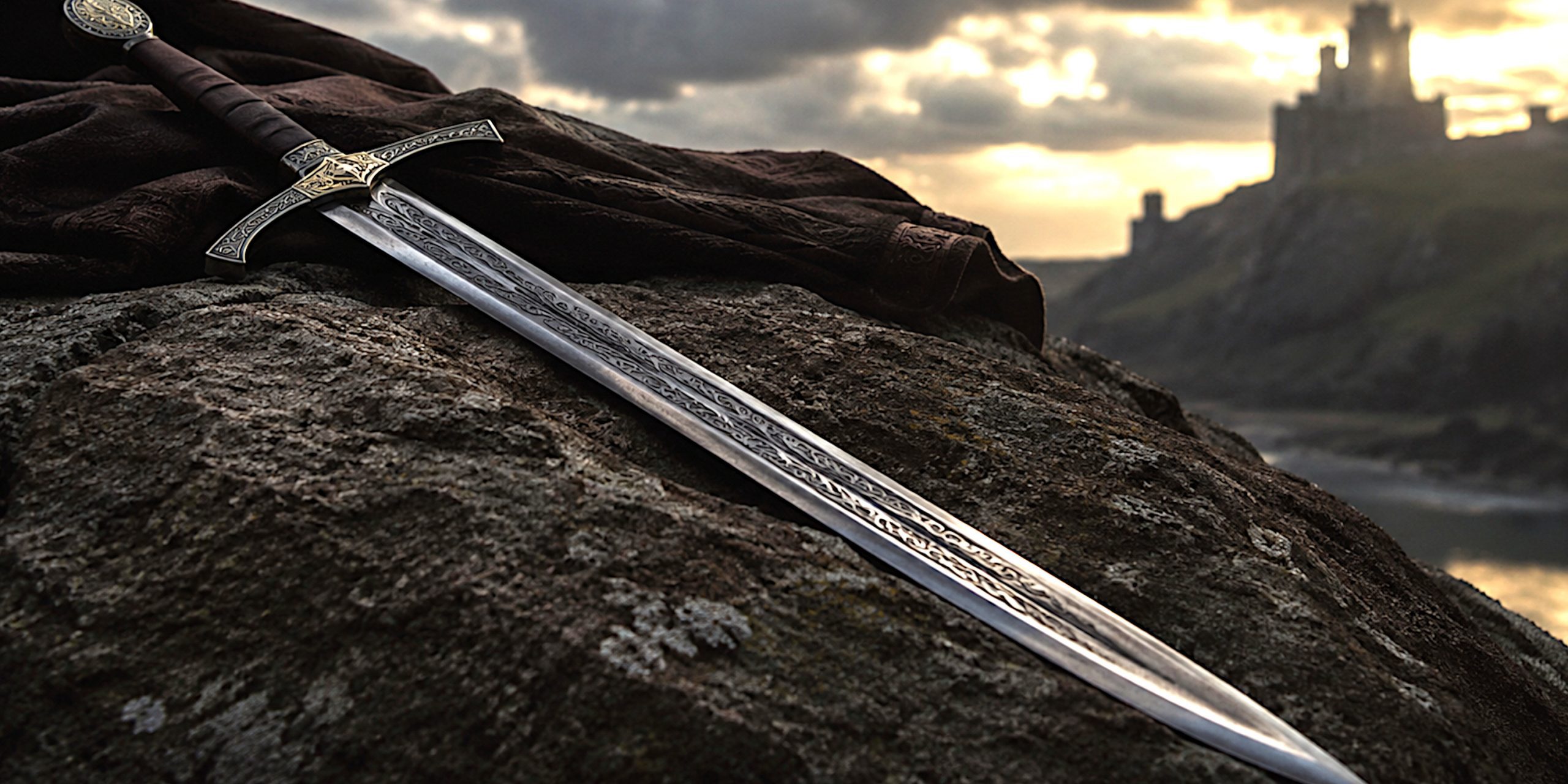
Although descriptions vary slightly throughout the novels, Heartsbane possesses the qualities expected of an ancient legendary blade.
Its defining characteristics include:
- A long, elegant double-edged blade
- Exceptional craftsmanship
- Ornate fittings reflecting immense age
- A weapon that appears both beautiful and intimidating
- A presence that commands respect before it is even drawn
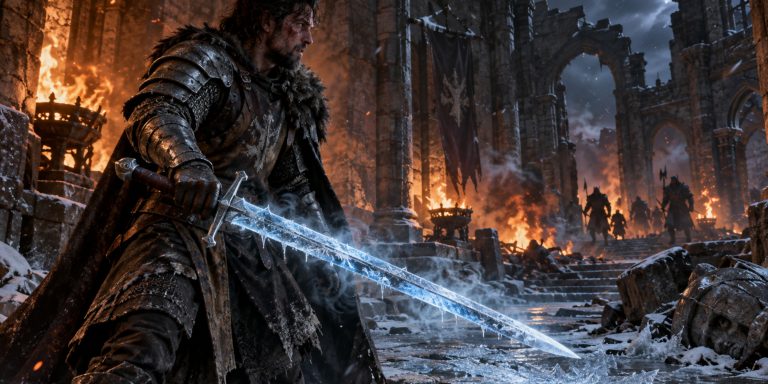
Rather than glowing constantly or crackling with magical energy, Heartsbane carries something subtler.
Characters often react emotionally to it before they fully understand why.
Powers and Abilities
The sword’s true power is never reduced to simple magical abilities.
Instead, Heartsbane possesses qualities that fit Williams’ restrained approach to fantasy.
Its strengths include:
- Extraordinary durability
- Exceptional cutting ability
- Ancient enchantments
- Symbolic importance that shapes political events
- Deep connection to forgotten history
The sword’s greatest strength is arguably psychological.
Owning Heartsbane changes how others see its bearer. In a world where prophecy, history and legend influence real decisions, reputation becomes a weapon in its own right.
Symbolism
Like nearly everything in Memory, Sorrow and Thorn, Heartsbane operates on multiple levels.
It represents:
- The burden of inheritance
- The consequences of violence
- The persistence of history
- Memory surviving through objects
- The cost of leadership
This makes Heartsbane far more interesting than a simple magical sword.
Many fantasy weapons exist purely to win battles.
Heartsbane exists to remind readers that every victory creates new scars.
Heartsbane in the Story
Throughout the series, Heartsbane becomes intertwined with larger struggles affecting Osten Ard.
Its significance extends beyond combat.
The sword reinforces several major themes:
- Ancient conflicts refusing to disappear
- Forgotten knowledge returning
- Political legitimacy
- Family legacy
- The repeating nature of history
Williams constantly reminds readers that old mistakes rarely stay buried forever.
Sometimes they come back carrying a sword.
How Heartsbane Compares with Other Legendary Swords
| Sword | Series | Primary Role |
|---|---|---|
| Heartsbane | Memory, Sorrow and Thorn | Legacy, sacrifice and memory |
| Andúril | The Lord of the Rings | Kingship and hope |
| Stormbringer | Elric | Chaos and corruption |
| Nightblood | Warbreaker | Sentient magical destruction |
| Ice | A Song of Ice and Fire | Noble authority and family heritage |
| Excalibur | Arthurian Legend | Divine kingship |
Heartsbane feels closer to real historical relics than many fantasy swords.
Rather than solving problems, it often complicates them.
That feels refreshingly believable.
Why Heartsbane Feels Different
Many fantasy novels introduce legendary weapons simply because legendary weapons are cool.
Tad Williams asks a more interesting question.
What happens when people spend thousands of years believing a sword matters?
Eventually, it genuinely does.
Not because the blade shoots lightning across battlefields, but because kings, armies and entire civilisations believe the stories surrounding it.
That subtle distinction gives Heartsbane remarkable emotional weight.
Influence on Modern Fantasy
The influence of Memory, Sorrow and Thorn on later fantasy cannot be overstated.
Authors including George R. R. Martin have openly acknowledged Tad Williams’ impact on modern epic fantasy.
Heartsbane reflects many qualities later seen in influential fictional weapons:
- Rich historical backstory
- Moral ambiguity
- Symbolic importance over raw magical power
- Connections between mythology and politics
- Ancient mysteries gradually revealed
Many modern fantasy weapons owe more to Williams than readers realise.
Why Readers Still Love Heartsbane
Decades after publication, Heartsbane remains memorable because it rewards patient readers.
It does not demand attention through spectacle.
Instead, every mention quietly reinforces the immense history of Osten Ard.
That approach feels surprisingly modern.
In an era where every magical item seems determined to explode dramatically every other chapter, Heartsbane simply exists with quiet confidence. It knows its reputation. It does not need to shout about it.
Honestly, that’s quite a flex for an ancient sword.
Legacy
Heartsbane remains one of the defining artefacts of Memory, Sorrow and Thorn.
Its importance lies not simply in battle, but in what it represents.
It reminds readers that objects can preserve history long after kingdoms disappear. Every scratch on the blade hints at forgotten wars, lost heroes and broken promises. The sword becomes a physical link between past and present, allowing Williams to explore one of the series’ central ideas: history never truly dies.
That is why Heartsbane continues to resonate with fantasy readers. It is not merely a magical weapon. It is memory forged into steel.
Frequently Asked Questions
Is Heartsbane magical?
Yes, although its powers are presented with subtlety rather than overwhelming displays of magic.
Who created Heartsbane?
Its exact origins lie deep within the ancient history of Osten Ard, adding to its legendary status.
What does Heartsbane symbolise?
The sword represents memory, sacrifice, grief, responsibility and the enduring influence of the past.
Is Heartsbane one of the Great Swords?
Yes. It is among the legendary weapons whose histories shape the mythology of Memory, Sorrow and Thorn.
Why is Heartsbane so memorable?
Its appeal comes from its rich history, symbolic importance and the restrained way Tad Williams integrates it into the wider story, making it feel like a genuine historical relic rather than just another magical sword.