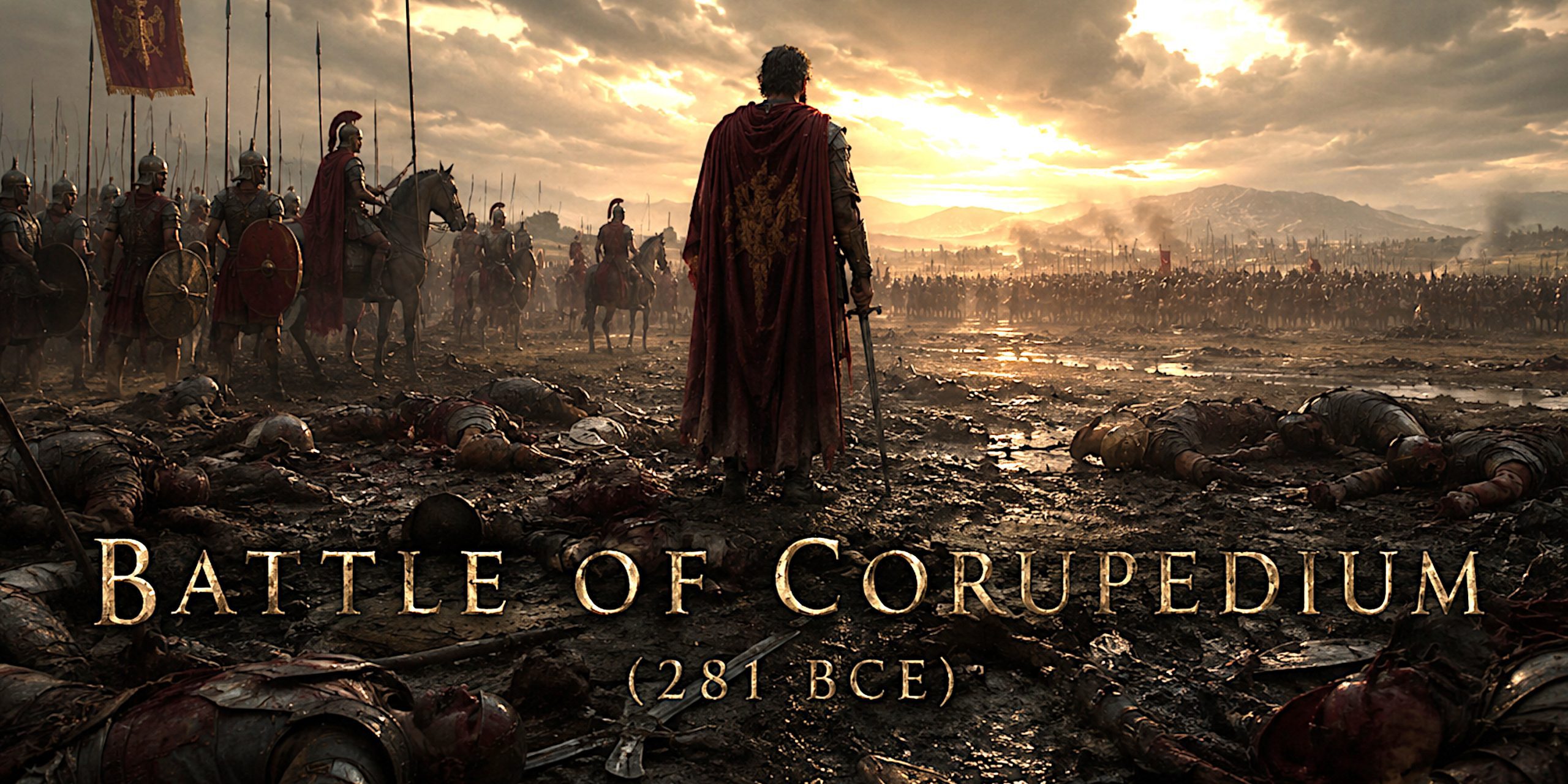
The Battle of Corupedium, fought in 281 BCE somewhere in western Asia Minor, marked the end of one of history’s longest and bloodiest succession struggles. It was the final major battle of the Wars of the Diadochi, the generations of conflict that erupted after Alexander the Great died without naming a capable adult heir.
When Seleucus I Nicator defeated Lysimachus, the last of Alexander’s original companions ruling a major kingdom disappeared from the political stage. It was a victory of enormous significance, yet one that delivered bitter irony. Seleucus achieved what seemed impossible, only to be murdered before he could truly enjoy it.
As a historian, I have always found Corupedium strangely fascinating. It lacks the romantic reputation of Ipsus or Gaugamela, but it feels like the closing chapter of an epic novel. The heroes have become ageing kings, their famous companions long dead, and the glorious dreams of empire have given way to weary ambition. History, as usual, had one last twist prepared.
Background
Following Alexander’s death in 323 BCE, his empire fragmented into competing kingdoms ruled by his former generals.
By 281 BCE only two of the original Diadochi remained as major powers:
- Seleucus I Nicator, ruler of the vast Seleucid Empire stretching from Syria to the borders of India.
- Lysimachus, ruler of Thrace, Macedonia and much of western Asia Minor.
Relations between the two rulers deteriorated after Lysimachus executed his capable son Agathocles. The decision caused political chaos within his kingdom.
Agathocles’ widow, Lysandra, fled to Seleucus seeking protection. Several governors and noble families also defected, giving Seleucus both a justification for intervention and valuable intelligence.
The stage was set for one final contest.
Why the Battle Was Fought
Several factors drove the conflict.
| Cause | Importance |
|---|---|
| Succession crisis after Agathocles’ execution | Immediate trigger |
| Defections from Lysimachus’ court | Strengthened Seleucus |
| Control of Asia Minor | Strategic objective |
| Personal rivalry between the last surviving Diadochi | Political motivation |
| Desire to reunify Alexander’s empire | Long term ambition |
Neither king was a young commander seeking glory.
Both were veterans in their seventies who had spent over forty years fighting almost continuously.
Forces
Exact numbers remain uncertain because no contemporary source records the armies in detail.
Seleucid Army
| Unit | Estimated Presence |
|---|---|
| Macedonian phalanx | Large |
| Companion style heavy cavalry | Strong |
| Cataphracts | Possible |
| Horse archers | Present |
| War elephants | Significant number |
| Light infantry | Numerous |
| Cretan archers | Likely |
| Slingers | Present |
Strengths
- Vast resources from the Seleucid Empire
- Large elephant corps inherited from eastern campaigns
- Experienced multinational army
- Numerous veteran officers
Lysimachus’ Army
| Unit | Estimated Presence |
|---|---|
| Macedonian phalanx | Large |
| Heavy cavalry | Strong |
| Thracian infantry | Numerous |
| Peltasts | Present |
| Mercenary Greeks | Likely |
| Light cavalry | Moderate |
Strengths
- Highly experienced veterans
- Strong defensive formations
- Excellent knowledge of Asia Minor
Estimated Army Sizes
| Army | Estimated Strength |
|---|---|
| Seleucus | 40,000 to 60,000 |
| Lysimachus | 35,000 to 50,000 |
These figures remain educated estimates based upon the logistical capacity of each kingdom.
Leaders
| Commander | Kingdom | Role |
|---|---|---|
| Seleucus I Nicator | Seleucid Empire | Supreme Commander |
| Lysimachus | Thrace and Macedonia | Supreme Commander |
Seleucus I Nicator
By 281 BCE Seleucus had become one of antiquity’s greatest survivors.
He had served under Alexander, lost everything, rebuilt an empire from almost nothing and defeated nearly every rival placed before him.
His greatest strength was patience. He often preferred careful preparation over reckless attack.
Lysimachus
Lysimachus had been one of Alexander’s personal bodyguards.
Although perhaps less celebrated than Seleucus, he proved an exceptionally capable administrator and battlefield commander.
Age, political instability and questionable family decisions weakened his position more than military incompetence ever did.
Executing your most talented son rarely improves morale. Ancient royal families never seemed to grasp this remarkably consistent lesson.
Arms and Armour
The armies remained largely Macedonian in character despite decades of evolution.
| Weapon | Users | Notes |
|---|---|---|
| Xiphos | Officers and infantry | Straight double edged Greek sword used for close combat |
| Kopis | Cavalry | Forward curved cutting sword capable of devastating slashing blows |
| Machaira | Cavalry and officers | Curved single edged sword similar to the kopis |
| Sarissa | Phalanx infantry | Pike approximately 5 to 6 metres long |
| Dory spear | Supporting infantry | Traditional thrusting spear |
| Javelins | Peltasts | Missile weapon |
| Composite bow | Eastern troops | Greater range than simple bows |
Armour
- Bronze helmets
- Iron helmets in increasing numbers
- Linen cuirasses
- Scale armour
- Muscle cuirasses for elite officers
- Large aspis shields
- Smaller pelte shields for light troops
- Greaves for heavy infantry
The Battlefield
The precise location of Corupedium remains unknown.
Most historians place it somewhere near Sardis in Lydia, western Asia Minor.
The name itself may derive from a nearby plain suitable for deploying phalanxes and cavalry.
Open terrain would certainly favour the armies involved.
Battle Timeline
| Time | Event |
|---|---|
| Early 281 BCE | Seleucus invades Asia Minor |
| Campaign begins | Defections weaken Lysimachus |
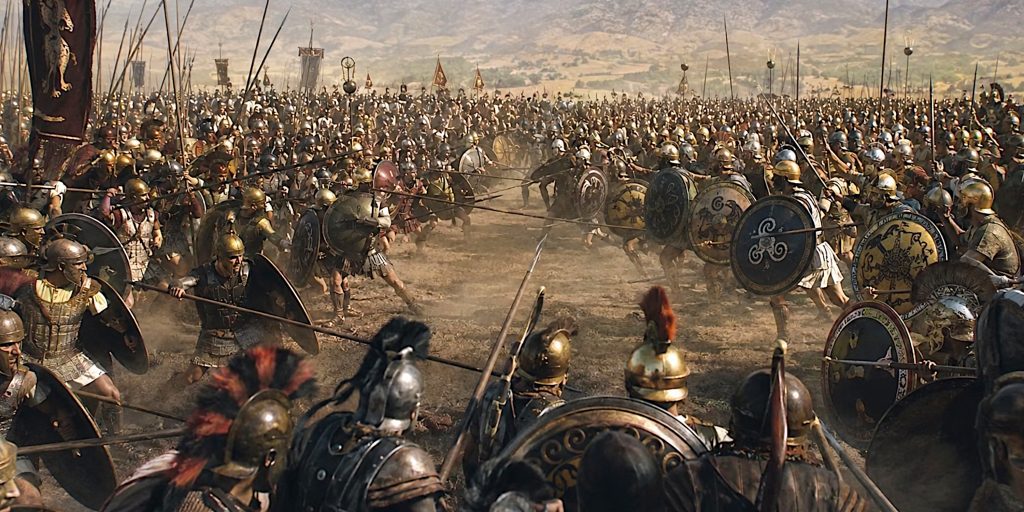
| Battle day | Armies deploy on open ground |
| Opening phase | Phalanxes engage |
| Middle stage | Cavalry actions develop |
| Decisive moment | Lysimachus is killed in combat |
| Final phase | His army collapses |
| Aftermath | Seleucus gains control of Asia Minor |
How the Battle Unfolded
Although ancient descriptions are frustratingly brief, the broad outline is reasonably clear.
Both armies probably formed classic Hellenistic battle lines with the phalanx occupying the centre.
Light troops screened the advance while cavalry protected each flank.
War elephants likely played an important supporting role for Seleucus by disrupting enemy formations and creating gaps for cavalry exploitation.
At some point during the fighting, Lysimachus was killed.
Whether struck by a javelin, spear or missile remains uncertain.
His death shattered command and control.
Like many Hellenistic armies, cohesion depended heavily upon the survival of the king. Once news spread across the battlefield, organised resistance rapidly collapsed.
Seleucus emerged victorious.
Casualties
Precise casualty figures are unknown.
Likely outcomes include:
- Heavy losses among Lysimachus’ army
- Numerous prisoners
- Collapse of organised resistance in Asia Minor
- Death of King Lysimachus
Seleucus probably suffered substantial casualties as well, although victory naturally obscures such details in surviving accounts.
Contemporary Sources
Ancient accounts survive only in fragments and later histories.
Justin summarises the battle’s importance:
“Lysimachus was slain in battle.”
Appian notes that Seleucus became master of Asia after defeating his rival.
Memnon of Heraclea also preserves valuable information regarding the political events surrounding the campaign.
While frustratingly brief, these writers agree that Corupedium represented the decisive end of Lysimachus’ kingdom.
Archaeology
Unlike battles such as Cannae or Kalkriese, Corupedium has never been securely identified archaeologically.
Current evidence consists primarily of historical reconstruction.
Archaeologists continue to debate:
- The precise battlefield location
- Ancient road networks
- Settlement patterns near Sardis
- Possible military encampments
No confirmed concentration of weapons, armour or human remains has yet been connected to the battle.
This is hardly unusual for Hellenistic warfare. Many battlefields disappeared beneath centuries of farming, settlement and changing landscapes long before archaeology became a science.
Aftermath
The consequences proved immense.
Seleucus now controlled almost all of Alexander’s former Asian territories and appeared poised to reclaim Macedonia.
He never had the opportunity.
Only months later he crossed into Europe, where he was assassinated by Ptolemy Keraunos.
Instead of restoring Alexander’s empire, his death ensured the Hellenistic kingdoms remained permanently divided.
Corupedium therefore closed one era while quietly opening another.
The surviving kingdoms gradually evolved into stable states that would dominate the eastern Mediterranean until Rome began absorbing them during the following centuries.
Legacy
Corupedium is often overshadowed by Ipsus, Issus and Gaugamela, yet its historical importance is difficult to exaggerate.
It marked:
- The final major battle of the Wars of the Diadochi
- The death of the last significant rival to Seleucus
- The end of Alexander’s original generation of commanders
- The transition from conquest to established Hellenistic kingdoms
Perhaps its greatest lesson is that victory does not always bring security.
Seleucus survived decades of warfare, defeated every serious rival, reunited much of Alexander’s empire and then fell not to an enemy army, but to an assassin. History possesses an unusually sharp sense of irony.
Frequently Asked Questions
Where was the Battle of Corupedium fought?
The exact location remains uncertain, although it was almost certainly fought somewhere near Sardis in western Asia Minor.
Who won the Battle of Corupedium?
Seleucus I Nicator defeated Lysimachus in 281 BCE.
Why was the battle important?
It ended the Wars of the Diadochi and removed the last major rival among Alexander the Great’s surviving successors.
How did Lysimachus die?
Ancient sources agree that he was killed during the battle, although the exact circumstances remain unknown.
Was Corupedium the last battle of the Diadochi?
It is widely regarded as the final decisive battle of the Wars of the Diadochi, bringing nearly forty years of conflict between Alexander’s successors to an end.