The Swiss Guards have enjoyed a remarkable reputation for over five centuries. To most people, they are the brightly dressed soldiers who stand watch over the Pope inside Vatican City. Their colourful uniforms make them one of the world’s most recognisable military formations. That image, however, only tells a tiny part of their story.
Long before they became guardians of the papacy, Swiss soldiers were among Europe’s most feared infantry. Kings, dukes and emperors competed fiercely for their services. Their discipline, determination and willingness to fight almost to the last man earned them both admiration and fear. They helped shape warfare during the late medieval and Renaissance periods before eventually becoming ceremonial protectors with a very real security role.
The history of the Swiss Guards is therefore one of remarkable transformation. It stretches from bloody battlefields in Burgundy and Italy to the polished marble corridors of the Apostolic Palace. Few military units have survived for so long while preserving such a strong sense of identity.
Who Were the Swiss Guards?
The term “Swiss Guards” can describe several military formations recruited from the Swiss Confederation between the fifteenth and nineteenth centuries. Swiss regiments served France, Spain, Naples, Savoy and numerous German states.
The best known formation is the Pontifical Swiss Guard, established in 1506 by Pope Julius II.
At a glance
| Feature | Details |
|---|---|
| Founded | 22 January 1506 |
| Founder | Pope Julius II |
| Origin | Swiss Confederation |
| Role | Protection of the Pope and Apostolic Palace |
| Headquarters | Vatican City |
| Current Strength | Around 135 soldiers |
| Motto | Acriter et Fideliter (“Courageously and Faithfully”) |
Although modern Swiss Guards perform close protection and security duties, they remain active military personnel rather than historical re-enactors dressed for tourists’ cameras.
Origins of Swiss Military Excellence
The mountainous cantons of medieval Switzerland produced exceptional infantry.
Several factors explain their success.
- Citizen militias trained regularly.
- Communities valued military service.
- Difficult terrain encouraged physical endurance.
- Cantons developed strong traditions of cooperation.
- Long pikes allowed disciplined formations to dominate cavalry.
Swiss victories during the fourteenth and fifteenth centuries astonished Europe.
Major successes included:
- Morgarten (1315)
- Laupen (1339)
- Sempach (1386)
- Grandson (1476)
- Murten (1476)
- Nancy (1477)
Their defeat of Charles the Bold of Burgundy transformed Switzerland’s military reputation almost overnight.
Italian rulers quickly began hiring Swiss mercenaries in large numbers. Soon France, the Holy Roman Empire and the Papacy followed.
One historian joked that Renaissance Europe developed a severe shortage of princes who could resist hiring Swiss soldiers. There is more truth in that than humour.
The Creation of the Pontifical Swiss Guard
Pope Julius II admired Swiss military discipline and sought a permanent corps of elite guards.
On 22 January 1506, Captain Kaspar von Silenen led approximately 150 Swiss soldiers into Rome.
Their arrival is regarded as the official foundation of the Pontifical Swiss Guard.
Unlike many mercenary contracts, service to the Pope gradually acquired a religious character. Guards swore loyalty not merely to an employer but to the successor of Saint Peter.
That distinction would become enormously significant.
Recruitment and Training
Historically, recruits came from Catholic cantons within Switzerland.
Modern recruits must satisfy strict conditions.
They must:
- Be Swiss citizens
- Be practising Roman Catholics
- Have completed Swiss military service
- Meet physical fitness requirements
- Possess good character references
- Be unmarried upon joining
- Meet minimum height standards
Training combines traditional military ceremony with modern security techniques.
Today’s guards receive instruction in:
- Close protection
- Counter-terrorism
- Firearms
- Tactical movement
- First aid
- Languages
- Crowd management
The halberd may attract photographers, but concealed pistols and assault rifles remain rather more useful against contemporary threats.
The Sack of Rome, 1527
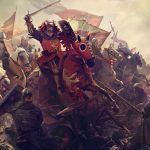
No event defines the Swiss Guards more than the Sack of Rome.
On 6 May 1527, an army of roughly 20,000 Imperial troops under Charles V attacked Rome.
Only 189 Swiss Guards defended Pope Clement VII.
As Imperial soldiers stormed the city, the Guards fought a desperate rear-guard action across St Peter’s Square.
Most died defending the Pope.
Their sacrifice allowed Clement VII to escape through the Passetto di Borgo into Castel Sant’Angelo.
Only forty-two Guards survived.
The event remains central to the identity of the corps.
Every new Swiss Guard still takes his oath on 6 May in memory of those who fell.
Military Organisation
The Guard traditionally followed military organisation similar to other Renaissance infantry units.
Ranks included:
- Captain
- Lieutenant
- Sergeant
- Corporals
- Halberdiers
Modern ranks have evolved while preserving historical titles.
The corps remains relatively small but highly specialised.
Arms and Armour
The Swiss Guards carried weapons typical of elite Renaissance infantry while adapting them as military technology evolved.
Polearms
The halberd became the defining weapon.
Its combination of spear point, axe blade and hook allowed soldiers to:
- Stop cavalry
- Pull riders from horses
- Break armour
- Fight effectively in close quarters
Pikes also formed the backbone of early Swiss formations.
Swords
Swiss Guards carried several sword types depending on period and rank.
| Sword | Purpose |
|---|---|
| Katzbalger | Close combat sidearm, particularly during the sixteenth century |
| Swiss Sabre | Popular among officers and soldiers during the Renaissance |
| Arming Sword | Earlier guards often carried one-handed cruciform swords |
| Rapier | Increasingly worn by officers during the late sixteenth and seventeenth centuries |
| Smallsword | Ceremonial and officer’s weapon in later centuries |
The broad, practical Swiss sabre reflected the straightforward fighting style of Swiss infantry. It lacked the elegance of an Italian rapier but was perfectly suited to battlefield realities.
Armour
Equipment changed considerably over time.
Typical armour included:
- Sallets
- Burgonets
- Morion helmets
- Breastplates
- Backplates
- Mail sleeves
- Gauntlets
- Gorgets
By the seventeenth century, improvements in firearms reduced the value of heavy armour.
Modern ceremonial armour includes polished breastplates and morion helmets, while operational duties rely upon contemporary ballistic protection.
Firearms
Later Guards adopted:
- Matchlock arquebuses
- Muskets
- Pistols
Today they use modern military firearms alongside ceremonial weapons.
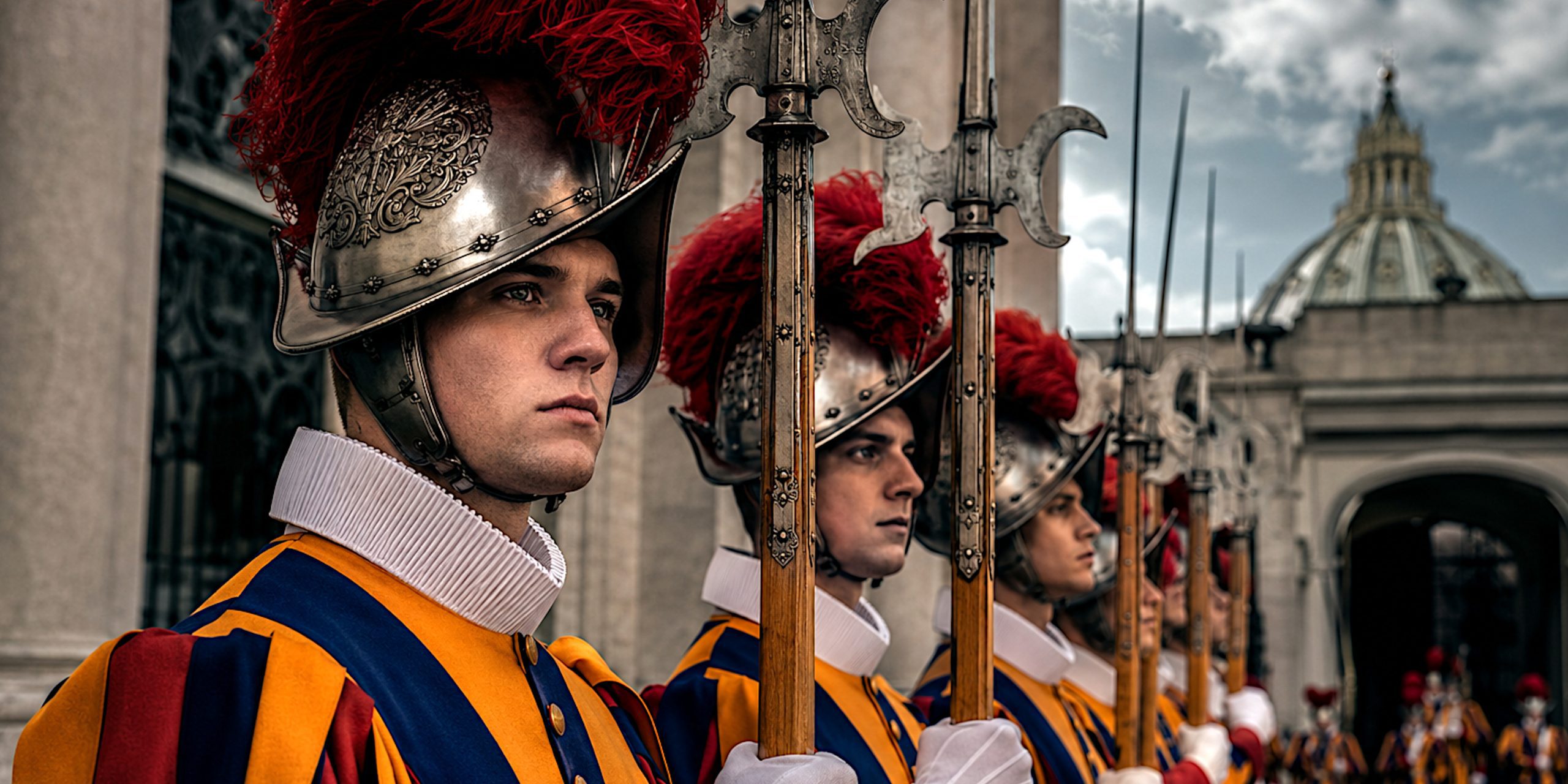
Uniforms
Few military uniforms attract as much attention.
Contrary to popular myth, Michelangelo did not design them.
The current appearance largely reflects redesigns introduced by Commandant Jules Repond in 1914, inspired by Renaissance artwork by Raphael and other contemporary artists.
The famous colours include:
- Blue
- Red
- Yellow
- Orange for officers
Helmet plumes indicate rank or ceremonial occasion.
Despite appearances, the uniforms are surprisingly practical for ceremonial duties.
Daily Life in the Vatican
Swiss Guards perform far more than ceremonial functions.
Their responsibilities include:
- Protecting the Pope
- Guarding entrances
- Securing Vatican buildings
- Escorting visiting dignitaries
- Controlling access
- Supporting emergency procedures
Many guards also receive specialist protection training similar to modern executive security teams.
Discipline and Reputation
Swiss mercenaries developed an international reputation for reliability.
Contemporary rulers frequently remarked upon their willingness to honour contracts.
This reputation became one of Switzerland’s greatest exports.
Not every Swiss soldier behaved impeccably, of course. Mercenary life rarely encouraged sainthood. Even so, compared with many contemporary armies, Swiss discipline remained notably strong.
Contemporary Accounts
Several observers praised Swiss courage.
The Florentine diplomat Francesco Guicciardini admired their battlefield determination.
He wrote:
“The Swiss are esteemed above all other infantry.”
Niccolò Machiavelli frequently discussed Swiss military organisation in The Prince and The Art of War.
He observed:
“The Swiss are completely armed and very free.”
Following the Sack of Rome, numerous chroniclers praised the Guards’ loyalty in refusing to abandon Pope Clement VII despite overwhelming odds.
Archaeology
Archaeological discoveries continue to illuminate the world of Swiss soldiers.
Important evidence includes:
- Battlefield excavations at Grandson and Murten.
- Mass graves from Renaissance conflicts.
- Halberd heads recovered from Swiss and Italian sites.
- Armour fragments from Burgundian battlefields.
- Sword blades bearing Swiss makers’ marks.
- Coins, buckles and military equipment from mercenary camps.
Excavations at the battlefields of the Burgundian Wars have revealed concentrations of polearms, crossbow bolts and early firearm projectiles that match written descriptions of Swiss infantry assaults.
Within the Vatican itself, restoration work has occasionally uncovered earlier defensive structures associated with the Guard’s long occupation.
The Swiss Guards Compared
| Formation | Primary Weapon | Reputation |
|---|---|---|
| Swiss Guards | Pike, halberd, sword | Discipline and loyalty |
| Landsknechts | Pike, zweihänder | Aggressive German mercenaries |
| Spanish Tercios | Pike and arquebus | Combined arms excellence |
| English Billmen | Billhook | Strong defensive infantry |
| French Gendarmes | Lance | Elite heavy cavalry |
Swiss infantry dominated European battlefields before firearms transformed warfare. Eventually, formations such as the Spanish tercios combined pikes with gunpowder weapons more effectively, gradually reducing the Swiss tactical advantage.
Decline of Swiss Mercenary Dominance
Several developments weakened Swiss military supremacy.
These included:
- Expansion of firearms
- Larger standing armies
- Professional officer corps
- Combined arms tactics
- Political neutrality within Switzerland
Although Swiss regiments continued serving foreign powers well into the nineteenth century, their battlefield dominance gradually faded.
The Pontifical Swiss Guard alone maintained uninterrupted service.
Legacy
The Swiss Guards remain among the oldest continuously serving military units in the world.
Their influence extends far beyond Vatican ceremonies.
Their legacy includes:
- Development of elite infantry tactics
- Military professionalism
- Symbol of loyalty and sacrifice
- Renaissance military tradition
- Continued papal protection
- Enduring Swiss military heritage
Their sacrifice during the Sack of Rome remains one of history’s finest examples of military devotion to duty.
Visiting the Swiss Guards Today
Visitors can see the Swiss Guards throughout Vatican City.
Popular locations include:
- St Peter’s Square
- Bronze Door
- Apostolic Palace entrances
- Vatican Museums approaches
- Porta Sant’Anna
Changing of the guard ceremonies remain popular with visitors, although security duties understandably take priority over spectacle.
Fascinating Facts
- The Guard has protected the Pope since 1506.
- New recruits swear their oath every 6 May.
- Members still come exclusively from Switzerland.
- The halberd remains an official weapon.
- Modern Guards receive advanced firearms training.
- The famous Renaissance uniform dates largely from the early twentieth century.
- Every recruit completes Swiss military service before joining.
Takeaway
The Swiss Guards occupy a unique place in military history. They began as members of Europe’s most feared infantry tradition before becoming guardians of one of the world’s smallest states. Their colourful uniforms may tempt visitors to think of them as ceremonial relics, yet beneath the Renaissance appearance stands a modern protective force whose history is written in courage rather than costume.
For a historian, they are endlessly fascinating because they bridge two worlds. They remind us that behind every polished breastplate and brightly striped sleeve stands a tradition forged in some of the bloodiest battlefields of Renaissance Europe. Few military organisations can claim such continuity, and even fewer have earned it at such cost.