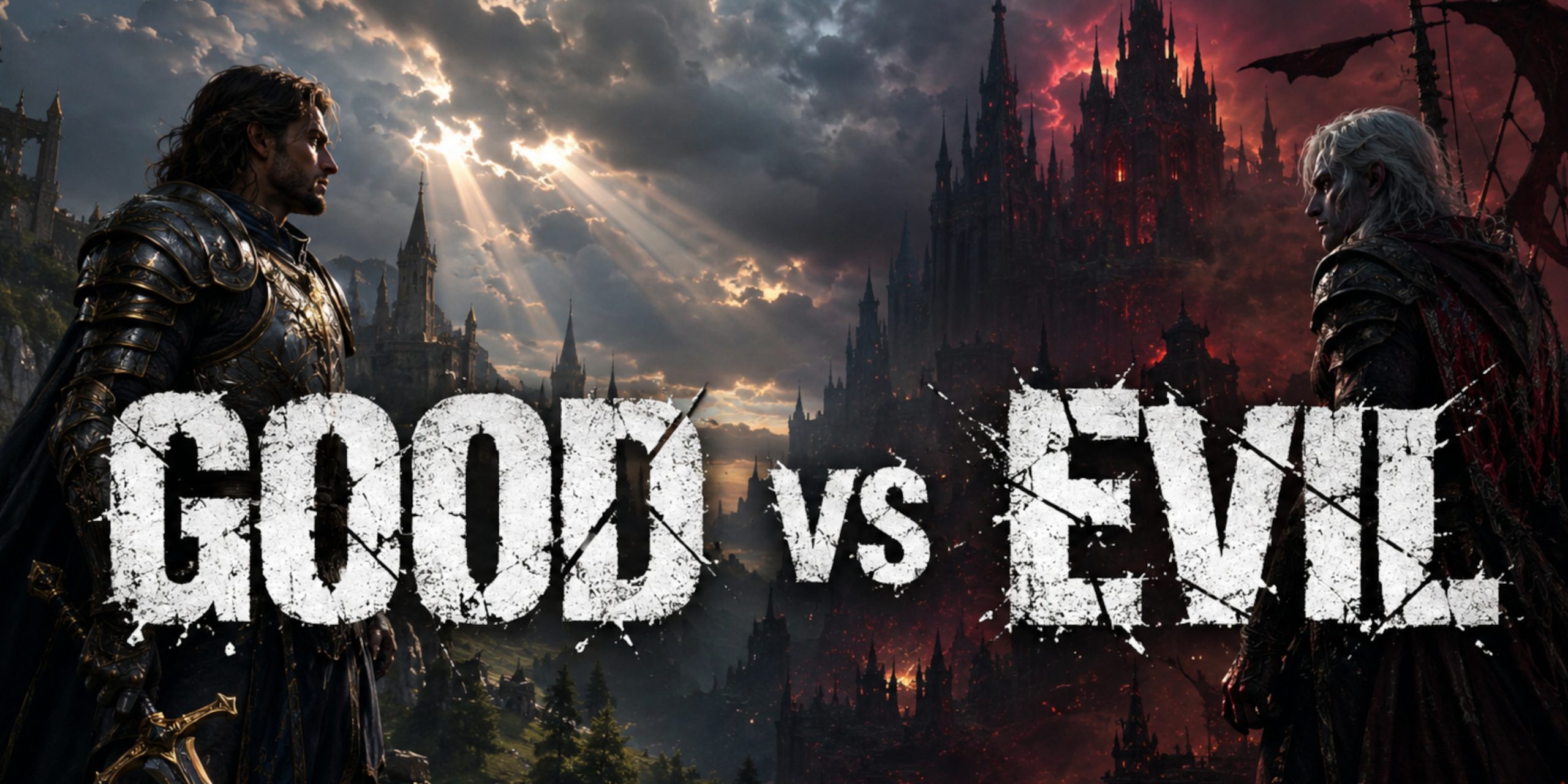
One of the best things about Baldur’s Gate 3 is that it refuses to tell you what the “correct” choice is. You can become the heroic saviour of the Sword Coast, the sort of person who rescues strangers simply because it feels right. Or you can embrace power, manipulation and absolute chaos until entire settlements fear your name.
Neither route is simply a different colour of morality. They change companions, quests, equipment, merchants, romances and even how the world reacts to you. That is what makes each playthrough feel genuinely different rather than just a series of dialogue swaps.
If you’re wondering whether to play the noble hero or the terrifying villain, here’s how the two paths compare.
The Good Path
Playing as the hero generally means protecting innocent people, helping companions through their personal struggles and refusing shortcuts that rely on cruelty.
It is the most complete version of the game’s narrative and usually rewards patience over immediate power.
What defines a good playthrough?
Typical decisions include:
- Saving the Emerald Grove
- Protecting refugees
- Helping companions resolve conflicts peacefully where possible
- Opposing the Absolute
- Showing mercy when enemies surrender
- Breaking destructive cycles rather than continuing them
Your character gradually becomes someone many NPCs genuinely trust. People remember your actions, and allies appear throughout the adventure because of earlier decisions.
That sense of continuity is surprisingly satisfying.
The Evil Path
The evil route is not simply about selecting every aggressive dialogue option.
Sometimes the darkest choices are calm, calculated and completely self-serving.
You might manipulate everyone around you, seize forbidden powers or sacrifice entire groups if they become inconvenient.
The game often allows you to gain short term advantages, although those benefits frequently come with permanent consequences.
Typical evil choices include:
- Attacking the Emerald Grove
- Siding with the goblins
- Exploiting companions for personal gain
- Using tadpole powers without hesitation
- Eliminating people who stand in your way
- Choosing domination over cooperation
Being feared certainly has its advantages, but the world gradually becomes a much lonelier place.
Story Differences
The largest difference appears during Act One.
Choosing to defend the grove unlocks a long chain of returning characters who continue appearing throughout Acts Two and Three. Their stories develop alongside yours, creating a stronger sense that your actions genuinely mattered.
An evil route removes many of those characters permanently.
Instead, you receive a darker narrative focused on power, intimidation and fewer lasting alliances.
The story remains compelling, but it feels intentionally isolated.
That contrast is probably one of Larian’s smartest design decisions. Evil does not simply change cutscenes. It changes the emotional atmosphere of the entire campaign.
Companion Reactions
Companions are one of the biggest reasons to replay Baldur’s Gate 3.
Some naturally approve of heroic actions.
Characters who usually appreciate kindness include:
- Karlach
- Wyll
- Halsin
- Jaheira
Others are far more comfortable with ruthless or pragmatic decisions.
These include:
- Astarion
- Lae’zel
- Minthara
- Shadowheart, depending on her story direction
Even then, most companions are not completely good or evil.
Astarion may enjoy selfish choices, yet still appreciates loyalty.
Lae’zel values strength more than cruelty.
Shadowheart’s morality changes dramatically depending on your influence.
That nuance keeps relationships interesting throughout multiple playthroughs.
Quest Content
One surprise for many first time players is that the good path actually contains more quests overall.
Helping NPCs naturally creates additional storylines.
People survive.
They ask for further help.
They return later with unexpected rewards.
Choosing evil often ends quests before they fully develop because key characters simply die.
This makes an evil run feel faster, although there is less content to experience.
Ironically, being nice often results in more combat, more dialogue and more exploration.
Loot and Rewards
Many players assume evil characters receive dramatically stronger rewards.
That is not entirely true.
Some unique items are exclusive to darker choices, particularly those involving Minthara or certain Absolute storylines.
However, good characters gain access to:
- More merchants
- More quest rewards
- More crafting materials
- Additional legendary equipment
- More opportunities to earn gold
Overall, both routes provide excellent gear.
The difference lies more in how you obtain it.
Heroes earn rewards through trust.
Villains usually take them.
Romance Options
Romance changes depending on your behaviour.
A heroic character generally has access to every major romance provided companions remain alive.
An evil playthrough introduces complications.
Certain companions may permanently leave.
Others become hostile.
Some romances become impossible because earlier decisions closed those paths forever.
Interestingly, Minthara becomes one of the strongest reasons to try an evil campaign, particularly after later updates expanded her content.
Difficulty Comparison
Neither route is objectively harder.
Instead, they create different challenges.
A good run usually involves:
- More allies
- More resources
- More support during major encounters
- Larger quest chains
An evil run often features:
- Fewer allies
- More enemies
- Reduced merchant access
- Smaller support network
Combat itself does not become dramatically more difficult, but surviving with fewer friendly faces can make certain encounters feel much tougher.
Roleplaying Freedom
This is where Baldur’s Gate 3 truly shines.
Good does not mean naïve.
You can be sarcastic, intimidating and pragmatic while still protecting innocent people.
Likewise, evil does not require random violence.
Some of the most memorable villains manipulate situations so effectively that people willingly help them without realising what is happening.
The game consistently rewards committing to a believable personality rather than chasing an invisible morality score.
Good vs Evil Comparison Table
| Category | Good Path | Evil Path |
|---|---|---|
| Overall story | Richer and more hopeful | Darker and more isolated |
| Companion availability | Highest | Reduced |
| Quest content | More side quests | Fewer but different outcomes |
| Merchants | More available | Some become inaccessible |
| Romance options | Widest variety | More restricted |
| Roleplaying | Heroic leadership | Ruthless ambition |
| Replay value | Excellent | Outstanding as a second playthrough |
Which Path Is More Fun?
For a first playthrough, the good route is usually the stronger experience.
You see more of the world, meet more characters and experience the fullest version of the game’s story.
The emotional payoffs also land harder because you’ve spent dozens of hours helping people whose stories continue right until the ending.
The evil route shines on a second or third campaign.
Once you already know what should happen, deliberately breaking the world becomes fascinating.
Watching familiar quests collapse because of your choices gives the game remarkable replay value.
Some decisions genuinely made me stop and think, “Well…that escalated quickly.”
Larian clearly expected players to experiment, and the game rarely punishes curiosity.
Final Verdict
Neither the good nor evil path is objectively better in Baldur’s Gate 3. They simply deliver different experiences.
The good route offers a richer story, stronger companion relationships and the greatest amount of content. It feels like the definitive adventure and is ideal for newcomers.
The evil path trades friendship for power. It removes safety nets, reshapes the world and reveals entirely different sides of familiar characters. It may be smaller in scale, but it remains one of the most impressive villain playthroughs in modern RPGs because your actions have genuine consequences.
If you only plan to finish the game once, choose the hero.
If you plan on returning, save the villain for later.
You’ll be surprised by just how different the same adventure can become.