Most studios have mascots. FromSoftware apparently decided theirs would be a glowing magical sword that keeps appearing across doomed kingdoms, nightmare dimensions, and worlds where everyone seems one bad afternoon away from becoming a monster.
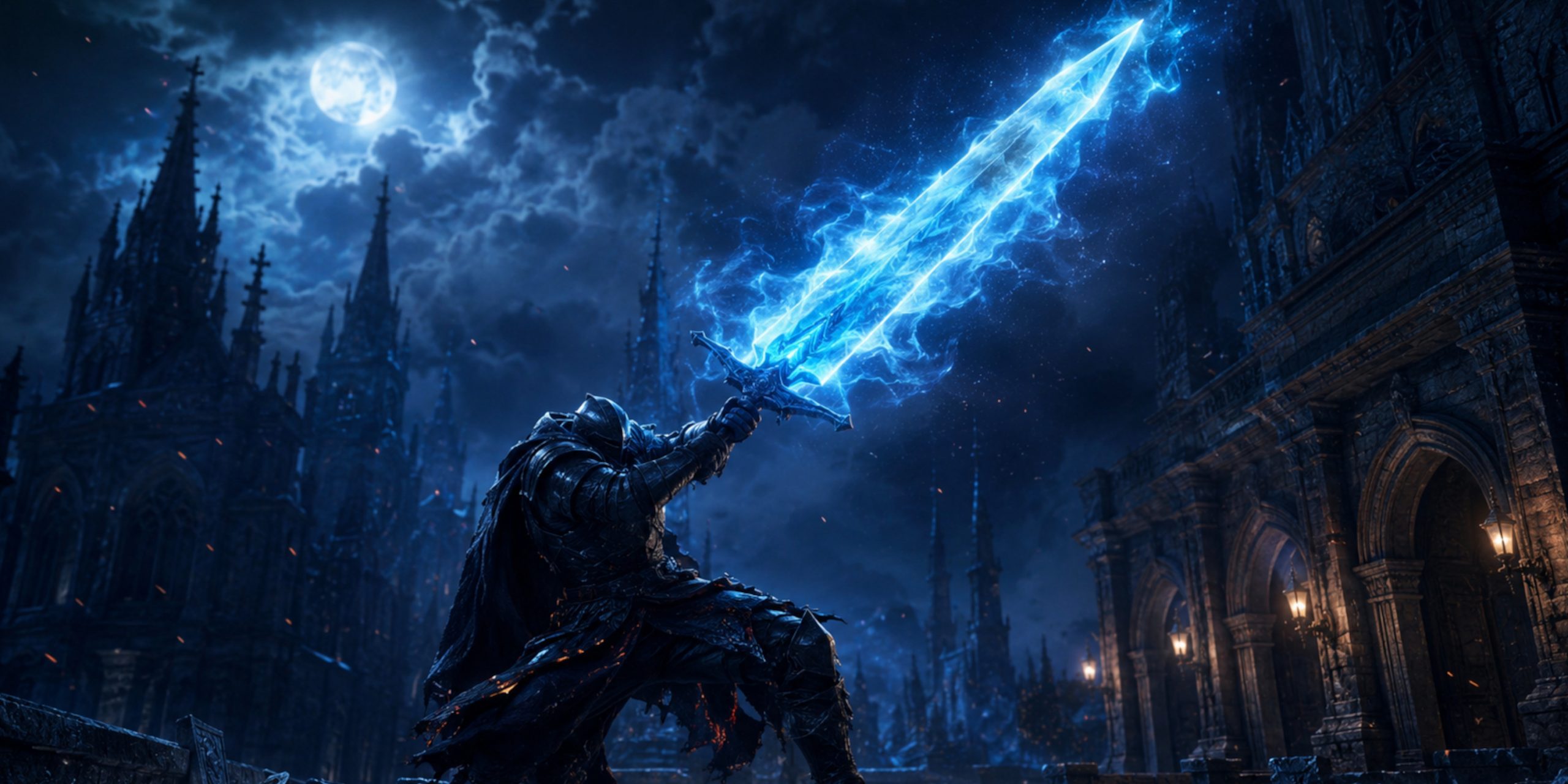
The Moonlight Greatsword is one of gaming’s most famous recurring weapons. It has appeared throughout FromSoftware’s catalogue for decades, constantly changing its form while keeping the same core idea: an ancient blade of pale blue light connected to mystery, power, and forgotten knowledge.
It is not always the strongest sword in pure gameplay terms, but that almost misses the point. Finding the Moonlight Greatsword feels like uncovering a secret tradition shared between players and developers. It is FromSoftware quietly saying, “Yes, we remembered.”
And somehow, after all these years, it still works.
Origins: King’s Field and the Birth of a Legend
Long before Dark Souls made players suspicious of every treasure chest, the Moonlight Sword appeared in King’s Field, released in 1994.
This first-person fantasy RPG established many ideas that would later define FromSoftware:
- Dangerous exploration
- Minimal guidance
- Environmental storytelling
- Ancient powers hidden beneath dying worlds
The Moonlight Sword became a major part of the series’ mythology. Rather than being a simple high-level weapon, it represented something almost divine. It was a blade tied to protection, destiny, and forces beyond ordinary human understanding.
That identity followed it for decades.
What Makes the Moonlight Greatsword Special?
The weapon’s appearance varies between games, but several traits usually remain:
| Feature | Common Trait |
|---|---|
| Blade | Pale blue, green, or crystal-like energy |
| Damage type | Magic, arcane, or intelligence-based power |
| Combat style | Heavy sword attacks mixed with energy waves |
| Themes | Knowledge, moonlight, ancient beings, hidden truth |
| Users | Scholars, knights, chosen warriors, mysterious figures |
The design works because it feels impossible. Most fantasy swords are forged from rare metal or blessed by gods. The Moonlight Greatsword often looks like someone captured moonlight itself and sharpened it.
Completely impractical? Probably.
Ridiculously cool? Absolutely.
The Moonlight Greatsword in Dark Souls
The Moonlight Greatsword became truly famous through the Dark Souls trilogy.
In the original Dark Souls, players obtain it by cutting off the tail of Seath the Scaleless, one of the game’s most fascinating bosses.
Seath is obsessed with immortality and knowledge, making the sword’s connection to him especially fitting. The blade is not just a weapon. It feels like a physical extension of his strange crystal magic.
The sword features:
- Pure magic scaling
- Powerful ranged attacks
- A glowing crystalline design
- Heavy investment into Intelligence builds
For sorcery players, it became the ultimate statement weapon. Nothing says “wizard” quite like carrying a sword bigger than yourself because ordinary magic apparently was not dramatic enough.
Dark Souls II: The Legacy Continues
Dark Souls II continued the tradition with another version of the Moonlight Greatsword, obtained through the story surrounding Duke’s Dear Freja.
The connection to Seath remains through themes of inherited power and obsession. The game constantly explores cycles repeating over time, making the return of this weapon especially fitting.
The blade feels like a relic from a history everyone has forgotten, which is basically FromSoftware’s favourite emotional setting.
Ancient tragedy first, explanations later.
Dark Souls III: A Weapon From a Fading World
In Dark Souls III, the Moonlight Greatsword appears through Oceiros, the Consumed King.
This version is especially interesting because Oceiros shares several parallels with Seath:
- Dragon obsession
- Experiments with transformation
- Desire to transcend humanity
The sword’s return reinforces one of Dark Souls III’s biggest ideas: history keeps repeating until barely anyone remembers why.
By this stage, players were not just finding another weapon. They were finding a piece of FromSoftware history inside a world built around forgotten history.
Very subtle. Very FromSoftware.
Bloodborne: The Holy Moonlight Sword
Bloodborne transformed the weapon into arguably its most beloved version: the Holy Moonlight Sword.
Rather than simply importing the classic design, FromSoftware adapted it perfectly to Bloodborne’s universe.
The sword is linked to Ludwig, the first hunter of the Healing Church. When players discover the weapon’s true nature, it becomes a beautiful but unsettling symbol of obsession.
Its transformed state creates:
- A glowing cosmic blade
- Arcane energy attacks
- Sweeping magical strikes
- A sense that the weapon itself might understand more than its owner
Bloodborne changes the Moonlight Sword from a heroic relic into something stranger. Is it guiding Ludwig? Helping him? Manipulating him?
The answer is probably uncomfortable, because this is Bloodborne and happiness is apparently illegal.
Elden Ring: The Dark Moon Greatsword
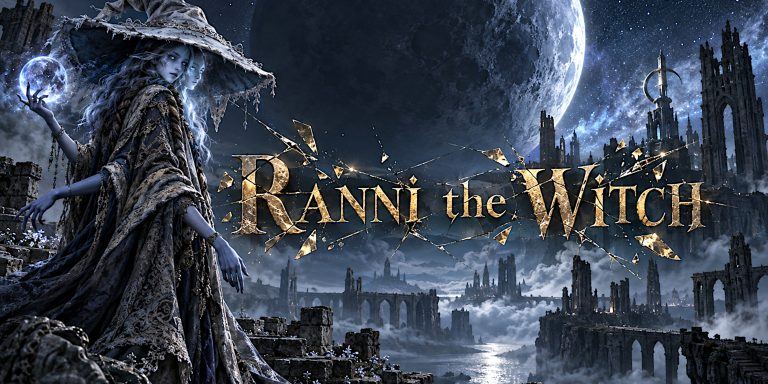
Elden Ring introduced the Dark Moon Greatsword, closely tied to Ranni the Witch.
This version leans heavily into lunar themes, connecting the weapon with:
- Cold magic
- The stars
- Cosmic forces
- Ranni’s mysterious destiny
Obtaining it requires completing one of Elden Ring’s biggest questlines, making it feel earned rather than simply discovered.
The design is also one of the most elegant versions. Instead of looking purely destructive, it feels ceremonial. This is not just something you swing at enemies. It feels like an artefact from a civilisation that understood secrets everyone else forgot.
Classic FromSoftware behaviour: give players a wedding gift that can defeat monsters.
Every Major Moonlight Greatsword Appearance
| Game | Weapon Version |
|---|---|
| King’s Field | Moonlight Sword |
| Armored Core | Moonlight energy blade references |
| Demon’s Souls | Large Sword of Moonlight |
| Dark Souls | Moonlight Greatsword |
| Dark Souls II | Moonlight Greatsword |
| Bloodborne | Holy Moonlight Sword |
| Dark Souls III | Moonlight Greatsword |
| Elden Ring | Dark Moon Greatsword |
The fact it appears across completely separate worlds makes it feel almost bigger than any single game.
It is less of a weapon now and more of a FromSoftware signature.
Is the Moonlight Greatsword Always Powerful?
Usually, yes, but with a catch.
The Moonlight Greatsword is rarely designed as a beginner weapon. It often requires:
- Specific character builds
- Heavy stat investment
- Knowledge of scaling systems
- Careful timing
Players expecting a simple oversized sword sometimes find it awkward.
Players who build around it usually discover something much more interesting: a hybrid weapon that combines melee combat with magical pressure.
Basically, it rewards players who looked at a wizard and thought, “Needs more sword.”
Why Fans Love the Moonlight Greatsword
The popularity comes from more than stats.
The Moonlight Greatsword represents everything fans associate with FromSoftware:
- Mystery without excessive explanation
- Beauty mixed with danger
- Hidden connections between worlds
- Rewards for curious players
Other weapons might deal more damage. Some are faster. Some are easier to use.
Few have the same emotional weight.
FromSoftware’s Eternal Blade
The Moonlight Greatsword has survived because it feels like a legend that escaped from one game and started wandering through others.
Every appearance adds something new. Sometimes it is heroic, sometimes tragic, sometimes cosmic and terrifying. It adapts without losing its identity.
After decades of cursed kingdoms, fallen heroes, impossible bosses, and questionable NPC decisions, one thing remains certain:
Somewhere in the darkness, there is probably a glowing blue sword waiting to be found. And yes, players will absolutely rearrange their entire character build just to use it.