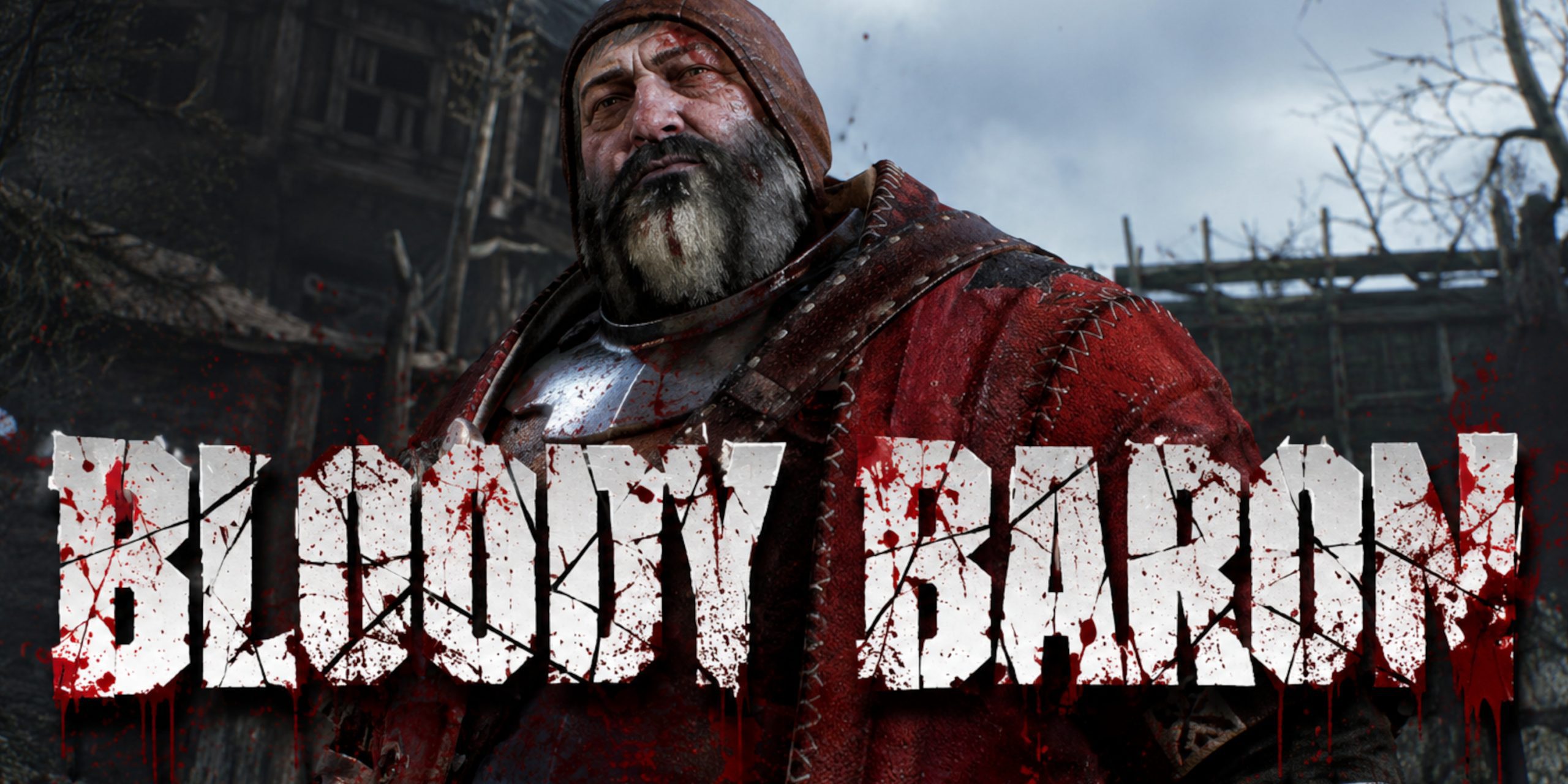
Why Everyone Still Talks About the Bloody Baron
Few quests in gaming stop players in their tracks quite like the Bloody Baron storyline in The Witcher 3: Wild Hunt. On the surface, it begins as a fairly simple exchange. Geralt needs information about Ciri, and the local warlord of Velen knows something useful.
Classic Witcher setup. Find person, ask questions, maybe kill something unpleasant in a swamp.
Then the game casually drops one of its most emotionally complicated stories.
The Bloody Baron questline is not really about monsters with claws and teeth. It is about broken people, terrible decisions, guilt, forgiveness and whether someone who has caused pain can ever truly change.
The answer is messy, which is exactly why it works.
Who Is the Bloody Baron?
The Bloody Baron’s real name is Philip Strenger. When Geralt arrives in Velen, Strenger rules Crow’s Perch as a self-appointed baron after the region collapses into chaos during the Nilfgaardian invasion.
He is loud, violent, intimidating and clearly dangerous. At first glance, he seems like another brutal warlord taking advantage of a broken land.
Then Geralt learns there is much more underneath.
The Baron was once a soldier in Temeria’s army. Years of warfare, trauma and alcohol abuse damaged him deeply. His marriage to Anna Strenger collapsed after years of anger, betrayal and violence.
The clever part of the writing is that the game never asks players to simply like or hate him. He is both victim and villain in different parts of his own story.
That is uncomfortable, but also very human.
How the Bloody Baron Questline Begins
Geralt travels to Crow’s Perch while searching for Ciri. The Baron reveals that Ciri stayed with him briefly, but he refuses to tell Geralt everything until he helps find his missing wife Anna and daughter Tamara.
This begins the quest Family Matters, one of the longest and most important storylines in Velen.
Geralt investigates:
- Anna and Tamara’s disappearance
- The family’s violent history
- A miscarriage connected to a cursed creature
- The influence of the mysterious Crones of Crookback Bog
What begins as a missing persons case quickly turns into one of the darkest fairy tales in the Witcher universe.
The Botchling Choice Explained
One of the most memorable moments comes when Geralt discovers the Baron’s unborn child became a botchling.
A botchling is a cursed creature created from an unwanted or improperly buried infant. It is easily one of the most disturbing monsters in the game, which is saying something considering Velen seems to specialise in nightmare fuel.
Geralt has two options.
Turn the Botchling Into a Lubberkin
Geralt can convince the Baron to carry the creature home, name it and bury it properly.
This transforms it into a lubberkin, a protective family spirit.
This path reveals a softer side of the Baron as he finally accepts responsibility for his lost child.
Kill the Botchling
Geralt can fight and kill the creature instead.
This still allows him to continue the investigation, but it removes one of the few moments where the Baron actively confronts the damage he caused.
Neither choice stops the main quest, but the lubberkin route carries much more emotional weight.
Finding Tamara
Geralt eventually discovers that Tamara escaped to Oxenfurt.
She did not vanish because of monsters or magic. She left because she could no longer live with her father’s behaviour.
Tamara joins the witch hunters of the Eternal Fire and refuses to return home.
This conversation changes the player’s understanding of the Baron. Until this point, much of the story comes from his perspective. Tamara reminds Geralt that regret does not erase the harm already done.
A very Witcher lesson.
Anna and the Crones of Crookback Bog
The search for Anna leads Geralt into one of the creepiest areas of the game: Crookback Bog.
Anna is found serving the Crones, three ancient beings worshipped by locals as strange protectors.
The Crones are not generous fairy tale witches. They manipulate desperate people and demand horrific prices.
Anna’s fate becomes tied to another major quest: The Whispering Hillock.
This is where the story becomes painfully complicated.
The Whispering Hillock Choice
Before finding Anna, Geralt encounters a mysterious spirit trapped beneath an ancient tree.
The spirit claims the Crones imprisoned it and asks Geralt for help.
Geralt can either free it or destroy it.
Naturally, because this is The Witcher, neither option lets everyone skip happily into the sunset.
What Happens If You Free the Spirit?
If Geralt releases the spirit:
- The children of Crookback Bog are saved
- The nearby village of Downwarren is destroyed
- The Crones punish Anna
- Anna is transformed into a water hag
- The curse is eventually lifted, but Anna dies
- The Baron takes his own life from grief
This is usually considered the darkest ending for the Baron storyline.
What Happens If You Kill the Spirit?
If Geralt destroys the spirit:
- Downwarren survives
- The children disappear and are implied to have been eaten by the Crones
- Anna survives but loses her mind
- The Baron leaves Velen to seek help for her
This ending gives the Baron and Anna a chance, although it comes at a horrible cost elsewhere.
The game basically looks at the player and says: “Congratulations, you made a choice. Now live with it.”
Very cheerful stuff.
Is There a Good Ending for the Bloody Baron?
Not really.
There is a more hopeful ending, but not a clean victory.
The Witcher universe rarely deals in perfect solutions. Geralt is often choosing between damaged outcomes, trying to save whoever he can.
The Baron surviving does not magically repair his family. Anna is traumatised, Tamara remains hurt, and years of suffering cannot vanish because someone feels sorry.
But there is the possibility of change.
Sometimes that is all this world offers.
Why the Bloody Baron Questline Works So Well
The genius of this questline is how it changes your opinion over time.
At first:
The Baron seems like a monster.
Then:
You understand his pain.
Then:
You learn why others see him as the monster.
The writing refuses to simplify him. Philip Strenger can be funny, protective and genuinely remorseful. He can also be cruel, violent and responsible for terrible damage.
Many games ask whether a villain can be redeemed.
The Witcher 3 asks something harder:
What if someone wants redemption but cannot undo what they have already done?
Ciri and the Baron
The Baron’s relationship with Ciri reveals another side of him.
During her time at Crow’s Perch, Ciri finds temporary safety. The Baron treats her with surprising kindness, almost as a replacement daughter figure.
It does not excuse his past, but it shows why the character feels believable.
People are rarely only one thing.
Legacy of the Bloody Baron Questline
Years after release, the Bloody Baron remains one of the most discussed parts of The Witcher 3 because it understands something many games miss.
Big emotional moments do not always need world-ending threats.
Sometimes the hardest battles involve a ruined family, old mistakes and people trying to fix something already broken.
The monsters of Velen are terrifying, but the Bloody Baron questline proves the scariest things in The Witcher are often painfully human.