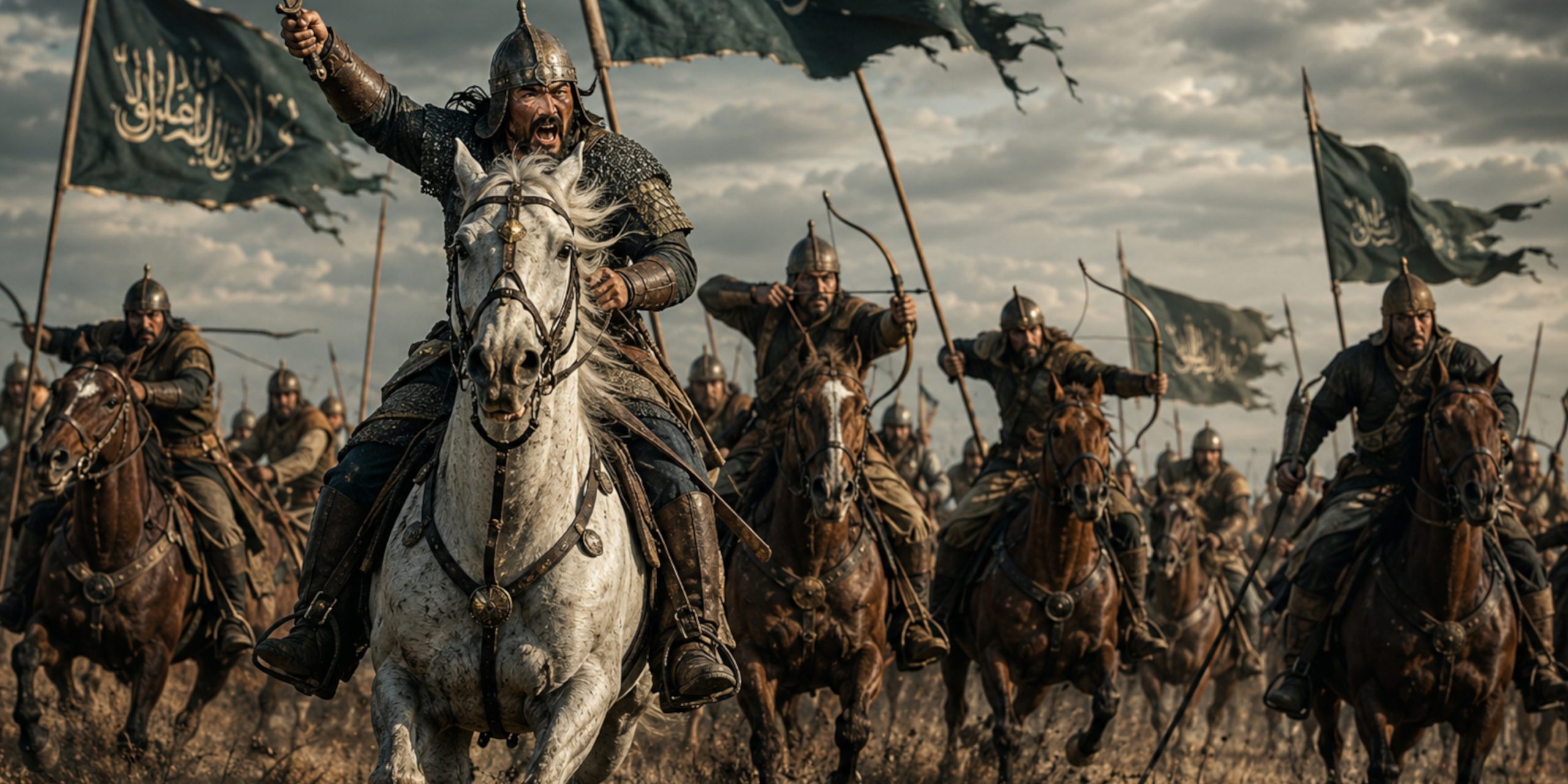
The Turkish ghazi cavalry were among the most influential mounted warriors of the medieval Islamic world. They rode out from the turbulent frontiers of Anatolia, fought in raids against Byzantine territories, and helped lay the foundations of what would become one of history’s greatest empires.
Yet they were never a formal military institution in the modern sense. The ghazis were frontier warriors, adventurers, tribal horsemen, religious volunteers, ambitious nobles, and opportunists rolled into one. They occupied a world where faith, warfare, politics, and personal ambition often rode side by side.
As a historian, I have always found the ghazis fascinating because they defy neat categorisation. Some were deeply motivated by religious ideals. Others were almost certainly attracted by the prospect of land, plunder, and social advancement. Medieval chroniclers naturally preferred the more heroic interpretation. Human nature suggests the truth lay somewhere in the middle.
Who Were the Ghazis?
The term ghazi derives from the Arabic concept of ghaza, meaning a raid or military expedition against non-Muslim territories.
In Anatolia during the 13th and 14th centuries, the word came to describe Muslim frontier warriors operating along the shifting borderlands between Turkish principalities and the shrinking Byzantine Empire.
The collapse of the Seljuk Sultanate of Rum after the Mongol invasions created a fragmented political landscape. Numerous Turkish beyliks emerged across Anatolia, including the small principality ruled by Osman I.
The ghazis became the military backbone of many of these states.
Their ranks included:
- Tribal horsemen
- Turkoman nomads
- Local military retainers
- Religious warriors
- Adventurers seeking wealth
- Former Byzantine converts
- Mercenaries
Far from being a uniform force, they represented a diverse frontier society bound together by warfare and opportunity.
The Frontier World of Anatolia
The ghazis flourished in one of medieval history’s most volatile regions.
Anatolia during the late 13th century was divided among:
- Byzantine territories
- Turkish beyliks
- Mongol-controlled regions
- Independent frontier lords
Borders shifted constantly.
A village that paid taxes to a Byzantine governor one year might find itself under Turkish rule the next. Alliances changed frequently. Raiding became a way of life.
This environment produced highly mobile cavalry forces capable of reacting quickly to opportunities.
The frontier itself became a cultural melting pot where Turkish, Persian, Arab, Greek, Armenian, and Balkan influences mixed freely.
The Rise of the Ottoman Ghazis
No ghazi leader became more famous than Osman I.
Later Ottoman chroniclers portrayed Osman and his followers as holy warriors fighting to expand Islam. While this undoubtedly formed part of their identity, modern historians generally view Ottoman expansion as driven by a combination of:
- Religious zeal
- Political ambition
- Economic opportunity
- Strategic necessity
What cannot be disputed is that Ottoman ghazis proved remarkably successful.
During the late 13th and early 14th centuries they captured key Byzantine territories in north-western Anatolia.
Victories under:
- Osman I
- Orhan Gazi
- Murad I
- Bayezid I
transformed a small frontier principality into a regional power.
Arms and Armour
Ghazi cavalry equipment reflected centuries of Central Asian and Islamic military traditions.
Individual warriors varied enormously in wealth. A successful frontier commander might possess impressive armour and finely crafted weapons. A poorer horseman could appear considerably less equipped.
Sword Types
Several sword forms were used by ghazi cavalry.
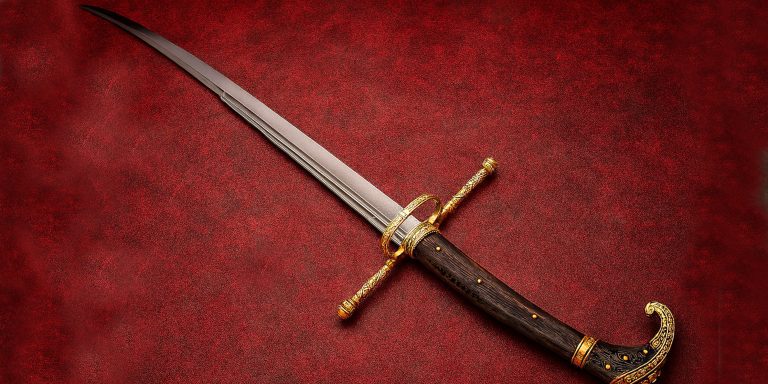
Kilij
The most iconic Turkish sword.
Characteristics included:
- Curved blade
- Single edge
- Excellent cutting power
- Effective from horseback
The kilij gradually evolved into the classic Ottoman cavalry sword.
Seljuk Sabres
Earlier Turkish sabres remained common throughout the 13th century.
Features included:
- Moderate curve
- Lightweight construction
- Fast handling
- Suitable for mounted combat
Straight Double-Edged Swords
Some warriors continued using straight swords influenced by:
- Byzantine designs
- Islamic military traditions
- Earlier Turkic weapons
These remained useful for thrusting attacks.
Other Weapons
Composite Bow
The most important ghazi weapon.
Constructed from:
- Wood
- Horn
- Sinew
The composite bow delivered impressive power despite its compact size.
Mounted archery remained central to Turkish warfare.
Lance
Used for charges and close combat.
Typical features:
- Wooden shaft
- Iron spearhead
- Length suitable for mounted use
Mace
Favoured against armoured opponents.
Axe
Battle axes appeared frequently in contemporary illustrations and accounts.
Spear
Used both as a thrusting weapon and occasionally as a thrown missile.
Armour
Protection varied according to wealth and status.
Common armour types included:
| Armour Type | Description |
|---|---|
| Mail armour | Interlinked iron rings offering excellent flexibility |
| Lamellar armour | Small plates laced together |
| Scale armour | Metal scales attached to backing material |
| Quilted armour | Affordable padded protection |
| Helmet | Usually conical with nasal guard |
| Shield | Round or kite-shaped designs |
Horse armour existed but was relatively uncommon among ordinary ghazis.
Elite commanders occasionally equipped their mounts with partial protection.
Battlefield Tactics
The ghazis inherited many tactical traditions from earlier Turkic steppe warfare.
Their strengths included:
- Mobility
- Endurance
- Flexibility
- Knowledge of terrain
Typical tactics involved:
Mounted Archery
Horse archers harassed enemies at range before closing for melee combat.
Feigned Retreats
One of the oldest steppe tactics.
Warriors would appear to flee before suddenly turning against pursuing forces.
This manoeuvre worked surprisingly often. Medieval commanders repeatedly fell for it despite ample evidence that they probably should not have.
Raiding Warfare
Fast-moving strikes targeted:
- Villages
- Supply depots
- Isolated garrisons
- Trade routes
Encirclement
Enemy formations could be surrounded and weakened through repeated attacks from multiple directions.
Famous Campaigns and Battles
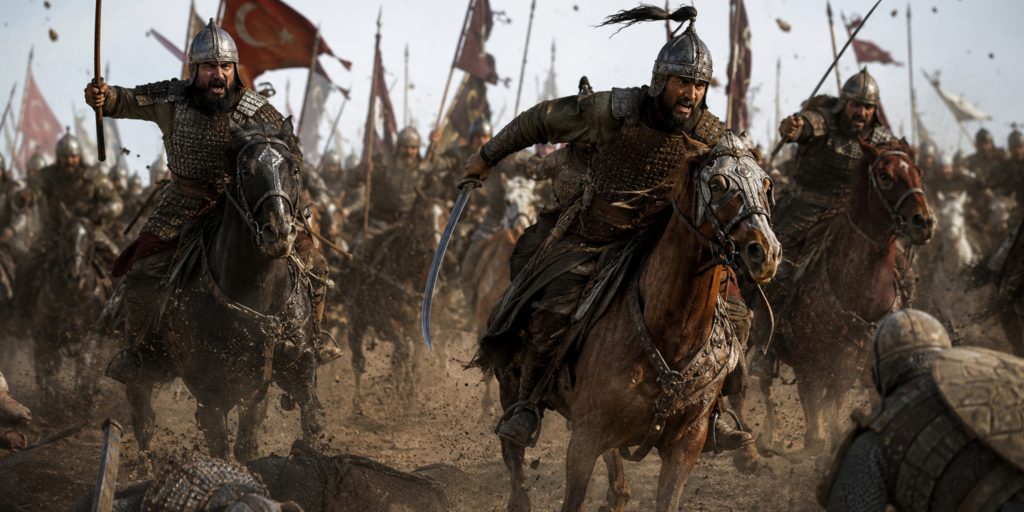
Several major engagements highlight the role of ghazi cavalry.
Battle of Bapheus (1302)
One of the earliest significant Ottoman victories.
Osman’s forces defeated a Byzantine army near Nicomedia.
The victory accelerated Ottoman expansion in north-western Anatolia.
Siege of Bursa (1317-1326)
Ghazi forces played a crucial role in isolating and eventually capturing the city.
Bursa became the first major Ottoman capital.
Battle of Maritsa (1371)
Ottoman cavalry helped destroy a coalition of Balkan nobles.
The victory strengthened Ottoman influence throughout the Balkans.
Battle of Kosovo (1389)
Ghazi cavalry formed part of the Ottoman army that defeated Serbian-led forces.
The battle became one of the defining events of Balkan medieval history.
Battle of Nicopolis (1396)
Ottoman mounted warriors contributed significantly to the defeat of a major crusading army.
Many Western knights underestimated the mobility and discipline of Turkish cavalry.
That proved to be a costly educational experience.
Archaeology and Material Evidence
Archaeological evidence for individual ghazis can be frustratingly sparse.
Frontier warriors rarely leave tidy labels behind saying “Property of Ghazi Ahmed, please return if found.”
Nevertheless, important discoveries provide valuable insights.
Bursa and Early Ottoman Sites
Excavations around Bursa have uncovered:
- Weapon fragments
- Arrowheads
- Armour components
- Horse equipment
These finds help illustrate the military culture of the early Ottoman frontier.
İznik and Bilecik
Excavations in regions associated with early Ottoman expansion have revealed evidence of military occupation and fortification.
Battlefield Finds
Across Anatolia and the Balkans archaeologists have recovered:
- Iron arrowheads
- Lance heads
- Horse fittings
- Armour fragments
Many are consistent with equipment used by Turkish cavalry during the 14th and 15th centuries.
Artistic Evidence
Contemporary manuscripts provide additional evidence.
Illustrations depict warriors carrying:
- Composite bows
- Curved sabres
- Conical helmets
- Round shields
These images complement archaeological discoveries and written accounts.
Contemporary Quotes
Several medieval observers commented on Turkish frontier warriors and cavalry.
The Byzantine historian Pachymeres described Turkish raiders as relentless enemies operating throughout western Anatolia:
“They swept over the land like a flood.”
The Ottoman chronicler Aşıkpaşazade emphasised the religious identity of early Ottoman warriors:
“They fought in the path of God.”
The traveller Ibn Battuta, who encountered frontier society in Anatolia during the 14th century, praised the military spirit of the Turkish rulers and their followers:
“They are among the greatest of warriors.”
Like many medieval sources, these quotations should be approached carefully. Chroniclers tended to admire, fear, or promote their subjects rather than analyse them with modern detachment.
Daily Life of a Ghazi
Most ghazis spent far more time preparing for campaigns than actually fighting.
Their lives revolved around:
- Horse breeding
- Hunting
- Military training
- Tribal politics
- Religious observance
- Frontier administration
Horses were central to their existence.
A skilled horseman could travel remarkable distances across difficult terrain and remain combat effective upon arrival.
The bond between warrior and mount was often the difference between success and death.
Legacy
The Turkish ghazi cavalry helped transform the political map of the eastern Mediterranean.
Their influence can be seen in:
- Ottoman military traditions
- Cavalry tactics
- Frontier culture
- Turkish martial identity
- Islamic military history
Although the Ottoman army gradually evolved into a more sophisticated and centralised institution, the image of the frontier ghazi never disappeared.
Ottoman rulers continued to celebrate their ghazi heritage for centuries.
The title itself remained a source of prestige long after the frontier world that created it had vanished.