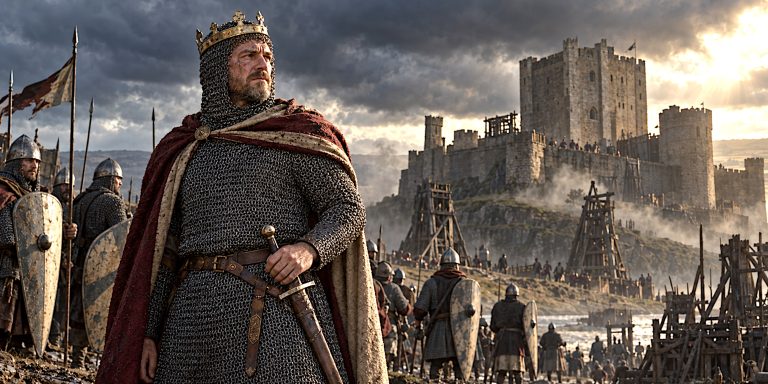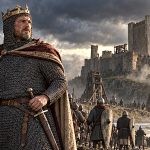
The Crusader States were among the strangest political experiments of the medieval world. A scattering of Latin Christian kingdoms and counties carved into the Levant after the First Crusade, they existed between triumph and catastrophe for nearly two centuries. Their rulers spoke French, Occitan, Norman Italian, German, Armenian, Greek, and Arabic. Their castles dominated trade routes and pilgrimage roads. Their knights fought in blistering heat while wearing enough mail to sink gracefully into the Mediterranean.
To medieval Europe, these states were holy frontier realms. To their Muslim rivals, they were foreign colonies planted violently into the eastern Mediterranean. To historians, they remain fascinating because they never fully belonged anywhere. They were western kingdoms balanced uneasily upon eastern soil.
The Crusader States rose quickly, flourished unexpectedly, and died dramatically.
What Were the Crusader States?
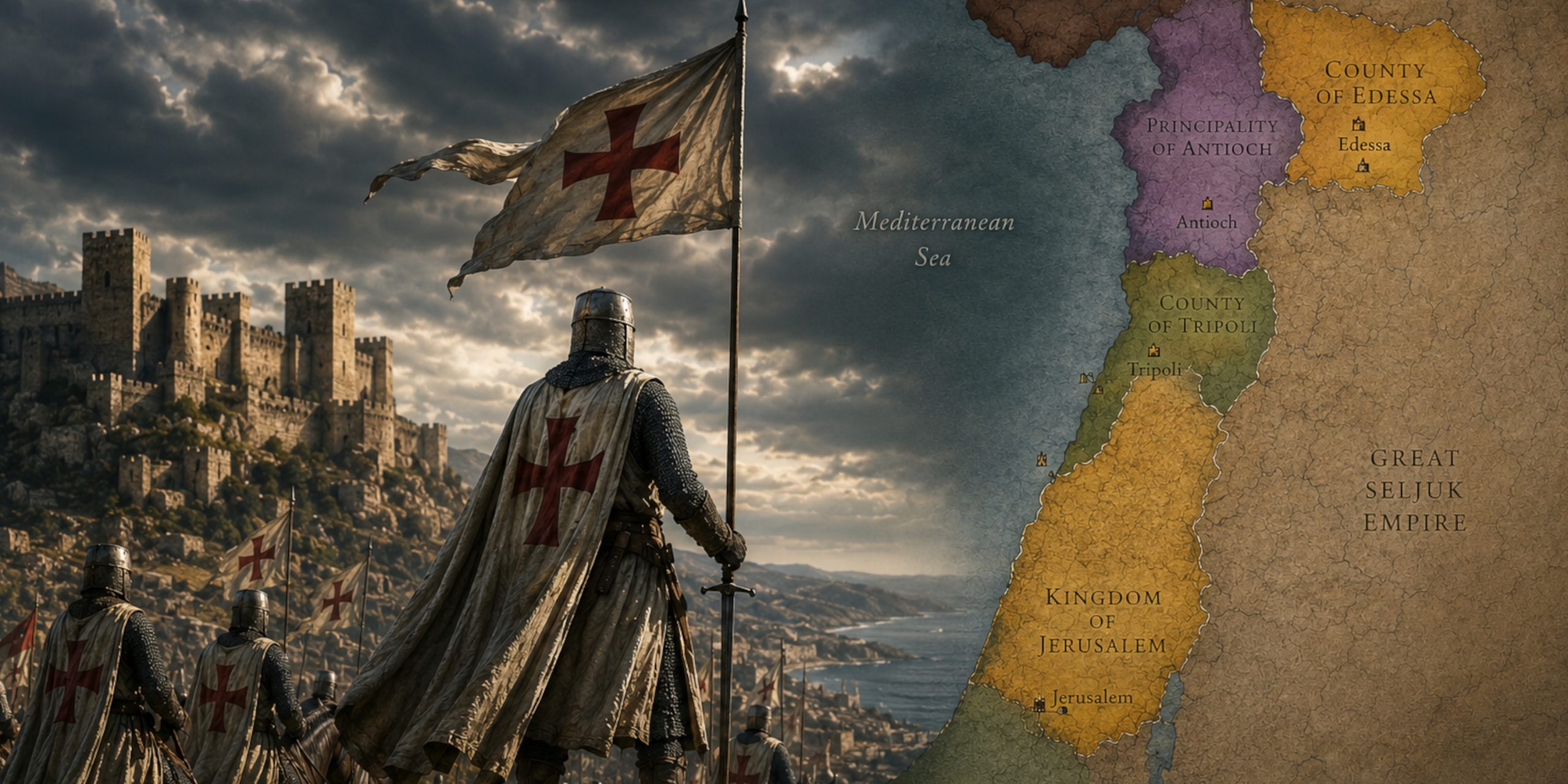
The Crusader States were four principal Latin Christian territories established in the Near East following the success of the First Crusade between 1097 and 1099.
These states were:
- The Kingdom of Jerusalem
- The County of Edessa
- The Principality of Antioch
- The County of Tripoli
They were ruled primarily by western European nobles, many of them French-speaking, though their populations were enormously diverse. Muslims, Eastern Christians, Jews, Armenians, Syrians, Greeks, and Latin settlers all lived within their borders.
The states relied heavily upon fortified cities, military orders, pilgrimage routes, maritime trade, and constant military support from Europe. Without reinforcements from the west, their survival was always uncertain.
The entire project rested on a dangerous assumption: that distant European powers would continue caring about the Levant indefinitely. Medieval politics being medieval politics, they often became distracted by dynastic feuds, civil wars, or stabbing one another over inheritance disputes.
The First Crusade and the Birth of the States
The origins of the Crusader States lie in Pope Urban II’s speech at Clermont in 1095. He called for western Christians to aid Byzantium and reclaim Jerusalem from Muslim control.
Thousands responded.
Some came seeking salvation. Others came seeking land, status, adventure, or perhaps simply a legal excuse to hit someone with a sword while feeling spiritually validated.
The First Crusade achieved what many thought impossible. Crusader armies captured:
- Nicaea in 1097
- Antioch in 1098
- Jerusalem in 1099
Following these victories, crusader leaders established permanent territories instead of returning home.
The Four Main Crusader States
The Kingdom of Jerusalem
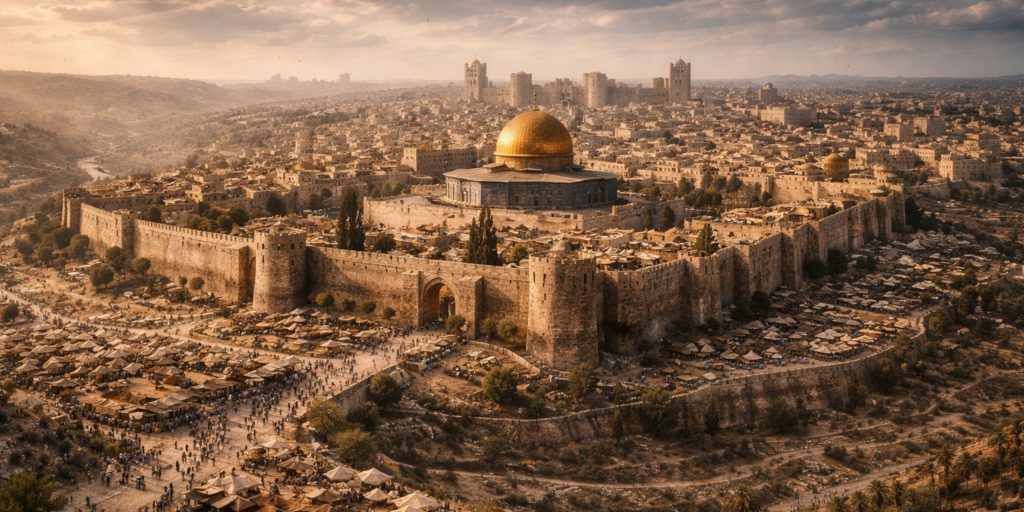
The most famous and symbolically important Crusader State was the Kingdom of Jerusalem, founded after the capture of the city in 1099.
Its first ruler, Godfrey of Bouillon, refused the title of king, supposedly declaring he would not wear a golden crown where Christ wore thorns. Medieval chroniclers loved this story because it sounded wonderfully noble.
His successor, Baldwin I of Jerusalem, had no such hesitation and accepted the crown quite happily.
Jerusalem became the political and religious centre of the Latin East. The kingdom stretched along the Levantine coast and depended heavily upon ports such as Acre, Jaffa, and Tyre.
At its height, the kingdom maintained an impressive network of castles, churches, monasteries, and fortified towns.
The County of Edessa
The County of Edessa was the first Crusader State established, founded in 1098 by Baldwin of Boulogne.
It was also the most vulnerable.
Located deep inland and surrounded by hostile powers, Edessa lacked strong natural defences and struggled to maintain support from neighbouring crusader territories.
In 1144, the city fell to the Muslim ruler Zengi. Its loss shocked Europe and directly inspired the Second Crusade.
Edessa never recovered.
The Principality of Antioch
The Principality of Antioch emerged after one of the most brutal sieges of the First Crusade.
Ruled initially by Bohemond I of Antioch, Antioch became a wealthy and strategically vital state linking Syria and Anatolia.
The principality often balanced between warfare and diplomacy. Its rulers negotiated with Byzantines, Armenians, Muslims, and fellow crusaders with equal frequency.
Antioch developed into a hybrid frontier society where Latin, Byzantine, and Armenian influences mixed constantly.
The County of Tripoli
The final major Crusader State, the County of Tripoli, was established in 1109.
Tripoli became commercially successful thanks to Mediterranean trade connections, particularly with Italian maritime powers such as Venice and Genoa.
Its rulers built powerful fortifications throughout the surrounding mountains and coastlines.
The county survived until 1289, when Mamluk forces captured the city after a devastating siege.
Society in the Crusader States
Despite popular imagination, the Crusader States were not populated solely by heavily armoured western knights wandering dramatically through deserts.
The reality was more complicated.
Most inhabitants were local eastern Christians and Muslims. Latin settlers formed a relatively small ruling elite concentrated in cities and castles.
Languages spoken included:
- Old French
- Arabic
- Greek
- Armenian
- Syriac
- Latin
Trade connected the states to Europe, Byzantium, Egypt, and the Islamic world. Italian merchants became enormously influential, especially in coastal cities.
Daily life could be surprisingly practical. Crusader nobles adapted to eastern climates, wore lighter fabrics beneath armour, adopted local foods, and occasionally copied eastern military techniques. The stereotype of every crusader stubbornly roasting inside thick wool while refusing to learn anything foreign does not quite survive historical scrutiny.
Arms and Armour of the Crusader States
The armies of the Crusader States blended western European and Near Eastern military traditions.
Sword Types Used
Common sword types included:
- Arming swords
- Knightly cruciform swords
- Early longswords
- Falchions
- Byzantine-style spathion blades
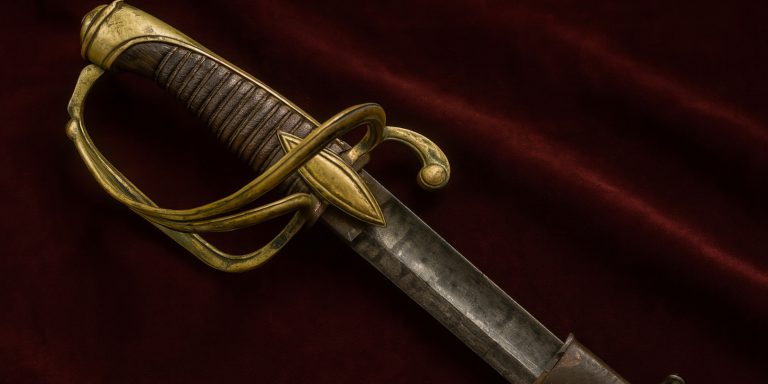
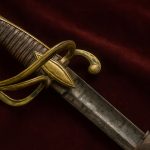
- Curved sabres captured or adopted from Muslim opponents
Typical crusader swords resembled classic medieval European weapons with straight double-edged blades optimised for cutting and thrusting.
Many surviving examples align with the famous Oakeshott typology, especially Type X, XI, and XII swords.
Muslim opponents frequently used curved sabres that proved effective for mounted warfare and rapid strikes. Over time, some crusaders adopted eastern weapons and tactics themselves.
Armour and Equipment
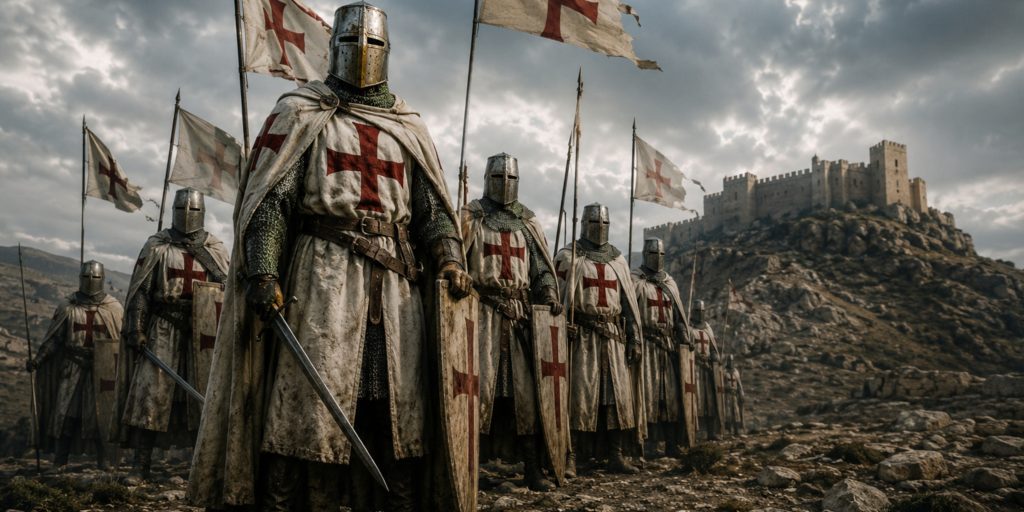
Typical crusader equipment included:
- Mail hauberks
- Nasal helmets
- Kite shields
- Surcoats
- Mail chausses
- Spears and lances
- Crossbows
By the twelfth century, helmets evolved into more enclosed forms offering greater facial protection.
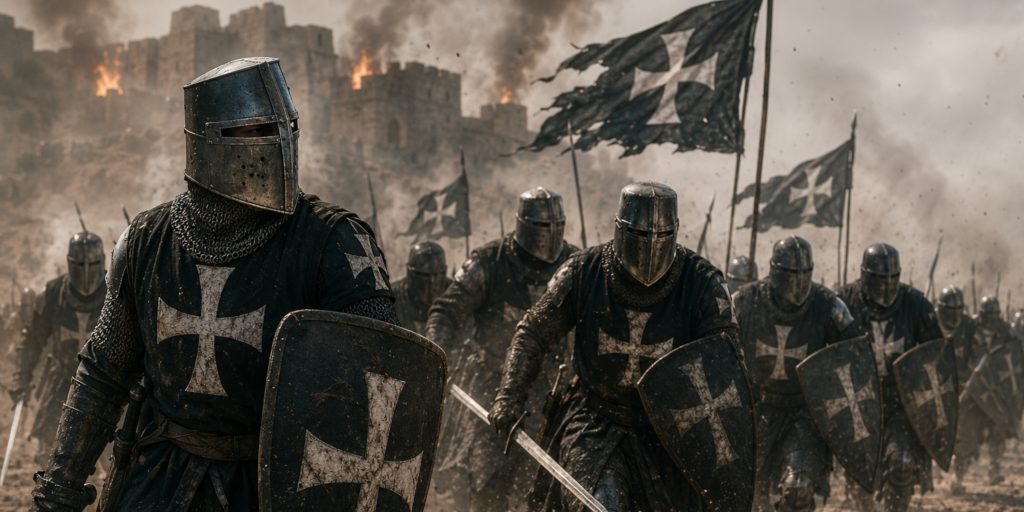
Military orders such as the Knights Templar and Knights Hospitaller became elite professional fighting forces.
The climate posed constant problems. European mail armour was effective but brutally hot under Levantine sunlight. Medieval chroniclers occasionally describe crusaders collapsing from thirst and exhaustion before the enemy even arrived, which is an exceptionally medieval way to lose a battle.
Castles and Fortifications
The Crusader States became famous for their fortifications.
Some of the greatest castles of the medieval world emerged during this period.
Important sites included:
- Krak des Chevaliers
- Belvoir Castle
- Margat
- Kerak Castle
These castles protected trade routes, frontier zones, and pilgrimage roads.
Crusader military architecture influenced European castle design for generations. Concentric defences, thick curtain walls, angled towers, and advanced gatehouses became increasingly common after contact with eastern fortifications.
Warfare and Famous Battles
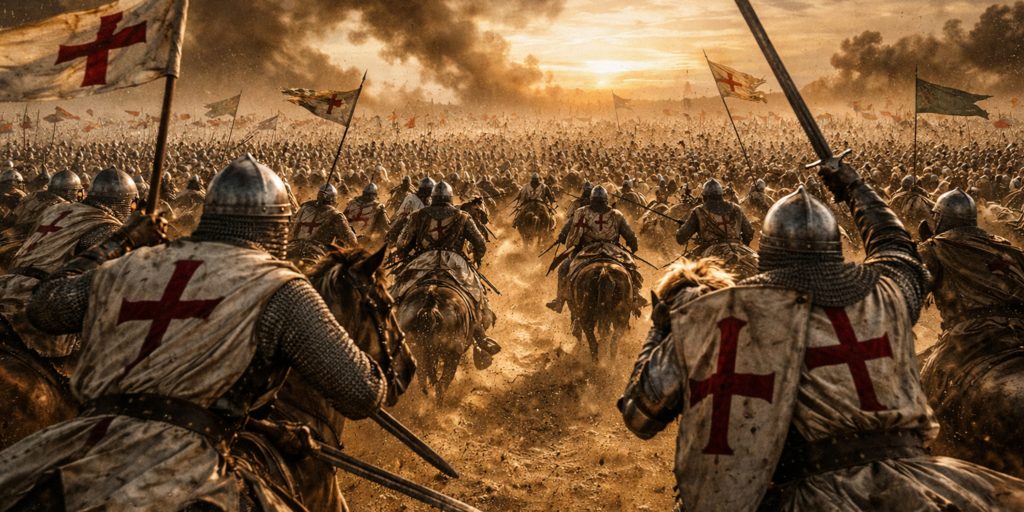
The Crusader States existed in near-constant warfare.
Key battles included:
| Battle | Date | Outcome |
|---|---|---|
| Battle of Dorylaeum | 1097 | Crusader victory |
| Siege of Jerusalem | 1099 | Crusader capture of Jerusalem |
| Battle of Harran | 1104 | Major crusader defeat |
| Battle of Montgisard | 1177 | Baldwin IV victory against Saladin |
| Battle of Hattin | 1187 | Crushing crusader defeat |
| Siege of Acre | 1189–1191 | Crusader victory |
| Fall of Acre | 1291 | End of the Crusader States |
The most devastating moment came at the Battle of Hattin.
There, Saladin annihilated the army of Jerusalem and recaptured the holy city shortly afterwards.
The defeat exposed the fragile foundations beneath crusader power.
Archaeology of the Crusader States
Modern archaeology has transformed understanding of the Crusader States.
Excavations across Israel, Palestine, Jordan, Lebanon, and Syria have uncovered:
- Castle foundations
- Arrowheads and weapons
- Coins and seals
- Pilgrim artefacts
- Churches and monasteries
- Fortified urban districts
At Acre, archaeologists uncovered extensive underground crusader halls, tunnels, and hospitals associated with the Hospitallers.
Excavations at Krak des Chevaliers revealed sophisticated water systems, storage chambers, and layered defensive construction.
Burial sites have also provided evidence of battlefield trauma, nutrition, disease, and cultural mixing between settlers and local populations.
Recent isotope analysis suggests some crusader communities became far more integrated with local society than earlier historians believed.
Contemporary Quotes
Medieval chroniclers left vivid descriptions of the Crusader States and the wars surrounding them.
The chronicler Fulcher of Chartres famously wrote:
“We who were Occidentals have now become Orientals.”
The Muslim historian Ibn al-Athir described the arrival of the crusaders with horror:
“A calamity such as no previous age had ever brought.”
After the fall of Jerusalem in 1187, the poet Imad ad-Din al-Isfahani wrote:
“Jerusalem was purified of the filth of the Franks.”
Meanwhile, western chroniclers often portrayed the Holy Land with almost dreamlike reverence, despite the fact many crusaders spent large portions of their lives hungry, sunburnt, and arguing over fortifications.
Why the Crusader States Fell
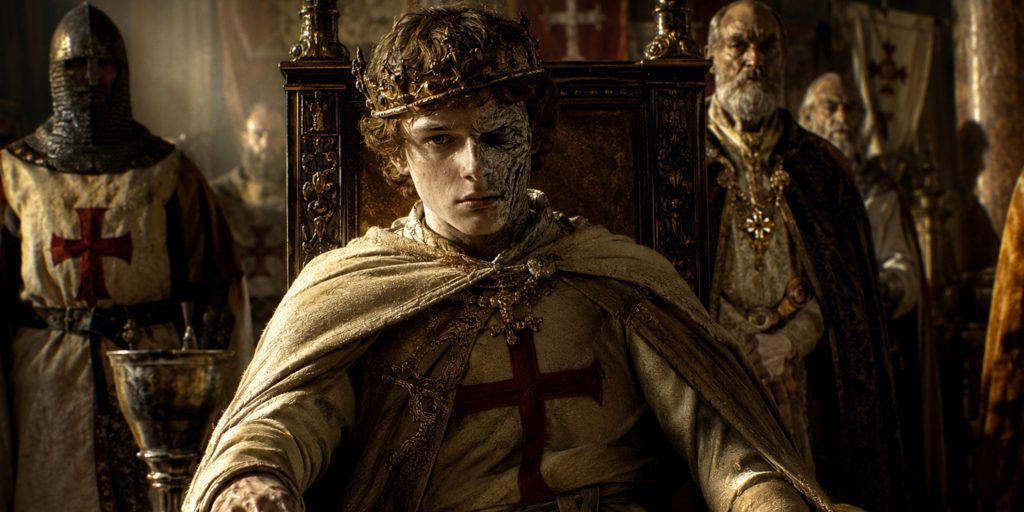
Several factors contributed to the collapse of the Crusader States.
Internal Division
Crusader rulers frequently quarrelled among themselves. Rivalries between nobles weakened military coordination.
This was not unusual for medieval politics. If two lords agreed on something for longer than a fortnight, chroniclers probably assumed witchcraft was involved.
Muslim Unification
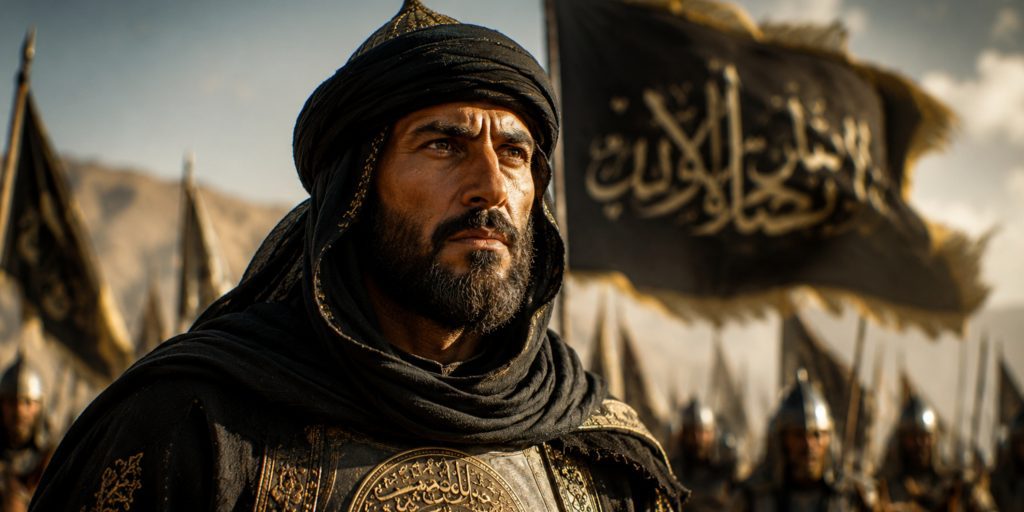
Leaders such as Nur ad-Din and Saladin united previously divided Muslim territories.
This transformed the balance of power.
Limited European Support
The Crusader States depended heavily upon reinforcements from Europe.
Over time, enthusiasm for crusading declined, especially after repeated military failures.
The Rise of the Mamluks
The Mamluk Sultanate proved highly effective militarily.
By the late thirteenth century, the Mamluks systematically dismantled remaining crusader strongholds.
The fall of Acre in 1291 marked the effective end of crusader rule in the Levant.
Legacy of the Crusader States
The Crusader States left a lasting legacy across Europe and the Middle East.
They influenced:
- Military architecture
- Trade networks
- Religious relations
- Medieval warfare
- Pilgrimage culture
- East-west diplomacy
The crusades themselves remain controversial and emotionally charged subjects even today.
Modern historians increasingly view the Crusader States not simply as holy kingdoms, but as complex frontier societies shaped by violence, adaptation, trade, faith, and survival.
Their story contains extraordinary bravery and extraordinary brutality in equal measure.
And perhaps that is why they continue to fascinate. The Crusader States stood at the collision point between worlds, never fully stable, never fully secure, and always one campaign away from disaster.