There is a particular satisfaction in studying the Royal Navy’s long war against piracy. Not because it is neat or heroic in the simple sense, but because it is messy, improvised, and often just a little bit ruthless. The pirate hunter was not always a romantic figure in polished uniform. More often, he was a tired captain in a leaky sloop, chasing ghosts across warm seas that smelled faintly of rot and ambition.
From the late seventeenth century into the early nineteenth, the Royal Navy became the single most effective anti piracy force in the Atlantic and beyond. This was not by accident. It was the result of policy, persistence, and a willingness to hang quite a lot of people in public.
Why the Navy Took on Pirates
Piracy was not merely an irritation to trade. It was a direct challenge to imperial authority. Merchant shipping fed the British economy, and any threat to those routes quickly became a matter of state concern.
The so called Golden Age of Piracy, roughly between 1650 and 1730, coincided with expanding trade networks in the Caribbean and along the American coast. Ships grew more numerous. Protection did not always keep pace. Pirates noticed.
The Royal Navy’s response was gradual at first. Early efforts relied on privateers and colonial governors. That approach had a habit of backfiring. A privateer with unpaid wages could become a pirate with alarming ease.
By the early eighteenth century, the Crown shifted strategy. Warships were deployed more consistently. Captains were given clearer authority. Admiralty courts followed behind them, ready to turn captured pirates into examples.
It was, in short, a system.
The Men Who Hunted Pirates
Pirate hunting was not a glamorous posting. It required patience, resilience, and a willingness to operate far from support.
Some figures stand out, not because they were flawless, but because they were effective.
Woodes Rogers
A privateer turned governor, Rogers approached piracy with a practical mindset. As governor of the Bahamas, he offered pardons to those willing to surrender and pursued the rest with determined efficiency. His campaign at Nassau broke one of the major pirate hubs in the Caribbean.
He also understood something many missed. Pirates were not just criminals, they were organised communities. Disrupt the structure, and the rest tended to fall apart.
Lieutenant Robert Maynard
Maynard’s encounter with Blackbeard is often retold with theatrical enthusiasm. The reality is no less striking. In 1718, he cornered Edward Teach in North Carolina waters and engaged in close combat aboard the pirate’s vessel.
The fight was brutal, cramped, and personal. Teach was killed after sustaining multiple wounds, and his head was displayed as proof. Subtlety was not the aim.
Captain Chaloner Ogle
Ogle’s victory over Bartholomew Roberts in 1722 marked a turning point. Roberts had been one of the most successful pirates of the era. His death signalled that even the most capable pirate captains could not evade naval pressure indefinitely.
Ships and Tactics
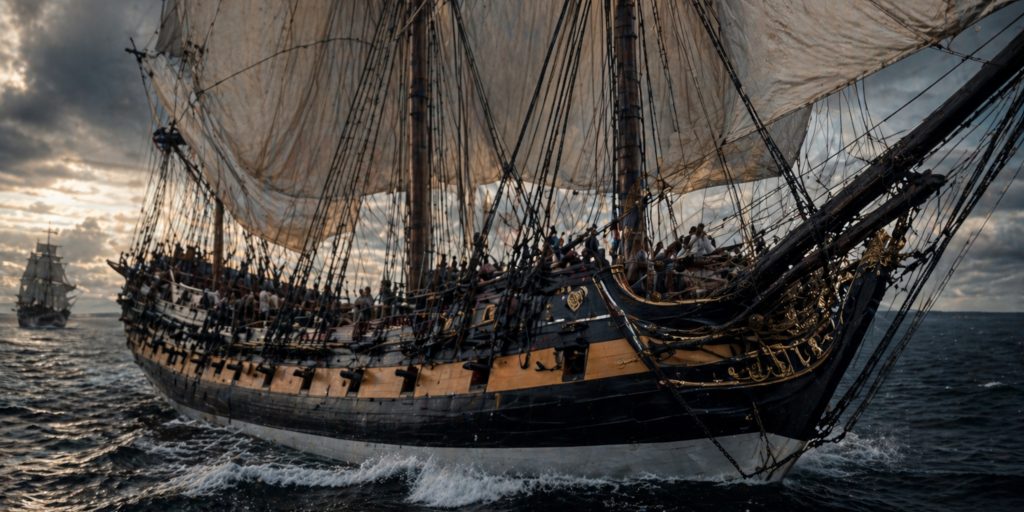
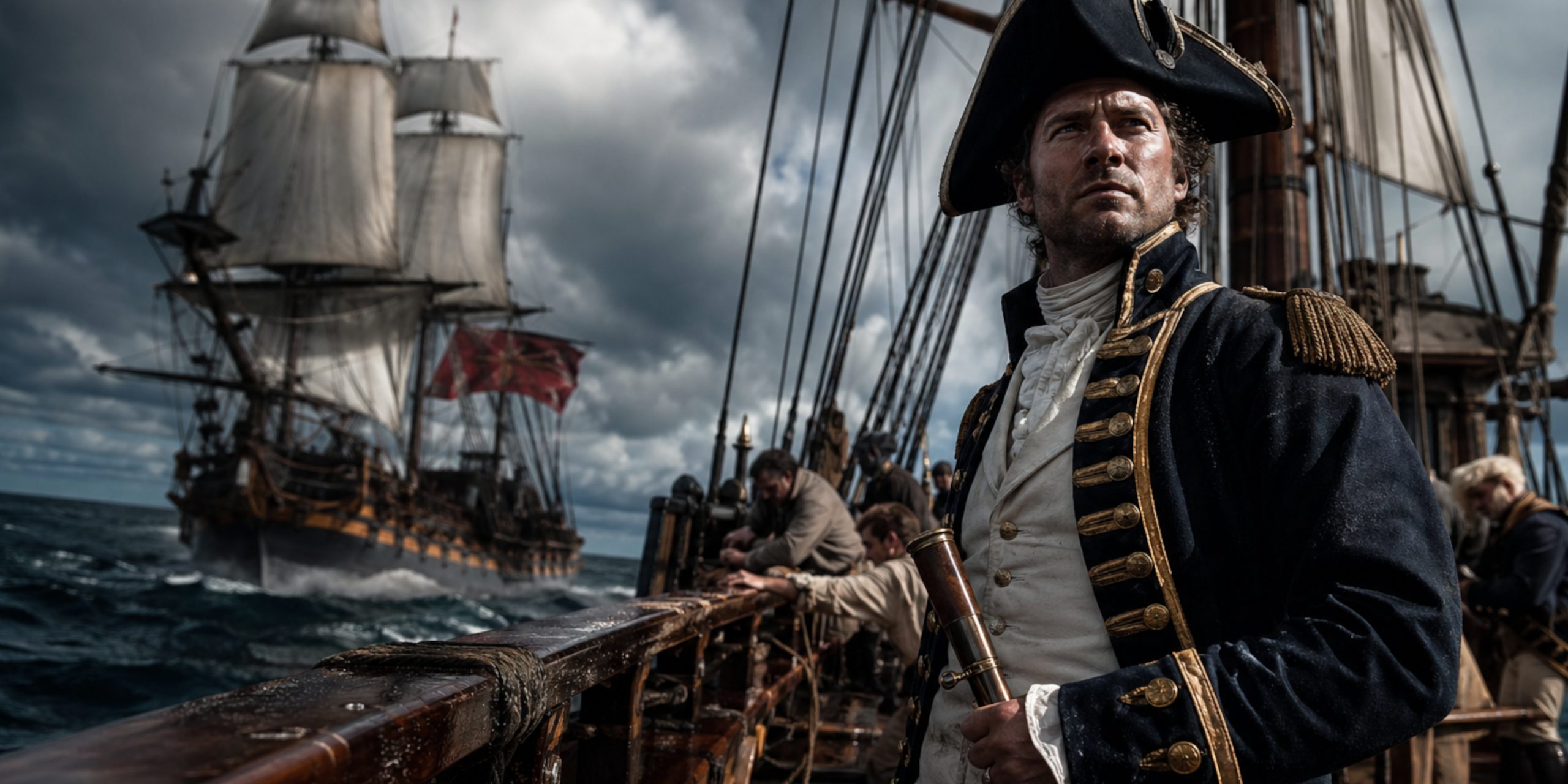
The Royal Navy did not always send large ships of the line after pirates. That would have been impractical. Pirates favoured speed, shallow waters, and surprise.
Instead, the Navy adapted.
- Small, fast vessels such as sloops and brigs were used for pursuit
- Crews were trained for boarding actions rather than formal battle lines
- Intelligence networks relied on merchants, informants, and occasionally former pirates
Weapons were practical and close ranged.
- Cutlasses, short and brutal, ideal for confined decks
- Pistols, often unreliable but effective at close range
- Muskets for initial volleys before boarding
The goal was rarely to sink a pirate ship. Capture was preferred. A captured pirate could be tried, and more importantly, displayed.
Law, Punishment, and Theatre
The legal machinery behind pirate hunting deserves as much attention as the naval actions.
Captured pirates were transported to Admiralty courts. Trials could be swift. Outcomes were often predictable.
Execution followed, usually by hanging. Bodies were sometimes left in chains along busy waterways as a warning. It was not subtle, and it was not meant to be.
There is a temptation to view this as excessive. It was certainly theatrical. Yet it worked. Piracy declined sharply in regions where enforcement was consistent.
One cannot help noticing that the Royal Navy fought piracy not only with ships and guns, but with spectacle.
Life as a Pirate Hunter
Service in anti piracy patrols was uncomfortable at best.
- Long periods at sea with limited supplies
- Tropical diseases that killed more men than combat
- Frustration from chasing elusive targets across vast distances
There was also a certain irony. Naval crews were not always paid promptly. Conditions could be harsh. The line between disciplined sailor and desperate outlaw was thinner than the Admiralty preferred to admit.
Still, many officers took pride in the role. Pirate hunting offered independence, command experience, and the possibility of prize money.
And, if one is honest, a story worth telling later.
Decline of Piracy
By the mid eighteenth century, large scale piracy in the Atlantic had largely been suppressed.
Several factors contributed.
- Increased naval presence in key regions
- Stronger colonial administration
- Fewer safe havens for pirates to operate from
Pirates did not vanish entirely. They rarely do. But they became less organised, less ambitious, and far less successful.
The Royal Navy’s sustained pressure had changed the environment. Piracy was no longer a viable career in the way it had briefly been.
A Historian’s Reflection
There is a tendency to romanticise pirates and to cast pirate hunters as either villains or heroes. Neither view is particularly helpful.
The reality sits somewhere in between. Pirates were often products of circumstance, men navigating brutal systems with limited choices. The Royal Navy, for its part, was enforcing order in a way that suited imperial interests first and moral clarity second.
And yet, there is something undeniably compelling about the chase. A small warship on the horizon, sails straining, closing in on a vessel that knows it cannot outrun what is coming.
It is not a clean story. It is not even a fair one. But it is a revealing one.
And if I sound slightly amused at times, it is because history has a habit of taking itself very seriously, even when it is, at heart, a series of desperate decisions made by people who would have preferred a quieter life.