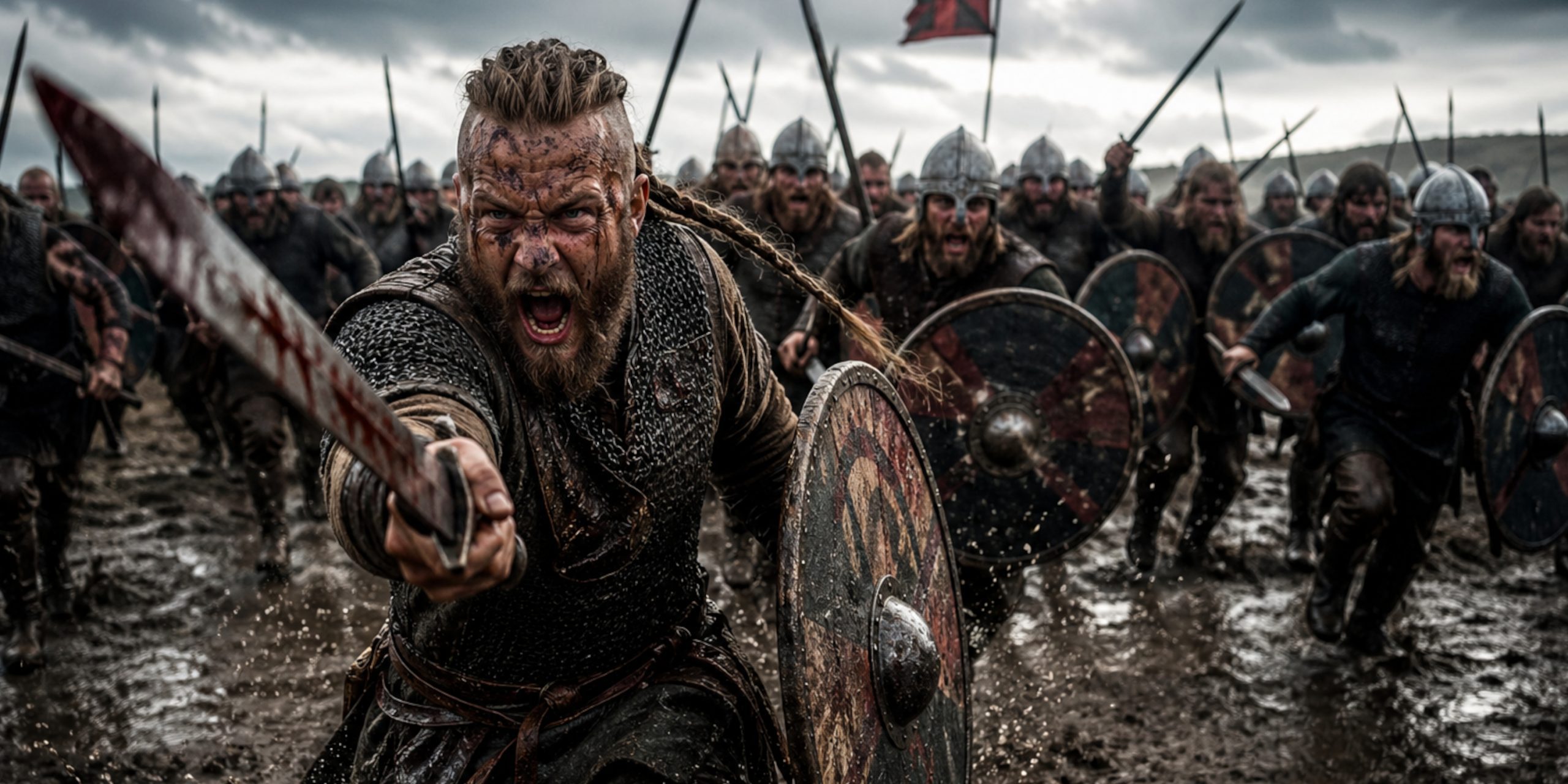
The Viking Age has a habit of being reduced to a few familiar images. Longships cutting through grey seas, warriors shouting themselves hoarse, and axes rising and falling with theatrical enthusiasm. The reality is more grounded, and in some ways more unsettling. Viking weapons were not chosen for spectacle. They were tools of survival, status, and at times quiet intimidation.
What makes a weapon “deadly” is not always its size or brutality. It is how reliably it does its job, how well it fits the hand that wields it, and how often it appears in the ground centuries later. The archaeological record gives us a blunt answer. Some weapons turn up everywhere. Others, far rarer, tell us more about wealth and identity than battlefield practicality.
The Viking Sword
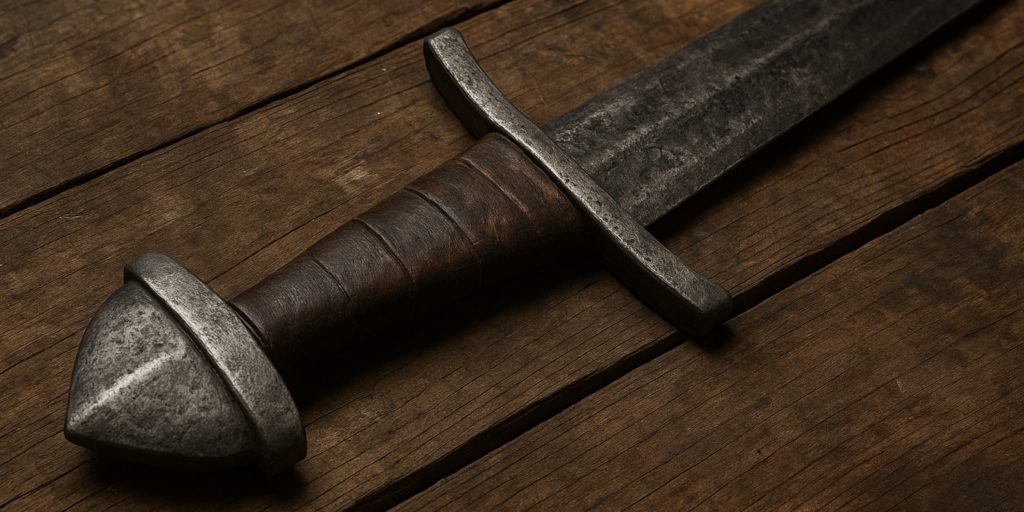
The Viking sword sits at the centre of popular imagination, and with some justification. It was a formidable weapon, but also a social marker. Owning one said something about who you were, and more importantly, who you were not.
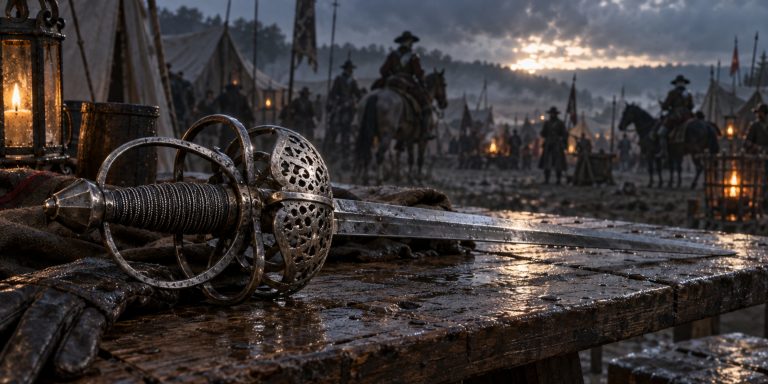
Typically double edged and around 70 to 90 cm in blade length, these swords were designed for cutting rather than thrusting. The broad blade and relatively short grip made them ideal for slashing attacks in close quarters. Pattern welding, visible in subtle ripples along the blade, combined flexibility with strength.
The most famous examples carry the ULFBERHT inscription, found across northern Europe. These blades suggest a level of metallurgical quality that stands out even today, likely produced using high carbon steel that was not widely available in the region.
In battle, the sword was deadly in skilled hands. In practice, it was never the most common weapon. That honour belongs elsewhere.
A line often attributed to Snorri Sturluson captures the cultural weight of the sword:
“Sharp is the sword that the king gives, but sharper still is the man who bears it.”
The Viking Axe
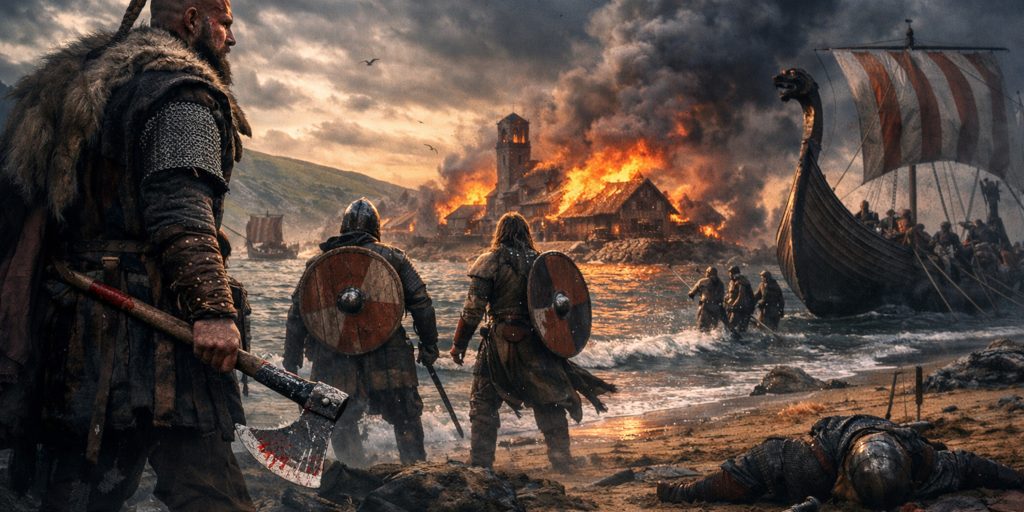
If the sword was prestigious, the axe was practical. It appears in graves, settlements, and battle sites with a frequency that leaves little doubt. This was the working weapon of the Viking world.
Axes ranged from small one handed tools to the imposing Dane axe, with a long haft and wide blade. The bearded axe, with its extended lower edge, allowed for a firm grip closer to the blade and offered more control in combat.
The lethality of the axe comes from its efficiency. A well placed strike could split shield rims, crush bone, or hook an opponent’s weapon out of line. It required less metal than a sword and was easier to produce, making it accessible to a wider portion of society.
From Heimskringla comes a stark description of axe work in battle:
“He hewed at shield and man alike, and neither stood long before him.”
It is not poetic restraint. It is a matter of fact observation.
The Spear
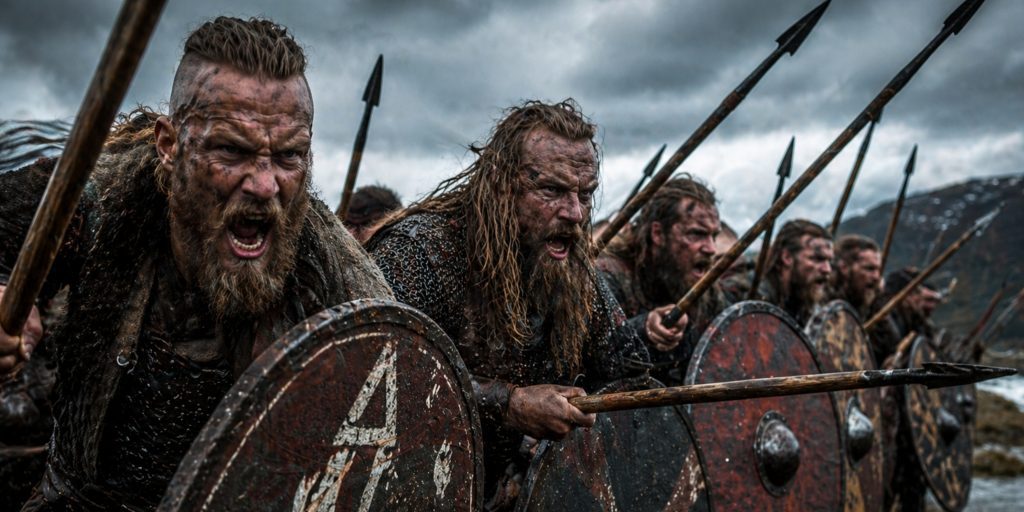
The spear is often overlooked, which says more about modern taste than Viking reality. It was the most common weapon across the Viking Age.
Light enough to throw and robust enough for thrusting, the spear gave its user reach and flexibility. In a shield wall, it became even more effective. Rows of spearheads projecting forward created a barrier that was difficult to approach and dangerous to linger near.
Spearheads vary widely in shape and size, from narrow thrusting points to broader blades capable of cutting. This variety hints at different fighting styles and regional preferences.
The spear also carried symbolic weight. In Norse mythology, the god Odin wields Gungnir, a weapon that never misses its mark. That association alone tells us how deeply the spear was embedded in the culture.
The Seax
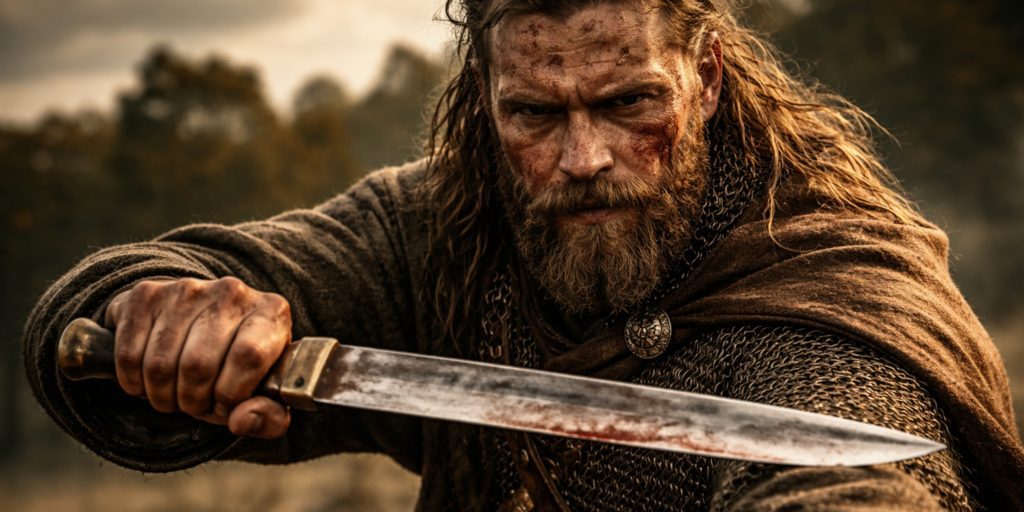
The seax sits somewhere between knife and short sword, and that ambiguity is part of its appeal. It was carried by many and used for far more than fighting.
Longer examples, sometimes called long seaxes, could reach lengths comparable to short swords. The distinctive broken back shape appears frequently in finds from the later Viking Age.
In combat, the seax was direct and unforgiving. It lacked the reach of a spear or the prestige of a sword, but in close quarters it was entirely capable of lethal work.
Its presence in graves across social levels suggests it was a constant companion. Not every warrior owned a sword, but many carried a seax.
Bows and Arrows
Archery rarely dominates Viking narratives, yet it played a consistent role in warfare and hunting alike. Bows were typically made from yew or elm, with draw weights capable of delivering significant force.
Arrowheads found at sites such as Birka include both broadheads for hunting and narrower points designed for armour penetration.
In battle, archers could disrupt formations before close combat began. At sea, they were even more valuable, able to strike from one vessel to another with unsettling precision.
The sagas occasionally note their effectiveness with understated approval. A well placed arrow rarely needed embellishment.
Shields as Weapons
Strictly speaking, the shield is defensive. In practice, it was part of the offensive system.
Round shields, often around 80 to 90 cm in diameter, were constructed from wooden planks with an iron boss at the centre. That boss was not decorative. It protected the hand and could be used to punch or unbalance an opponent.
In a shield wall, the weapon itself becomes secondary. The formation dictates the flow of the fight. Spears thrust between shields, axes swing over them, and swords exploit any opening.
The shield is what allows the rest of the weapons to function properly. Without it, even the finest blade becomes a liability.
Archaeology and What Survives

The archaeological record does not flatter or exaggerate. It simply accumulates.
Weapons are found in graves, hoards, and occasionally battle sites. Swords appear less frequently than axes and spearheads, reinforcing the idea that they were valuable possessions. Spearheads, by contrast, are almost ubiquitous.
Sites such as Gjermundbu have provided rare insights into a complete warrior’s equipment, including helmet, weapons, and armour fragments.
Corrosion has taken its toll, and organic materials such as wood rarely survive. What remains is iron, shaped and reshaped by time. Even so, patterns emerge. The tools that were most useful are the ones we find most often.
Contemporary Accounts
Writers from outside the Viking world tend to be more alarmed than analytical, which is understandable given their position at the receiving end.
Alcuin of York, reacting to the raid on Lindisfarne, wrote:
“Never before has such terror appeared in Britain as we have now suffered from a pagan race.”
While not a technical description of weaponry, it hints at the psychological impact. The weapons themselves were not exotic. Their use, often swift and coordinated, was what made them effective.
The sagas, written later, mix memory with storytelling. They offer flashes of detail rather than careful catalogues. Still, they confirm the same pattern. Spears, axes, and the occasional sword, used with confidence and little hesitation.
What Made These Weapons Deadly
Deadliness in the Viking Age rests on three factors. Accessibility, reliability, and context.
Axes and spears dominate because they were widely available and effective in formation fighting. Swords stand out for craftsmanship and status, but not for sheer frequency. The seax fills the gaps, ever present and quietly lethal.
There is a temptation to rank these weapons, to crown one as the most dangerous. The evidence resists that neat conclusion. A spear in a shield wall is more dangerous than a sword wielded alone. An axe in skilled hands can end a fight faster than either.
The Viking approach to warfare was not about a single superior weapon. It was about using the right tool at the right moment, and doing so with enough confidence to make it count.
Takeaway
Strip away the myths and the shouting, and Viking weaponry becomes something more interesting. It reflects a society that valued practicality, adaptability, and a certain blunt honesty.
The deadliest weapon was rarely the most expensive one. It was the one that turned up when it was needed and did not fail.
That, in the end, is a rather sobering measure of effectiveness.