The Battle of the Gulf of Naples, fought on 5 June 1284, was one of the decisive naval battles of the War of the Sicilian Vespers. It took place just off Naples and ended in a crushing victory for the Aragonese fleet under Roger of Lauria. By the end of the day the Angevin fleet had been broken, Naples itself was exposed, and Charles of Salerno, heir to the Angevin kingdom, was sitting in captivity rather than on a throne.
Few medieval naval battles had consequences quite so dramatic. A prince was captured, an ambitious kingdom was humbled, and the balance of power in the Mediterranean shifted sharply toward Aragon. Medieval chroniclers, who were never shy about a disaster provided it happened to somebody else, treated the battle almost as divine punishment for Angevin arrogance.
Background
The battle came during the long and bitter War of the Sicilian Vespers, which had begun in 1282 after the people of Sicily rebelled against Angevin rule. The revolt had spread rapidly, and the island invited Peter III of Aragon to take the Sicilian crown.
Charles I of Anjou had spent years building a Mediterranean empire stretching from southern Italy to parts of the Balkans. Sicily was supposed to be the glittering centrepiece. Instead, by 1284, it had become a source of ruinously expensive embarrassment.
The Angevins still controlled Naples and mainland southern Italy, but Aragon dominated Sicily. Naval supremacy became critical. Whoever controlled the sea could move troops, supply ports and strangle the other side’s communications.
Roger of Lauria, the brilliant Aragonese admiral, had already demonstrated that he was among the most capable commanders of his age. Charles of Salerno, son of Charles I, decided to challenge him outside Naples despite warnings to wait for reinforcements. It was not the finest decision ever made by a prince. Medieval history is rather crowded with men who believed that caution was for other people.
Foces
| Side | Commander | Estimated Strength | Notes |
|---|---|---|---|
| Aragonese-Sicilian Fleet | Roger of Lauria | Around 40 galleys | Highly experienced crews, many hardened by years of Mediterranean warfare |
| Angevin Fleet | Charles of Salerno | Around 30 to 40 galleys | Included Neapolitan and Provençal vessels, less cohesive and hurried into battle |
Leaders
- Aragonese-Sicilian
- Roger of Lauria
- Berenguer de Sarrià
- Sicilian captains from Messina and Catalonia
- Angevin
- Charles of Salerno
- Various Neapolitan and Provençal admirals
- Noble retainers from mainland Italy and France
Troop Composition
Aragonese Fleet
- Professional Catalan and Sicilian sailors
- Crossbowmen stationed on the decks and fighting towers
- Marines armed with spears, swords and shields
- Veteran galley rowers, many of whom could also fight if required
Angevin Fleet
- French and Neapolitan marines
- Crossbowmen and archers
- Noble cavalrymen transported for later operations ashore
- Mixed crews, less experienced in coordinated naval fighting
The Aragonese advantage lay not simply in numbers, which were fairly similar, but in discipline and cohesion. Lauria’s men had spent years working together. The Angevin fleet looked formidable from a distance, rather like an expensive suit of armour worn by someone who has forgotten where the straps go.
The Commanders
Roger of Lauria was already developing a formidable reputation. Born in Calabria and raised in the Aragonese court, he combined Mediterranean seamanship with a ruthless instinct for timing. He preferred to draw enemies into rash attacks and then strike once their formation was broken.
Charles of Salerno was brave, energetic and determined to defend Naples. Unfortunately, he also appears to have been susceptible to the dangerous medieval belief that noble birth naturally produced military genius. History repeatedly disagrees.
Contemporary accounts suggest that Charles ignored advice from his father not to risk battle until the main Angevin fleet had arrived. Instead, eager to prove himself, he sailed out of Naples in pursuit of Lauria.
Arms and Armour
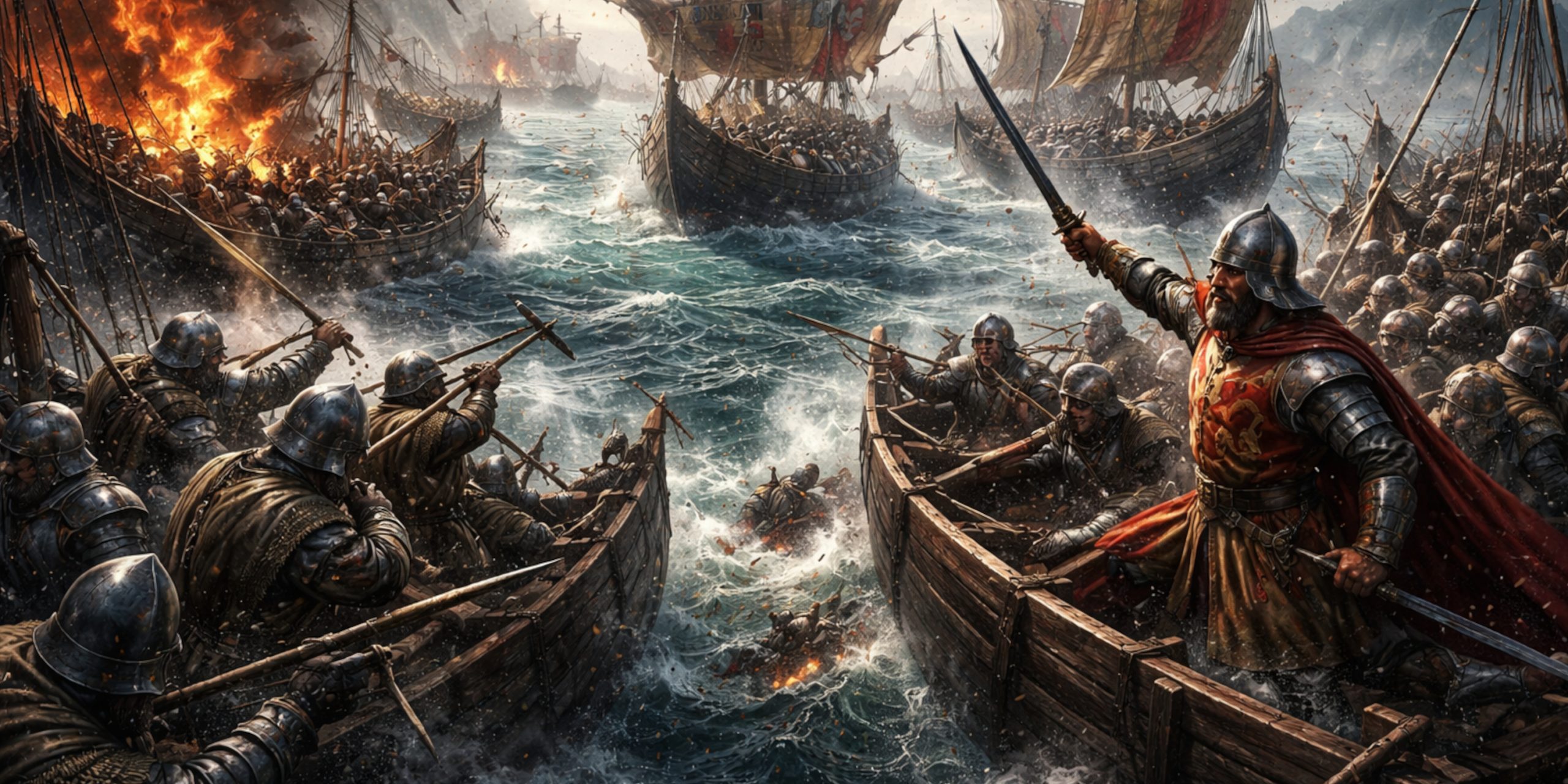
Naval warfare in 1284 was brutal and close-range. Medieval galleys did not fight like later sailing ships exchanging broadsides. The aim was to close, board and overwhelm the enemy.
| Weapon or Armour | Aragonese Use | Angevin Use |
|---|---|---|
| Crossbows | Widely used by Catalan and Sicilian marksmen | Used by Provençal and Neapolitan troops |
| Spears and Pikes | Used during boarding actions | Used to repel boarders |
| Shields | Round and kite shields carried by marines | Kite shields common among Angevin troops |
| Mail Hauberks | Standard protection for officers and marines | Worn by nobles and marines |
| Great Helms and Cervellières | Worn by commanders and heavily armoured troops | Common among Angevin knights |
| Swords | Arming swords and falchions | Arming swords and knightly blades |
Specific Sword Types Used
- Arming sword
- The most common sidearm aboard both fleets
- Straight, double-edged blade suited to thrusting and cutting in confined spaces
- Falchion
- Favoured by some Catalan and Sicilian marines
- Single-edged, slightly curved and brutally effective during boarding
- Early Knightly Sword, broadly corresponding to Oakeshott Types XII and XIII
- Used by Angevin nobles and officers
- Longer blade, useful for powerful cuts but less practical on a crowded galley deck
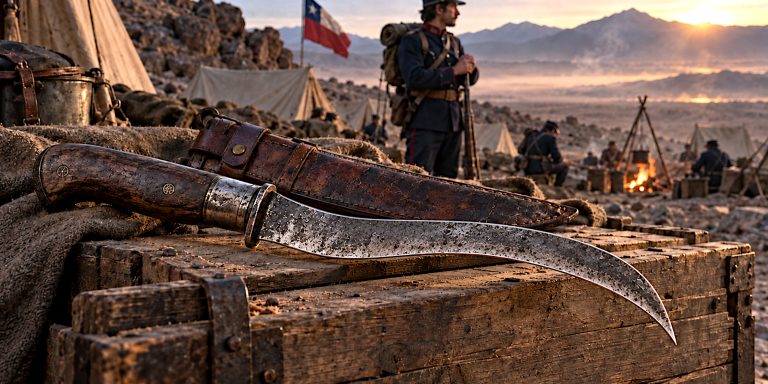
- Seax-style knives and daggers
- Used as secondary weapons once combat became close and chaotic
The fighting would have been grimly intimate. Wet planks, cramped decks and the smell of tar, sweat and seawater. Elegant swordsmanship had little place here. A man with a short blade and a willingness to stab quickly was usually at an advantage.
The Battle
Roger of Lauria approached Naples and deliberately taunted the defenders into coming out to fight. According to chroniclers, he sailed close to the harbour, provoking the city and its fleet.
Charles of Salerno took the bait.
The Angevin fleet left Naples in some disorder, eager to engage before the Aragonese escaped. Lauria withdrew slightly, keeping his ships together and drawing the enemy farther from the protection of the harbour.
Once the Angevin line had become stretched and fragmented, Lauria suddenly turned and attacked.
The Aragonese crossbowmen opened fire first, inflicting heavy casualties before the ships even collided. Then Lauria’s galleys closed for boarding actions. The better-trained Aragonese crews fought with greater discipline, isolating Angevin ships and overwhelming them one by one.
Charles of Salerno’s flagship was surrounded and captured after fierce fighting. The prince himself was taken prisoner.
By the end of the battle much of the Angevin fleet had been sunk, captured or scattered.
Battle Timeline
| Time | Event |
|---|---|
| Early June 1284 | Roger of Lauria approaches Naples with the Aragonese fleet |
| 5 June, morning | Lauria provokes the Angevin fleet outside the harbour |
| Midday | Charles of Salerno sails out with around 30 to 40 galleys |
| Early afternoon | Lauria feigns withdrawal and draws the Angevins farther from Naples |
| Afternoon | Aragonese fleet suddenly turns and attacks |
| Late afternoon | Angevin line collapses under concentrated boarding actions |
| Evening | Charles of Salerno is captured and surviving Angevin ships flee back toward Naples |
Contemporary Quotes
The contemporary chronicler Ramon Muntaner, who greatly admired Roger of Lauria and was never in danger of understating his achievements, wrote:
“No galley dared face him upon the sea.”
Another chronicler described the capture of Charles of Salerno in sombre terms:
“The prince was taken, and with him perished the hope of the kingdom.”
A later Angevin account, written with the weary bitterness familiar to anyone who has watched a disaster unfold from very close range, lamented:
“They went out proudly, and returned neither proudly nor many.”
Archaeology and Evidence
Unlike land battles, medieval naval engagements often leave frustratingly little physical evidence. Ships sank in deep water, wreckage drifted, and surviving vessels were reused or rebuilt.
Even so, archaeology around the Bay of Naples and the wider Tyrrhenian coast has revealed a good deal about the ships and weapons likely involved.
Finds from medieval harbour excavations in Naples, Amalfi and Sicily include:
- Iron crossbow bolts
- Fragments of mail armour
- Ship timbers from Mediterranean galleys
- Ceramics and equipment associated with late thirteenth-century fleets
- Iron sword fragments and dagger blades
Excavated galley remains from the Mediterranean show that these vessels were relatively light and fast, designed for speed and boarding actions rather than heavy collision tactics. Their narrow hulls and raised fighting platforms fit the descriptions given by chroniclers of the battle.
The battle site itself has never been conclusively identified underwater. The Gulf of Naples is a busy and complicated environment for archaeology, with centuries of later shipping, volcanic activity and modern development obscuring the evidence. In other words, even the seabed has had a very crowded diary since 1284.
Why the Aragonese Won
Several factors explain the Aragonese victory:
- Roger of Lauria was the superior commander
- The Aragonese fleet remained disciplined and cohesive
- Lauria successfully provoked Charles into fighting at the wrong moment
- Aragonese crossbowmen inflicted severe damage before boarding began
- The Angevin fleet lost formation after leaving Naples
Most importantly, Lauria controlled the tempo of the battle from beginning to end. Charles of Salerno reacted to events. Lauria created them.
Aftermath and Legacy
The consequences were immense. Charles of Salerno remained a prisoner for years. Charles I of Anjou was left devastated and died the following year in 1285.
The Angevin dream of restoring complete control over Sicily effectively died in the waters off Naples. Although the war continued, the balance had shifted decisively.
The battle also cemented Roger of Lauria’s reputation as one of the greatest admirals of the medieval world. Few commanders have managed to lure an enemy prince into a trap, destroy his fleet and carry him off alive in a single afternoon.
The Battle of the Gulf of Naples remains one of the finest examples of medieval naval command. It showed that discipline, planning and patience could defeat prestige and enthusiasm. Medieval chroniclers loved to present battles as contests decided by divine favour. In this case, divine favour may have had some assistance from Roger of Lauria’s very careful planning.