A historian’s look at steel, symbolism, and the men who carried them
The American Civil War is often remembered through rifles, artillery, and industrial warfare. Yet the sword still held a curious place. It was no longer decisive on the battlefield, but it remained deeply symbolic. Officers wore swords as markers of rank, identity, and, occasionally, personal courage. Some of these blades became inseparable from the reputations of the men who carried them.
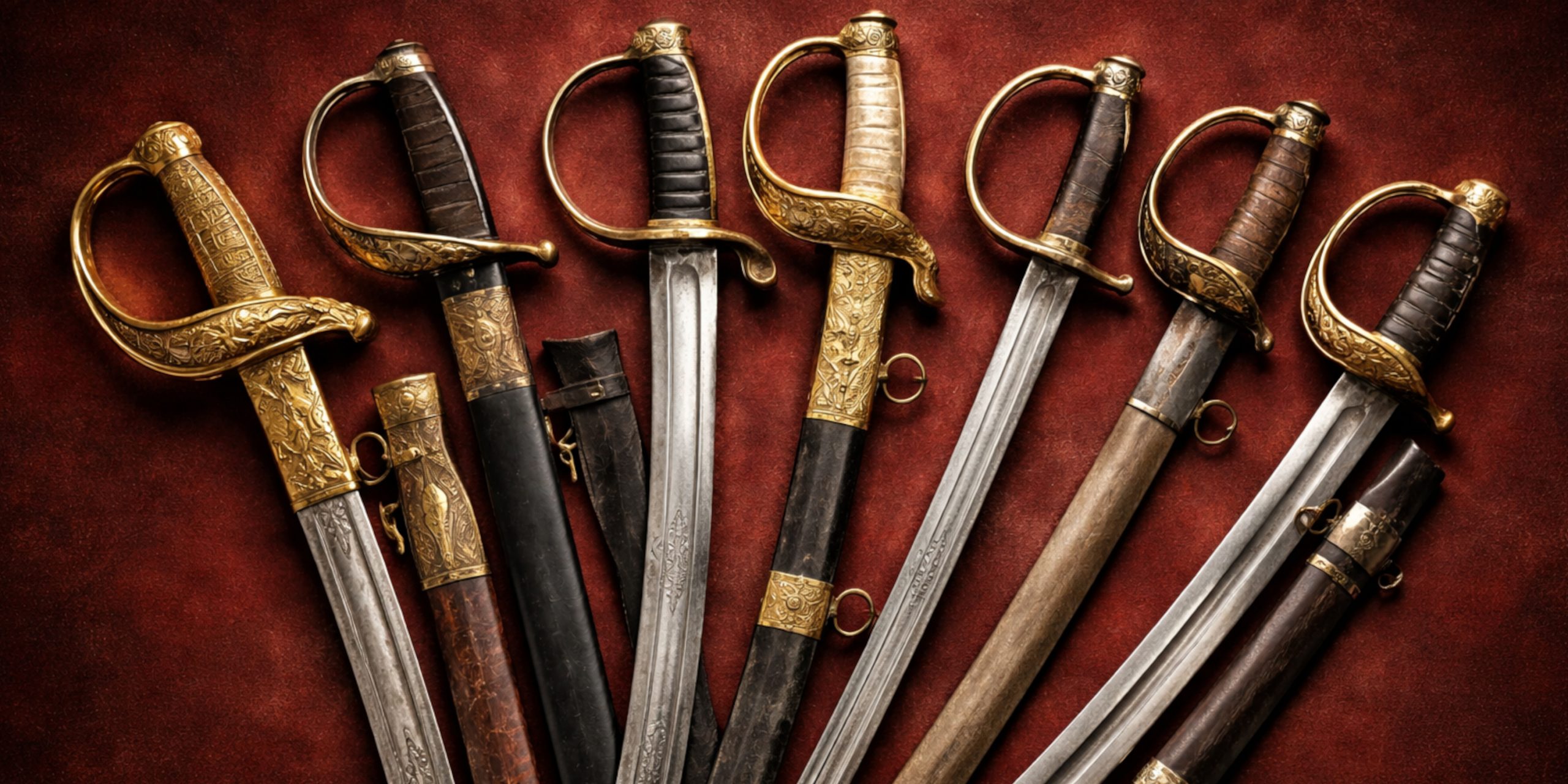
This is a look at seven of the most notable swords from the conflict. Some saw real action, others served more as badges of command, but all carry stories worth telling.
1. Robert E. Lee’s Presentation Sword
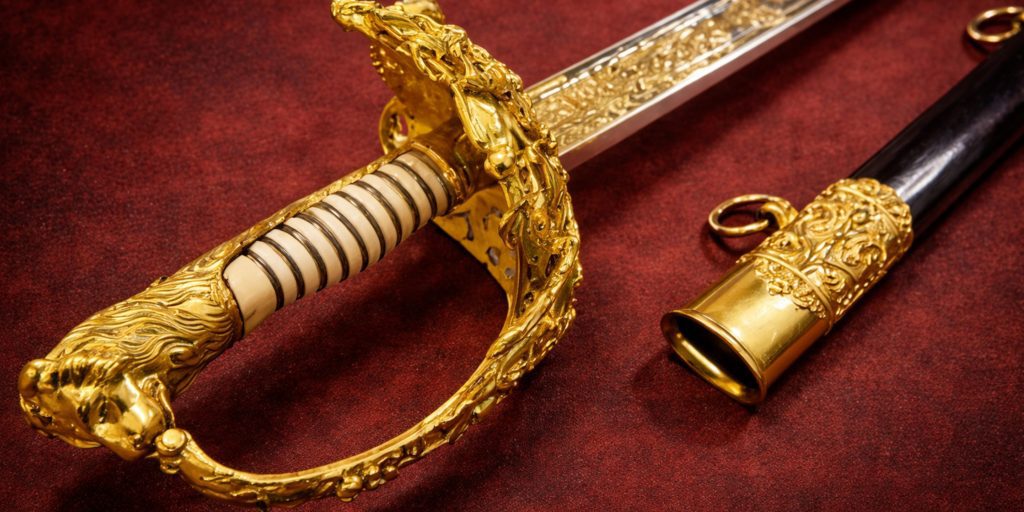
Few swords capture the blend of ceremony and authority quite like the presentation sword given to Robert E. Lee.
Overview
This ornate weapon was gifted to Lee early in the war, reflecting both admiration and expectation. It was richly decorated, far removed from the plain regulation patterns issued to most officers.
Battles
Lee carried swords throughout major engagements including:
- Battle of Antietam
- Battle of Gettysburg
That said, Lee rarely used a sword in combat. His role was strategic, not front-line.
Archaeology and Surviving Artefacts
Several swords associated with Lee survive in museums and private collections. Provenance can be murky, as multiple presentation swords were gifted to him.
Contemporary Voices
One officer remarked that Lee’s presence, rather than his weapon, inspired confidence. A polite way of saying the sword was mostly for show.
2. Ulysses S. Grant’s Field Sword
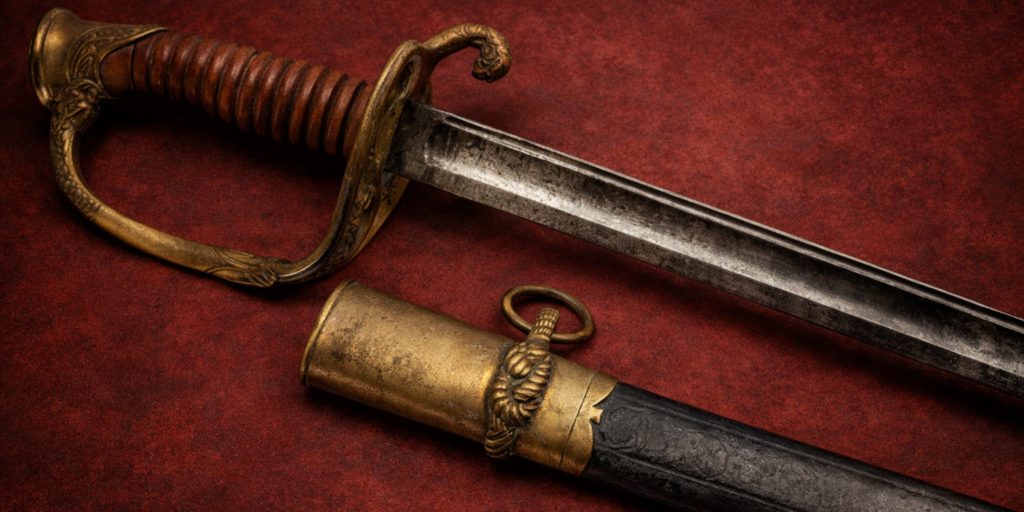
Ulysses S. Grant preferred practicality over ornament.
Overview
Grant’s sword was relatively plain. It reflected his personality. Direct, efficient, and not overly concerned with appearances.
Battles
Grant’s campaigns defined the war’s later years:
- Battle of Vicksburg
- Battle of Shiloh
He carried a sword, but like Lee, he rarely used it in combat.
Archaeology and Artefacts
Grant’s personal items, including swords, are preserved in collections such as the Smithsonian. Wear patterns on scabbards hint at constant travel rather than battlefield use.
Contemporary Voices
Grant himself was not fond of ceremony. He once appeared so plainly dressed that a sentry reportedly failed to recognise him. The sword did little to help.
3. J.E.B. Stuart’s Cavalry Sabre
J. E. B. Stuart embodied the romantic image of cavalry warfare.
Overview
His sabre was a curved cavalry blade, suited for slashing from horseback. Stuart carried it with theatrical flair.
Battles
- Battle of Brandy Station
- Battle of Yellow Tavern
Here, swords still mattered. Cavalry clashes often devolved into close combat.
Archaeology and Artefacts
Stuart’s equipment has been preserved in several collections. His flamboyant uniform often draws more attention than the blade itself.
Contemporary Voices
Union cavalrymen noted the intensity of sabre fighting. One described it as “a whirlwind of steel and shouting”. Not subtle, but effective.
4. George A. Custer’s Personal Sabre
George Armstrong Custer had a taste for drama, and his sword reflected it.
Overview
Custer carried a customised sabre, often more decorative than practical. He was known to favour revolvers in combat.
Battles
- Battle of Gettysburg
- Appomattox Campaign
Custer’s cavalry actions were aggressive and often decisive.
Archaeology and Artefacts
Several swords attributed to Custer exist, though authentication remains a challenge. His reputation ensures continued interest.
Contemporary Voices
Custer’s men admired his boldness. Critics might say recklessness. Both assessments can be true at once.
5. Stonewall Jackson’s Sword
Stonewall Jackson was not a man given to ornament.
Overview
Jackson’s sword was functional, almost austere. It suited a commander known for discipline and intensity.
Battles
- First Battle of Bull Run
- Battle of Chancellorsville
Jackson’s campaigns relied on speed and surprise rather than personal combat.
Archaeology and Artefacts
Relics associated with Jackson are held in institutions across the United States. His personal effects are studied as much for their symbolism as their material value.
Contemporary Voices
A soldier once remarked that Jackson seemed more comfortable with prayer than with parade. His sword followed the same logic.
6. Nathan Bedford Forrest’s Fighting Sabre
Nathan Bedford Forrest actually used his sword in anger.
Overview
Forrest’s sabre was a working weapon. It showed signs of heavy use, unlike many officers’ blades.
Battles
- Battle of Fort Donelson
- Battle of Brice’s Crossroads
Forrest’s style involved aggressive charges and close fighting.
Archaeology and Artefacts
Weapons attributed to Forrest often show clear wear. Nicks and repairs tell their own story.
Contemporary Voices
Forrest reportedly said he got there “first with the most men”. His sword suggests he also arrived ready to use it.
7. Union Model 1860 Light Cavalry Sabre
Not tied to a single individual, this was the most widely used sword of the war.
Overview
The Model 1860 sabre was the standard issue for Union cavalry. Light, curved, and mass-produced.
Battles
It appeared in nearly every major cavalry engagement, including:
- Battle of Brandy Station
- Sheridan’s Shenandoah Valley Campaign
Archaeology and Artefacts
Thousands survive. Some are pristine, others bear the scars of combat. Each tells a slightly different story.
Contemporary Voices
Many cavalrymen complained about its balance. Others swore by it. As with most military equipment, opinions varied depending on whether it saved your life that day.
The Role of the Sword in the Civil War
By the 1860s, the sword was no longer a primary weapon in most engagements. Firearms dominated. Yet the sword persisted as a symbol of authority and, in cavalry actions, a practical tool.
It sat somewhere between relic and necessity. A curious position, but a revealing one.
Takeaway
The swords of the American Civil War tell a quieter story than rifles or artillery. They speak of tradition lingering in a modernising war. They remind us that even in an age of industrial conflict, there was still room for steel carried at the hip, whether for ceremony, identity, or the occasional brutal encounter at close quarters.
And if we are honest, there is something enduring about a sword. Even when it is no longer needed, it refuses to disappear entirely.