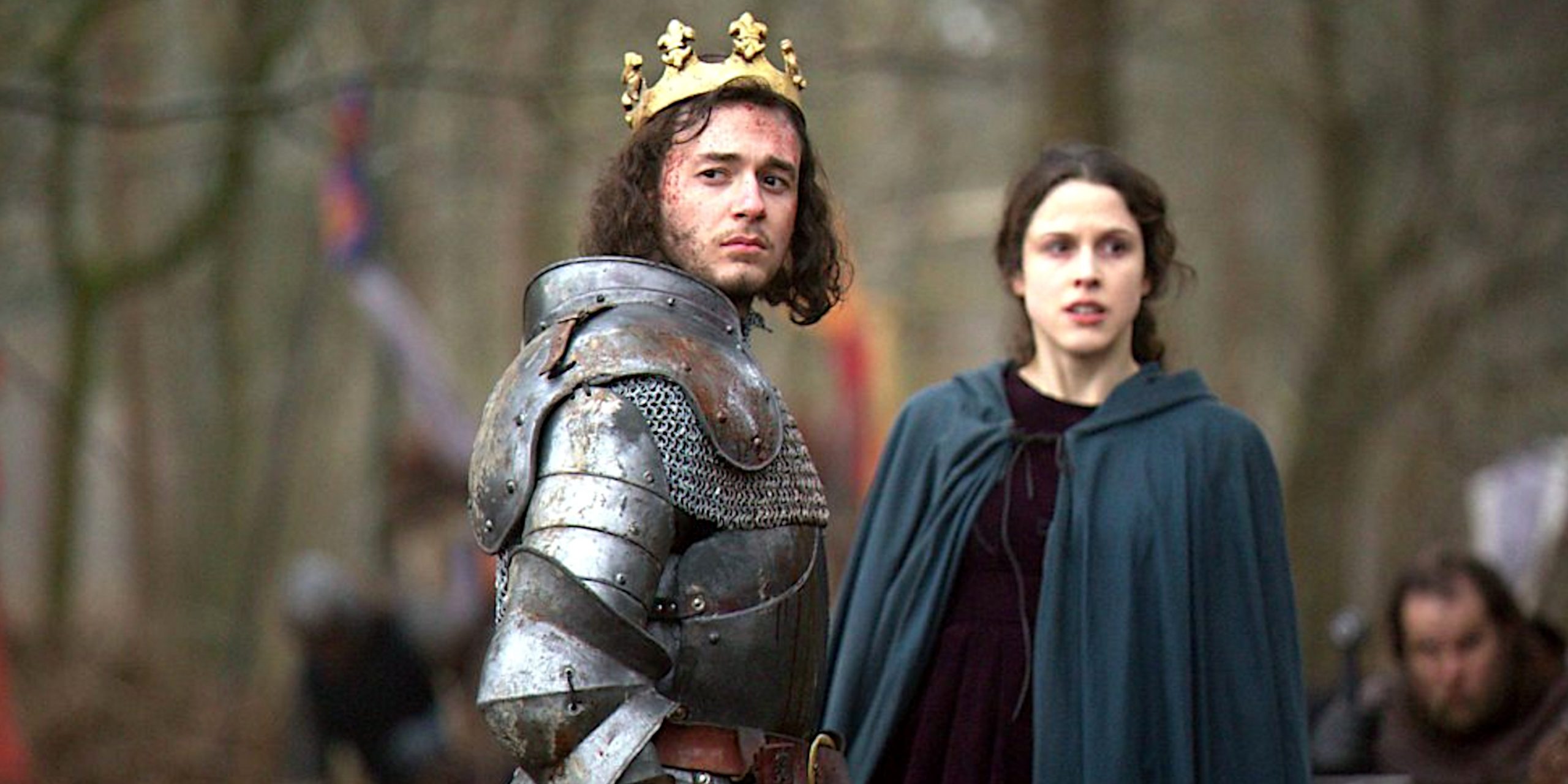
There is something slightly unfair about The White Queen. It gives you just enough mud, steel, and political chaos to get hooked, then quietly skips past the parts where thousands of men actually try to rearrange each other with sharp objects.
So let’s fix that. These are the key battles behind the series, what the show hints at, and what really happened when the banners went up and things got properly ugly.
The First Battle of St Albans (1455)
This is where it all kicks off, less grand battlefield, more violent disagreement in a market town.
In the series, it sits in the background, more political spark than centrepiece. In reality, it was messy, fast, and surprisingly personal. Richard, Duke of York, and his ally Warwick cornered the Lancastrian forces inside St Albans itself.
Key reality points:
- Fighting took place in narrow streets, not open fields
- Warwick’s troops broke in through gardens and back routes, which feels almost rude
- King Henry VI was found sitting under a tree, wounded but alive
- Several Lancastrian nobles were killed at close quarters
This was not a grand, sweeping clash. It was a violent ambush dressed up as a battle. The Wars of the Roses begin less like a war and more like a feud that escalates too far, too quickly.
The Battle of Towton (1461)
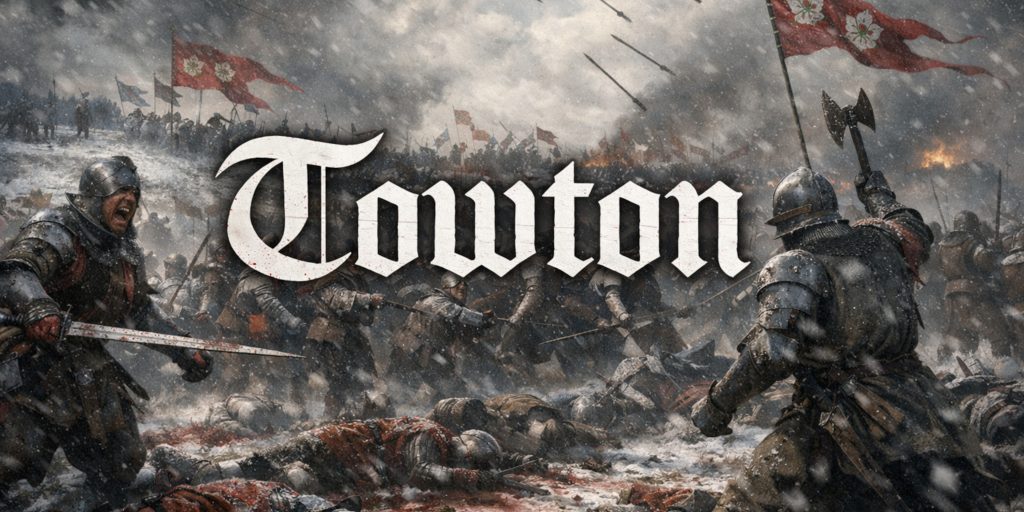
If St Albans was a brawl, Towton was absolute carnage. This is the big one the show gestures toward but never fully shows, probably because recreating it properly would require an alarming amount of fake blood and emotional stamina.
Towton remains the largest and bloodiest battle ever fought on English soil.
What actually happened:
- It took place during a snowstorm, which already feels like a bad omen
- Yorkist archers used the wind to extend their range, forcing Lancastrians to waste arrows
- Fighting lasted for hours, devolving into brutal hand to hand combat
- Retreat turned into slaughter, with thousands cut down while fleeing
Estimates vary, but casualties likely reached around 28,000. That is not a battle, that is a national trauma.
Edward IV’s victory here was decisive. It was not just a win, it was a statement that the Yorkists were not going anywhere.
Also worth noting, archaeology at Towton has uncovered skeletons with horrific injuries, crushed skulls, deep blade wounds, the sort of evidence that makes the whole thing feel uncomfortably real.
The Battle of Barnet (1471)
Barnet is chaos disguised as strategy. The show captures the tension around Warwick, but the battle itself was a masterclass in how things go wrong very quickly.
The defining feature here is fog. Thick, disorienting, and catastrophic.
What went down:
- Visibility was so poor that units lost alignment
- One Lancastrian contingent was mistaken for Yorkists and attacked by their own side
- Panic spread faster than orders could correct it
- Warwick, the so called Kingmaker, was killed while trying to flee
There is something almost darkly comic about it. One of the most powerful men in England undone not by brilliance or bravery, but by confusion and a bad morning’s weather.
Edward IV’s leadership held firm, and that made the difference.
The Battle of Tewkesbury (1471)
Tewkesbury feels like the end of something, because it is.
After Barnet, the Lancastrian cause was already wobbling. Tewkesbury finished the job.
Reality check:
- The Lancastrian army chose a defensive position, but terrain boxed them in
- Yorkist forces attacked aggressively and broke their lines
- Prince Edward of Westminster was killed, accounts vary, none are especially comforting
- Margaret of Anjou was captured shortly after
The death of the prince effectively ended the Lancastrian direct line. From this point on, resistance becomes fragmented, desperate, and increasingly doomed.
If Towton was the bloodiest moment, Tewkesbury was the quiet, grim conclusion to that phase of the war.
The Battle of Bosworth Field (1485)
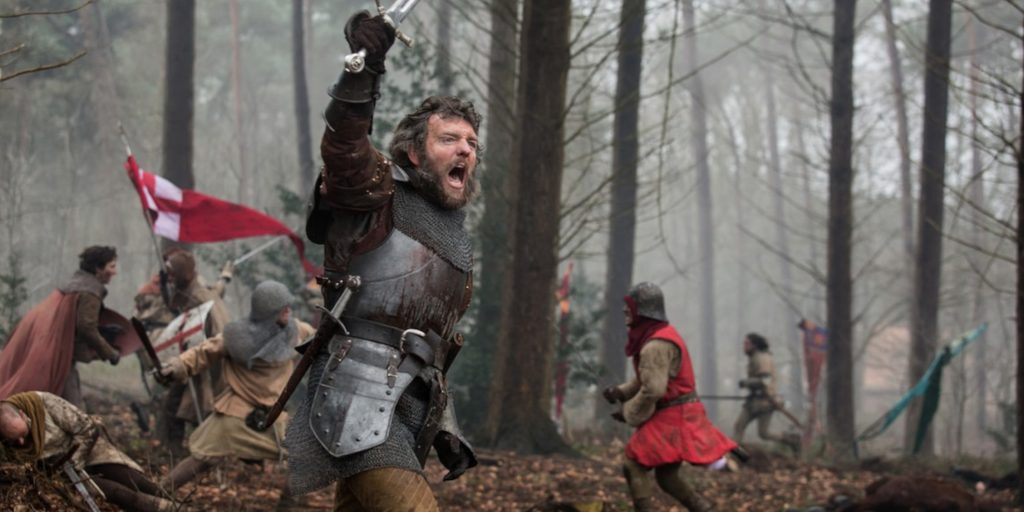
Bosworth sits just beyond the main timeline of The White Queen, but it is the natural endpoint of everything the series builds toward.
And it is arguably the most famous moment of the entire conflict.
What actually happened:
- Richard III held the stronger position early on
- The Stanley forces, who had been sitting on the fence, finally intervened
- Richard launched a direct charge toward Henry Tudor, aiming to end it in one move
- He came very close, then everything collapsed around him
Richard III was killed in the fighting, making him the last English king to die in battle.
There is a strange symmetry to it. Years of political manoeuvring, betrayals, marriages, and shifting loyalties, and it ends with a king charging headfirst into a fight he cannot win.
Henry Tudor becomes Henry VII, and just like that, the medieval period in England starts to fade into something new.
How Accurate Is The White Queen Overall?
The show gets the tone right. That constant sense that power is fragile, loyalty is conditional, and everything can change in a single afternoon.
Where it simplifies things is scale and brutality. Battles were not neat turning points. They were chaotic, exhausting, and often decided by small moments, weather, timing, a misread banner, a delayed charge.
Also, there is far more mud than the show lets on. Probably for the best.
Takeaway
What stands out, looking at these battles together, is how unpredictable they are. Not just in outcome, but in how they unfold.
A snowstorm decides Towton. Fog scrambles Barnet. A single aggressive charge defines Bosworth.
It is tempting to see history as inevitable, as if everything was leading neatly toward the Tudors. It was not. It was fragile, messy, and often decided by chance as much as design.
Which, if you think about it, makes The White Queen feel almost restrained. The real story is louder, harsher, and far less tidy.