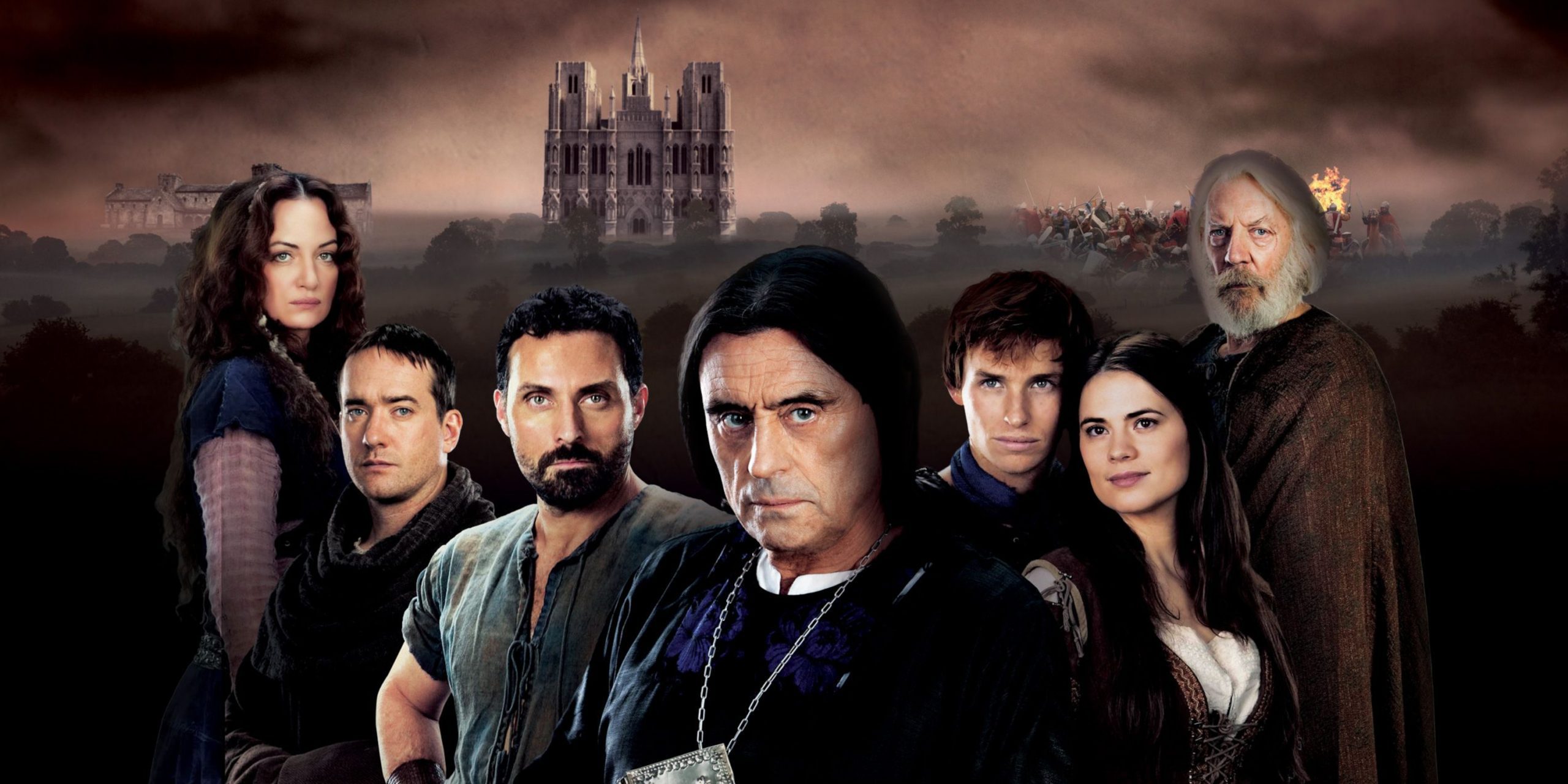
How much of Ken Follett’s medieval epic was based on real history? Quite a lot, actually, though the novel still enjoys a good dramatic flourish when it suits it.
Quick Answer
Yes, The Pillars of the Earth is grounded in real medieval history. Its world draws heavily on 12th-century England, especially the civil war known as the Anarchy, the power of the medieval Church, and the immense ambition behind cathedral building. The characters and town of Kingsbridge are fictional, but the political chaos, social tensions, and architectural culture behind them are very real.
What Is The Pillars of the Earth Based On?
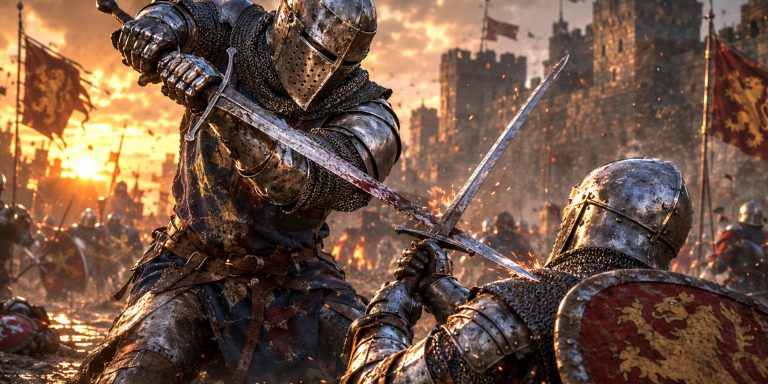
At its core, The Pillars of the Earth is based on 12th-century England, a period shaped by dynastic crisis, private warfare, church influence, and major building projects. The novel stretches across decades, but its main historical backdrop is the Anarchy, the civil war between King Stephen and Empress Matilda.
That setting gives the book much of its tension. This was not a calm, tidy kingdom humming along nicely while monks admired scaffolding. It was an unsettled, often brutal world where succession disputes could wreck entire regions and ambitious men saw chaos as a career opportunity.
Follett built his fictional story on those real conditions, which is why the novel often feels convincing even when the plot turns the drama up a notch.
The Real Historical Background, The Anarchy
One of the most important real events behind the novel is the succession crisis that followed the sinking of the White Ship in 1120. William Adelin, the only legitimate son of Henry I, was drowned in the disaster, leaving the English crown in a dangerously uncertain position.
Henry I named his daughter Matilda as his heir, but when he died in 1135, his nephew Stephen took the throne instead. That decision helped trigger years of civil war, now known as the Anarchy.
For ordinary people, this was a miserable state of affairs. Royal authority weakened, rival factions fought for advantage, castles multiplied, and local lords could become thoroughly unpleasant with greater confidence than usual. The phrase often associated with the period, that Christ and his saints were asleep, has endured because it captures the sense of disorder so well.
This is one of the strongest historical foundations in the novel. The sense of a country splintering under pressure is not invented. It really was that unstable.
Why the Anarchy Fits the Story So Well
The genius of using the Anarchy as a backdrop is that it explains almost everything. It helps explain violence, insecurity, shifting loyalties, legal confusion, and why progress in a place like Kingsbridge never feels guaranteed.
A cathedral project needed money, labour, transport, political support, and long stretches of relative stability. Civil war is not ideal for any of that. It is difficult to organise a glorious monument to God when half the region is busy settling scores.
That is why the novel’s local tensions feel believable. Big political struggles in the 12th century had immediate local consequences. They shaped trade, justice, landholding, church patronage, and basic survival.
Was Kingsbridge Cathedral Based on a Real Cathedral?
Kingsbridge itself is fictional, but its cathedral clearly draws on real medieval English cathedrals. Follett’s inspiration came from his fascination with cathedral architecture, and the building in the novel feels like a blend of several great ecclesiastical sites rather than a copy of one specific place.
That approach works well because it mirrors the wider truth. Medieval cathedrals were not just churches. They were statements of power, devotion, wealth, ambition, and civic pride. They were also gloriously expensive. If medieval bishops had access to branding consultants, they would have been unbearable.
The central role of the cathedral in the novel is one of its most historically believable features. A major church building project could dominate the life of a town for decades. It created jobs, drew skilled craftsmen, attracted pilgrims, and gave local elites a chance to display piety and prestige in the same gesture.
Very efficient, really.
How Accurate Is the Cathedral Building?
This is where the novel is at its strongest. The attention given to design, engineering, labour, cost, fire, collapse, and rebuilding reflects real medieval construction challenges.
Cathedrals were not created in a neat and uninterrupted burst of genius. They were long-term projects shaped by experimentation, setbacks, money problems, changing tastes, and plain bad luck. Fires happened. Parts failed. Plans changed. Builders adapted.
The novel also captures an essential truth about great medieval builders. A master mason was not simply a labourer with a better hammer. He could be a figure of considerable importance, part engineer, part designer, part practical magician, and often one of the most valuable people in a major project.
That side of the story feels lived-in because it is rooted in real building culture rather than in vague medieval wallpaper.
The Real Power of the Medieval Church
One of the reasons The Pillars of the Earth feels so persuasive is that it understands the Church was not merely a spiritual body. It was a political institution, a landowner, an employer, a legal force, and a major player in the daily life of medieval society.
That means the novel’s church politics are not some exaggerated bit of villainy added for entertainment. Priors, bishops, monks, and archbishops often operated inside networks of influence, patronage, rivalry, and reform. Holiness and ambition were not mutually exclusive. Medieval history is full of people who managed to combine prayer with administrative warfare.
The novel gets that blend right. It shows the Church as both sacred and strategic, which is exactly how it often functioned in practice.
How Real Is Everyday Life in the Novel?
The everyday texture of The Pillars of the Earth is not perfect, but much of it rings true. The world it presents is harsh, unequal, and deeply dependent on local power.
For peasants, labourers, and lesser townsfolk, life could be precarious. Famine, violence, disease, exploitation, and bad luck were never far away. For nobles and churchmen, there was more protection and more influence, though not necessarily more virtue.
The book also does something I appreciate, it avoids making medieval people seem dim. Too many historical dramas treat the Middle Ages as a parade of mud, shouting, and preventable infections. Follett’s world allows for intelligence, craft, planning, and ambition, which is much closer to reality. A society capable of building great cathedrals was not primitive. It was technically skilled and socially complex.
Which Parts Feel Less Historically Accurate?
This is where balance matters. The novel is historically grounded, but it is still a modern novel written for modern readers.
Some characters think and behave in ways that can feel more modern than 12th century. Their attitudes to love, self-expression, mobility, and individual agency are sometimes closer to contemporary storytelling than to the mental world of medieval England.
The plot can also compress reality. Institutions move more quickly, connections form more neatly, and dramatic consequences arrive with suspiciously good timing. Real medieval history was often slower, muddier, and less narratively considerate.
Still, these adjustments are fairly normal in historical fiction. Follett is trying to tell a gripping story, not trap the reader inside a parchment archive for 900 pages.
What the Novel Gets Right About Class and Power
One of the book’s sharpest strengths is its treatment of inequality. Power in the 12th century was unevenly distributed and often brutally exercised. Access to justice, safety, property, and influence depended heavily on social rank.
That comes through clearly in the novel. Lords, clergy, craftsmen, and peasants do not inhabit the same world, even when they occupy the same town. Their risks are different, their freedoms are different, and the consequences of failure are wildly different.
That is one of the most truthful aspects of the story. Medieval society was ordered, but not fair. It had rules, though those rules had an infuriating habit of bending around wealth and force.
So, in that respect, not entirely alien to modern life.
Why The Pillars of the Earth Feels So Convincing
The novel works because it chooses the right historical anchor. A cathedral is the perfect centrepiece for a story about medieval society because it gathers together politics, religion, labour, engineering, money, art, and status into one giant stone argument.
Everything important in the period can be traced through it. Who pays for it. Who controls it. Who builds it. Who benefits from it. Who tries to corrupt it. Who sees it as a monument to God, and who sees it as a monument to themselves with better branding.
That is why the historical atmosphere feels rich. The novel does not just borrow costumes. It uses real medieval pressures to support its fiction.
How Historically Accurate Is The Pillars of the Earth Overall?
The best verdict is this, The Pillars of the Earth is historically grounded rather than strictly accurate in every detail.
Its fictional town and characters exist inside a very real medieval framework. The Anarchy is real. The power struggles are real. The cathedral culture is real. The role of the Church is real. The hardship and inequality of the period are real.
Where the novel bends history, it usually does so through characterisation, pacing, and heightened drama rather than through complete invention. That is a sensible trade for a book that wants to be compelling as well as informed.
If you finish the novel with a vivid sense that 12th-century England was unstable, ambitious, hierarchical, violent, and obsessed with building in stone, then it has done a good job.
Final Verdict
The Pillars of the Earth gets the broad shape of the medieval world impressively right. It captures the chaos of the Anarchy, the extraordinary scale of cathedral building, the weight of church politics, and the fragility of ordinary life in a deeply unequal society.
It is not flawless as history, and it does smooth a few rough edges into modern storytelling. Still, its foundations are solid. That is probably why the book has lasted. Beneath the drama, there is real history holding the whole thing up.
Which is reassuring, because medieval scaffolding alone would be a stressful basis for anything.
Watch the Trailer:
FAQ: The Real History Behind The Pillars of the Earth
Is The Pillars of the Earth based on a true story?
Not directly. The main characters and Kingsbridge are fictional, but the novel is set against real 12th-century events, especially the Anarchy.
Was Kingsbridge a real place?
No. Kingsbridge is fictional, though it was inspired by real medieval English cathedral towns.
Was the Anarchy a real war?
Yes. It was the civil war between King Stephen and Empress Matilda after the death of Henry I.
Is the cathedral building realistic?
Broadly, yes. The novel’s treatment of cathedral construction is one of its most convincing historical features.
How accurate is the Church politics in the book?
Quite accurate in spirit. The medieval Church was both a religious institution and a major political and economic power.
Are the characters based on real people?
Most are fictional, though they exist within a world shaped by real rulers, churchmen, and events.