Terror on the Atlantic and Caribbean Seas
The Golden Age of Piracy, roughly from the 1650s to the 1730s, produced some of the most notorious criminals in maritime history. Merchant captains dreaded them, colonial governors hunted them, and sailors whispered their names with a mixture of fear and admiration.
Many pirates were little more than opportunistic thieves. A smaller number became something else entirely. They commanded fleets, captured dozens of ships, and briefly turned sections of the Atlantic world into personal hunting grounds.
The truth behind these figures is often obscured by myth, tavern stories, and a great deal of theatrical storytelling from later centuries. Yet the historical record still reveals men whose careers were violent, audacious, and occasionally absurd in their scale.
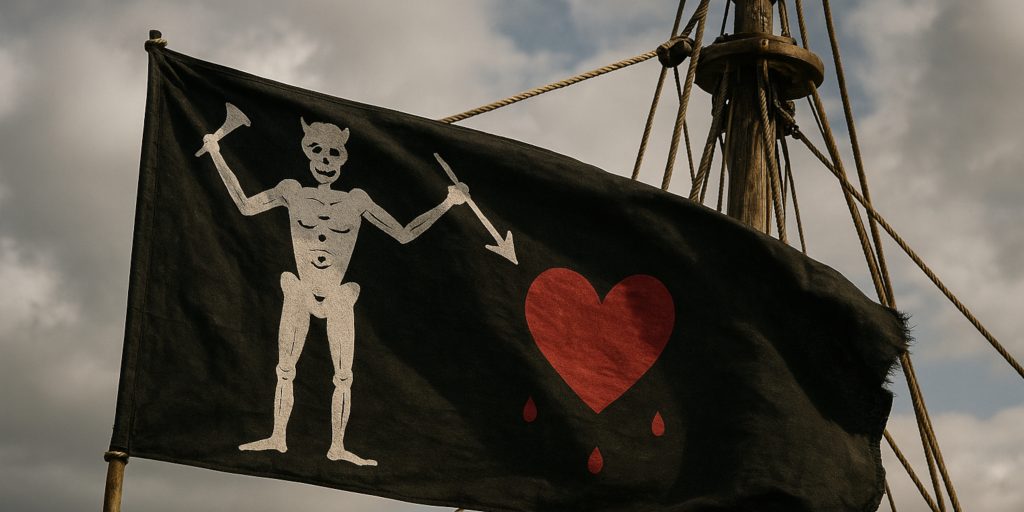
A pirate’s reputation was often as valuable as his cannon. Terrify enough captains and ships would surrender without a fight. That simple calculation helps explain why some of the most feared pirates cultivated appearances that bordered on the theatrical.
Below are several of the most dangerous pirates of the era, men who turned the sea into a battlefield and whose careers forced empires to take piracy far more seriously.
Edward Teach, “Blackbeard”
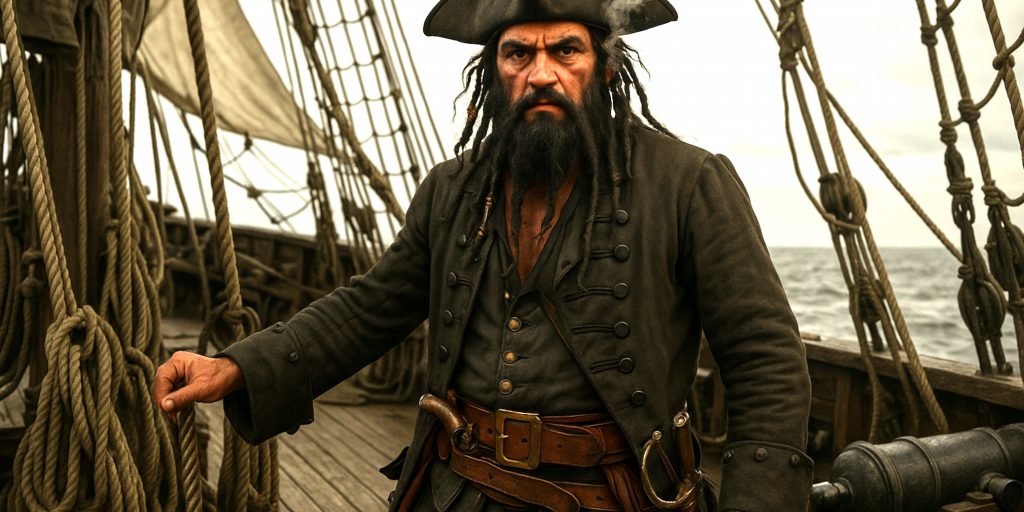
Few pirates have cultivated a reputation as enduring as Edward Teach, better known as Blackbeard. His career lasted only a few years, yet his name still dominates popular imagination.
Blackbeard operated primarily in the Caribbean and along the American eastern seaboard between 1716 and 1718. His flagship, the Queen Anne’s Revenge, was a captured French slave ship heavily armed with cannon.
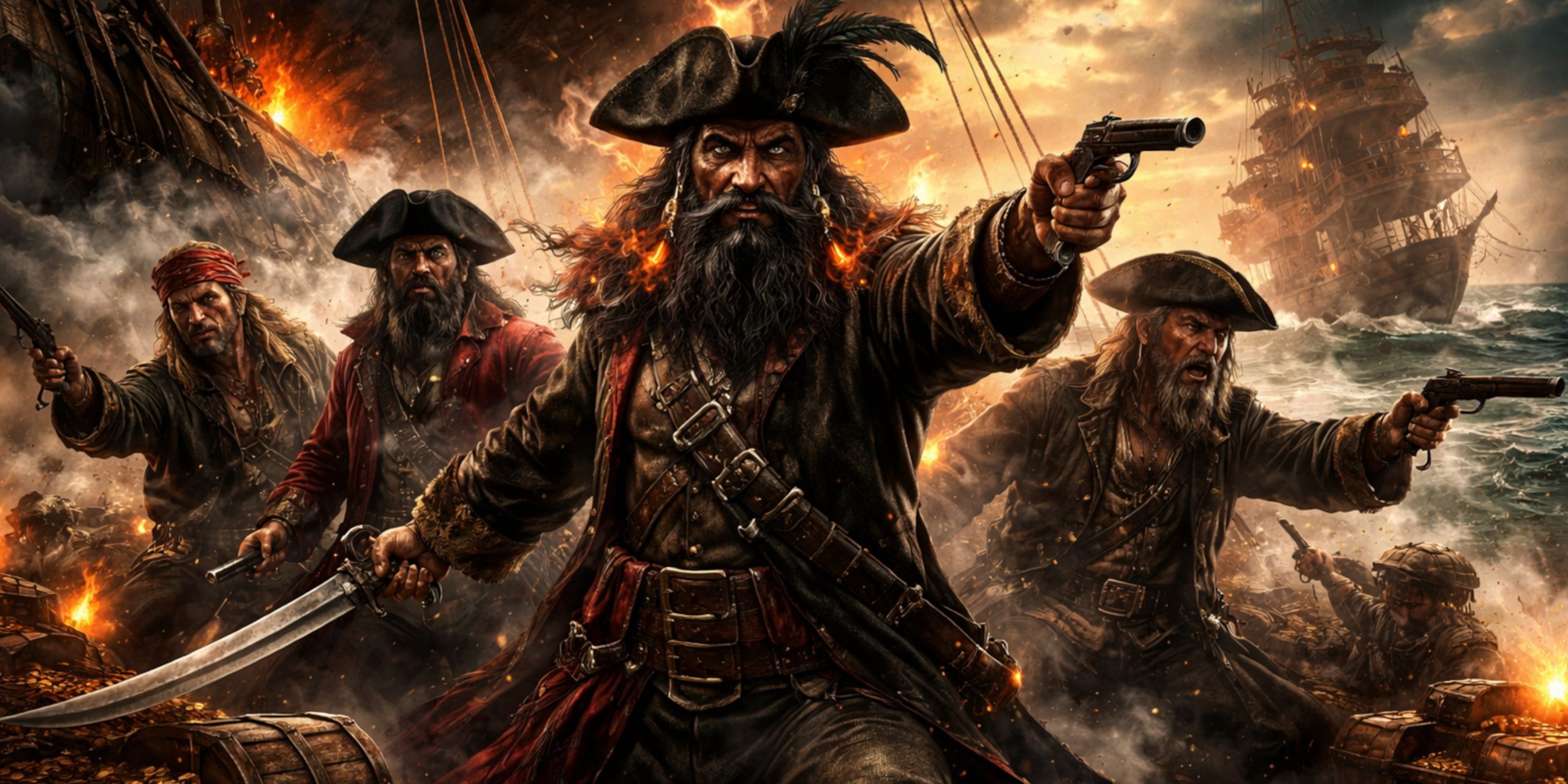
What made Blackbeard especially effective was his understanding of psychological warfare. Before battle he reportedly tied slow burning fuses into his thick beard and hair, creating the impression that his face was surrounded by smoke and sparks.
Contemporary descriptions make clear that the effect was intentional.
“Such a figure that imagination cannot form an idea of a fury from hell to look more frightful.”
Captain Charles Johnson, A General History of the Pyrates, 1724
Blackbeard blockaded the port of Charleston in 1718, capturing several ships and holding hostages for medical supplies. It was a striking demonstration that pirates could threaten major colonial towns.
His career ended later that year when Royal Navy forces cornered him off Ocracoke Island. The fight was brutal and personal. Lieutenant Robert Maynard eventually killed him in close combat.
Blackbeard reportedly suffered numerous wounds before falling. His severed head was later hung from Maynard’s ship as proof of the victory.
Bartholomew Roberts, “Black Bart”
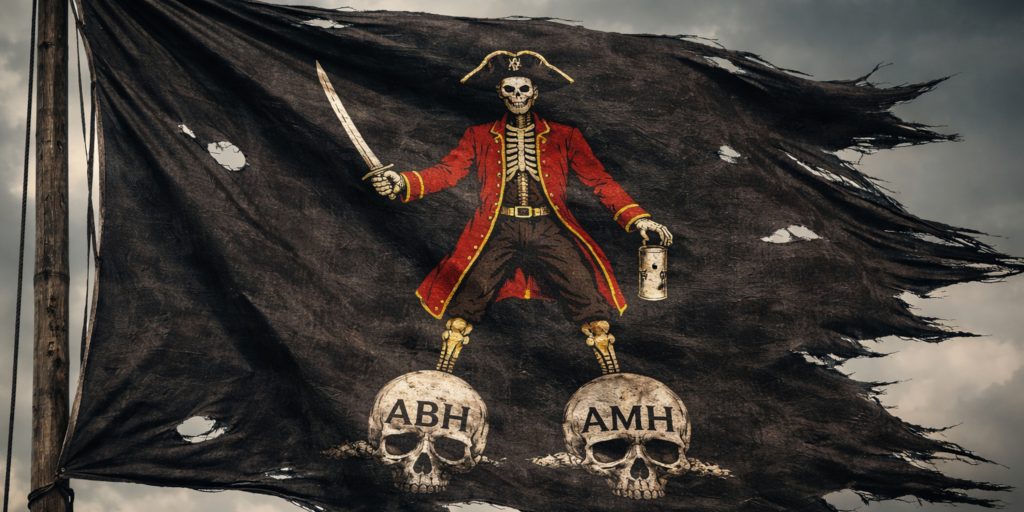
If piracy had a statistic for productivity, Bartholomew Roberts would likely sit at the top of the table. His career from 1719 to 1722 saw the capture of more than four hundred ships, a figure that borders on the unbelievable but is widely supported by historical accounts.
Roberts was Welsh, well educated by pirate standards, and surprisingly disciplined. His crews followed written articles that regulated conduct, compensation, and punishment.
His ships operated across a vast area of the Atlantic, including the Caribbean, the Brazilian coast, and West Africa. Merchant shipping suffered heavily during his campaigns.
Roberts understood spectacle as well as violence. He sometimes dressed in crimson silk with a diamond cross on his chest while commanding battle.
His attitude toward piracy was direct and unapologetic.
“In an honest service there is thin commons, low wages, and hard labour. In this we have plenty and satiety, pleasure and ease.”
Bartholomew Roberts
Roberts was killed in 1722 when British naval forces attacked his ship Royal Fortune off the coast of Gabon. A grapeshot blast struck his throat early in the battle. According to pirate tradition his crew threw his body overboard to prevent capture.
Henry Every
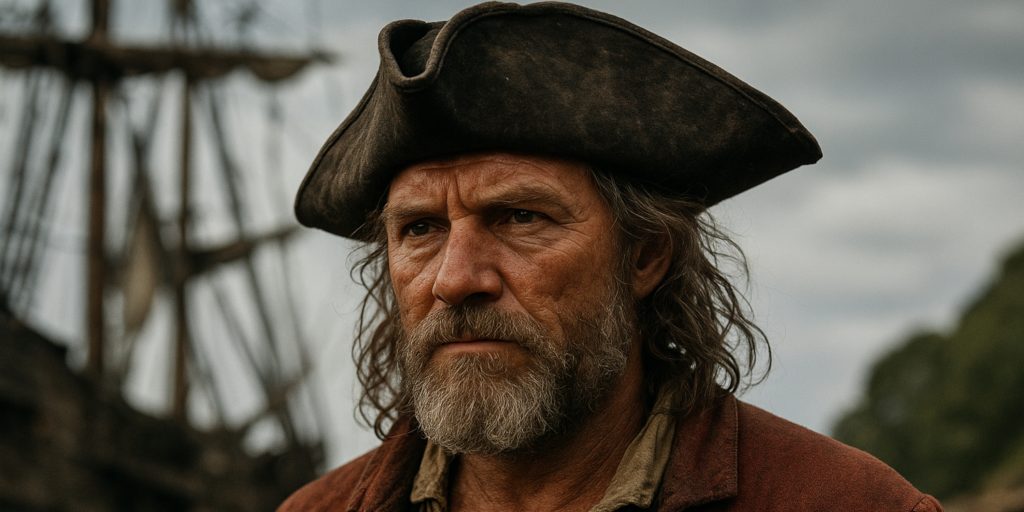
Henry Every stands apart from most pirates for a simple reason. His career was short but extraordinarily profitable.
Every began as a privateer before turning pirate in 1694. The following year he carried out one of the most lucrative raids in the history of piracy when his ship Fancy attacked a Mughal treasure convoy in the Indian Ocean.
The most famous prize was the ship Ganj-i-Sawai, reportedly carrying enormous wealth belonging to the Mughal Empire.
The attack caused international outrage. The Mughal emperor Aurangzeb threatened severe retaliation against English trading interests in India, forcing the British government and the East India Company to launch one of the earliest global manhunts.
Every disappeared after the raid. Despite widespread searches, he was never conclusively captured.
The mystery surrounding his fate became part of his legend.
Charles Vane
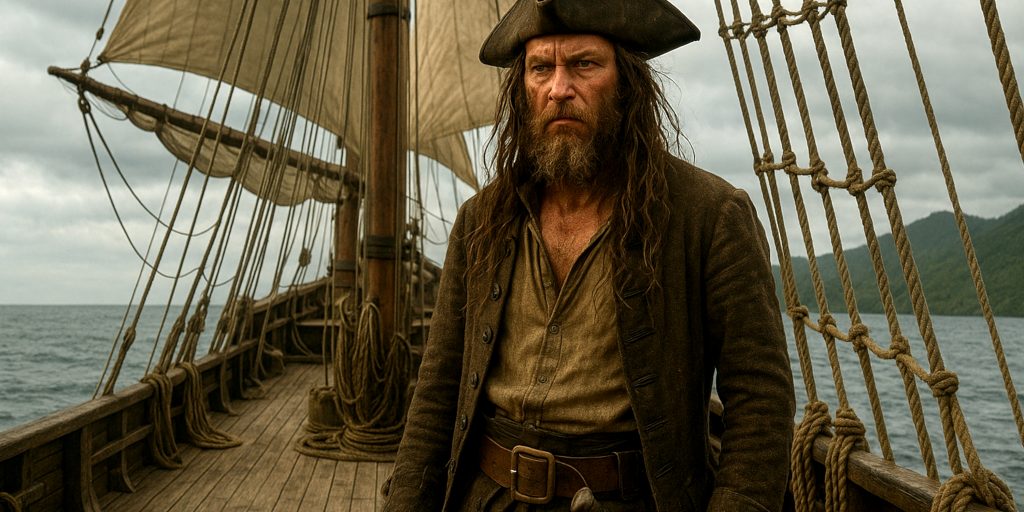
Charles Vane was known less for theatrical intimidation and more for relentless aggression. Operating around the Bahamas and Caribbean between 1716 and 1719, he attacked merchant ships with little hesitation.
Vane also refused offers of royal pardon that many other pirates accepted. This stubbornness eventually cost him support among his own crew.
During a storm he lost his command ship and was later marooned on a small island. Rescued by a passing vessel, he was eventually recognised and arrested.
He was executed in Jamaica in 1721.
Contemporary observers viewed him as particularly violent even by pirate standards.
Samuel Bellamy, “Black Sam”
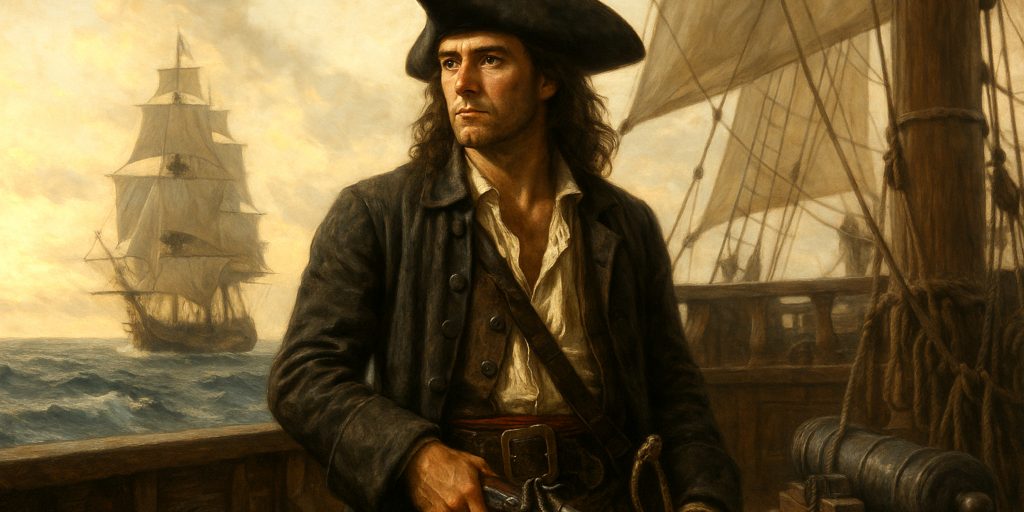
Samuel Bellamy is sometimes described as the Robin Hood of pirates. The comparison is flattering and probably exaggerated, yet Bellamy’s story remains remarkable.
In 1717 he commanded the Whydah Gally, one of the most powerful pirate ships in the Atlantic.
Bellamy reportedly believed that pirates were justified in seizing wealth from merchant elites. A famous speech attributed to him captures this sentiment.
“They vilify us, the scoundrels do, when there is only this difference, they rob the poor under the cover of law, while we plunder the rich under the protection of our own courage.”
Bellamy’s career ended abruptly when the Whydah sank in a violent storm off Cape Cod in 1717. The wreck was rediscovered in the twentieth century and remains one of the most important pirate archaeological sites.
Contemporary Views of Pirate Violence

Pirates were not romantic figures to those who faced them at sea. Merchant sailors and passengers often experienced captivity, brutality, and occasionally torture when treasure was hidden or resistance was offered.
Colonial governments were deeply concerned about the economic damage caused by piracy. Trade routes were vulnerable, insurance costs rose, and the legitimacy of imperial authority was challenged.
Governors frequently described pirates in stark terms.
“They are the common enemies of mankind.”
Colonial legal description of pirates
This phrase became embedded in international maritime law.
Why These Pirates Were So Effective
Several factors explain the success of the most dangerous pirate captains.
First, they commanded experienced crews. Many pirates were former naval or merchant sailors who understood ships and gunnery extremely well.
Second, pirate ships were often faster than merchant vessels. They could pursue targets or escape naval patrols when necessary.
Third, pirates used reputation as a weapon. A terrifying captain could sometimes capture ships without firing a single cannon.
There was also a practical element. Pirate crews shared loot more equally than most naval or merchant organisations. This made piracy surprisingly attractive to sailors accustomed to brutal discipline and poor wages.
The End of the Golden Age
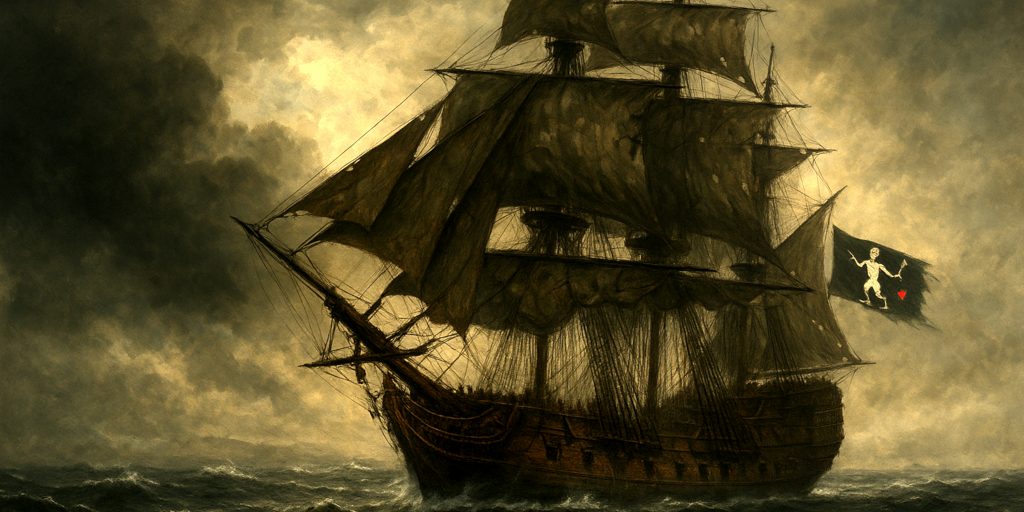
By the 1720s and early 1730s piracy had declined sharply. European empires began committing greater naval resources to suppress pirate strongholds.
Ports such as Nassau, once a haven for pirates, were brought under firm colonial control. Royal pardons tempted many pirates to surrender, while others met their end on the gallows.
Public executions were often staged as spectacles intended to discourage future piracy. Bodies were sometimes displayed in chains near harbours as grim warnings.
Despite these measures, the legends of the pirates proved harder to kill.
Legacy of the Deadliest Pirates
The pirates of the Golden Age left a curious legacy. In their own time they were criminals who disrupted trade and threatened imperial authority. Within a generation they had become the subject of stories, books, and eventually myth.
Some of that myth was encouraged by early writers who understood that readers enjoyed a dramatic rogue.
The historian must approach these figures with caution. Beneath the legend stand men who lived violent lives and rarely died peacefully.
Still, their stories continue to fascinate. Few historical figures combined rebellion, greed, danger, and theatrical flair in quite the same way.
One suspects the pirates themselves would have approved of the reputation.
After all, fear was one of their most reliable weapons.