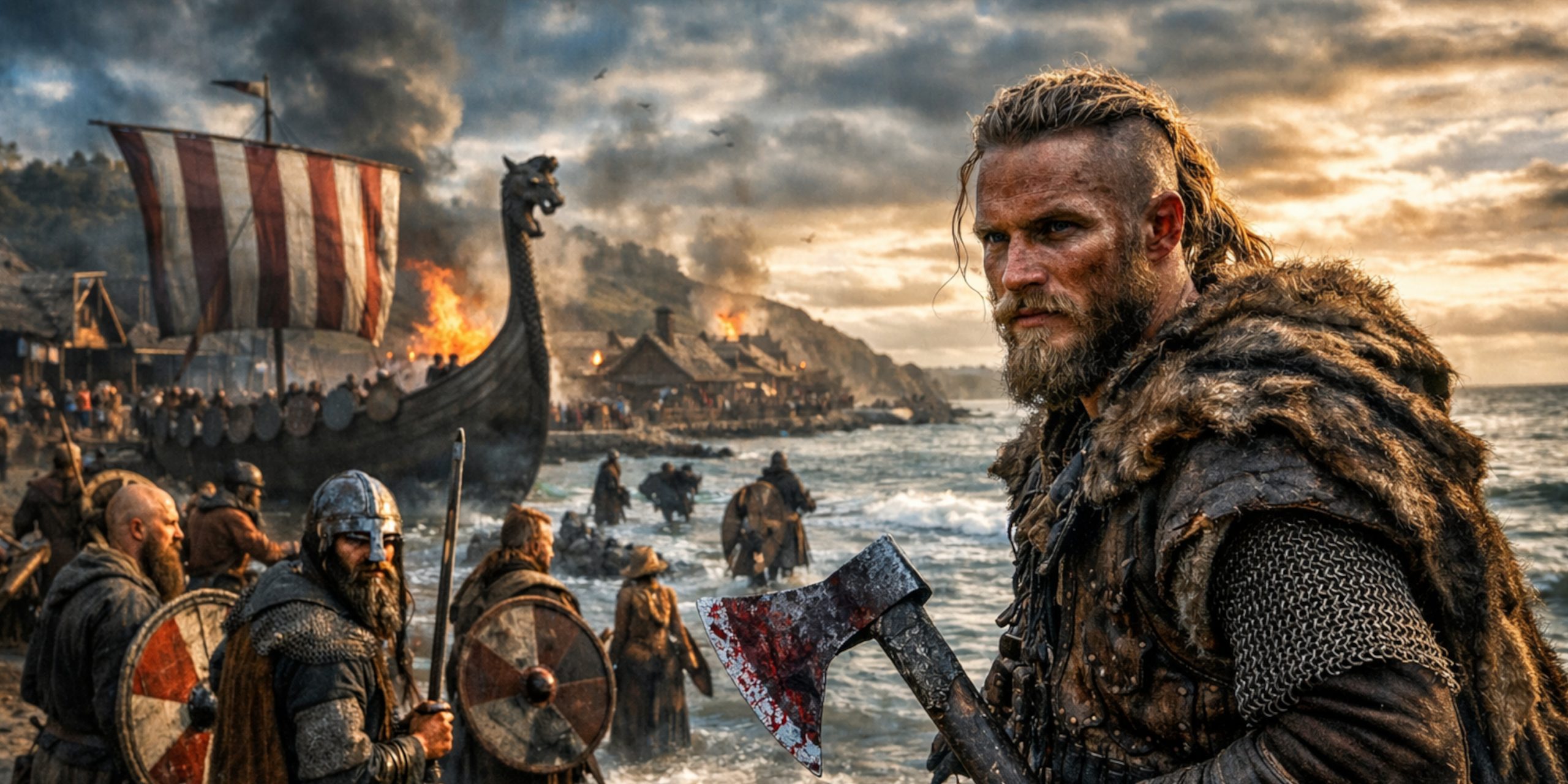
The television series Vikings threw millions of viewers into the rough and restless world of early medieval Scandinavia. Longships slicing through cold seas, axe-wielding raiders charging ashore, jarls plotting power plays over smoky feasting halls. It looks dramatic, often brutal, and oddly beautiful.
The obvious question for anyone with even a passing interest in history is simple. Was the Dark Age world really like this?
The answer sits somewhere between careful historical inspiration and very enthusiastic storytelling. The show captures many real features of early medieval life while bending timelines, merging historical figures, and occasionally turning the drama knob to eleven. Still, for a series built for television rather than lecture halls, it does a surprisingly respectable job of bringing the early medieval world to life.
What Historians Mean by the Dark Ages
The phrase Dark Ages gets thrown around a lot, though historians use it cautiously. It generally refers to the early medieval period in Europe, roughly between the fall of the Western Roman Empire in the fifth century and the rise of stronger kingdoms by the tenth.
The label once implied a cultural collapse after Rome. That idea has softened. It was not an age of ignorance so much as an age of transformation. Power shifted from imperial systems to smaller kingdoms. Trade networks changed. New cultures emerged.
Scandinavia during this time produced the societies we associate with the Viking Age. These communities were seafaring, ambitious, and deeply connected through trade and warfare across the North Atlantic and the rivers of eastern Europe.
Vikings uses this setting as its playground.
Scandinavia in the Series
The show centres on communities in Norway and Denmark, depicting small settlements governed by jarls and kings who compete for land, wealth, and prestige.
This part is fairly grounded in reality.
Early Viking Age Scandinavia consisted of many local power structures. Jarls, chieftains, and regional kings controlled territory and followers. Authority depended on loyalty, reputation, and the ability to reward supporters with plunder or land.
Feasting halls functioned as both political centres and social spaces. These large wooden buildings were where alliances were forged, disputes settled, and warriors celebrated victories.
The show occasionally exaggerates the scale of these settlements. In reality many early Viking communities were modest clusters of farmsteads rather than the bustling proto towns sometimes seen on screen.
Still, the social structure portrayed in the series is recognisable to historians.
Warfare and the Viking Warrior Image
Violence drives much of the drama in Vikings, and with good reason. Raiding played a central role in early Viking expansion.
The famous longship raids along the coasts of Britain and Francia were real historical events. Fast ships allowed Scandinavian crews to strike monasteries, towns, and river settlements with little warning.
The weapons shown in the series are mostly accurate.
Common arms included:
- Spears, the most widespread weapon among warriors
- Axes, especially bearded axes designed for both combat and practical work
- Round wooden shields with iron bosses
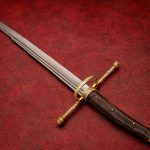
- Pattern welded swords used by wealthier fighters
- Seaxes, single edged blades carried as sidearms
Swords were prestige weapons. Owning one suggested wealth and status. Most fighters likely carried spears or axes instead.
Combat in the show often becomes cinematic chaos, with individuals duelling dramatically across battlefields. Real early medieval fighting was probably more organised, relying heavily on shield formations and coordinated lines.
The famous shield wall appears in the series, which historians consider one of the more realistic touches.
Religion and the Viking Worldview
One of the most interesting aspects of Vikings is how it treats religion.
The series portrays Norse pagan belief as deeply woven into everyday life. Characters invoke Odin before battle, honour Thor, and interpret dreams and omens as messages from the gods.
This reflects what we know from archaeological evidence and later written sources. Norse religion involved ritual offerings, sacred spaces, and a worldview where fate and divine will shaped human destiny.
At the same time the show highlights the growing contact between pagan Scandinavians and Christian Europe.
That tension between belief systems was very real. Raids on Christian monasteries often placed Norse warriors in direct contact with a religion that would eventually spread across Scandinavia itself.
Watching characters wrestle with these ideas is one of the more historically interesting threads in the series.
The Wider Dark Age World
One of the strengths of Vikings is that it does not remain confined to Scandinavia. The story moves across England, Francia, the Mediterranean, and even the river systems of eastern Europe.
This wider geography reflects the real reach of Viking activity.
Scandinavian traders and warriors travelled vast distances. Some sailed west to Iceland, Greenland, and even North America. Others moved east through the rivers of modern Russia and Ukraine, forming the networks that eventually contributed to the rise of the Kievan Rus.
The show compresses timelines heavily. Historical figures who lived decades apart end up sharing scenes together. That is the price of dramatic storytelling.
Still, the general sense of a connected early medieval world is correct.
Daily Life Beyond the Raids
Raiding may dominate the action, yet most people in the Viking Age were farmers.
Agriculture formed the backbone of Scandinavian society. Families raised livestock, cultivated barley and rye, and stored food for long winters. Craftwork also played a role. Blacksmiths, shipbuilders, and textile producers supported local economies.
The series occasionally shows these quieter aspects of life. Scenes of farming, fishing, and ship construction help balance the constant warfare.
One thing the show captures well is the importance of ships. Longships were technological marvels of their time. Their shallow draught allowed them to navigate rivers as easily as open sea, giving Scandinavian crews unmatched mobility.
Without these ships the Viking Age simply would not have happened.
Where the Series Takes Creative Freedom
Even a history friendly show bends reality.
The biggest liberty lies in chronology. Events that historically unfolded across generations are compressed into the lifetime of a few characters. This allows the story to move quickly but creates an unusual historical timeline.
Certain characters are also composites. Figures like Ragnar Lothbrok come from a mix of legend, saga literature, and possible historical inspiration rather than clear historical documentation.
Costumes occasionally lean toward dramatic flair rather than strict archaeological accuracy. Leather armour and elaborate hairstyles appear more often than historical evidence suggests.
These changes make sense for television. Historical storytelling always balances authenticity with narrative momentum.
Why the Series Resonates
Part of the reason Vikings works so well is that the early medieval world was genuinely dramatic.
This was a period of migration, religious change, and political upheaval. Kingdoms rose and fell quickly. Trade routes connected distant cultures. Sea travel allowed communities to reach places that earlier generations had never imagined.
When viewers watch ships approaching the coast of England or warriors gathering in a wooden hall lit by firelight, they are seeing echoes of a real historical landscape.
The details might shift for the sake of drama, but the atmosphere often rings true.
Seven Swords Takeaway
The Dark Age world portrayed in Vikings sits somewhere between historical reconstruction and epic storytelling.
It captures the spirit of the Viking Age remarkably well. The ships, weapons, belief systems, and restless ambition of Scandinavian societies all feel rooted in the historical record. At the same time the show reshapes timelines and personalities to keep the narrative gripping.
For historians the series can be both entertaining and mildly frustrating. One moment you are nodding approvingly at a well staged shield wall. The next moment two historical figures separated by half a century are sharing a conversation.
Still, if a television drama encourages people to look deeper into the early medieval world, that is no bad outcome.
The Dark Ages were never as dark as the name suggests. They were loud, messy, ambitious centuries that reshaped Europe. And if a few dramatic axe swings help bring that world to life, historians can probably forgive the occasional historical shortcut.