Ragnar Lothbrok sits in that dangerous corner of medieval history where fact, saga and outright exaggeration all drink from the same horn. He may have been a real Viking warlord. He may have been several men folded together by storytellers. Or he may have become larger than history because medieval Scandinavians simply refused to let a good tale die quietly.
Whatever the truth, Ragnar became the great archetypal Viking. Raider, king, explorer, husband of shieldmaidens, enemy of Anglo-Saxon kingdoms and allegedly the father of some of the most feared Norse leaders in Europe. Medieval writers practically turned him into the Scandinavian equivalent of Achilles with slightly more mud and significantly worse table manners.
What survives today is a fascinating mixture of chronicles, sagas, archaeology and political mythmaking.
Who Was Ragnar Lothbrok?
Ragnar Lothbrok, or Ragnarr Loðbrók in Old Norse, appears in several medieval Scandinavian texts including the Saga of Ragnar Lothbrok and Saxo Grammaticus’ Gesta Danorum. These sources were written centuries after Ragnar supposedly lived, which immediately creates problems for historians.
The nickname “Lothbrok” is usually translated as “Hairy Breeches” or “Shaggy Trousers”. This is perhaps the least intimidating title ever attached to a legendary conqueror, though the sagas insist the unusual trousers were worn to protect him while fighting a giant serpent. Medieval Scandinavia was not a place that believed in moderation.
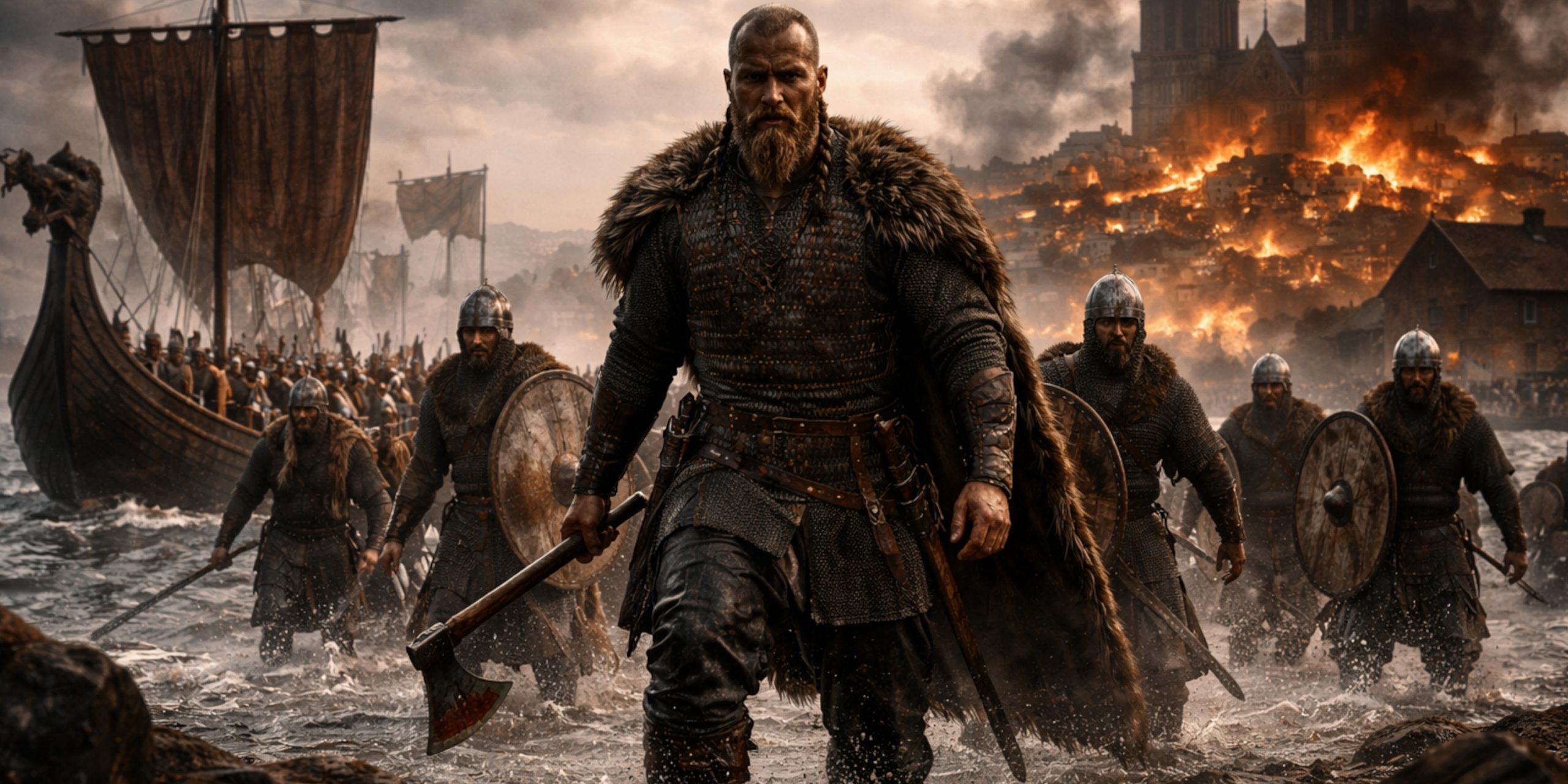
Most historians believe Ragnar was connected to real Viking activity during the ninth century, especially raids on Francia and Anglo-Saxon England. The famous Viking siege of Paris in 845 is often associated with him, although the historical record is frustratingly vague.
Some scholars argue Ragnar was inspired by multiple Viking leaders merged into one heroic figure over time. Others think a historical Ragnar existed, but his exploits were wildly embellished by later generations eager for dramatic ancestors.
Either way, his cultural impact became enormous.
Ragnar in the Medieval Sources
The main written sources for Ragnar include:
- The Tale of Ragnar’s Sons
- The Saga of Ragnar Lothbrok
- Saxo Grammaticus’ Gesta Danorum
- Anglo-Saxon chronicles
- Frankish annals
The Scandinavian sagas portray Ragnar as:
- A warrior king of Denmark and Sweden
- Husband of Lagertha, Thora and Aslaug
- Father of Bjorn Ironside, Ivar the Boneless, Ubba and Sigurd Snake-in-the-Eye
- A relentless raider against England and Francia
Frankish and English records are more restrained. They describe devastating Viking attacks but rarely indulge in heroic storytelling. Monks writing while their monasteries burned tended not to romanticise Vikings. Fair enough, really.
The Historical Ragnar Problem
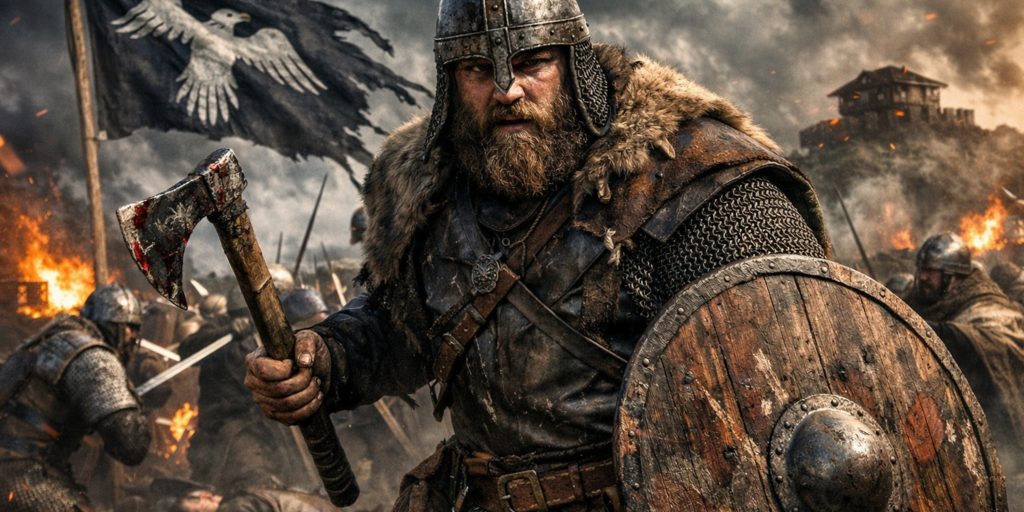
One of the central debates surrounding Ragnar is whether he actually existed as one identifiable man.
Several historical figures may have contributed to the legend:
- Reginherus, a Viking leader who attacked Paris in 845
- Danish kings from the House of Skjöldung
- Viking warlords active in England during the ninth century
- Earlier Scandinavian heroic figures absorbed into oral tradition
This blending of personalities was common in medieval storytelling. Oral traditions evolved constantly, especially in societies where reputation mattered almost as much as survival.
Ragnar became less a single historical person and more the perfect expression of Viking ideals:
- Courage
- Fame
- Ruthlessness
- Adventure
- Defiance against fate
The sagas cared less about strict accuracy and more about preserving heroic memory.
Ragnar’s Raids on England and Francia
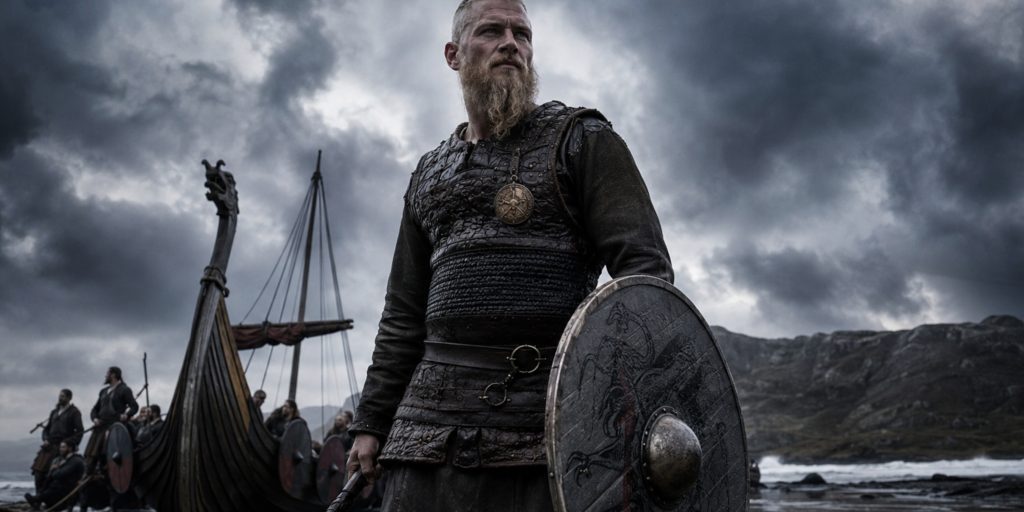
The Viking world during Ragnar’s supposed lifetime was expanding aggressively across Europe.
Raid on Paris, 845
The most famous campaign associated with Ragnar was the Viking attack on Paris in 845.
According to Frankish records:
- A Viking fleet sailed up the Seine
- Paris was attacked and heavily damaged
- King Charles the Bald paid a massive tribute
- Disease later struck the Viking camp
Some chroniclers identified the Viking leader as Reginherus, who many later associated with Ragnar.
The attack terrified the Carolingian world because it exposed how vulnerable even major cities had become to Viking river warfare.
The Vikings excelled at striking quickly, exploiting waterways and avoiding prolonged sieges where possible. Ragnar’s reputation as a cunning commander likely emerged from precisely these kinds of operations.
Raids in Anglo-Saxon England
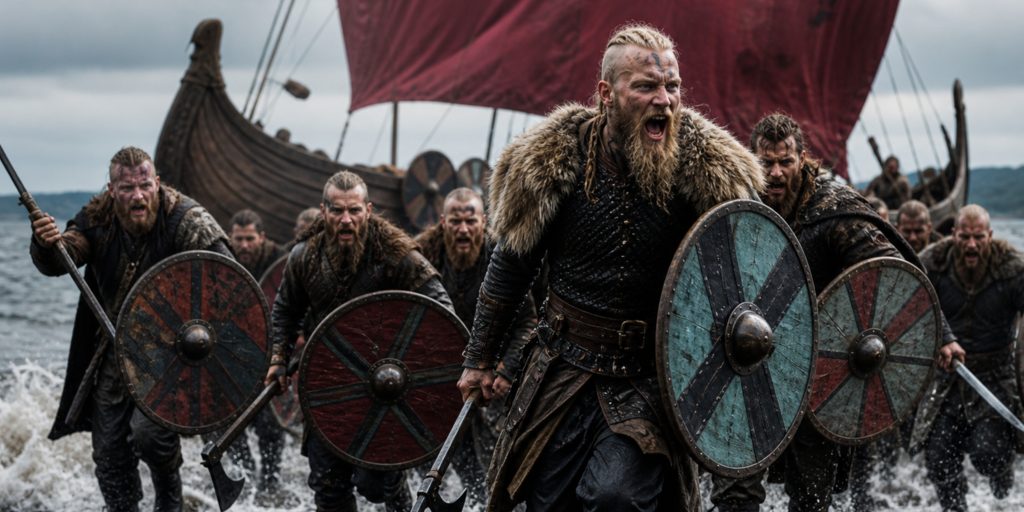
Later traditions claim Ragnar launched repeated attacks against Northumbria and other English kingdoms.
One famous story states he was captured by King Ælla of Northumbria and executed in a snake pit. This dramatic death became central to later saga tradition because it supposedly inspired Ragnar’s sons to invade England in revenge.
Historically, the Great Heathen Army that invaded England in 865 was very real. Whether its leaders truly sought revenge for Ragnar is impossible to confirm, but the story became deeply embedded in Norse tradition.
Battles and Military Acumen
Ragnar’s legendary reputation rests heavily on his image as a battlefield commander and strategic raider.
Strengths as a Viking Leader
According to saga tradition and historical comparison, Ragnar excelled in several areas:
| Military Strength | Description |
|---|---|
| Naval mobility | Rapid coastal and river assaults |
| Psychological warfare | Shock attacks and terror tactics |
| Flexible command | Small adaptable warbands |
| Opportunism | Targeting weak or divided kingdoms |
| Leadership charisma | Maintaining loyalty among warriors |
The Vikings did not usually fight like disciplined Roman legions or later medieval armies. Their strength came from mobility, aggression and surprise.
A successful Viking leader needed charisma as much as tactical skill. Warriors followed leaders who brought wealth and glory. Failure could quickly become fatal, especially in a culture where ambitious men carried axes and strong opinions.
Battlefield Style
Ragnar’s forces likely fought using:
- Shield walls
- Axe and spear formations
- Fast coastal landings
- River assaults
- Hit-and-run tactics
Viking commanders relied heavily on momentum and morale. Battles often became brutal close-quarter struggles rather than carefully choreographed manoeuvres.
The sagas portray Ragnar as fearless, though saga heroes are rarely depicted sensibly. Medieval Norse literature had little patience for cautious retirement planning.
Arms and Armour
The Viking Age warrior was dangerous because of practicality rather than extravagance.
Swords Used in Ragnar’s Era
Several sword types are strongly associated with ninth-century Scandinavia.
| Sword Type | Characteristics |
|---|---|
| Carolingian sword | Broad double-edged blade with excellent balance |
| Petersen Type H | Common Viking hilt design with decorated pommel |
| Pattern-welded swords | Blades forged with layered iron and steel |
| Seax | Large fighting knife carried beside the sword |
High-quality swords were expensive status symbols. Many warriors relied more heavily on spears and axes because they were cheaper and highly effective.
A fine sword represented prestige, inheritance and political power. Vikings even named their blades, which says a great deal about how attached they became to sharpened pieces of metal.
Viking Armour
Armour in Ragnar’s period varied depending on wealth and rank.
Common equipment included:
- Round wooden shields with iron bosses
- Mail shirts for elite warriors
- Iron helmets, often simple conical designs
- Leather belts and reinforced tunics
- Wool cloaks and layered clothing for harsh climates
Contrary to popular fantasy, Vikings did not wear horned helmets in battle. The archaeological evidence simply does not support it. A horned helmet in combat would be a spectacularly efficient way to get oneself killed.
Ragnar’s Family and Sons
The legends surrounding Ragnar’s sons became almost as influential as Ragnar himself.
His supposed sons included:
Several of these figures likely existed historically.
Ivar the Boneless in particular appears in English and Irish sources connected to the Great Heathen Army. Bjorn Ironside also appears in Scandinavian traditions linked to raids in the Mediterranean.
The medieval sagas transformed Ragnar into the patriarch of a dynasty of terrifying conquerors.
Death of Ragnar Lothbrok
The most famous version of Ragnar’s death comes from saga literature.
According to tradition:
- Ragnar invaded Northumbria with too small a force
- He was defeated and captured by King Ælla
- He was thrown into a pit of snakes
- He died defiantly, boasting that his sons would avenge him
Whether any part of this truly happened remains uncertain.
What matters historically is how the story functioned. Ragnar’s death became a moral and emotional catalyst for the Viking invasions of England. It tied Norse warfare to honour, revenge and dynastic memory.
It also gave medieval storytellers one of the great dramatic deaths of the era. Historians are obliged to remain sceptical, though one quietly suspects the saga writers enjoyed every minute of composing it.
Archaeology and Latest Discoveries
No confirmed grave or direct artefact belonging to Ragnar has ever been identified.
Still, archaeology continues to reveal the world he may have inhabited.
Viking Ship Discoveries
Sites such as:
- Gokstad
- Oseberg
- Roskilde
- Gjellestad
have revealed sophisticated Viking shipbuilding techniques. These longships explain how Viking raiders reached England, Francia and beyond with frightening speed.
The vessels were shallow-drafted, flexible and ideal for river warfare.
Weapons and Warrior Burials
Excavations across Scandinavia and Britain continue to uncover:
- Viking swords
- Spearheads
- Shield bosses
- Mail fragments
- Silver hoards
- Warrior graves
Recent isotope analysis on Viking burials has also revealed surprisingly diverse origins among Viking populations. The Viking world was far more interconnected than older stereotypes suggested.
Repton and the Great Heathen Army
One of the most significant discoveries connected to Ragnar’s legendary descendants comes from Repton in Derbyshire.
Archaeologists uncovered:
- A mass Viking burial
- Scandinavian weaponry
- Human remains linked to the ninth century
- Evidence supporting accounts of the Great Heathen Army
While not directly tied to Ragnar himself, these discoveries strengthen the historical backdrop behind the sagas.
Where to See Viking Artefacts Connected to Ragnar’s World
Several museums contain artefacts from the Viking Age associated with the era of Ragnar Lothbrok.
National Museum of Denmark, Copenhagen
Contains:
- Viking weapons
- Jewellery
- Rune stones
- Everyday artefacts from ninth-century Scandinavia
Viking Ship Museum, Roskilde
One of the finest collections of reconstructed Viking ships in the world.
Visitors can study:
- Longship construction
- Navigation methods
- Maritime warfare technology
British Museum, London
Houses important Viking collections including:
- Swords
- Hoards
- Anglo-Scandinavian artefacts
- Silver treasures from Viking England
Museum of Cultural History, Oslo
Features extensive Viking Age material including:
- Weapons
- Burial finds
- Armour fragments
- Ship artefacts
The surviving material culture often tells us more reliable truths than the sagas themselves.
Iron corrodes less dramatically than medieval storytelling.
Ragnar Lothbrok in Popular Culture
Modern audiences know Ragnar largely through television, novels and games.
The television series Vikings popularised him globally, portraying him as:
- Curious
- Ambitious
- Brutal
- Emotionally complex
The show borrowed heavily from saga material while blending chronology freely. Historical purists occasionally reacted as though personally attacked, although medieval chronology itself was rarely tidy.
Ragnar’s appeal remains obvious:
- He represents rebellion against established powers
- He embodies exploration and ambition
- He straddles history and myth simultaneously
Very few medieval figures occupy that strange middle ground so effectively.
Takeaway
Ragnar Lothbrok survives because he became more than a man.
He represents the Viking Age distilled into one figure: violent, adventurous, charismatic, unpredictable and endlessly mythologised. Historians may debate whether he truly existed as described, but the arguments themselves reveal how deeply embedded he became in European memory.
There is something oddly fitting about Ragnar remaining elusive. The Viking world itself often appears through fragments, burnt monasteries, half-remembered poetry and graves pulled slowly from cold northern soil.
Somewhere between those fragments stands Ragnar Lothbrok, still refusing to disappear quietly.ow looms larger than history, yet whose true essence lies in the sagas that immortalised him.