Few historical dramas have shaped popular ideas about the Viking Age quite like Vikings. Since its debut in 2013, the series has filled screens with shield walls, longships slicing through cold seas, and characters who speak about fate as if they have personally met the Norns.
It is gripping television. It is also, at times, wildly inaccurate.
The show mixes real historical figures with legendary sagas, compresses decades into a few episodes, and occasionally treats chronology like a polite suggestion rather than a rule. Yet beneath the drama and creative liberties lies a surprising amount of genuine history.
So how accurate is Vikings? The answer is somewhere between impressive authenticity and enthusiastic storytelling.
Let’s sort the facts from the fiction.
The World of the Vikings
Before judging the series, it helps to understand the historical setting.
The Viking Age broadly spans 793 to 1066, beginning with the famous raid on Lindisfarne and ending with the Norman conquest of England. During this period, Scandinavian warriors, traders, and settlers travelled across Europe and beyond.
They reached:
- England and Ireland
- France and the Mediterranean
- Russia and Byzantium
- Iceland, Greenland, and North America
The show focuses primarily on Scandinavian raids in England and the rise of legendary figures like Ragnar Lothbrok and his sons.
This is where the series starts to blur history with saga tradition.
What Vikings Gets Right
Longships and Seafaring
One of the most accurate elements of the show is its portrayal of Viking ships.
The sleek longships seen in the series resemble archaeological finds such as the Oseberg and Gokstad ships discovered in Norway. These vessels were fast, shallow, and capable of sailing both open seas and rivers.
This design explains how Viking raiders could suddenly appear far inland. A fleet could sail up a river, unload warriors, attack a monastery, and vanish before local forces organised a defence.
The show captures that mobility well.
The Brutal Reality of Viking Warfare
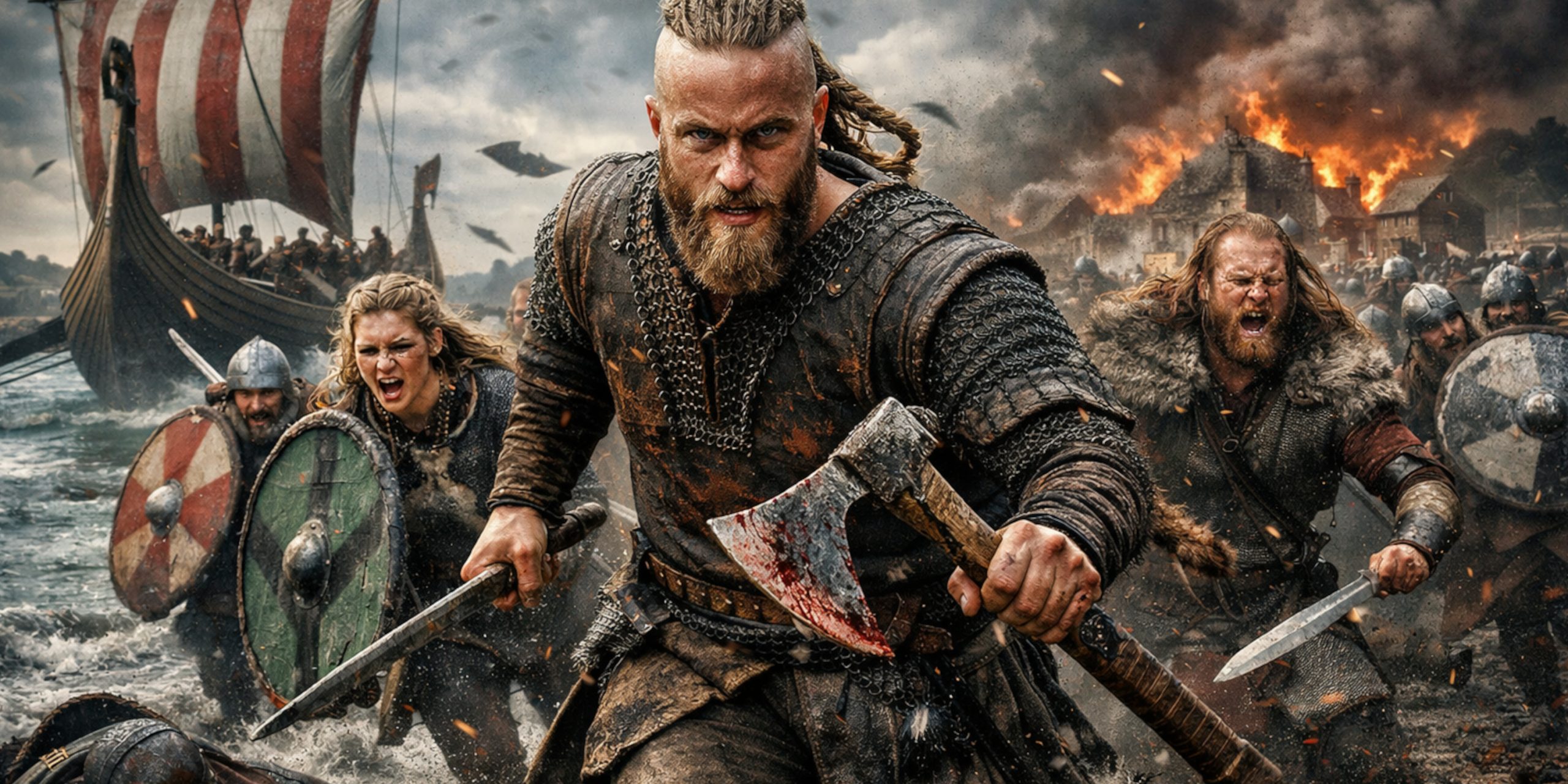
The combat in Vikings is often chaotic and visceral. That part is closer to reality than many polished Hollywood battle scenes.
Viking warfare relied heavily on:
- Shield walls, where warriors locked shields together
- Axes, including the iconic bearded axe
- Spears, which were extremely common
- Single handed swords, usually expensive and owned by wealthier warriors
The show also reflects the social prestige of weapons. A finely made sword was a status symbol, not standard equipment.
If you see a farmer casually swinging a beautiful patterned blade, the historian in me quietly raises an eyebrow.
Pagan Beliefs and Mythology
The spiritual world of the Vikings is handled surprisingly well.
The series regularly references Norse gods such as:
- Odin
- Thor
- Freyja
Characters speak about Valhalla, fate, and the judgement of the gods. While the show dramatises these beliefs, the overall tone reflects what we know from sagas and later medieval sources.
Religion during the Viking Age blended ritual, myth, and local traditions. People genuinely believed the gods influenced daily life.
The show captures that mindset effectively.
The Role of Women
Viking women in the series often fight, lead, and influence politics. Some viewers assume this is pure fiction, yet the truth is a little more complicated.
Women in Norse society had more legal rights than many women elsewhere in medieval Europe. They could inherit property, manage farms, and initiate divorce.
Archaeology has also sparked debate about female warriors. The famous Birka grave in Sweden contained weapons and the remains of a high status individual later identified as biologically female.
Does this prove shieldmaidens were common? No.
But it does suggest that the Viking world may have been more flexible than once believed.
Where the Show Takes Creative Liberties
Ragnar Lothbrok
Ragnar is the beating heart of the early seasons, yet historians still debate whether he existed as a single historical figure.
The character seems to combine several legendary and semi historical leaders described in Norse sagas. These stories were written centuries after the events they describe.
In other words, Ragnar may represent a fusion of multiple Viking warlords.
Great storytelling, questionable biography.
Chronology Is a Mess
The timeline of the show is… generous.
Events that occurred decades apart are compressed into a single narrative arc. Historical figures who lived in different generations somehow end up sharing conversations.
For example:
- The raid on Lindisfarne occurred in 793
- The Great Heathen Army invasion of England began in 865
The show often treats these developments as if they were part of the same storyline.
From a historian’s perspective, it feels like watching two centuries squeezed into a family dinner.
Viking Armour
If you watch closely, you may notice something missing.
Helmets.
Many characters charge into battle with flowing hair and excellent cheekbones but very little head protection. Historically, warriors valued helmets. They were expensive, but anyone who could afford one would certainly wear it.
Mail armour also appears less frequently than it likely did among elite warriors.
The show favours dramatic visuals over practical battlefield gear.
Understandable for television, slightly alarming for anyone entering combat.
Viking Culture Was Not Just Violence
Vikings leans heavily into raiding and warfare. While raids were important, Scandinavian society was far more complex.
Vikings were also:
- Traders
- Farmers
- Explorers
- Craftsmen
Trade networks connected Scandinavia to places as distant as the Byzantine Empire and the Islamic Caliphates. Silver coins from the Middle East have been found in Viking hoards across northern Europe.
The show hints at this wider world but rarely slows down long enough to explore it fully.
Which is understandable. A twenty minute episode about barley farming probably would not trend on streaming platforms.
The Portrayal of England and Europe
The series also simplifies the political landscape of early medieval Europe.
Anglo Saxon England was not a single kingdom during much of the Viking Age. It was divided into several competing realms, including:
- Wessex
- Mercia
- Northumbria
- East Anglia
The show focuses heavily on Wessex and King Alfred, which works narratively but overlooks the complexity of the period.
Real medieval politics involved alliances, betrayals, and shifting borders that would give modern mapmakers a headache.
So, Is Vikings Historically Accurate?
Yes and no.
The show captures the spirit of the Viking Age remarkably well. Its ships, belief systems, and sense of exploration feel grounded in real history. Many characters and events are inspired by genuine sources.
At the same time, the series blends legend with fact and reshapes timelines to serve the story.
This is historical drama rather than documentary.
For many viewers, it also serves as a gateway into real Viking history. Plenty of people have discovered Norse archaeology and medieval sources after first watching the show.
And honestly, if a television series inspires someone to read about early medieval Scandinavia instead of scrolling endlessly through social media, that feels like a small victory for history.
Takeaway
Vikings sits in that interesting middle ground between entertainment and education. It does not always follow the historical record, but it does introduce audiences to a fascinating period of European history.
Think of it like a saga told beside a fire. The broad strokes might be true, the details occasionally exaggerated, and the heroes perhaps a little larger than life.
That is exactly how the Vikings themselves liked their stories.