There is a moment, usually somewhere around the middle of The Wheel of Time, when it clicks. This world of prophecies, cyclical time, and looming catastrophe starts to feel oddly familiar. Not copied, not lifted, but shaped by something older. If you have even a passing interest in The Wheel of Time and Norse mythology, the overlap is hard to ignore.
It is not just surface details. It runs deeper, into structure, worldview, and the uncomfortable idea that history does not move forward so much as it circles back with new names and slightly worse consequences.
A World That Turns Instead of Ends
At the heart of The Wheel of Time is the idea that time is cyclical. Ages come and go, repeating in variations, with events echoing across eras.
That idea sits very comfortably beside Norse cosmology. In Norse mythology, the world does not simply end. It collapses, burns, and then begins again after Ragnarök. The survivors step into a renewed world that feels both fresh and strangely recycled.
Jordan leans into this with a kind of quiet inevitability. His characters fight to change the future, but the pattern keeps reasserting itself. Norse myth is even more blunt about it. The end is coming, everyone knows it, and yet the story still matters.
There is something oddly reassuring in that. Catastrophic, yes. But not final.
The Dragon Reborn and the Burden of Knowing
Rand al’Thor is not just a chosen one. He is a man trapped in a loop, forced to repeat a role that has already destroyed him once.
That has strong echoes of Odin. Odin is defined by his pursuit of knowledge, especially knowledge of how the world ends. He sacrifices, suffers, and gains insight, only to discover that knowing does not equal control.
Rand walks a similar line. He learns more than he wants to know. He sees the cost ahead of time. And like Odin, he cannot step away from it.
Both figures carry a particular kind of tragedy. Not ignorance, but awareness.
The World Tree and the Pattern
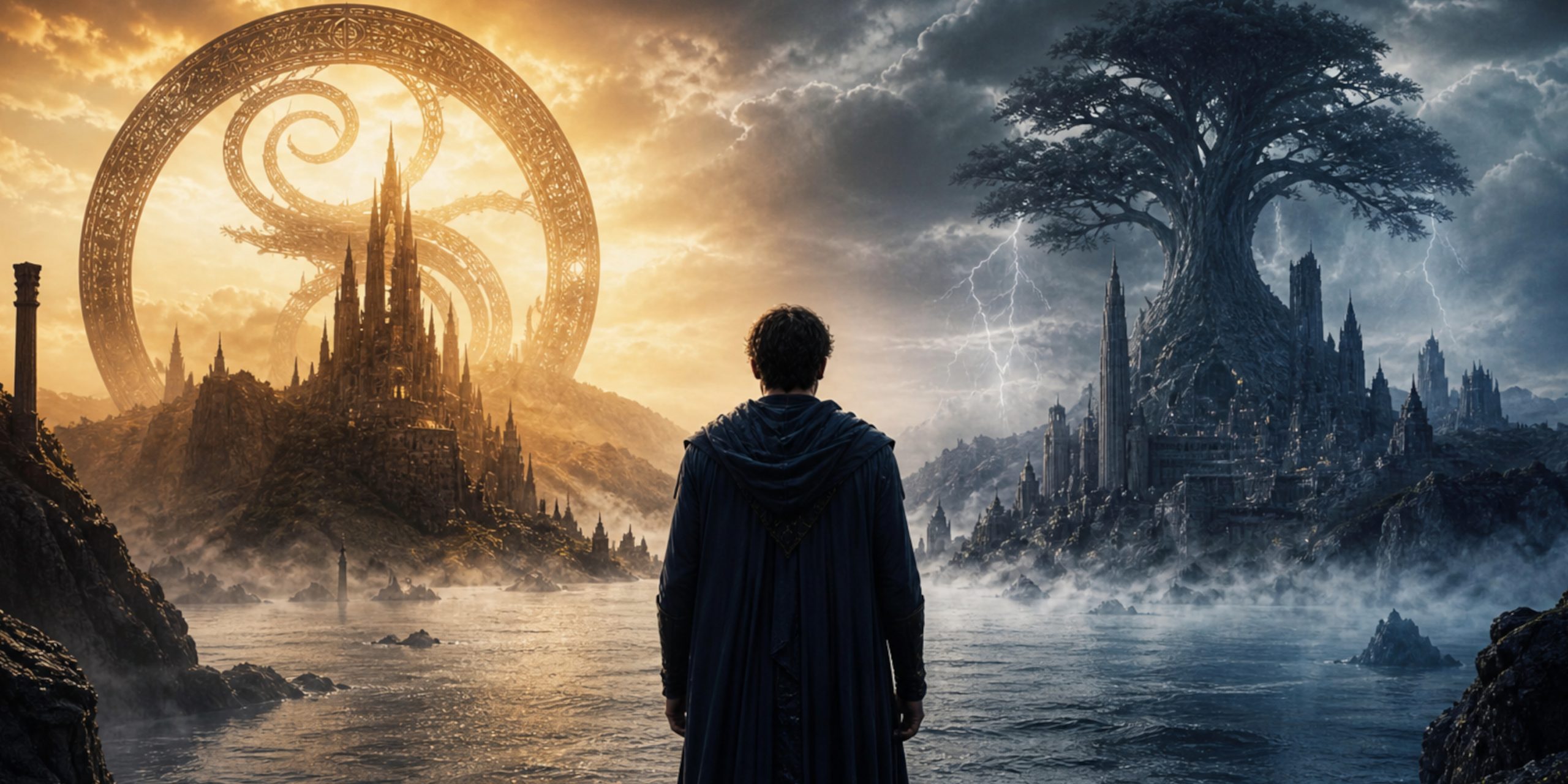
Norse myth centres on Yggdrasil, the great tree that connects all realms. It is not stable. It is under constant strain, gnawed at, threatened, yet still holding everything together.
Jordan’s version of this is less visual but just as structural. The Pattern, woven by the Wheel, binds reality into a coherent whole. Threads intersect, diverge, and snap under pressure.
The comparison is not perfect, but the feeling is similar. A fragile system holding together a universe that is always on the verge of unravelling.
Also worth noting, neither system is especially comforting once you think about it for more than a minute.
Fate Versus Choice, and the Illusion of Control
Both worlds wrestle with the same uncomfortable question. If everything is already written, what is the point of choice?
In Norse mythology, fate is absolute. Even the gods are bound by it. Odin knows what is coming and still cannot avoid it.
In The Wheel of Time, there is more wiggle room. The Pattern allows for variation, small shifts, different outcomes within a broader framework. Rand is not entirely powerless. But he is never fully free either.
That tension is where a lot of the story lives. Characters make choices that matter, even if the destination feels fixed.
It is a bit like trying to choose how you fall rather than whether you fall at all.
Monsters, Myths, and the Shape of Evil
The forces of darkness in both settings are not subtle. They are ancient, destructive, and deeply tied to the structure of the world.
Norse myth gives us giants, wolves, and chaos beings that exist outside order. They are not just enemies, they are inevitabilities.
Jordan’s Dark One fills a similar role. Not a villain with a plan, but a force that seeks to break the Pattern entirely. The Forsaken, his lieutenants, feel closer to human ambition, but the core threat is something more fundamental.
In both cases, evil is not just moral. It is structural.
The End Always Feels Personal
What stands out most is how both traditions keep pulling the cosmic down to a human level.
Ragnarök is not just the end of the world. It is a series of personal duels, betrayals, and sacrifices. Gods facing enemies they have known for ages.
The Last Battle in The Wheel of Time works the same way. It is enormous in scale, but it hinges on individuals making very specific, very human decisions.
That is probably why the parallels resonate. These are not distant myths or abstract fantasy concepts. They are stories about people trying to carry impossible weight without collapsing under it.
Why These Parallels are compelling
It would be easy to say that The Wheel of Time simply borrows from Norse mythology. That misses the point.
What Jordan does is closer to translation than imitation. He takes old ideas, cyclical time, inevitable endings, flawed gods, and reshapes them into something that feels modern without losing that older edge.
And honestly, it works because those ideas still hit. The fear that history repeats. The suspicion that knowledge comes at a cost. The uneasy sense that even if everything falls apart, something will crawl out of the ashes and start again.
Not exactly cheerful, but strangely compelling.