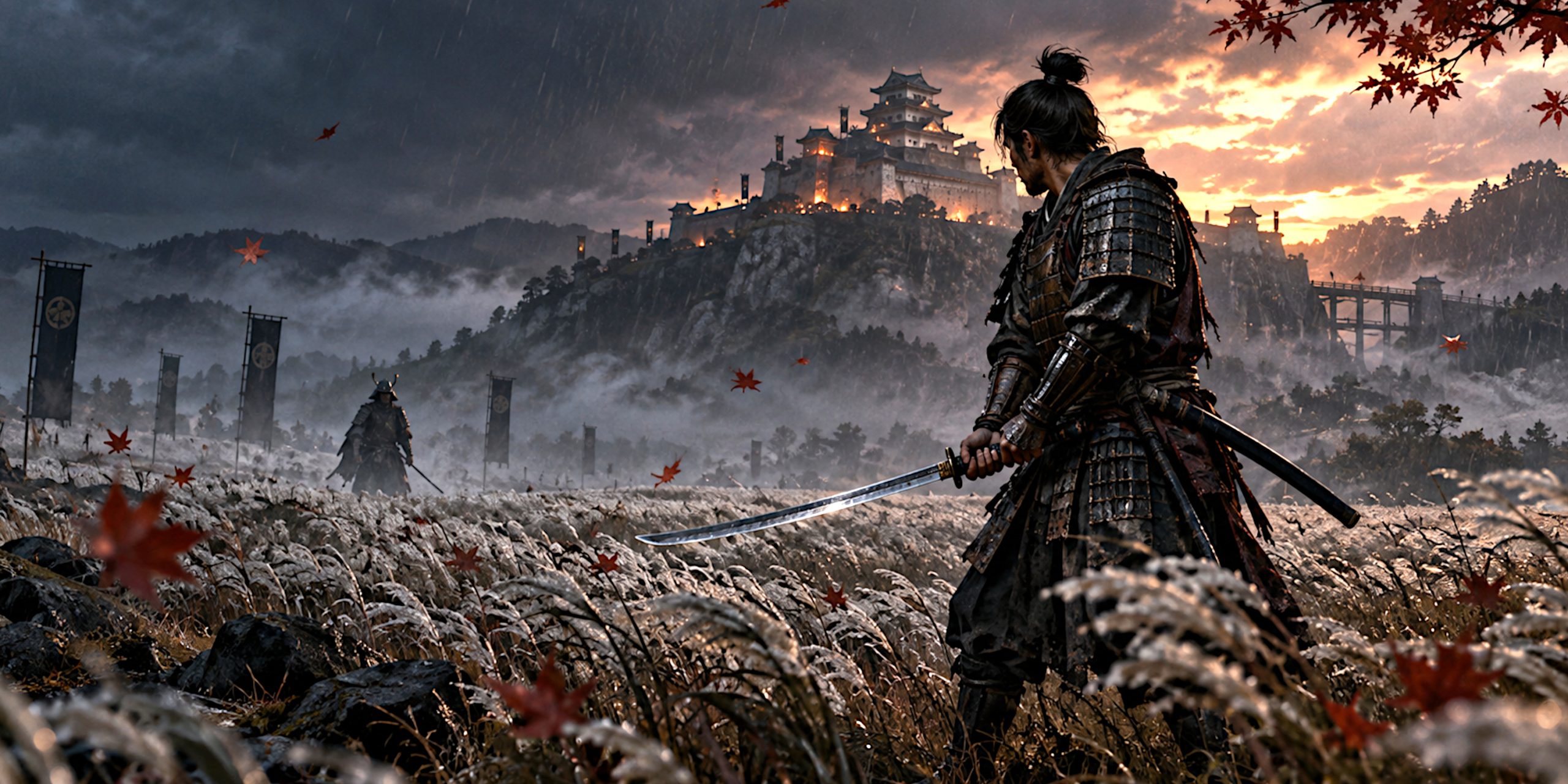
Samurai games have a slight identity problem. Some pursue historical drama, some fill sixteenth-century Japan with demons, and others quietly hand you a grappling hook before expecting you to fight a man the size of a wardrobe. Authenticity varies. The appeal does not.
The best games in this loose genre understand what makes the fantasy work: measured swordplay, dangerous duels, political turmoil and the tension between duty and survival. They also need to be good games once the armour has stopped looking impressive.
This ranking covers action RPGs, stealth adventures, strategy games and fighting games. It favours the quality of the complete experience rather than historical accuracy alone. Strictly speaking, not every protagonist below is a samurai. Sekiro is a shinobi, for instance, but excluding one of gaming’s finest Japanese sword-fighting experiences on a technicality would be impressively joyless.
The Best Samurai Games at a Glance
| Rank | Game | Best for |
|---|---|---|
| 1 | Ghost of Tsushima | The complete samurai adventure |
| 2 | Sekiro: Shadows Die Twice | Pure sword combat |
| 3 | Total War: Shogun 2 | Historical strategy |
| 4 | Nioh 2 | Deep builds and demanding action |
| 5 | Ghost of Yōtei | Cinematic open-world exploration |
| 6 | Onimusha 2: Samurai’s Destiny | Supernatural samurai action |
| 7 | Rise of the Ronin | Weapon variety and player choice |
| 8 | Way of the Samurai 4 | Branching stories and replayability |
| 9 | Assassin’s Creed Shadows | Stealth in a large open world |
| 10 | Like a Dragon: Ishin! | Historical melodrama and side activities |
| 11 | Nioh 3 | Flexible samurai and ninja combat |
| 12 | Samurai Shodown | Tense one-on-one duels |
| 13 | Trek to Yomi | Samurai cinema atmosphere |
| 14 | Shadow Tactics: Blades of the Shogun | Tactical stealth |
| 15 | Samurai Warriors 5 | Large-scale arcade combat |
How We Ranked the Games
The order considers five things:
- The quality and feel of the sword combat
- How effectively the setting uses Japanese history or samurai cinema
- Story, characters and atmosphere
- Variety, replay value and mechanical depth
- How well the game holds up now, not merely how important it once was
Historical accuracy is considered, but it is not the only test. A game can place real people in a carefully recreated period and still be a chore to play. Equally, a supernatural fantasy can capture the danger and discipline of a duel with remarkable conviction.
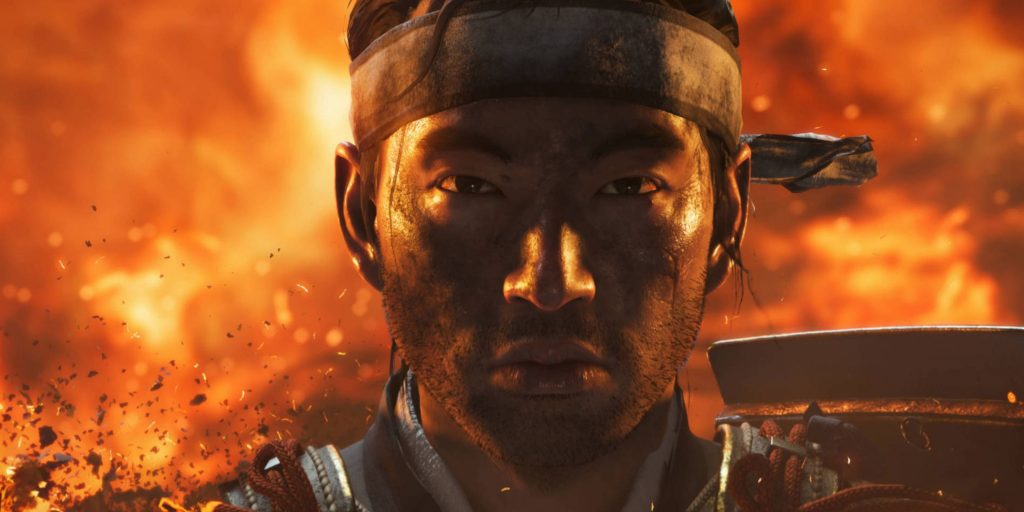
1. Ghost of Tsushima
Developer: Sucker Punch Productions
First released: 2020
Available on: PlayStation 4, PlayStation 5 and PC
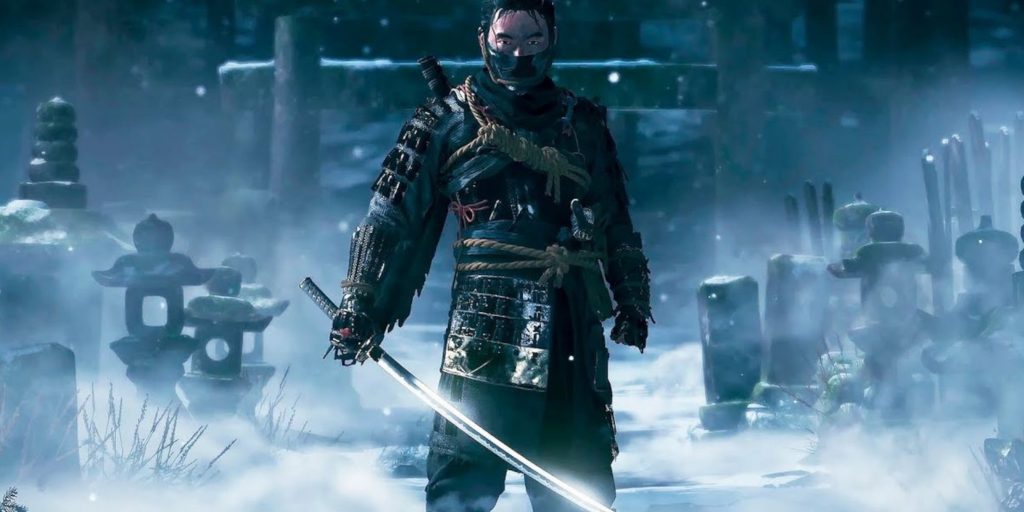
Ghost of Tsushima remains the best all-round samurai game because it brings combat, landscape and character together with unusual confidence. Its version of the Mongol invasion of Tsushima in 1274 is heavily romanticised, but the fiction understands the emotional force of a warrior caught between inherited ideals and ugly necessity.
Jin Sakai begins as a conventional samurai and gradually adopts stealth, deception and terror. That transformation gives the familiar open-world checklist a genuine dramatic purpose. Standoffs, fox dens and liberated farms do eventually repeat themselves, yet the central swordplay keeps its edge. Changing stance to answer different enemy types feels natural, while lethal mode turns even ordinary encounters into brief, nervous contests.
The art direction does as much work as the combat. Wind replaces a conventional navigation arrow, leaves move across fields in dense waves, and colour is used with the confidence of a film rather than a map screen. It is not a documentary about medieval Japan. It is a playable samurai epic, and a very good one.
Best reason to play: The strongest balance of combat, story and open-world spectacle.
2. Sekiro: Shadows Die Twice
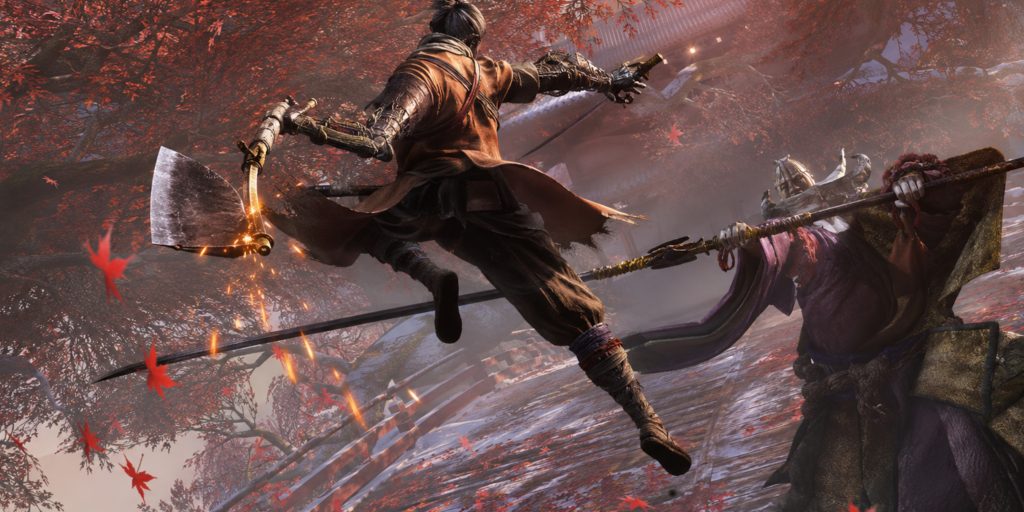
Developer: FromSoftware
First released: 2019
Available on: PlayStation 4, Xbox One and PC
No other game makes a sword clash feel quite like Sekiro. Its posture system transforms defence into attack. Deflecting a blow is not a frightened retreat behind a block button. It applies pressure, disrupts rhythm and pushes an opponent towards a fatal opening.
That design produces extraordinary boss fights. Genichiro, Lady Butterfly and Isshin test timing and composure rather than the strength of an over-levelled build. The game can be brutal while its language is still unfamiliar. Once it clicks, fights that seemed chaotic become readable exchanges of steel. Then a headless ape arrives and good manners leave the room.
The protagonist is a shinobi and the world is a dark fantasy version of late Sengoku Japan, so this is not a conventional samurai role-playing game. It earns its place through the precision of its combat, its architecture and its understanding that a duel should feel personal.
Best reason to play: The finest parry-based sword combat in the genre.
3. Total War: Shogun 2
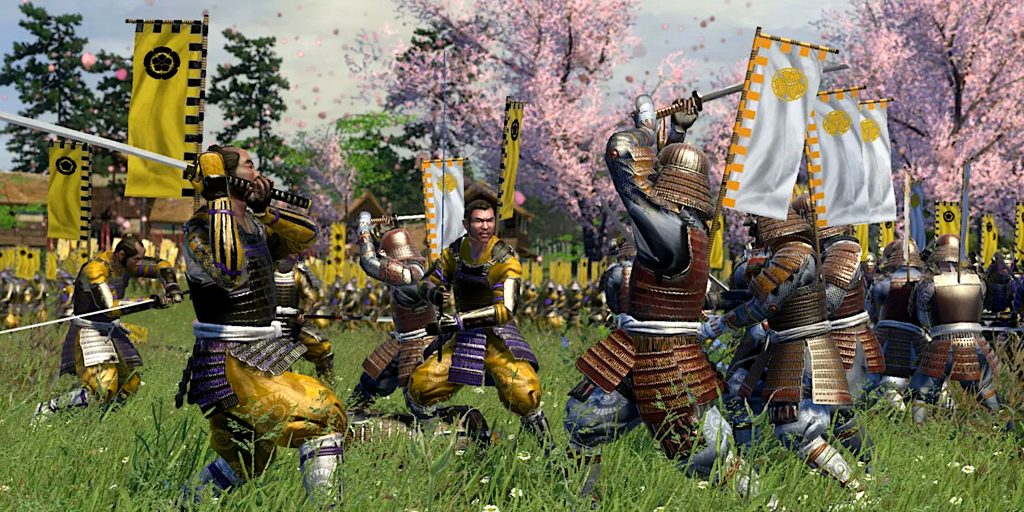
Developer: Creative Assembly
First released: 2011
Available on: PC, macOS and Linux
Most games on this list put a sword in your hand. Total War: Shogun 2 gives you a clan and asks whether you can keep it alive through diplomacy, taxation, religion, betrayal and battles involving thousands of troops.
Set during the Sengoku period, it combines turn-based campaigning with real-time warfare. Samurai are part of a larger military system that includes ashigaru spearmen, archers, cavalry, monks, firearms and naval forces. Terrain, morale and formation matter. Charging uphill into braced yari is a useful way to discover that expensive armour does not cure poor judgement.
Its campaign is cleaner and more focused than many later Total War games. The Realm Divide mechanic can make the final phase feel artificially hostile, but it also prevents a dominant player from sleepwalking towards the shogunate. For anyone interested in samurai as a social and military class rather than a lone cinematic hero, this remains essential.
Best reason to play: The richest strategic treatment of samurai warfare.
4. Nioh 2
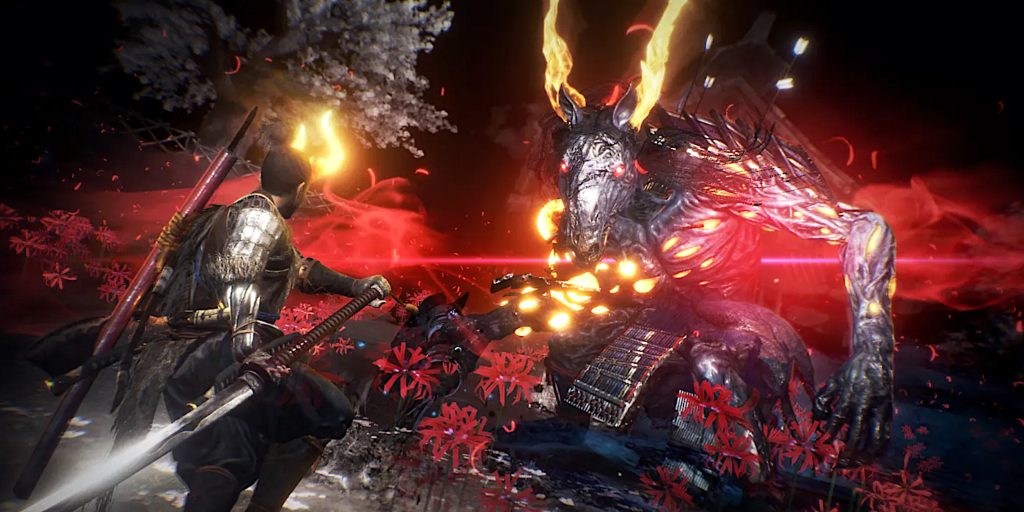
Developer: Team Ninja
First released: 2020
Available on: PlayStation 4, PlayStation 5 and PC
Nioh 2 turns Sengoku Japan into an action RPG packed with yōkai, historical figures and more loot than any responsible warrior could carry. Beneath that excess sits an exceptionally technical combat system.
Weapons have distinct skill trees and three stances. Ki Pulse rewards precise stamina recovery, while Burst Counters and yōkai abilities create aggressive answers to dangerous attacks. The game supports swords, dual swords, spears, odachi, kusarigama and several less conventional choices. Building a character can become its own hobby, possibly one requiring a spreadsheet and a forgiving social calendar.
Its story is less coherent than its combat, and the constant equipment comparison can smother the pace. Even so, few games offer this much control over how a warrior moves and fights. It is the series at its most complete and confident.
Best reason to play: Huge mechanical depth and excellent weapon variety.
5. Ghost of Yōtei
Developer: Sucker Punch Productions
First released: 2025
Available on: PlayStation 5
Set around Mount Yōtei in 1603, Ghost of Yōtei moves beyond Jin Sakai’s story and follows Atsu on a revenge-driven hunt. The later historical setting gives the game access to a changing Japan, different weapons and a frontier atmosphere distinct from Tsushima.
Its greatest strength is freedom of approach. Exploration is less rigid, combat has broader weapon options and the landscape has a colder, wilder personality. Sucker Punch still frames almost every journey as though a cinematographer is crouched in the grass nearby, waiting for the wind to behave.
The revenge structure is more familiar than the moral conflict at the heart of Ghost of Tsushima, which is why the original keeps the higher position. Yet Yōtei is a more flexible game in several practical respects and an easy recommendation for anyone wanting a lavish modern samurai adventure.
Best reason to play: A beautiful, flexible successor to Ghost of Tsushima.
6. Onimusha 2: Samurai’s Destiny
Developer: Capcom
First released: 2002, remastered in 2025
Available on: PlayStation 4, Xbox One, Nintendo Switch and PC
Onimusha 2 mixes samurai drama, demonic horror and compact action-adventure design. Jūbei Yagyū fights through Nobunaga’s supernatural forces using elemental weapons, quick counters and magical attacks. History is treated more as a launch platform than a boundary.
The fixed camera angles and gift-based relationship system reveal the game’s age, sometimes rather charmingly and sometimes because you have just walked towards the wrong door. Its contained locations and brisk pacing now feel refreshing beside open worlds built to occupy an entire season of your life.
The remaster makes the game easier to access while preserving its distinctive early-2000s character. New players should also consider Onimusha: Warlords, but the sequel offers the more varied and ambitious adventure.
Best reason to play: Old-school Capcom action with a wonderfully strange samurai-horror identity.
7. Rise of the Ronin
Developer: Team Ninja
First released: 2024
Available on: PlayStation 5 and PC
Set during the Bakumatsu, Rise of the Ronin explores the end of the Tokugawa shogunate rather than the more frequently visited Sengoku period. Western firearms, political factions and modernising cities give it a valuable sense of transition.
Its combat borrows Team Ninja’s speed and technical detail, then places them inside a more approachable open-world structure. Different weapons and combat styles allow substantial experimentation. Choices affect relationships and missions, although the consequences are not always as dramatic as the game suggests.
Visually and structurally, it lacks the elegance of the Ghost games. Its world can feel busy with ordinary activities. The fighting is the reason to stay. Parries are forceful, weapons feel meaningfully different and important duels generate real tension.
Best reason to play: Team Ninja combat in a fascinating nineteenth-century setting.
8. Way of the Samurai 4
Developer: Acquire
First released: 2011
Available on: PlayStation 3 and PC
Way of the Samurai 4 is smaller, stranger and more reactive than most modern action games. A playthrough can be completed quickly, but decisions redirect the story through different factions and endings. Failure, betrayal and accidental chaos are part of the design rather than reasons to reload immediately.
Set in a fictional port during the final years of the shogunate, it plays freely with cultural conflict and political absurdity. The tone jumps from serious to ridiculous without requesting permission. Combat has plenty of styles to learn, while sword customisation gives persistent rewards across repeated runs.
Its controls and presentation are undeniably awkward. The trade is genuine agency. Few games are so willing to let the player disrupt the plot, live with the consequences and return to find another route.
Best reason to play: Exceptional replayability and wonderfully unpredictable choices.
9. Assassin’s Creed Shadows
Developer: Ubisoft Quebec
First released: 2025
Available on: PlayStation 5, Xbox Series X and S, Nintendo Switch 2, PC and compatible Apple devices
After years of fans asking for an Assassin’s Creed game in Japan, Shadows arrived with two contrasting protagonists. Naoe is a shinobi built for darkness, infiltration and careful movement. Yasuke is a direct fighter whose size, armour and weapons make subtlety more of an optional side quest.
The changing seasons and detailed environments make exploration rewarding, and the split between stealth and combat creates useful variety. Yasuke’s battles have weight, particularly with heavy weapons, while Naoe offers the better expression of the series’ original assassin fantasy.
The usual Ubisoft habits remain. The map is large, the systems are numerous and the story sometimes loses urgency between activities. It also takes liberties with people and events, so it should not be mistaken for a history lesson. As a broad action RPG set in late Sengoku Japan, however, it has plenty to recommend.
Best reason to play: Two distinct play styles inside a richly detailed world.
10. Like a Dragon: Ishin!
Developer: Ryu Ga Gotoku Studio
First released: 2014, remade internationally in 2023
Available on: PlayStation 4, PlayStation 5, Xbox One, Xbox Series X and S, and PC
Like a Dragon: Ishin! recasts familiar faces from the wider series as figures in the violent politics of the Bakumatsu. Its hero, Sakamoto Ryōma, can switch between swordsmanship, gunplay, brawling and a cheerfully excessive combination of sword and revolver.
The central conspiracy is delivered with the studio’s usual appetite for loyalty, betrayal and men staring at one another with tremendous seriousness. Around it sits an almost unreasonable supply of diversions, including farming, cooking and karaoke. Historical atmosphere and tonal discipline are not always travelling companions here.
The combat lacks the precision of Nioh or Sekiro, but the characters and side stories give Ishin! a personality those more austere games cannot reproduce.
Best reason to play: A dramatic historical story with gloriously distracting side content.
11. Nioh 3
Developer: Team Ninja
First released: 2026
Available on: PlayStation 5 and PC
Nioh 3 expands the series with larger open-field areas and the ability to switch between samurai and ninja combat styles. The samurai style supports direct confrontations and disciplined technique, while the ninja style favours speed, evasion and specialised tools.
It is ambitious and mechanically generous, but generosity in Nioh tends to arrive carrying twelve menus and several hundred pieces of equipment. Players who love experimentation will find an enormous amount to learn. Anyone hoping for a clean historical adventure should note that yōkai remain firmly employed.
The third game advances the formula, particularly in movement and flexibility, but Nioh 2 remains the tighter recommendation for newcomers. This is the stronger choice for experienced players who actively want more systems to master.
Best reason to play: Seamless movement between forceful samurai and agile ninja styles.
12. Samurai Shodown
Developer: SNK
First released: 2019
Available on: PlayStation 4, Xbox One, Xbox Series X and S, Nintendo Switch and PC
Samurai Shodown rejects frantic combos in favour of spacing, patience and frighteningly damaging strikes. A single bad decision can remove a substantial portion of the health bar. That makes each pause meaningful and every committed attack slightly alarming.
The cast mixes samurai, ninja and highly stylised fighters from different backgrounds. Historical realism is not the objective, but the game captures the suspense of armed combat better than many more elaborate simulations. Its sparse single-player offering limits its broader appeal, especially for anyone arriving after the busiest period of online activity.
As a local competitive game, it remains unusually tense and readable. Victory often belongs to the player who resisted pressing a button for half a second longer.
Best reason to play: Deliberate, high-risk fighting built around decisive weapon strikes.
13. Trek to Yomi
Developer: Flying Wild Hog and Leonard Menchiari
First released: 2022
Available on: PlayStation 4, PlayStation 5, Xbox One, Xbox Series X and S, Nintendo Switch and PC
Trek to Yomi is presented in black and white with theatrical compositions inspired by Japanese period cinema. Its story follows Hiroki, a young warrior drawn through violence, grief and the underworld after failing to protect his village.
The visuals are the main attraction. Silhouettes, weather and architecture create frames that regularly look hand-composed. Combat is simpler and less responsive than the presentation deserves, while repeated enemy encounters expose its narrow move set.
This is not the best choice for deep swordplay, but it is a concise, atmospheric journey that understands the visual grammar of a samurai film. At roughly the length of a long weekend rather than a minor academic degree, it also knows when to end.
Best reason to play: Striking monochrome presentation and cinematic atmosphere.
14. Shadow Tactics: Blades of the Shogun
Developer: Mimimi Games
First released: 2016
Available on: PlayStation 4, Xbox One, PC, macOS and Linux
This tactical stealth game follows five specialists working through heavily guarded locations in Edo-period Japan. Each character has a defined role, from infiltration and distraction to ranged attacks and direct violence. Success depends on combining those abilities rather than finding one unstoppable warrior.
Levels function as intricate puzzles. Guard sight lines overlap, patrols create narrow windows and simultaneous actions allow carefully planned takedowns. A tiny mistake can dismantle ten minutes of preparation, which is either delicious tension or grounds for a stern conversation with the save button.
It is only loosely centred on samurai, but its handling of class, castles and covert political violence earns it a place. Few games make observation feel this active.
Best reason to play: Clever, demanding stealth missions with excellent level design.
15. Samurai Warriors 5
Developer: Omega Force
First released: 2021
Available on: PlayStation 4, Xbox One, Nintendo Switch and PC
Samurai Warriors 5 takes the military figures of the Sengoku period and converts their campaigns into flamboyant battles against enormous crowds. Nobunaga Oda and Mitsuhide Akechi anchor the story, although historical restraint soon gives way to spectacular attacks and airborne soldiers.
Combat is accessible and satisfying in short bursts. Cutting through formations delivers uncomplicated pleasure, while multiple characters and objectives add variety. Repetition is unavoidable, and players seeking intimate duels will find more noise than nuance.
Still, the game provides an energetic introduction to famous names and conflicts. Just remember that armies did not historically wait in groups to be launched into the sky by one extremely busy officer.
Best reason to play: Fast, accessible battlefield action with a large historical cast.
Which Samurai Game Should You Play First?
Choose according to what you actually enjoy, rather than the armour on the cover.
- For a cinematic open world: Start with Ghost of Tsushima.
- For the best sword combat: Choose Sekiro: Shadows Die Twice.
- For role-playing depth and builds: Play Nioh 2.
- For historical strategy: Pick Total War: Shogun 2.
- For stealth: Try Assassin’s Creed Shadows or Shadow Tactics.
- For branching decisions: Choose Way of the Samurai 4.
- For a shorter experience: Play Trek to Yomi.
- For local competitive fights: Pick Samurai Shodown.
Players new to difficult action games should begin with Ghost of Tsushima. Its difficulty options are flexible and its combat teaches ideas that transfer well to tougher games. Sekiro and the Nioh series demand more patience, though both are far more rewarding once their systems make sense.
Which Game Has the Most Historically Accurate Samurai Setting?
No game here should be used as a substitute for historical research. Total War: Shogun 2 offers the most useful broad representation of clans, military units, economics and territorial conflict during the Sengoku period, although it simplifies all of them for strategy gameplay.
Rise of the Ronin and Like a Dragon: Ishin! are valuable because they explore the Bakumatsu, when the shogunate faced political upheaval, foreign pressure and rapid military change. Both fictionalise events and compress relationships.
Ghost of Tsushima uses the Mongol invasion as the basis for a deliberately cinematic story. Many weapons, tactics and social ideas have been adapted to fit the popular image of the samurai. Its emotional world is convincing, but conviction and accuracy are different things.
For actual history, treat these games as prompts for further reading. They are very good at making a period interesting. They are rather less reliable when asked to footnote it.
Are Sekiro and Nioh Really Samurai Games?
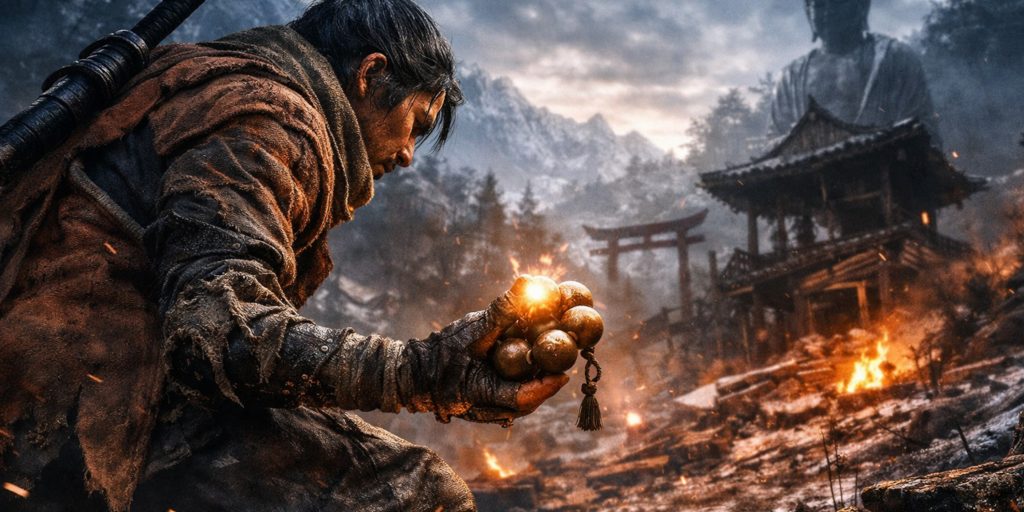
They belong in the wider samurai-games category, but neither is a straightforward simulation of samurai life.
Wolf in Sekiro is explicitly a shinobi. The game draws upon Sengoku imagery, Buddhist ideas and Japanese folklore to build a fictional realm called Ashina. Its combat has the formality and danger commonly associated with samurai duels, which explains why it appears so often in discussions of the genre.
The Nioh games allow extensive use of samurai weapons and armour while blending historical people with yōkai and dark fantasy. They offer detailed martial systems, not documentary realism.
Genre labels are useful until they start excluding the most interesting games. In this case, a broad definition produces the better list.
The Final Verdict
Ghost of Tsushima is still the best starting point and the strongest complete samurai adventure. It is accessible without being shallow, visually distinctive and driven by a conflict that gives its stealth mechanics narrative weight.
Sekiro is the superior choice if combat matters above everything else. Total War: Shogun 2 remains unmatched for players who want to command samurai armies rather than personally parry every sword. Nioh 2 offers the deepest action RPG, while Ghost of Yōtei carries the cinematic open-world formula into a new setting with greater freedom.
The genre is now broad enough to support almost any preference. You can manage a clan, stalk a castle, hunt demons or settle an argument with one carefully timed strike. Apparently the only thing samurai games agree upon is that peace was never going to make the tutorial.