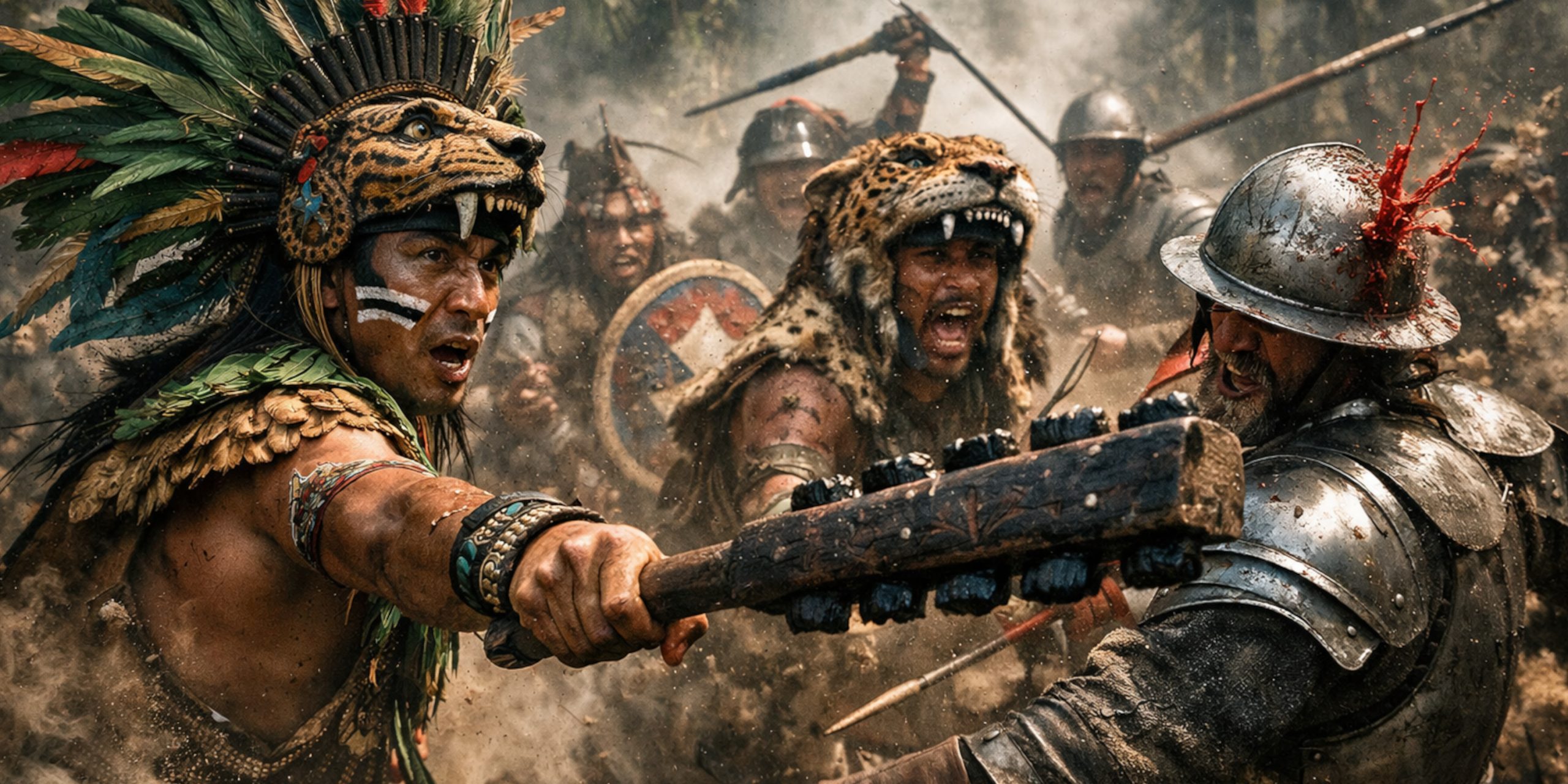
The first Spanish soldiers who marched into central Mexico in 1519 arrived with steel swords, crossbows, horses and an enviable amount of confidence. They expected to meet warriors armed with little more than sticks and stones. What they found instead was a sophisticated military culture with weapons that were ingenious, brutal and often deeply unsettling.
The Aztecs did not possess iron or steel, yet they built an arsenal that suited the landscape, their style of warfare and their military aims. Aztec weapons were not crude alternatives to European arms. Many were carefully designed tools for cutting, stunning, capturing and terrifying an enemy. Several impressed the Spaniards so much that they wrote about them with a mixture of admiration and alarm.
To a sixteenth-century conquistador, the most alarming discovery was that a weapon did not need to be made of steel to be horrifying. A sharpened edge of obsidian could slice flesh with an efficiency that made more than one Spaniard quietly reconsider his career choices.
Why Aztec Weapons Shocked the Spanish
The Spanish entered Mexico expecting a familiar kind of war. European warfare was based around steel blades, armour and formations. Aztec warfare followed different rules.
Aztec armies fought with the aim of breaking enemy lines, capturing prisoners and overwhelming opponents through numbers, discipline and shock. Their weapons reflected this. They were designed to maim, disable and terrify.
Several Spanish chroniclers admitted that they had underestimated their opponents. Bernal Díaz del Castillo, who fought during the conquest, described the Aztec warriors as fierce, organised and far from primitive. Their weapons often cut through padded cotton armour and could inflict dreadful wounds even on men wearing mail.
One conquistador observed, with the sort of grim understatement only a veteran soldier can manage, that an Aztec blow could “open a man from shoulder to breast”. It was not the sort of battlefield review one hopes to receive.
The Macuahuitl: The Sword That Was Not a Sword
The most famous Aztec weapon was the macuahuitl, a wooden club edged with razor-sharp blades of obsidian. It looked a little like a broad paddle or a flat sword, though to call it a sword risks offending both the Aztecs and any passing European fencing master.
The body of the weapon was usually made from hardwood, with grooves cut along the edges. Into these grooves the Aztecs inserted obsidian blades using natural resin or bitumen. Obsidian is volcanic glass, and when broken it produces an edge far sharper than most steel blades.
How the Macuahuitl Was Used
The macuahuitl could slash, chop and stun. A warrior could strike with the flat side to daze or disable an opponent, then use the obsidian edge to wound or capture him. Elite Aztec warriors often carried finely decorated versions.
Spanish chroniclers repeatedly described the damage it caused. Bernal Díaz claimed that the weapon could cut through a horse’s neck in a single blow. That account may be slightly exaggerated. Soldiers have always been gifted storytellers, particularly when explaining why things went badly. Even so, archaeological experiments have shown that a macuahuitl could inflict devastating cuts.
Contemporary quote:
“They have swords of this kind, made like a two-handed sword, set with flint blades that cut much better than our swords.”
The Spanish quickly learned that the macuahuitl was not merely an exotic curiosity. It was one of the deadliest close-combat weapons in the Americas.
The Atlatl: The Aztec Spear Thrower
Long before firearms, there was the atlatl. This simple but ingenious weapon was a spear-thrower that gave a warrior far greater range and power than he could achieve by hand.
The atlatl consisted of a wooden shaft with a hook at one end. A dart or light spear rested against the hook, and the thrower used the device to launch it at high speed.
Why the Atlatl Terrified the Conquistadors
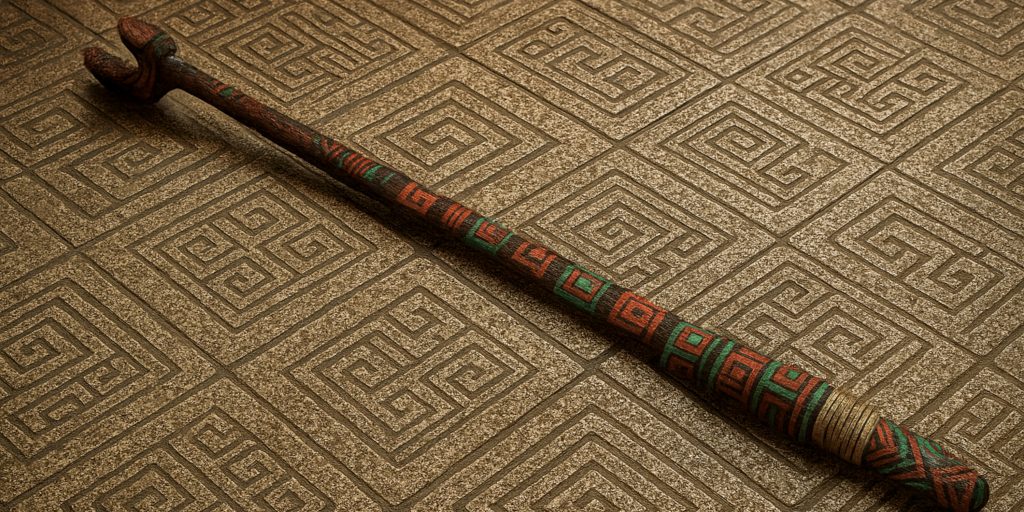
The atlatl gave Aztec warriors the ability to hurl projectiles with remarkable force. Spanish accounts describe darts piercing shields, cotton armour and occasionally even metal armour at close range.
The first attacks on the Spaniards often began with clouds of missiles. Darts launched from atlatls struck from a distance before the Aztecs closed in with clubs and blades.
Contemporary quote:
“The spears they throw are so strong that they pierce any armour.”
Archaeological testing has shown that an atlatl dart can reach considerable speed and strike with frightening force. Against a man in padded cotton armour, which many Spaniards adopted in Mexico because it was lighter than steel, the results could be grim.
The atlatl also had another advantage. It allowed Aztec warriors to attack cavalry. Horses were unfamiliar and frightening to many Mesoamerican peoples at first, but the Aztecs quickly learned that a horse was still a large target with legs, eyes and a rider who could be separated from it in dramatic fashion.
The Tepoztopilli: The Spear Built for Chaos
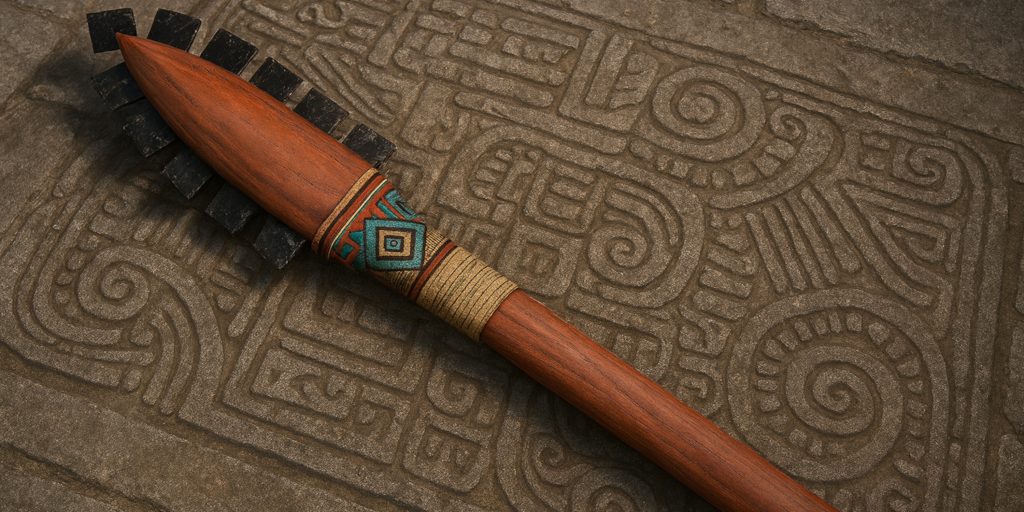
The tepoztopilli was a long spear or polearm fitted with obsidian blades along the head. Imagine a spear and a halberd meeting in a very bad mood.
This weapon was often around the height of a man and allowed Aztec warriors to strike at enemies from greater distance. The obsidian blades could slash as well as thrust.
What Made the Tepoztopilli Effective
The tepoztopilli was particularly useful against mounted Spaniards and tightly packed infantry. It allowed Aztec soldiers to keep an enemy at range while still delivering terrible wounds.
Some Spanish descriptions compare its cutting power to a European pike with a blade attached. Warriors could thrust at an approaching horse, hook a rider or slash at exposed limbs.
The long reach of the weapon made it especially useful in narrow streets during the fighting in Tenochtitlan. Spanish cavalry had less room to manoeuvre, and suddenly the advantages of a horse became rather less impressive.
Aztec Slings: Small Stones, Serious Problems
The sling is often ignored in discussions of Aztec warfare, perhaps because it sounds less dramatic than an obsidian sword. That is a mistake.
Aztec slingers could launch stones with startling speed and accuracy. A well-thrown sling stone could crack a skull, break bones or bring down a horse.
Why the Sling Was So Dangerous
The Aztecs used slings in large numbers, often before the main body of warriors advanced. A volley of stones could disrupt formations, wound men and create confusion.
Spanish helmets offered some protection, but not every conquistador wore one at all times. Human beings have always had a remarkable talent for removing protective equipment just before they desperately need it.
Bernal Díaz wrote that the stones hurled by Aztec slingers were powerful enough to injure even armoured men. In the chaos of battle, a stone striking a face, hand or horse could be enough to turn a fight.
The Quauhololli: The Crushing War Club
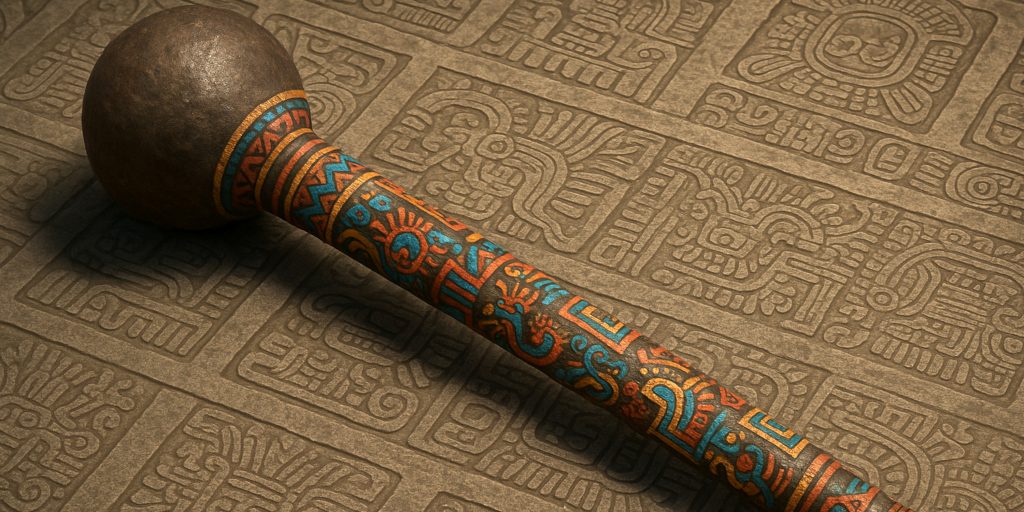
Not every Aztec weapon relied on cutting edges. The quauhololli was a heavy club with a rounded stone or hard wooden head.
This weapon was designed for blunt force. Against an opponent in armour, particularly one wearing metal or thick cotton padding, a crushing blow could be more effective than a slash.
Why Blunt Weapons Worked Against the Spanish
Spanish armour protected against cuts, but it could not fully absorb the shock of a heavy club. A conquistador struck on the head, ribs or shoulder could be stunned, knocked down or killed outright.
The Aztecs understood this perfectly. Many battles involved a mixture of cutting and blunt weapons. If a Spaniard proved too well-armoured for a blade, there was always the possibility of introducing him to several pounds of stone at high speed.
Contemporary quote:
“They carried clubs which could break a helmet and split the head beneath it.”
That is the sort of sentence that encourages a healthy respect for one’s opponent.
Bows and Arrows
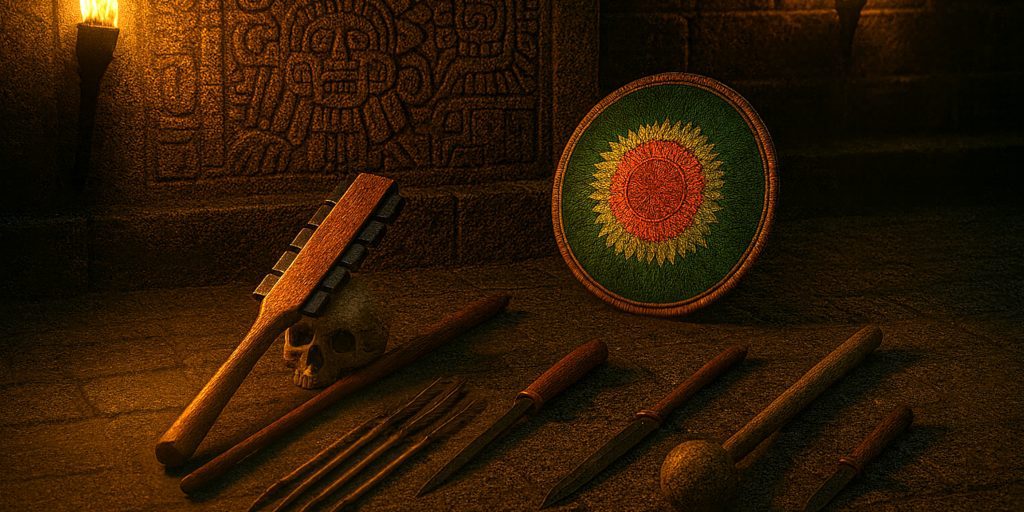
The Aztecs also used bows, though they were generally less feared by the Spanish than atlatls or clubs. Aztec bows were shorter than the great English longbow and suited to the terrain of central Mexico.
Warriors could fire quickly and in large numbers. Arrows tipped with obsidian or sharpened bone could still cause serious injuries, especially against lightly protected troops or native allies fighting beside the Spanish.
The Spanish often complained about the sheer volume of missiles directed at them. Battles in Mexico rarely involved a neat clash of lines. They involved noise, confusion, arrows, stones, darts and a great many people trying very hard to make one another regret leaving home.
Aztec Armour and Shields
The effectiveness of Aztec weapons was linked to the armour and tactics of the warriors who used them.
Aztec soldiers commonly wore ichcahuipilli, a quilted cotton armour that was surprisingly effective. It protected against arrows and reduced the force of blows while remaining lighter and cooler than European armour.
Many Spaniards adopted cotton armour themselves after arriving in Mexico. There is something rather revealing about conquering soldiers deciding that the local equipment is better than their own.
Aztec warriors also carried round shields called chimalli. These were often brightly decorated with feathers, leather and painted designs. A chimalli was not merely defensive equipment. It also displayed the rank and achievements of its owner.
Why the Spanish Eventually Adapted
Although Aztec weapons shocked the Spanish, the conquistadors eventually adapted. They learned which weapons were most dangerous, adopted local armour and changed their tactics.
Steel swords and firearms still gave the Spanish advantages, especially in prolonged fighting. Horses remained powerful shock weapons when used effectively. Disease and alliances with Aztec enemies also played a decisive role in the fall of the Aztec Empire.
Yet the conquest was far from an easy triumph. The Spanish suffered severe losses, especially during the fighting in Tenochtitlan and the disastrous retreat known as La Noche Triste.
Much of that suffering came at the hands of Aztec warriors armed with weapons the Spaniards had never seen before.
Which Aztec Weapon Was the Most Feared?
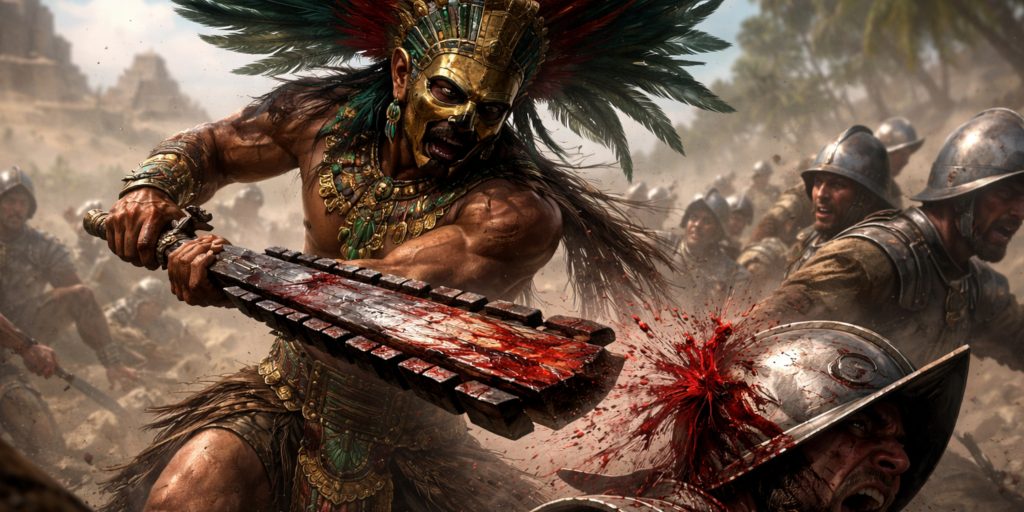
If one weapon stood above the rest in Spanish accounts, it was the macuahuitl. It was distinctive, terrifying and unlike anything in Europe.
Yet the most dangerous aspect of Aztec warfare was not a single weapon. It was the combination of them.
A Spanish soldier might face stones from slings, darts from atlatls and arrows from bows before being attacked by warriors armed with macuahuitls and tepoztopilli. In narrow streets or on causeways, there was often nowhere to retreat.
The conquistadors entered Mexico expecting a quick campaign against an enemy they considered inferior. Instead, they encountered one of the most formidable military systems in the Americas.
The Aztecs lacked steel, horses and gunpowder. What they possessed instead was experience, discipline and a talent for making even heavily armoured Europeans question their life choices.
Further Reading and Surviving Examples
Very few original Aztec weapons survive today because wood, leather and resin decay over time. The most famous surviving example of a macuahuitl was once kept in Madrid, though it was destroyed in a fire in the nineteenth century.
Modern reconstructions, codices and archaeological finds have helped historians understand how these weapons worked. The Florentine Codex, the Codex Mendoza and Spanish eyewitness accounts remain among the most important sources.
There is perhaps a final irony in all this. The Spanish arrived believing that European warfare represented the height of civilisation. They left behind descriptions filled with awe, fear and the grudging respect that soldiers reserve for enemies who proved far more dangerous than expected.