A historian’s ranking of the foot soldiers who built empires
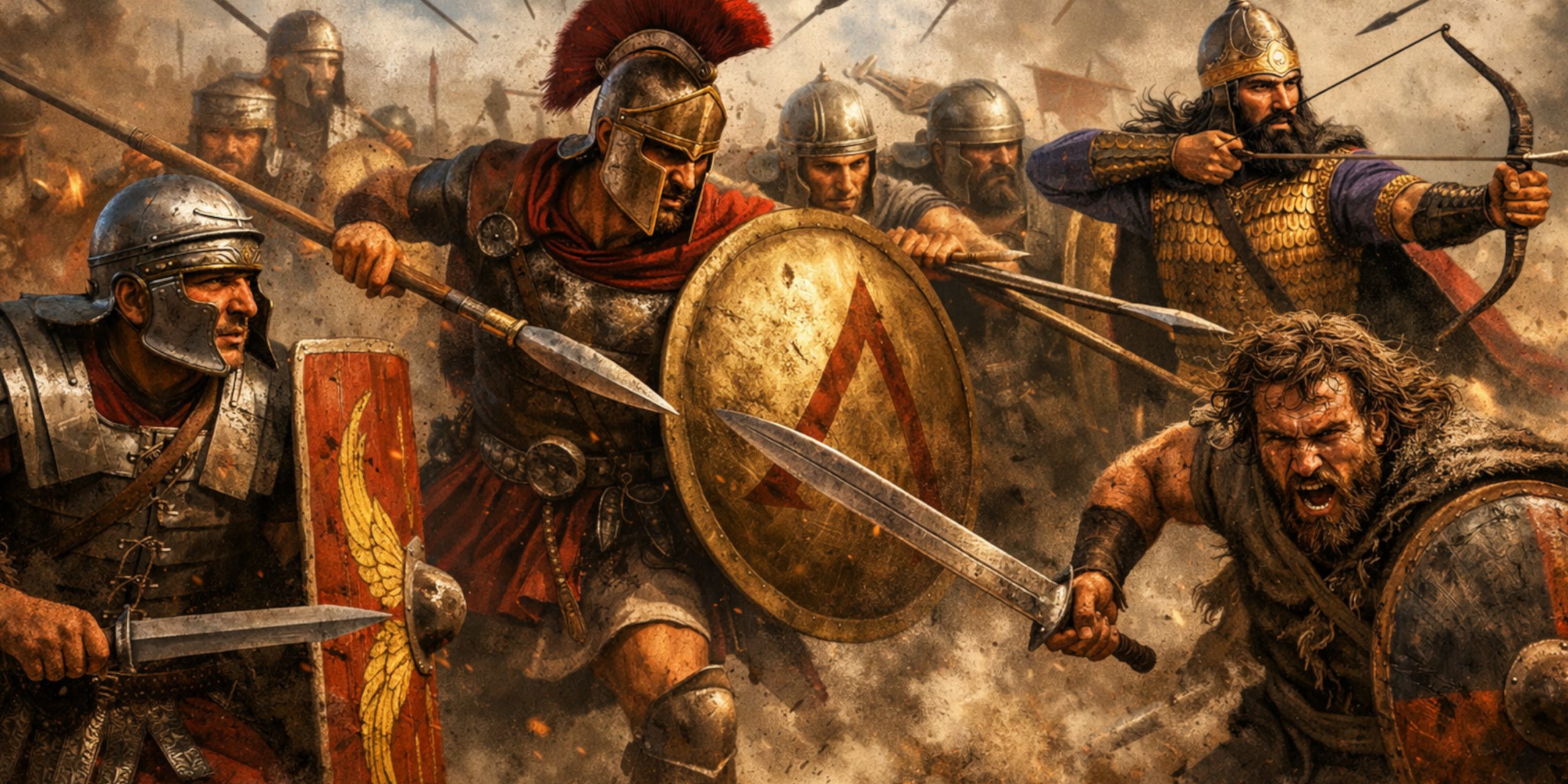
Ancient warfare was decided on foot long before cavalry and artillery dominated battlefields. Infantry units carried shields that locked together, spears that defined distance, and swords meant for killing at arm’s length. Discipline, cohesion and training mattered far more than individual heroics.
This tier list ranks ancient infantry by battlefield impact, tactical flexibility, training, equipment and historical performance.
S Tier: The Army Breakers
These units did not merely fight battles. They defined entire military systems.
Roman Legionaries (Polybian and Marian, 3rd century BC–3rd century AD)
Weapons: Pilum, gladius Hispaniensis, scutum shield, pugio dagger
Key battles: Cannae, Zama, Alesia, Pharsalus
Roman legionaries combined discipline, flexibility and brutality. Their pila shattered enemy shields, their short swords killed efficiently in close formation, and their command structure allowed adaptation mid-battle. No ancient infantry force matched their consistency across centuries.
Classical Greek Hoplites (5th–4th centuries BC)
Weapons: Dory spear, xiphos sword, aspis shield
Key battles: Marathon, Plataea, Mantinea
Hoplites fought as a wall of bronze and wood. When properly drilled, the phalanx was devastating in frontal combat. While tactically rigid, their cohesion and morale shaped Greek warfare for generations.
Macedonian Phalangites (4th–3rd centuries BC)
Weapons: Sarissa pike, xiphos sword, small shield
Key battles: Chaeronea, Issus, Gaugamela
Philip II and Alexander turned the phalanx into an offensive weapon. The sarissa created an almost impenetrable spear forest. Though vulnerable on the flanks, when properly supported it crushed enemy infantry outright.
Spartan Hoplites (6th–4th centuries BC)
Weapons: Dory spear, xiphos sword, aspis shield
Key battles: Thermopylae, Plataea, Mantinea
Spartans were professional soldiers in a world of citizen warriors. Their training, discipline and refusal to break earned them legendary status. They were not tactically innovative, but they were relentlessly dependable.
A Tier: Elite Professionals
Highly effective infantry who shaped regional warfare and occasionally rivalled S tier units.
Persian Immortals (6th–4th centuries BC)
Weapons: Spear, short sword, wicker shield, bow
Key battles: Marathon, Thermopylae, Plataea
Often underestimated, the Immortals were disciplined and well equipped by ancient standards. Their combined missile and melee role made them flexible, though they struggled against heavy spear formations.
Carthaginian Libyan Infantry (3rd century BC)
Weapons: Spear, captured Roman shields, straight sword
Key battles: Cannae, Trebia
Hardened veterans who adopted Roman equipment and tactics. At Cannae they held firm against legions long enough to enable Hannibal’s encirclement.
Hellenistic Thorakitai (3rd–2nd centuries BC)
Weapons: Thureos shield, spear, sword, javelins
Key battles: Sellasia, Magnesia
More flexible than phalangites, these medium infantry could skirmish, hold ground and exploit gaps. A response to the growing need for tactical adaptability.
Assyrian Heavy Infantry (9th–7th centuries BC)
Weapons: Spear, iron sword, large shield
Key battles: Campaigns against Israel, Urartu, Egypt
Among the first true professional infantry. Brutal, organised and heavily armed for their time, they set early standards for state-run armies.
B Tier: Reliable and Dangerous
Solid infantry who performed well under good leadership but lacked the dominance of elite formations.
Celtic Gallic Warriors (5th–1st centuries BC)
Weapons: Long sword, spear, oval shield
Key battles: Allia, Telamon
Ferocious fighters with excellent swords and high morale. Their lack of discipline and cohesion often undermined their battlefield success.
Samnite Infantry (4th–3rd centuries BC)
Weapons: Spear, sword, oval shield
Key battles: Caudine Forks
Tough mountain fighters who repeatedly humiliated early Roman armies. Flexible and aggressive, though eventually outmatched by legionary organisation.
Iberian Scutarii (3rd–2nd centuries BC)
Weapons: Falcata sword, spear, scutum-style shield
Key battles: Ilipa, various Punic War actions
Deadly swordsmen with excellent close-combat weapons. Brave and skilled, but inconsistent in formation fighting.
Egyptian New Kingdom Infantry (16th–11th centuries BC)
Weapons: Spear, khopesh sword, shield
Key battles: Kadesh
Well drilled for their era, forming the backbone of Egyptian armies alongside chariot forces.
C Tier: Brave but Limited
Units with courage and regional effectiveness, but limited strategic impact.
Levy Hoplites (Various Greek states)
Weapons: Spear, sword, shield
Effective when supported by elites, unreliable when isolated.
Early Roman Hastati (Pre-Marian)
Weapons: Pilum, gladius, scutum
Capable and brave, but inexperienced compared to later legionaries.
Hebrew Infantry (Iron Age)
Weapons: Spear, short sword, shield
Effective in defence and ambush, limited in open battlefield dominance.
Tribal Germanic Infantry (1st century BC–AD)
Weapons: Spear, seax, shield
Fierce but loosely organised. Dangerous in ambush, vulnerable in prolonged engagements.
D Tier: The Fragile and the Fodder
Units whose presence mattered more for numbers than performance.
Peasant Levies (Various cultures)
Weapons: Farm tools, spears, improvised shields
Brave but untrained. Rarely decisive.
Light Skirmishers Without Formation Support
Weapons: Sling, javelin, knife
Useful for harassment, ineffective in sustained combat.
Poorly Equipped City Militias
Weapons: Spears, short swords
Adequate for policing, unreliable in major warfare.
Seven Swords Takeaway
Ancient infantry warfare rewarded discipline above all else. The best units mastered formation fighting, weapon coordination and morale control. Roman legionaries dominated not because they were braver, but because they were better organised and better equipped for sustained war.
From the spear walls of Greece to the professional killing machines of Rome, ancient infantry laid the foundations for every military system that followed.