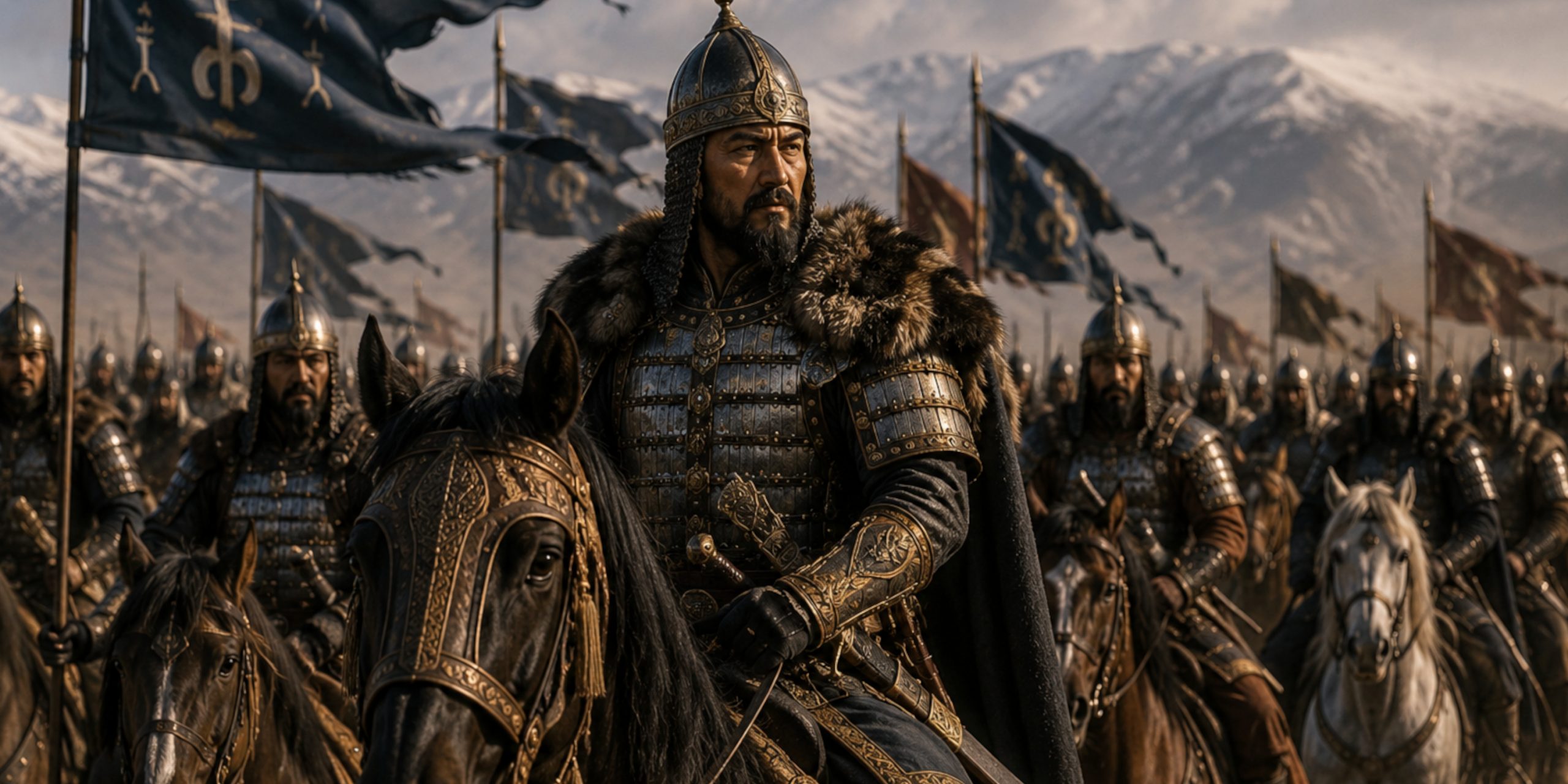
Few rulers changed the balance of medieval power as dramatically as Alp Arslan. His victory at Manzikert in 1071 did not instantly destroy the Byzantine Empire, despite what popular history sometimes claims after two cups of wine and a documentary soundtrack, but it cracked Byzantine authority in Anatolia so badly that recovery became painfully difficult. From that point onward, Turkish migration into Asia Minor accelerated, reshaping the region for centuries.
Alp Arslan himself remains oddly elusive. Unlike some medieval rulers who commissioned endless statues, triumphal arches, and self-congratulatory inscriptions, the Seljuk world left a lighter archaeological footprint. Much of what we know comes through Persian chroniclers, Byzantine writers, and later Islamic historians who viewed him through a mixture of admiration, fear, and political hindsight.
Even so, a surprisingly vivid figure emerges. Alp Arslan appears as disciplined, pragmatic, deeply religious, and absolutely relentless in war. He was not merely a raider king galloping across frontiers. He was a builder of imperial authority who helped transform the Seljuks from ambitious nomadic conquerors into rulers of a structured Islamic empire.
Who Was Alp Arslan?
Alp Arslan was born around 1029, the son of Chaghri Beg and nephew of Tughril Beg, founder of the Great Seljuk Empire. His name translates roughly as “Heroic Lion”, which, admittedly, sounds less like a medieval ruler and more like a terrifying tavern wrestler from central Anatolia.
He became Sultan of the Great Seljuk Empire in 1063 after a succession struggle. At the time, the Seljuks already controlled vast territories stretching across Persia and parts of Central Asia, but their hold over the Islamic world was still developing. Alp Arslan strengthened the empire militarily while also reinforcing Sunni Islamic authority under the Abbasid Caliphate.
His reign focused on several objectives:
- Securing internal Seljuk unity
- Crushing regional rivals
- Expanding influence into Armenia and Anatolia
- Containing Byzantine power
- Supporting Sunni orthodoxy against rival factions
He ruled alongside his famous vizier, Nizam al-Mulk, one of the great administrators of the medieval world. Their partnership mattered enormously. Alp Arslan conquered territory, while Nizam al-Mulk helped turn conquest into governance.
The Seljuk World Under Alp Arslan
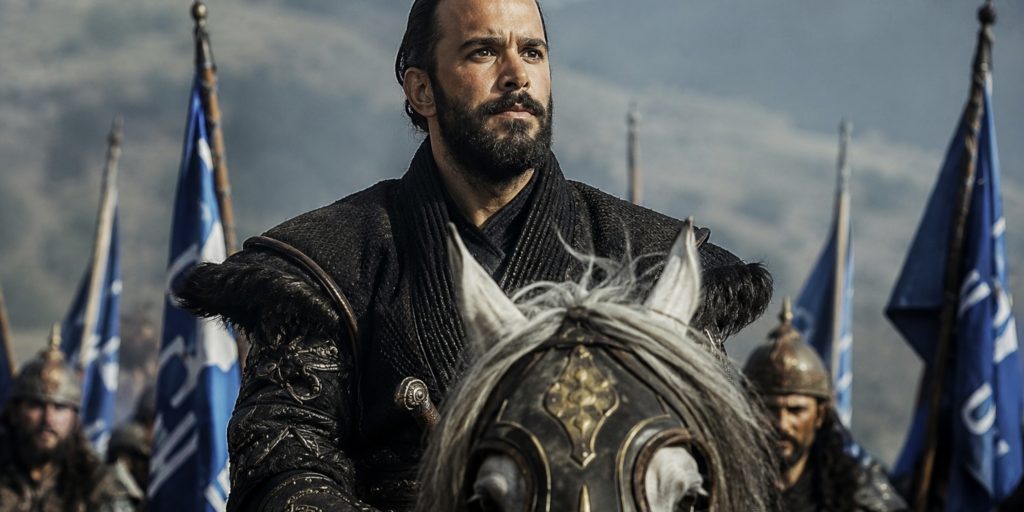
By the mid-11th century, the Seljuks had become the dominant military power of the eastern Islamic world. Their armies blended Turkic steppe warfare with Persian administrative sophistication.
The empire under Alp Arslan stretched across:
| Region | Status |
|---|---|
| Persia | Core Seljuk territory |
| Khorasan | Military heartland |
| Iraq | Under Seljuk influence |
| Armenia | Frequent campaign zone |
| Syria | Expanding influence |
| Anatolia | Increasingly contested frontier |
The Seljuk military system depended heavily on mounted archers and mobile cavalry warfare. This gave them extraordinary operational flexibility compared to the more rigid Byzantine field armies.
Alp Arslan understood mobility better than many of his contemporaries. He avoided wasteful frontal combat when manoeuvre could achieve the same result. Byzantine commanders repeatedly underestimated this.
A common medieval mistake, frankly.
Arms and Armour
Weapons of Alp Arslan’s Armies
Seljuk armies during Alp Arslan’s reign carried a blend of Turkic, Persian, and Islamic military equipment. Their greatest strength remained mounted warfare.
Common weapons included:
- Recurve composite bows
- Kilij-style curved sabres
- Straight double-edged swords
- Spears and lances
- Maces
- Axes
- Daggers
The composite bow was the deadliest weapon in Seljuk warfare. Lightweight, powerful, and devastating from horseback, it allowed mounted archers to exhaust heavier enemies before close combat began.
The early Turkic sabres used by Seljuk cavalry were evolving into forms that would later influence the kilij and other Islamic curved swords. Straight swords also remained common, especially among elite guards and Persianised troops.
Armour and Military Equipment
Seljuk warriors typically wore:
| Equipment | Description |
|---|---|
| Lamellar armour | Overlapping plates tied together |
| Mail shirts | Iron chain protection |
| Conical helmets | Often with nasal guards |
| Horse armour | Used for elite cavalry |
| Shields | Round or oval forms |
| Quilted padding | Worn beneath armour |
Elite mamluk and ghulam troops likely possessed the best equipment in the army. Wealthier commanders often carried finely decorated weapons with inscriptions and silver fittings.
Byzantine chroniclers frequently remarked on the speed of Seljuk cavalry. Their armour balanced protection with mobility, unlike some Byzantine cataphracts who resembled armoured wardrobes trying to cross difficult terrain.
Battles and Military Acumen
Early Campaigns
Before Manzikert, Alp Arslan campaigned extensively in Armenia and the Caucasus. These operations sharpened Seljuk battlefield coordination and expanded their frontier influence.
One major success came with the capture of Ani in 1064, the magnificent Armenian capital sometimes called the “City of 1001 Churches”.
The siege demonstrated:
- Strong logistical planning
- Effective siege warfare
- Psychological pressure tactics
- Coordinated cavalry operations
The fall of Ani shocked Christian powers across the region.
The Battle of Manzikert, 1071
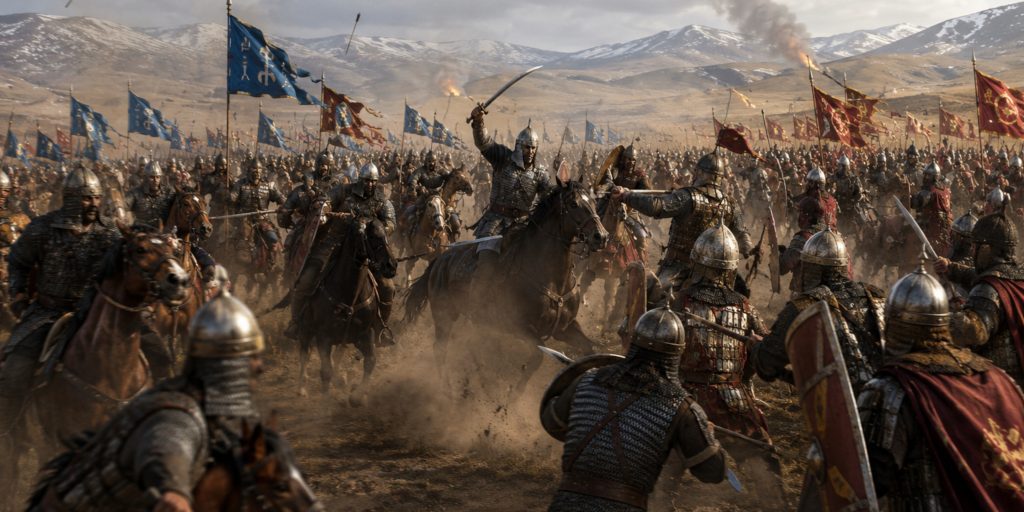
Manzikert remains Alp Arslan’s defining achievement.
The Byzantine Emperor Romanos IV Diogenes marched east with a large army intending to restore imperial authority in Anatolia. His force included Byzantine troops, mercenaries, Norman contingents, Pechenegs, Armenians, and others. Coordination was poor. Rivalries were everywhere. Some commanders openly disliked each other before the campaign even began, which is rarely ideal during an invasion.
Alp Arslan initially sought negotiation because he was campaigning elsewhere in Syria. When diplomacy failed, he moved rapidly north with remarkable speed.
Why Alp Arslan Won
Several factors shaped the Seljuk victory:
- Superior cavalry mobility
- Effective feigned retreats
- Constant mounted archery harassment
- Byzantine command fractures
- Exhaustion within the imperial army
- Flexible battlefield adaptation
The Seljuks avoided a static confrontation. Instead, they stretched Byzantine formations, harassed the flanks, and waited for confusion to spread.
When Romanos ordered withdrawal late in the day, parts of the Byzantine line misunderstood the movement. Disorder spread rapidly. Seljuk cavalry exploited the collapse.
Romanos IV was captured alive.
That moment became legendary.
Alp Arslan and Romanos IV
According to later tradition, Alp Arslan treated the defeated emperor with surprising restraint. One famous account records the Sultan asking Romanos what he would have done had their positions been reversed.
Romanos allegedly replied:
“Perhaps I would have killed you.”
Alp Arslan supposedly answered:
“My punishment is far heavier. I forgive you.”
Like many medieval quotations, the exact wording is difficult to verify. Chroniclers enjoyed dramatic dialogue almost as much as modern streaming writers. Still, the story reflects Alp Arslan’s enduring reputation for controlled authority rather than pointless cruelty.
Military Leadership Style
Alp Arslan’s military strengths included:
- Rapid strategic movement
- Flexible command structure
- Effective use of horse archers
- Psychological warfare
- Patience under pressure
- Political awareness after victory
He was not reckless. He understood timing exceptionally well. Unlike rulers who confused bravery with charging directly into spear walls, Alp Arslan preferred calculated battlefield control.
That distinction mattered enormously.
Personality and Reputation
Contemporary Islamic writers often described Alp Arslan as disciplined and devout. He cultivated the image of a Sunni warrior ruler while also maintaining practical political judgement.
Persian chroniclers admired:
- His simplicity in dress
- His generosity
- His military skill
- His respect for scholars
- His religious seriousness
There are recurring stories of him praying before battle in plain white garments, symbolically preparing for martyrdom if defeated. Whether every detail is factual hardly matters now. Medieval rulers understood symbolism perfectly well.
From a historian’s perspective, Alp Arslan stands out because he combined nomadic military traditions with imperial statecraft more effectively than many of his rivals. He did not merely conquer. He stabilised.
Death of Alp Arslan
Alp Arslan died in 1072 under unexpectedly grim circumstances.
While campaigning in Central Asia, he captured a fortress commander named Yusuf al-Kharezmi. During an audience, the prisoner attacked the Sultan with a concealed dagger.
Alp Arslan was mortally wounded.
Accounts suggest he regretted overconfidence moments before the attack, supposedly reflecting that he had underestimated a seemingly insignificant captive. Medieval chroniclers loved moral lessons, but the core event appears genuine.
He died shortly afterwards at around 42 years old.
His son Malik Shah succeeded him and expanded the empire further.
Archaeology and Historical Evidence
Archaeological evidence directly tied to Alp Arslan himself remains limited, though Seljuk material culture from his era survives across Iran, Turkey, and Central Asia.
Important areas connected to Seljuk archaeology include:
- Ani in modern Armenia
- Nishapur in Iran
- Rey near Tehran
- Merv in Turkmenistan
- Eastern Anatolia battle regions
Archaeologists have uncovered:
- Seljuk-era coins
- Ceramics
- Military equipment fragments
- Fortress remains
- Decorative inscriptions
- Architectural foundations
Recent archaeological work around Ani has revealed further details about fortifications, siege damage, and urban life during the Seljuk expansion period.
The battlefield of Manzikert itself remains difficult to conclusively identify in archaeological terms. Terrain changes, farming, and centuries of conflict have complicated research. Even so, scholars continue surveying likely locations around Malazgirt in eastern Turkey.
Artefacts and Where to See Them
No universally accepted personal artefacts of Alp Arslan survive with certainty, but many objects from the Seljuk world of his reign can still be viewed today.
Museums and Collections
| Museum | Location | Notable Material |
|---|---|---|
| Museum of Turkish and Islamic Arts | Istanbul | Seljuk weapons, manuscripts, ceramics |
| Topkapi Palace Museum | Istanbul | Islamic military artefacts and manuscripts |
| Tehran National Museum | Tehran | Seljuk-era material culture |
| Konya Karatay Museum | Konya | Seljuk decorative arts |
| Metropolitan Museum of Art | New York | Seljuk metalwork and arms |
| Louvre Museum | Paris | Islamic medieval artefacts |
Visitors can see:
- Seljuk helmets
- Mail armour fragments
- Ceremonial blades
- Coinage
- Calligraphic art
- Horse equipment
- Architectural carvings
Some surviving Seljuk swords and sabres reveal the transitional evolution of Turkic curved blades that later became iconic across the Islamic world.
Legacy
Alp Arslan’s victory at Manzikert transformed medieval history.
The consequences included:
- Expansion of Turkish settlement into Anatolia
- Weakening of Byzantine frontier control
- Greater Seljuk prestige
- Increased fragmentation within Byzantium
- Conditions that later contributed to the Crusades
It is tempting to describe Manzikert as the single moment Byzantium collapsed, but history is rarely that tidy. Empires usually decline through accumulation of failures rather than one dramatic afternoon. Still, Manzikert undeniably accelerated a crisis Byzantium struggled to contain.
Alp Arslan’s true achievement was broader than one battle. He helped establish the Seljuks as the dominant Sunni Islamic power of the 11th century and reshaped the political future of the Middle East and Anatolia.
That is an extraordinary legacy for a ruler whose reign lasted barely a decade.
Contemporary Quotes
Michael Attaleiates, Byzantine Historian
“The barbarians encircled the Romans like a cloud.”
Sibt ibn al-Jawzi
“Alp Arslan was brave, just, and devoted to the faith.”
Ibn al-Athir
“No king after the caliphs achieved what he achieved.”
Takeaway
Alp Arslan occupies a fascinating place in medieval history because he sits at the crossroads between worlds. He was a Turkic steppe commander, a Persian-style ruler, a Sunni Islamic champion, and the architect of one of Byzantium’s greatest military disasters.
He also feels unusually human in the chronicles. You see ambition, caution, piety, ruthlessness, intelligence, and occasional arrogance. Medieval rulers often become flattened into symbols over time. Alp Arslan still feels like a man making hard decisions in dangerous circumstances.
And perhaps that is why historians continue returning to him.
The “Heroic Lion” did not just win battles. He changed the shape of the medieval Near East.