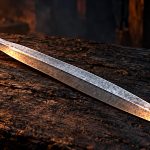
Long before knights, samurai, Vikings or Roman legionaries carried their famous blades, a group of metalworkers in ancient Anatolia created something extraordinary. Around 5,000 years ago, they produced weapons that looked beyond simple knives or daggers. These were long, carefully shaped blades designed with a new idea in mind.
The sword had arrived.
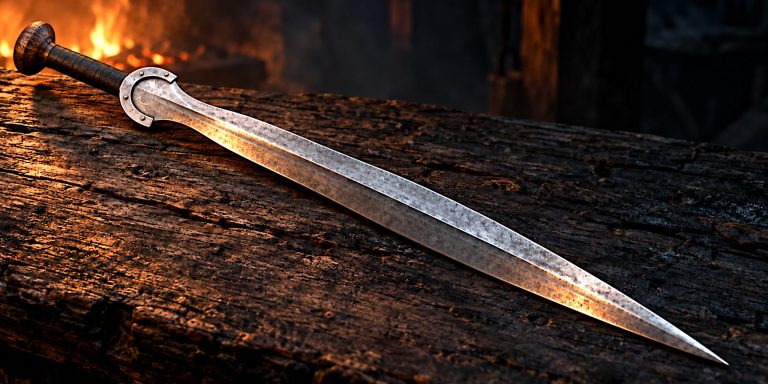
The Arslantepe swords, discovered in modern Turkey, are widely regarded as the oldest known swords found by archaeologists. Dating to roughly 3300 to 3000 BC, these remarkable weapons belong to a period when humans were experimenting with metal, cities were emerging, and warfare was becoming more organised.
They are not the gleaming steel masterpieces we imagine from later centuries. They are rougher, stranger and arguably more interesting. These blades represent the moment humanity looked at a piece of metal and thought, “What if we made this longer and significantly more intimidating?”
What Are The Arslantepe Swords?
The Arslantepe swords are a collection of nine ancient blades discovered at the archaeological site of Arslantepe, meaning “Lion Hill”, near modern Malatya in eastern Turkey.
They date from the Late Chalcolithic period, also known as the Copper Age.
Key details:
| Feature | Details |
|---|---|
| Date | Around 3300 to 3000 BC |
| Location | Arslantepe, Malatya, Turkey |
| Culture | Late Chalcolithic Anatolia |
| Material | Copper alloy containing arsenic |
| Number discovered | Nine swords |
| Length | Some examples around 45 to 60 cm |
| Current location | Malatya Museum, Turkey |
Their discovery challenged older assumptions that true swords appeared later during the Bronze Age.
These blades sit at a fascinating crossroads. They are advanced enough to be recognised as swords but still belong to an experimental age when metalworkers were learning what their materials could achieve.
The Discovery At Arslantepe
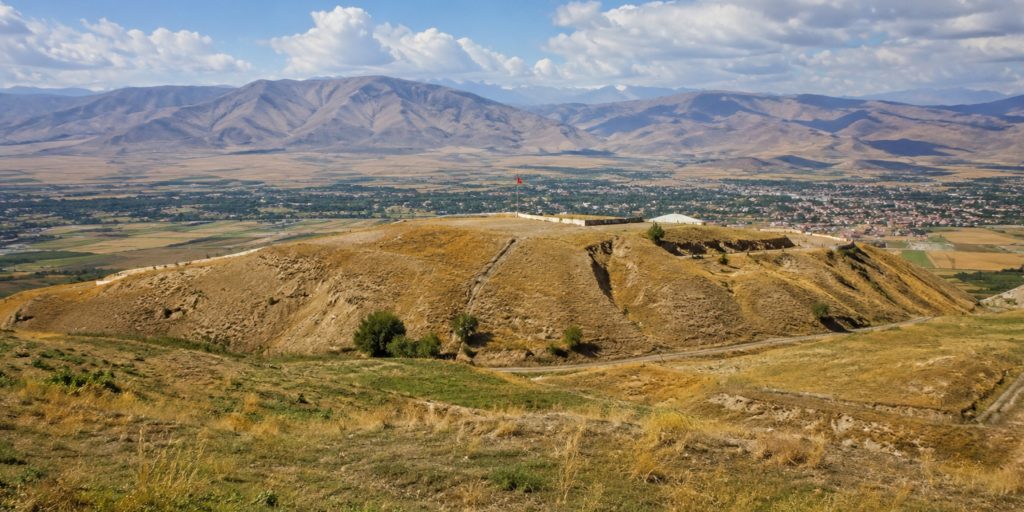
Arslantepe has been studied for decades by archaeologists, particularly Italian research teams investigating the development of early complex societies.
During excavations in the 1980s, archaeologists uncovered the swords inside a building complex associated with elite authority. The context of the find was almost as important as the weapons themselves.
They were not simply abandoned battlefield objects.
The blades were discovered in what appears to have been a centre of administration and power, suggesting they may have represented:
- Military authority
- Elite status
- Ceremonial power
- Control over advanced technology
In the Copper Age, owning a sword was probably less like owning a common weapon and more like owning the most impressive piece of technology anyone nearby had ever seen.
Why Are They Considered The World’s Oldest Swords?
The title of “oldest sword” is complicated because historians have to decide when a long dagger becomes a sword.
A knife is primarily a tool.
A dagger is a short weapon.
A sword is generally understood as a longer blade specifically developed for combat.
The Arslantepe examples are significant because their length, form and design suggest a deliberate move toward sword construction rather than simply enlarged knives.
They predate many famous ancient sword traditions, including:
| Sword Culture | Approximate Period |
| Arslantepe swords | c.3300 to 3000 BC |
| Early Bronze Age Aegean swords | c.2500 BC onwards |
| Egyptian bronze swords | c.2000 BC onwards |
| Mycenaean swords | c.1600 BC onwards |
The gap is enormous. The Arslantepe blades existed closer in time to the birth of urban civilisation than to the warriors of classical antiquity.
Design And Specifications
The Arslantepe swords were made using arsenical copper, an early metal alloy used before tin bronze became widespread.
Blade Features
Typical characteristics:
- Straight double edged blade
- Tapering point
- Integrated tang for attaching a grip
- Relatively narrow profile
- Cast metal construction
The design already contains ideas that would survive for thousands of years.
A Roman gladius, medieval arming sword and Bronze Age warrior blade all share the same basic problem these early smiths were trying to solve:
“How do you create a balanced piece of metal that can cut, thrust and survive impact?”
The Arslantepe craftsmen were asking that question before most of history had even been written.
Were The Arslantepe Swords Used In Battle?
This remains debated.
Some researchers believe they were functional weapons. Others suggest they were symbols of power.
There are reasons for both arguments.
Evidence For Practical Use
- They have recognisable fighting shapes
- The length gives advantages over knives and daggers
- Metal weapon development was increasing during this period
Evidence For Ceremonial Use
- Early copper alloys were softer than later bronze and iron
- Their elite archaeological context suggests prestige
- Decoration on some examples indicates status value
The truth may sit somewhere between the two. Throughout history, impressive weapons often served both purposes. A medieval noble’s sword could be deadly in battle and still announce wealth and rank.
Humans have always enjoyed making dangerous objects look unnecessarily beautiful.
The World Of The Sword Makers
The people who created the Arslantepe swords lived during a period of major transformation.
Communities were becoming larger and more organised. Wealth differences were increasing. Leaders, administrators and warrior elites were beginning to appear.
Important developments included:
- More advanced metallurgy
- Long distance trade networks
- Specialised craftspeople
- Centralised buildings and storage systems
- Growing competition between communities
The invention of the sword fits this changing world. It was not just a weapon. It was a sign that societies themselves were changing.
Comparison With Later Bronze Age Swords
The Arslantepe swords were revolutionary, but later sword makers improved the concept.
| Feature | Arslantepe Sword | Later Bronze Age Sword |
| Material | Arsenical copper | Tin bronze |
| Durability | Moderate | Stronger |
| Combat role | Emerging weapon type | Established battlefield weapon |
| Production | Rare elite objects | More widespread |
| Technology | Experimental | Mature metallurgy |
Later swords became stronger and more reliable, but Arslantepe provided the blueprint.
Where Can You See The Arslantepe Swords?
The original swords are held in the Malatya Museum in Turkey.
The wider Arslantepe archaeological site has also been recognised as a UNESCO World Heritage Site due to its importance in understanding early state formation and social organisation.
For anyone interested in ancient warfare, it is one of the most important places on earth. It captures a rare moment before the great warrior cultures of history, when the idea of the sword was still new.
Legacy: The Beginning Of A 5,000 Year Story
The Arslantepe swords are not famous because they were the sharpest, strongest or most beautiful weapons ever made.
They matter because they show the beginning.
From these early copper blades came a chain of innovation that eventually produced the bronze swords of Mycenaean warriors, the iron weapons of ancient armies, Viking blades, medieval longswords and countless other designs.
Every legendary sword has to start somewhere.
The first chapter may have been written at Arslantepe, where a Copper Age smith created something that changed warfare forever.