The story of Excalibur has survived for nearly a thousand years because it sits in that fascinating space where history and myth refuse to separate. Every generation has wanted to believe that somewhere beneath a Cornish cliff, inside a forgotten lake, or beneath an old abbey lies the sword of Britain’s greatest king.
As a historian, I rather enjoy disappointing people. There is no archaeological discovery that proves Excalibur existed. There is no museum label reading “Arthur’s Sword”. Yet the absence of proof has produced one of archaeology’s most intriguing detective stories.
What survives instead is a remarkable collection of early medieval sites, literary traditions, elite weapons and archaeological discoveries that reveal why the legend emerged and why it continues to feel strangely plausible.
The real story is, in many ways, more interesting than the myth.
At a Glance
| Topic | Evidence |
|---|---|
| Historical Arthur | Possible Romano-British war leader, unproven |
| Historical Excalibur | No confirmed archaeological evidence |
| Earliest literary source | Geoffrey of Monmouth, Historia Regum Britanniae (c.1136) |
| Most influential version | Sir Thomas Malory’s Le Morte d’Arthur (1485) |
| Strongest archaeological sites | Tintagel, South Cadbury, Glastonbury, Caerleon |
| Historical sword type | Late Roman or early medieval spatha |
Why Historians Still Take Arthur Seriously
Most medieval heroes can be comfortably placed into either history or mythology.
Arthur refuses to cooperate.
Unlike Robin Hood, Arthur appears surprisingly early in Welsh tradition. Unlike Beowulf, his stories became attached to real places across Britain. Unlike Alexander the Great, however, there are no contemporary records confirming his existence.
That awkward combination keeps historians interested.
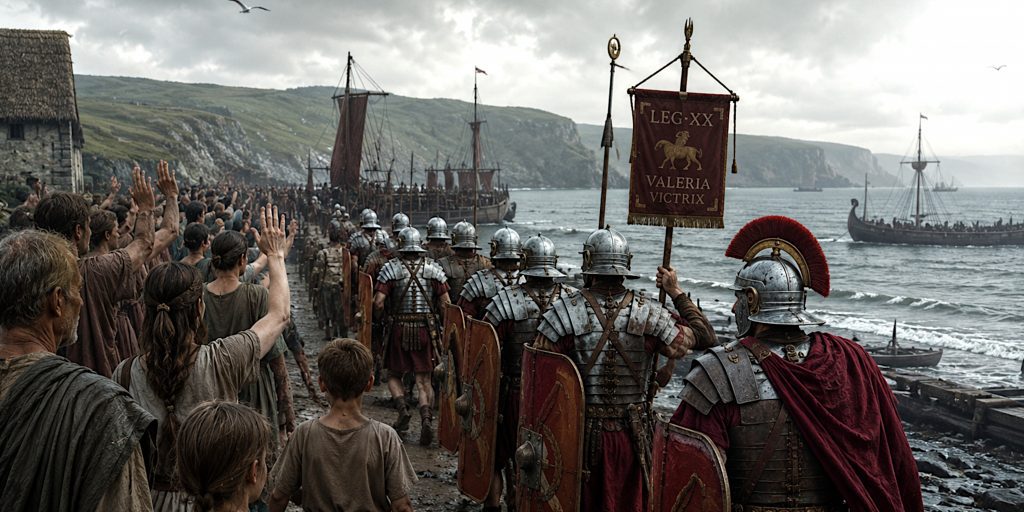
The period immediately after the Roman withdrawal from Britain during the early fifth century remains one of the least understood eras in British history. Written records are scarce, political authority fragmented and archaeology often provides only scattered clues.
If a successful British war leader emerged during this chaos, later generations could easily have transformed him into a legendary king.
That possibility is enough to keep excavations, debates and documentaries going.
The Earliest Sources for Excalibur
Arthur’s sword evolved considerably over the centuries.
The Welsh name k appears in early Welsh tradition. Geoffrey of Monmouth later Latinised the name into Caliburnus, while French romances eventually transformed it into Excalibur.
The sword itself changes as well.
Some traditions treat the Sword in the Stone and Excalibur as the same weapon. Others describe two entirely different swords, one proving Arthur’s right to rule and another bestowed by the Lady of the Lake. Even medieval writers could not entirely agree, which explains why modern adaptations are equally inconsistent.
Contemporary Medieval Quotes
Although Arthur’s lifetime, if historical, would have fallen centuries earlier, medieval chroniclers provide the earliest surviving descriptions.
Geoffrey of Monmouth wrote:
“Arthur himself took Caliburn, his excellent sword, which was forged in the Isle of Avalon.”
Writing in the late fifteenth century, Sir Thomas Malory described the return of Excalibur:
“Then there came an arm and a hand above the water and met it, and caught it.”
Neither author was recording eyewitness history. Both were preserving and reshaping traditions that had already circulated for centuries. Their works remain invaluable because they reveal how medieval Britain understood Arthur and kingship.
Was Excalibur Ever a Real Sword?
Probably not.
Could it have been inspired by a real sword?
Almost certainly.
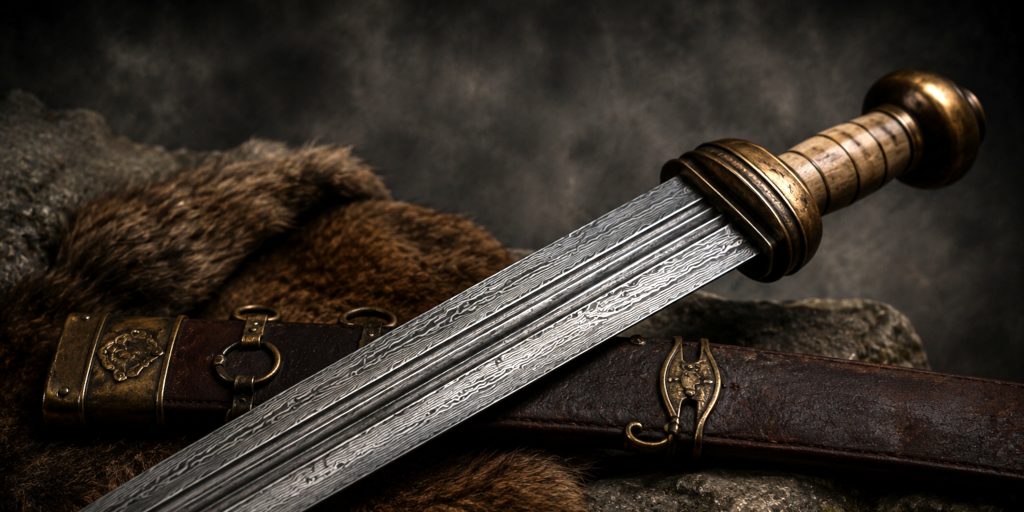
Elite weapons in fifth and sixth century Britain were extraordinary possessions. A finely forged blade required expensive materials, skilled smiths and extensive labour. Such swords became symbols of leadership, family prestige and military authority.
If Arthur was based upon a historical leader, his sword would likely have resembled a late Roman spatha rather than the enormous fantasy blades seen in modern films.
Typical characteristics included:
- Double-edged blade around 75 to 90 cm long
- Pattern welded iron construction
- Simple crossguard
- Organic grip of wood or bone
- Iron or bronze pommel
- Leather scabbard suspended from a baldric
There was nothing magical about these weapons.
They simply represented the finest military technology available in post-Roman Britain.
Archaeology That Keeps the Legend Alive
Tintagel, Cornwall

No location is more closely associated with Arthur than Tintagel.
Geoffrey of Monmouth identified it as Arthur’s birthplace, and archaeology has revealed something genuinely remarkable beneath the legend.
Excavations uncovered an extensive high status settlement dating to the fifth and sixth centuries, exactly the period traditionally associated with Arthur.
Luxury pottery from the eastern Mediterranean, imported wine amphorae and fine tableware demonstrate that Tintagel remained wealthy long after Roman Britain supposedly collapsed.
Perhaps the most famous discovery is the inscribed slate known as the Artognou Stone, found in 1998.
Despite enthusiastic headlines, it does not say “Arthur.”
It records the name Artognou, a different but linguistically related Celtic name. It demonstrates that important individuals occupied Tintagel during the correct period, but it does not identify Britain’s legendary king.
South Cadbury Castle

South Cadbury in Somerset has often been suggested as the strongest archaeological candidate for Camelot.
Excavations directed by Leslie Alcock during the 1960s revealed that the Iron Age hillfort underwent substantial refortification during the late fifth century.
Massive timber defences, imported Mediterranean goods and evidence of elite occupation suggest a powerful ruler controlled the site.
Whether that ruler happened to be Arthur remains unknown.
Even Alcock himself resisted making definitive claims.
Archaeology, unfortunately, rarely rewards wishful thinking.
Glastonbury Abbey
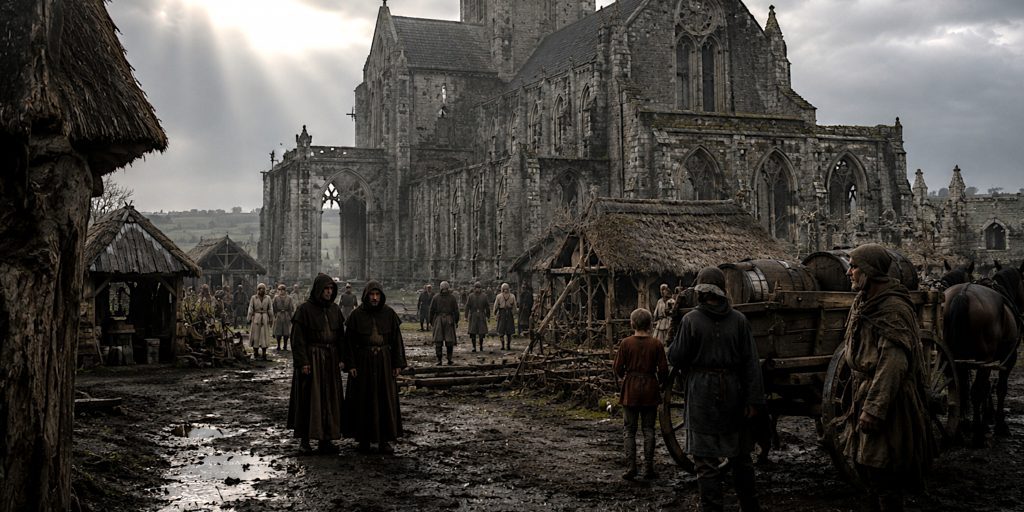
In 1191 the monks of Glastonbury announced an astonishing discovery.
They claimed to have uncovered the graves of King Arthur and Queen Guinevere beneath an ancient oak tree.
According to later accounts, a lead cross accompanied the burial bearing the inscription:
“Here lies buried the renowned King Arthur in the Isle of Avalon.”
Modern historians are deeply sceptical.
The abbey had recently suffered devastating fire damage and desperately needed wealthy pilgrims.
Finding Britain’s greatest king at precisely the right financial moment has always seemed remarkably convenient.
The original cross has long since disappeared, leaving only later descriptions.
Caerleon, Wales
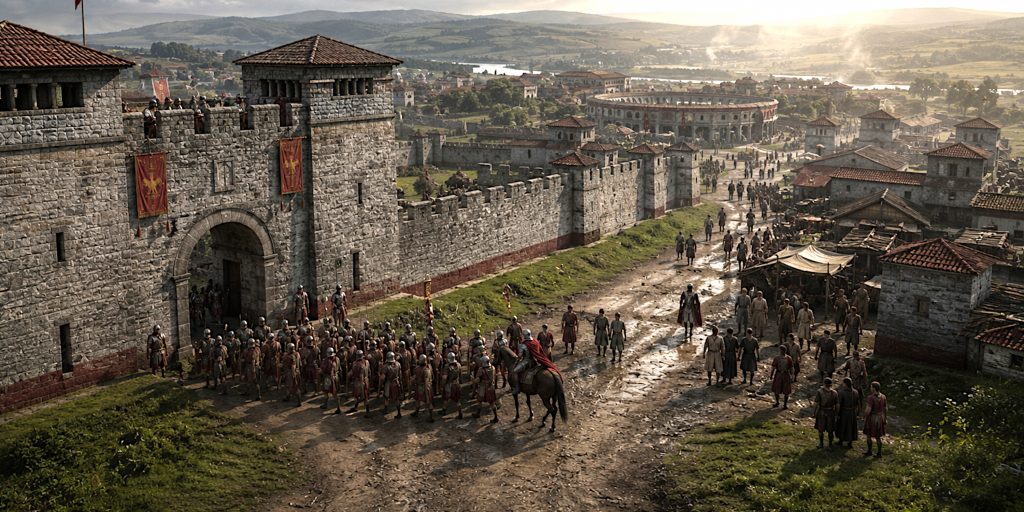
Caerleon possesses one of Britain’s finest surviving Roman fortresses.
Its impressive amphitheatre inspired later generations to identify it with Arthur’s Round Table.
The archaeology demonstrates that Caerleon was unquestionably an important Roman military centre.
Whether Arthur ever held court there remains entirely speculative.
The Lady of the Lake and Celtic Water Rituals

One part of the legend often dismissed as pure fantasy actually possesses surprisingly deep archaeological roots.
Across Iron Age Europe, warriors deposited swords, spears and shields into rivers, lakes and marshes as ritual offerings.
Hundreds of weapons have been recovered from sacred waters throughout Britain and continental Europe.
The famous Iron Age finds from the River Thames demonstrate that water held profound religious significance long before Arthurian legend developed.
The Lady of the Lake may therefore preserve a distant cultural memory of ancient Celtic beliefs surrounding sacred waters and divine gifts.
The story became magical.
Its origins may have been religious.
Archaeological Discoveries That Echo Excalibur
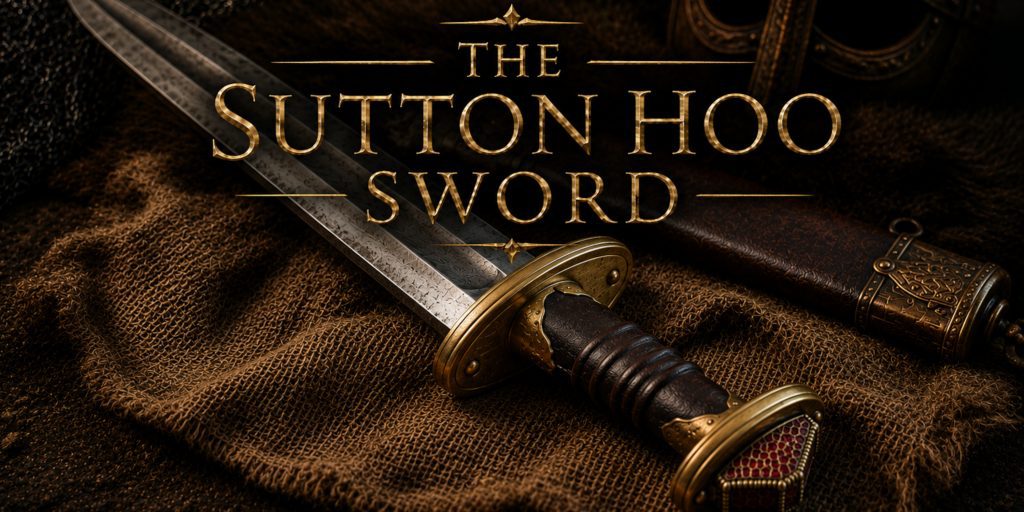
No sword has ever been identified as Excalibur, but several discoveries illustrate what an elite weapon from Britain’s early medieval world could have looked like.
| Discovery | Why It Matters |
|---|---|
| Sutton Hoo sword | Superb craftsmanship demonstrating elite Anglo-Saxon weapons |
| Staffordshire Hoard | Rich collection of decorated sword fittings and military equipment |
| Late Roman spathae | Closest historical parallels for a possible Arthurian sword |
| River Thames weapon deposits | Evidence for ritual deposition of swords in water |
These finds remind us that exceptional swords genuinely existed.
The supernatural elements arrived later.
What Archaeology Cannot Tell Us
Modern archaeology is extraordinarily powerful.
It can identify settlements, reconstruct trade routes, analyse ancient DNA and determine how weapons were forged.
What it cannot do is prove that a named legendary individual carried a particular sword fifteen centuries ago.
The historical Arthur, if he existed, may never be identifiable through archaeology alone.
That uncertainty is frustrating.
It is also what makes Arthurian studies so endlessly fascinating.
Why Excalibur Endures
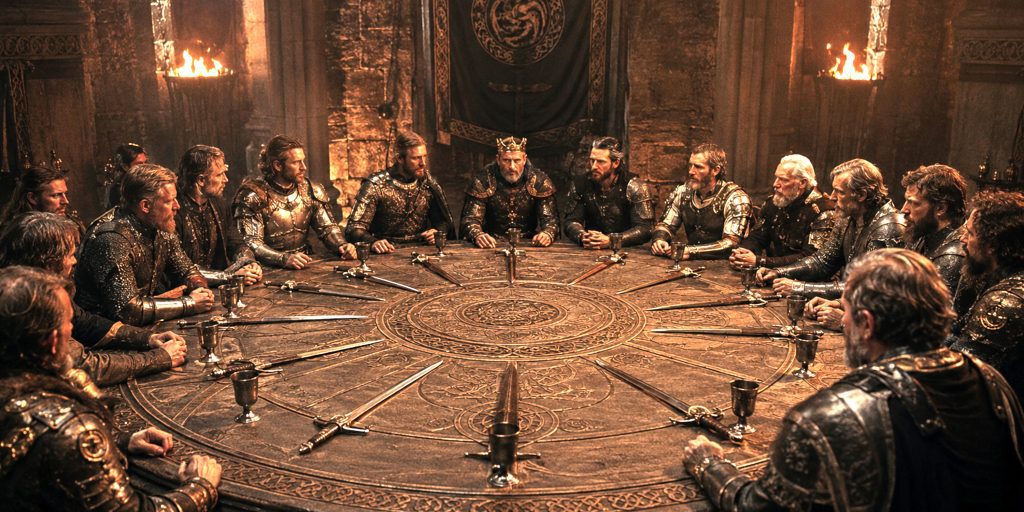
Excalibur was never simply a weapon.
It represented legitimate kingship, moral authority and the burden of leadership.
The sword appears, disappears and ultimately returns to the lake because it belongs to Britain rather than to Arthur himself.
That symbolism has allowed the legend to survive every historical challenge.
Each new excavation at Tintagel, each discovery of an early medieval sword and every fresh archaeological survey briefly revives the question.
Could this finally be connected to Arthur?
The answer, so far, remains no.
Yet archaeology has achieved something almost as remarkable.
It has revealed that behind one of Europe’s greatest legends lies a very real Britain filled with ambitious rulers, magnificent weapons and societies rebuilding themselves after the fall of Rome. That world needed only a little imagination for Arthur and Excalibur to emerge.
History supplied the stage.
Legend wrote the script.
Frequently Asked Questions
Has Excalibur ever been found?
No. No archaeological discovery has been accepted by historians as the real Excalibur.
Did King Arthur exist?
There is no definitive proof. Many historians believe Arthur may represent one or more Romano-British military leaders active during the fifth or sixth century.
Where is Camelot thought to be?
Leading candidates include South Cadbury, Tintagel, Caerleon and several other high status post-Roman sites. None has been conclusively identified.
What type of sword would a historical Arthur have carried?
Most likely a late Roman or early medieval spatha rather than the oversized medieval longswords often shown in films.
Is the Sword in the Stone the same as Excalibur?
It depends on the source. Some medieval texts treat them as separate weapons, while others use different names for the same sword.