Robert the Bruce at a Glance
| Detail | Information |
|---|---|
| Full name | Robert Bruce (Robert I of Scotland) |
| Born | 11 July 1274 |
| Died | 7 June 1329 |
| Reigned | 1306 to 1329 |
| Coronation | Scone Abbey |
| Dynasty | House of Bruce |
| Famous for | Winning Scottish independence and victory at Bannockburn |
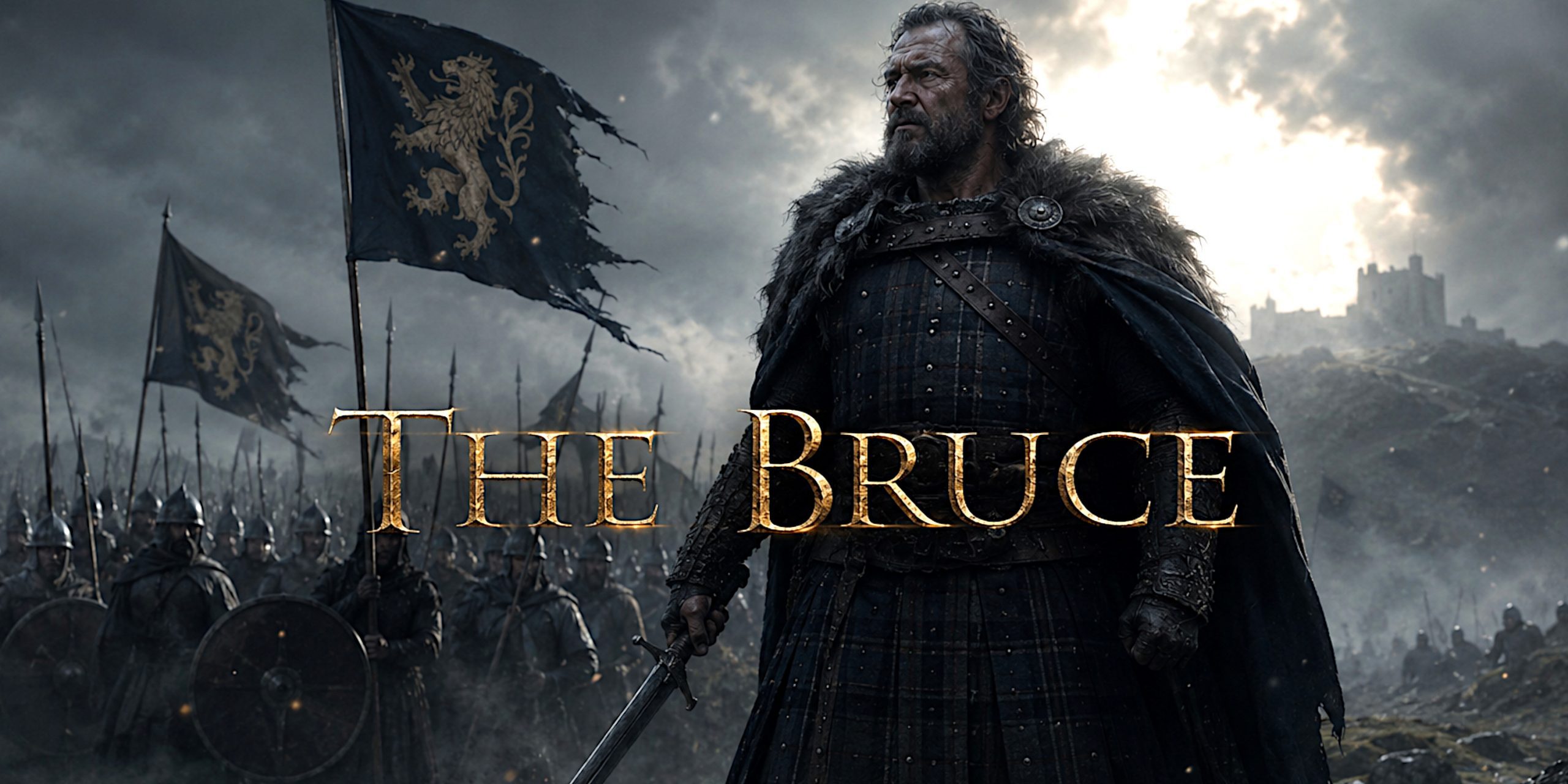
Few rulers have shaped Scotland quite like Robert the Bruce. His name is inseparable from independence, perseverance and one of medieval Europe’s most famous victories. Yet the real man was far more complicated than the national hero often portrayed in films.
Bruce changed allegiances during a turbulent political crisis, killed a rival inside a church, spent years on the run and rebuilt his fortunes from almost nothing. He was neither flawless nor universally admired, but he possessed a rare combination of determination, political instinct and military judgement.
As a historian, I have always found Bruce more fascinating than the polished legend. Medieval kings were rarely uncomplicated. Bruce certainly was not. His story is one of difficult decisions, calculated risks and remarkable resilience.
Early Life and Family
Robert Bruce was born on 11 July 1274 into one of Scotland’s most influential noble families. His ancestors had Norman roots, but over generations the Bruces became firmly established within Scottish politics and society.
His grandfather had been one of the principal claimants to the Scottish throne during the succession crisis that followed the death of King Alexander III. Although the crown ultimately went to John Balliol, the Bruce family never abandoned their belief that they possessed a legitimate claim.
Bruce grew up in a world where loyalty was rarely straightforward. Noble families often held lands in both Scotland and England, meaning they owed obligations to more than one king. Modern readers sometimes criticise Bruce for changing sides, but medieval politics was seldom black and white. Survival often depended upon knowing when to compromise and when to resist.
The Road to the Scottish Throne
The Scottish Wars of Independence transformed Bruce’s ambitions into reality.
Initially, he acknowledged Edward I of England, while also maintaining his own claim to the Scottish crown. Tensions between supporters of the Bruce and Comyn families continued to grow until they finally erupted in 1306.
The defining moment came inside Greyfriars Church in Dumfries, where Bruce confronted his rival, John Comyn. During the meeting Comyn was fatally stabbed. Whether the killing was carefully planned or the result of a confrontation that spiralled out of control remains debated, but the consequences were immediate.
Killing a political rival inside a church horrified many contemporaries. Bruce was excommunicated, yet he moved with remarkable speed. Within weeks he travelled to Scone and was crowned King Robert I of Scotland.
His triumph was short-lived.
Edward I responded with overwhelming force. Bruce suffered defeat at the Battle of Methven, many supporters were executed and members of his family were imprisoned. For a time, Scotland’s newly crowned king became a fugitive with little more than a handful of loyal followers.
The famous story of Bruce watching a spider repeatedly rebuild its web during this period has become part of Scottish folklore. It is a charming tale, although historians generally regard it as a later legend rather than a contemporary account. Medieval kings, it seems, rarely escaped the temptation of acquiring inspirational wildlife.
Rebuilding a Kingdom
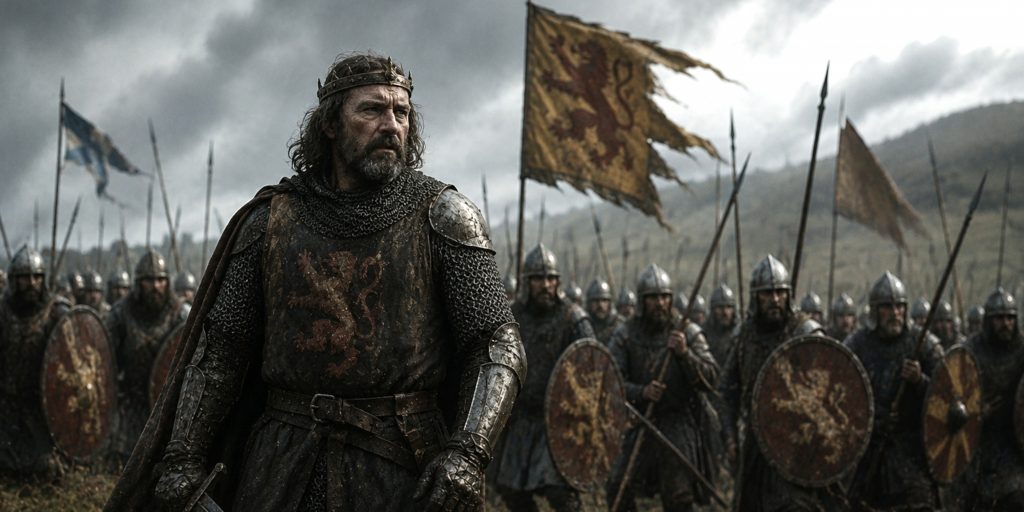
Bruce’s recovery was built on patience rather than spectacular victories.
Instead of seeking large battles against stronger English armies, he adopted fast-moving campaigns that targeted isolated garrisons and castles. Strongholds were captured, slighted to prevent their reuse, and English authority gradually weakened across Scotland.
His victory at Loudoun Hill in 1307 demonstrated how carefully chosen terrain could neutralise a larger force. Over the following years Bruce defeated rival Scottish nobles loyal to the Comyn faction, bringing much of the kingdom under his control.
By 1314 he was ready to confront England directly.
The Battle of Bannockburn
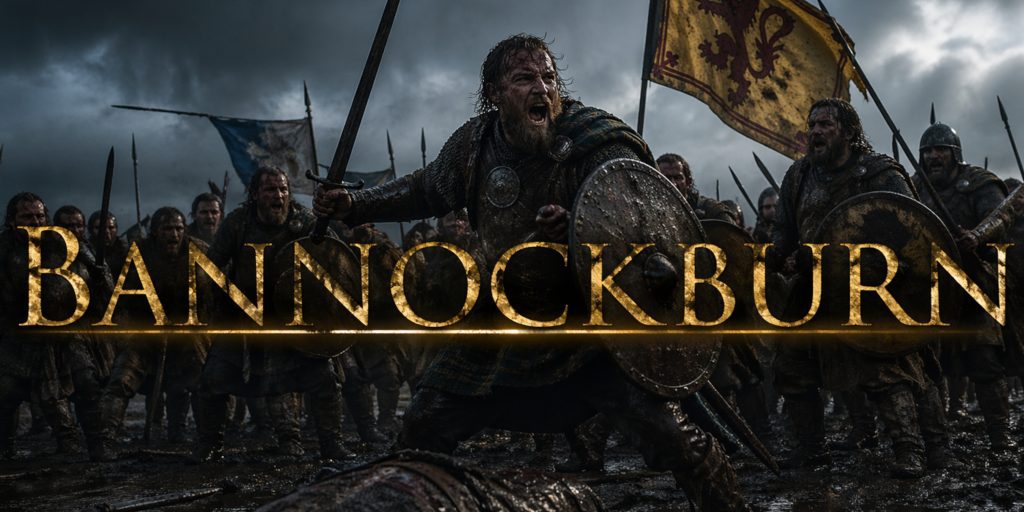
The Battle of Bannockburn remains Bruce’s greatest military achievement.
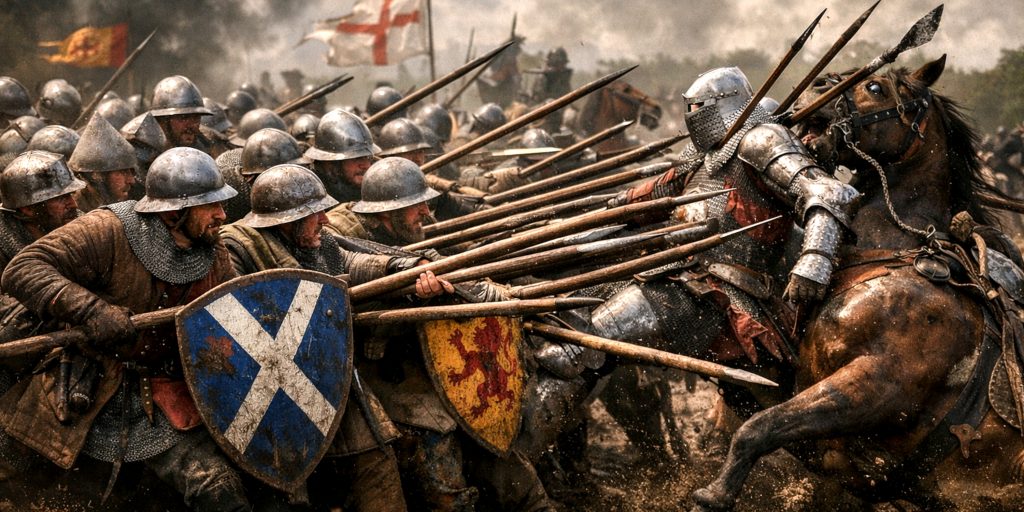
Edward II marched north with a large army to relieve the English garrison at Stirling Castle. Although Bruce commanded fewer men, he selected ground that limited the effectiveness of England’s greatest strength, its heavily armoured cavalry.
The Scots fought primarily in tightly packed schiltrons, disciplined formations of spearmen capable of resisting mounted attacks. Marshy ground and narrow approaches forced the English into congestion, preventing them from deploying effectively.
One of the battle’s most memorable episodes occurred before the main fighting, when the English knight Sir Henry de Bohun charged directly at Bruce. Armed only with a battle axe, Bruce calmly waited until the last possible moment before sidestepping the attack and delivering a fatal blow that split de Bohun’s helmet.
It was an extraordinary display of confidence. His followers reportedly admired the feat. Bruce himself is said to have been more concerned that the shaft of his axe had broken.
After two days of fighting, the English army collapsed into retreat. Bannockburn did not end the war immediately, but it transformed Scotland’s position and established Bruce as one of the outstanding military commanders of his age.
Arms and Armour
As a king and experienced knight, Robert the Bruce would have fought with equipment typical of the early fourteenth century.
| Equipment | Details |
| Sword | Knightly arming sword, with longer blades becoming increasingly common |
| Secondary weapon | One-handed battle axe or mace |
| Dagger | Rondel dagger |
| Helmet | Great helm or early bascinet |
| Armour | Riveted mail reinforced with emerging plate armour |
| Shield | Heater shield bearing royal arms |
Most Scottish infantry could not afford such equipment. They relied on long spears, axes, knives and simple padded garments or mail where available. At Bannockburn, discipline and tactical organisation proved far more valuable than expensive armour.
King, Diplomat and Statesman
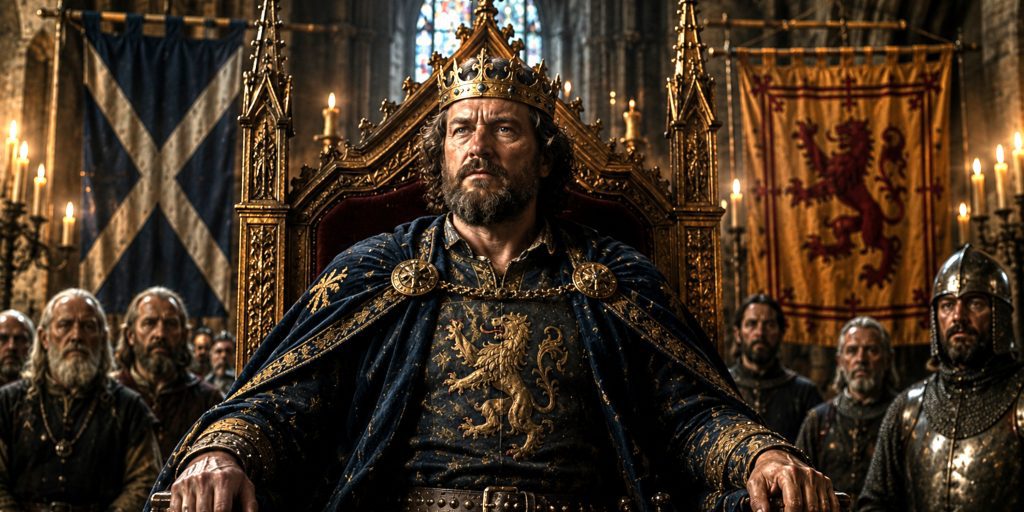
Bruce understood that military success alone would not secure Scotland’s future.
In 1320 Scottish nobles addressed the famous Declaration of Arbroath to Pope John XXII, defending Scotland’s independence and Bruce’s legitimacy as king. It remains one of the most celebrated political documents of medieval Europe.
Eight years later, the Treaty of Edinburgh and Northampton formally recognised Scotland as an independent kingdom and accepted Bruce as its lawful ruler.
After years of warfare, Bruce focused on restoring royal authority, strengthening government and rewarding those who had remained loyal during the struggle.
Death and Legacy
Robert the Bruce died on 7 June 1329, probably after suffering from a prolonged illness. Earlier writers often claimed he had leprosy, although modern historians question that diagnosis.
He was buried at Dunfermline Abbey with full royal honours. His heart, fulfilling his final wish, was carried towards the Holy Land by Sir James Douglas. Douglas never reached Jerusalem, dying instead during a campaign in Spain. Bruce’s heart was eventually returned to Scotland and buried at Melrose Abbey.
Today Bruce stands as one of Scotland’s defining historical figures. William Wallace inspired resistance, but Bruce secured lasting independence through a combination of military success, political judgement and relentless determination.
His legacy rests not simply on Bannockburn, remarkable though that victory was, but on his ability to rebuild a fractured kingdom when defeat seemed almost inevitable. History tends to celebrate dramatic victories. Bruce reminds us that persistence is often just as decisive.
Timeline
| Year | Event |
| 1274 | Robert Bruce is born |
| 1292 | John Balliol becomes King of Scotland |
| 1306 | Bruce kills John Comyn and is crowned king |
| 1306 | Defeated at Methven and forced into hiding |
| 1307 | Victory at Loudoun Hill |
| 1314 | Wins the Battle of Bannockburn |
| 1320 | Declaration of Arbroath sent to the Pope |
| 1328 | Scotland recognised as independent |
| 1329 | Death of Robert the Bruce |
Places to Visit
| Site | Why It Matters |
| Bannockburn | Battlefield and award-winning visitor centre |
| Dunfermline Abbey | Bruce’s burial place |
| Melrose Abbey | Burial site of Bruce’s heart |
| Scone Palace | Traditional coronation site of Scottish kings |
| Arbroath Abbey | Birthplace of the Declaration of Arbroath |
Frequently Asked Questions
Did Robert the Bruce really kill John Comyn?
Yes. Contemporary sources agree that Bruce killed his political rival at Greyfriars Church in Dumfries in 1306, although the precise sequence of events differs between accounts.
Was the spider story true?
Probably not. The tale first appears long after Bruce’s lifetime and is generally regarded as folklore rather than established history.
What weapon did Robert the Bruce use?
Bruce almost certainly fought with an arming sword, lance and battle axe. His famous duel with Henry de Bohun at Bannockburn was fought using a one-handed axe.
Why was Bannockburn so important?
The victory secured Bruce’s authority, destroyed English hopes of quickly reconquering Scotland and paved the way for international recognition of Scottish independence.
Where is Robert the Bruce buried?
His body rests at Dunfermline Abbey in Fife, while his heart was buried separately at Melrose Abbey in the Scottish Borders.