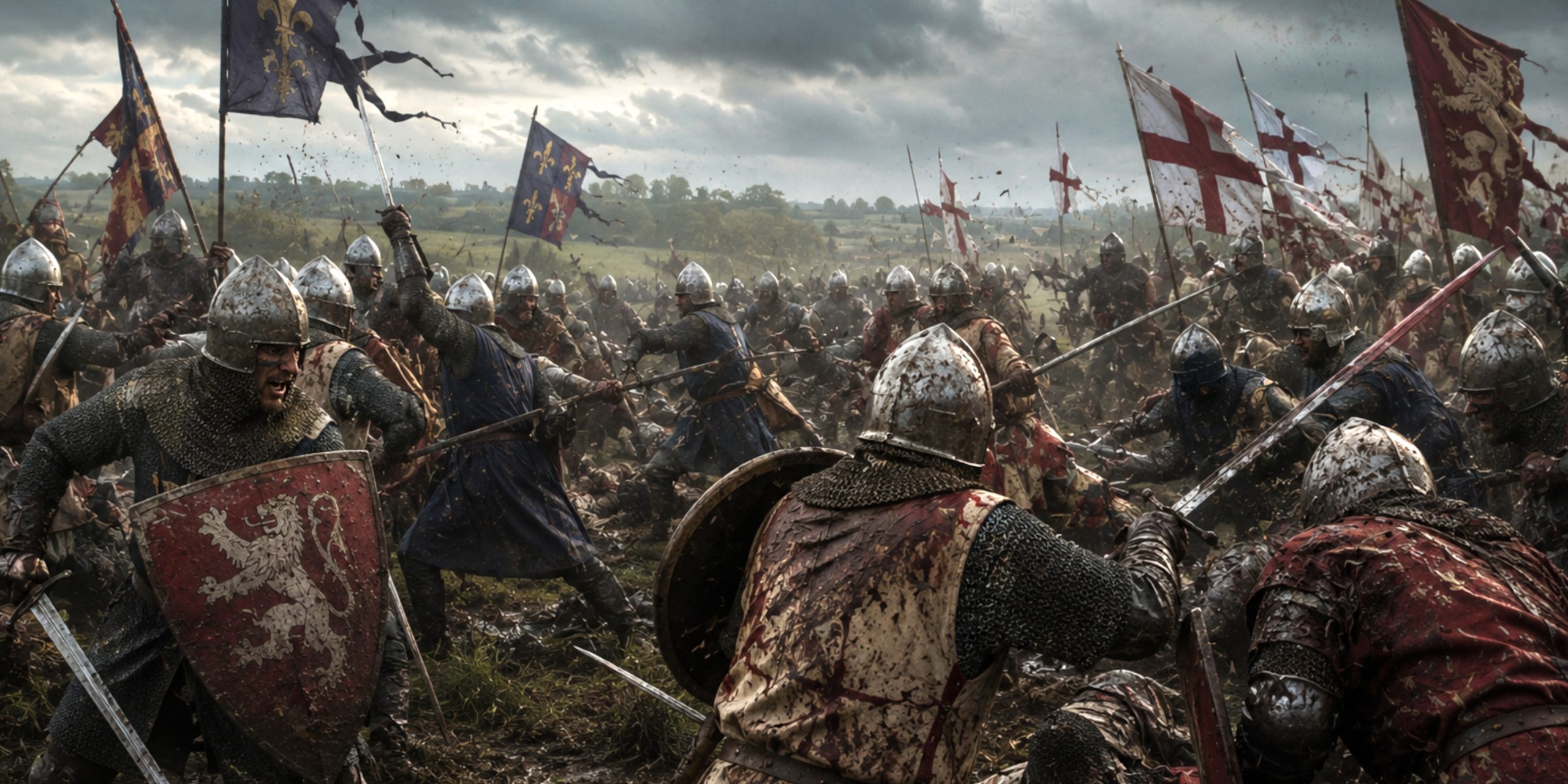
Few places in history were less forgiving than a medieval battlefield. Swords hacked, axes crushed, arrows darkened the sky and spears struck with terrifying force. Medical care was primitive by modern standards, infection was a constant threat and even a relatively small wound could become fatal days later.
Yet history repeatedly surprises us. Contemporary chronicles, archaeological evidence and remarkable individual cases reveal that some warriors endured injuries that seem almost impossible to survive. A combination of armour, adrenaline, luck and astonishing determination sometimes carried a wounded fighter through the battle and, on occasion, through a full recovery.
Not every dramatic story should be accepted without question. Medieval chroniclers had a habit of polishing the reputations of kings and heroes. Even so, enough well documented examples remain to show that the human body can withstand extraordinary punishment.
Arrow or Crossbow Bolt to the Face
The Injury
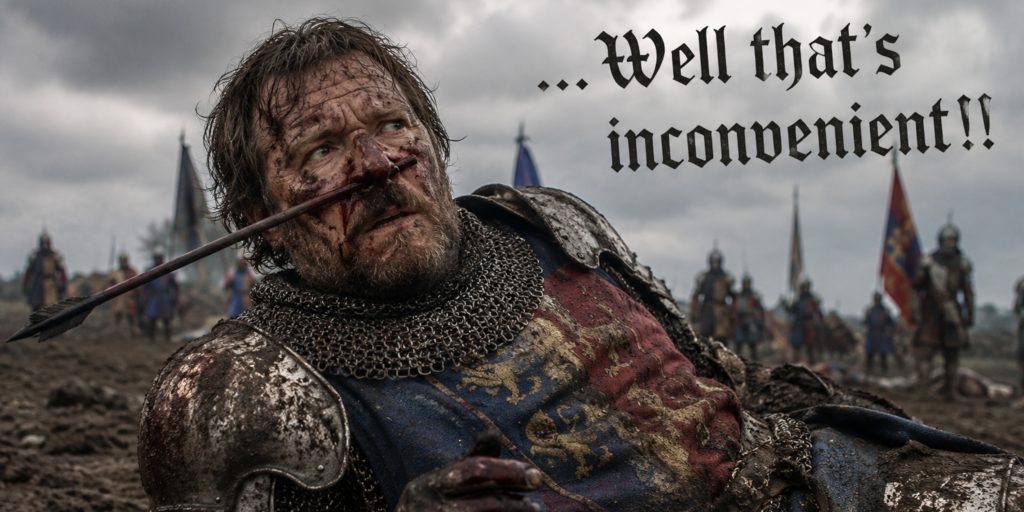
Facial wounds were surprisingly survivable if the projectile avoided the brain, major blood vessels and upper spinal cord. Mail coifs, visors and helmets could also reduce the force of impact, causing an arrow to glance or lodge rather than penetrate deeply.
Perhaps the best known example is King Henry V at the Battle of Shrewsbury in 1403. An arrow struck him in the face and became embedded near his nose and cheekbone. The wound looked catastrophic, yet the prince survived.
Royal surgeon John Bradmore later devised an ingenious extraction tool to remove the arrowhead without causing further damage. Henry recovered fully and would later become one of England’s most famous warrior kings.
Could They Keep Fighting?
Sometimes.
Adrenaline alone could keep a wounded man in the fight far longer than anyone might expect. Chroniclers describe knights continuing to swing swords, issue orders or withdraw under their own power despite arrows protruding from their faces. Recovery afterwards was far from guaranteed, but survival was certainly possible.
Fractured Skulls from Swords, Axes and Maces
The Injury
Helmets dramatically improved a warrior’s chances, but they could not eliminate the force of a heavy blow. A sword edge, axe or mace might crack the skull without fully penetrating it, producing fractures that were severe but not immediately fatal.
Archaeological discoveries from medieval battlefields and cemeteries have revealed healed skull fractures, proving that many men lived long after sustaining serious head injuries.
Could They Keep Fighting?
Occasionally.
Some undoubtedly continued fighting for minutes before dizziness, blood loss or concussion caught up with them. Others survived the battle only to die days later from swelling or infection.
Modern archaeology reminds us that a cracked skull was not automatically a death sentence. The real danger often arrived afterwards.
Losing Fingers or Hands
The Injury
Hands were constantly exposed during combat. Even with gauntlets, fingers could be severed by swords or crushed by heavy weapons. Archers faced additional risks while drawing powerful war bows.
Skeletons recovered from medieval sites frequently display healed amputations and damaged finger bones.
Could They Keep Fighting?
Surprisingly often.
A swordsman might switch hands or rely on a secondary weapon. Others withdrew while comrades covered them. Although permanently disabling, these injuries were often survivable if bleeding could be controlled.
One suspects many veterans later became remarkably enthusiastic about reminding younger recruits to keep their hands where the sharp bits were not.
Deep Abdominal Wounds
The Injury
A slash across the abdomen or a spear thrust into the stomach was among the most feared battlefield injuries. If the intestines were damaged or exposed, infection became almost inevitable.
Even so, not every abdominal wound proved instantly fatal.
Could They Keep Fighting?
Rarely.
Historical sources describe wounded men remaining conscious long enough to retreat or seek treatment. A few survived for weeks or months, particularly if the injury avoided major organs and received prompt care.
These cases were exceptional rather than typical.
Impalement by Spears and Lances
The Injury
A spear passing through the torso appears hopeless, yet survival depended entirely on the path it took. If the weapon missed the heart, liver and major blood vessels, there was at least a chance.
Several medieval and early modern accounts describe soldiers walking, speaking or even riding after being pierced by a spear.
Could They Keep Fighting?
Briefly.
Shock can delay the full effects of traumatic injury. Some men remained active long enough to escape immediate danger before collapsing from blood loss or internal damage.
Burns from Greek Fire
The Injury
The Byzantine Empire’s infamous Greek Fire remains one of history’s most terrifying weapons. The substance clung to clothing, ships and skin while continuing to burn.
Victims suffered severe thermal injuries and overwhelming psychological shock.
Could They Keep Moving?
For a short time.
Some escaped the flames and continued running or fighting before pain, exhaustion or their injuries overwhelmed them. Those with extensive burns rarely survived for long, but escape from the initial attack was not impossible.
Shattered Bones from Blunt Weapons
The Injury
War hammers, maces and polearms were designed to defeat armour by transferring tremendous force through metal. Limbs could be broken without the skin being cut.
Excavated skeletons from medieval conflicts frequently show healed fractures to arms, legs and ribs.
Could They Keep Fighting?
Sometimes.
Broken arms ended a warrior’s offensive ability, but fractured legs did not always prevent escape. Comrades could support an injured man, while splints and bandaging offered surprisingly effective stabilisation once the fighting stopped.
Neck Wounds
The Injury
The neck contains vital arteries, veins and the airway, but not every strike reached them. A glancing cut might produce dramatic bleeding without immediately becoming fatal.
Mail standards and padded collars also offered more protection than many people realise.
Could They Keep Fighting?
Occasionally.
If the major blood vessels remained intact, a determined warrior might survive long enough to retreat. Applying pressure to the wound could slow bleeding until treatment became available.
Luck, once again, played an uncomfortable role.
How Medieval Medicine Improved Survival
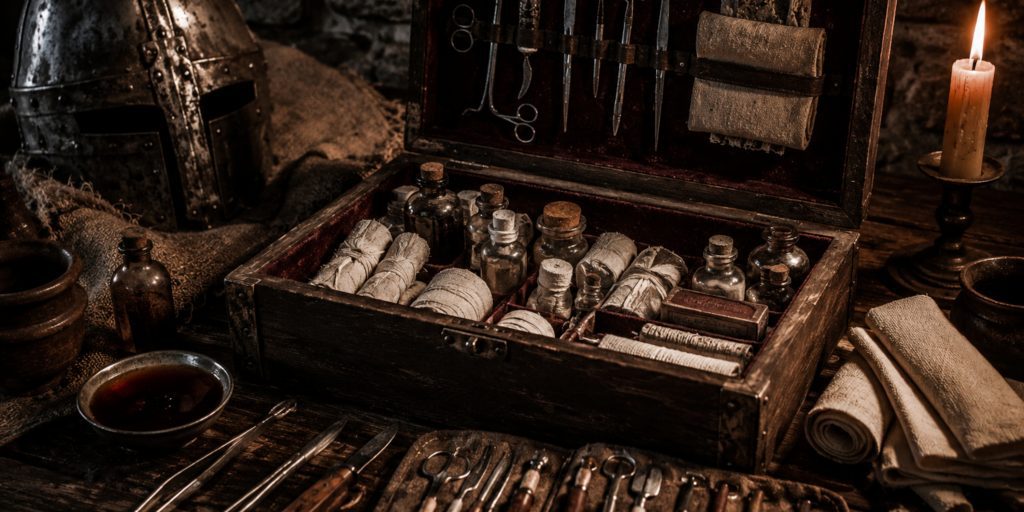
The popular image of medieval medicine often swings too far towards incompetence. While physicians lacked antibiotics and anaesthetics, experienced battlefield surgeons understood more than they are sometimes given credit for.
Treatment commonly included cleaning wounds with wine or vinegar, removing broken arrowheads, stitching cuts, applying herbal dressings and immobilising fractures. Monastic hospitals and military religious orders also developed practical experience in treating combat injuries.
Survival depended less on the sophistication of the treatment than on avoiding catastrophic blood loss and preventing infection during the following days.
Why Some Warriors Survived the Impossible
Several factors repeatedly appear in historical accounts.
Quality armour reduced the force of otherwise fatal blows.
Adrenaline temporarily masked pain and allowed wounded soldiers to keep functioning.
Physical conditioning gave experienced warriors remarkable resilience under stress.
Rapid treatment improved the chances of surviving otherwise dangerous injuries.
Pure luck remained the greatest factor of all. A wound that missed a major artery by a few millimetres could mean the difference between recovery and death.
What Archaeology Reveals
Some of the strongest evidence comes not from chronicles but from excavated skeletons.
Archaeologists have identified healed sword cuts across skulls, repaired fractures in arms and legs, partially healed facial injuries and evidence of amputations where the individual lived for years afterwards.
These remains demonstrate that medieval people could recover from astonishing trauma. They also remind us that battlefield survival did not necessarily mean living without lasting consequences. Chronic pain, disability and reduced mobility were probably common companions for many veterans.
Takeaway
It is easy to imagine medieval battles as contests where every serious wound meant instant death. The reality was rather more complicated. While thousands certainly died from injuries that modern medicine could now treat, others displayed extraordinary resilience in circumstances that seem almost unbelievable today.
From Henry V surviving an arrow buried deep in his face to archaeological evidence of healed skull fractures and amputations, the historical record paints a picture of remarkable endurance. Medieval warriors were not invincible, far from it, but they were often tougher than popular culture gives them credit for.
Would most of us have simply walked off these injuries? Almost certainly not. Then again, most of us have the luxury of never finding out.