Khazid’hea is one of those fantasy swords that makes ownership sound like a dangerously optimistic concept. Better known as Cutter, it is a sentient longsword from the Forgotten Realms, best known through R. A. Salvatore’s Legend of Drizzt novels. It can slice through armour, bone and even stone, but its sharpest feature is arguably its personality.
The sword wants to be carried by the greatest warrior it can find. It studies potential wielders, reshapes its hilt to appeal to them and exerts mental pressure when persuasion fails. Khazid’hea does not see itself as equipment. It sees warriors as applicants.
Its story is closely tied to Dantrag Baenre, Drizzt Do’Urden, Catti-brie and the wars surrounding Mithral Hall. Yet Cutter is more than a prestigious weapon passed between famous hands. It is ambitious, vain, predatory and capable of ruining anyone who mistakes raw courage for strength of will.
Spoiler warning: This article discusses events from several Legend of Drizzt novels, including Starless Night, The Two Swords and The Orc King.
Khazid’hea at a Glance
| Detail | Description |
|---|---|
| Name | Khazid’hea |
| Common name | Cutter |
| Weapon type | Enchanted sentient longsword |
| Setting | Forgotten Realms |
| Creator | Unknown |
| Known origin | Associated with surface elves before entering drow possession |
| Famous wielders | Dantrag Baenre, Catti-brie, Drizzt Do’Urden and Tos’un Armgo |
| Defining ability | An extraordinarily sharp edge capable of cutting very hard materials |
| Sentience | Telepathic, ambitious and able to influence or dominate vulnerable wielders |
| First major novel appearance | Starless Night |
The name Khazid’hea is commonly translated from the drow language as Cutter. It is an unusually honest name. Nobody involved wasted time calling it the Moonlit Fang of Eternal Destiny, which is quite refreshing by fantasy standards.
What Is Khazid’hea?
Khazid’hea is an intelligent magical longsword with a powerful hunger for combat and status. Its central obsession is finding the finest possible warrior. Once it identifies a candidate, it tries to make itself desirable, indispensable and eventually dominant.
That ambition gives Cutter a strange relationship with its wielders. It can cooperate brilliantly with someone strong enough to control it, but cooperation is never the same as loyalty. The sword is constantly judging the person holding it. A wielder who becomes injured, inactive or less useful may discover that Khazid’hea has already begun looking elsewhere.
This makes the weapon fundamentally different from a loyal enchanted blade. It does not care whether its wielder is noble, wicked or caught somewhere in the complicated middle. Skill matters. Violence matters. Prestige matters. Morality barely gets through the door.
What Does Khazid’hea Look Like?
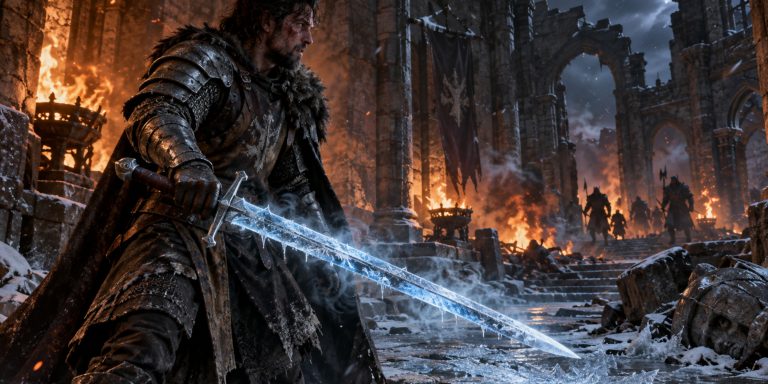
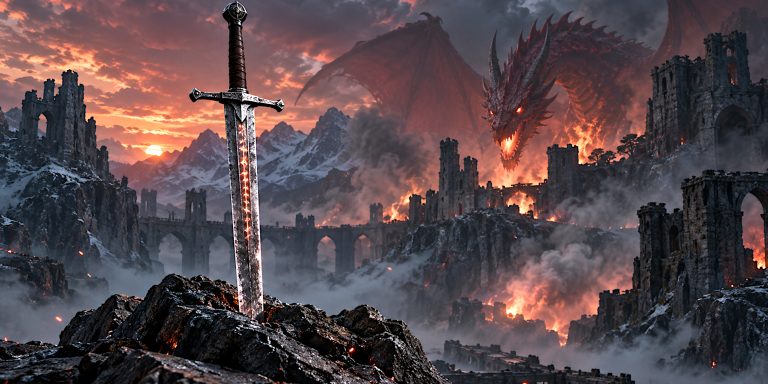
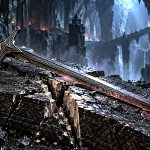
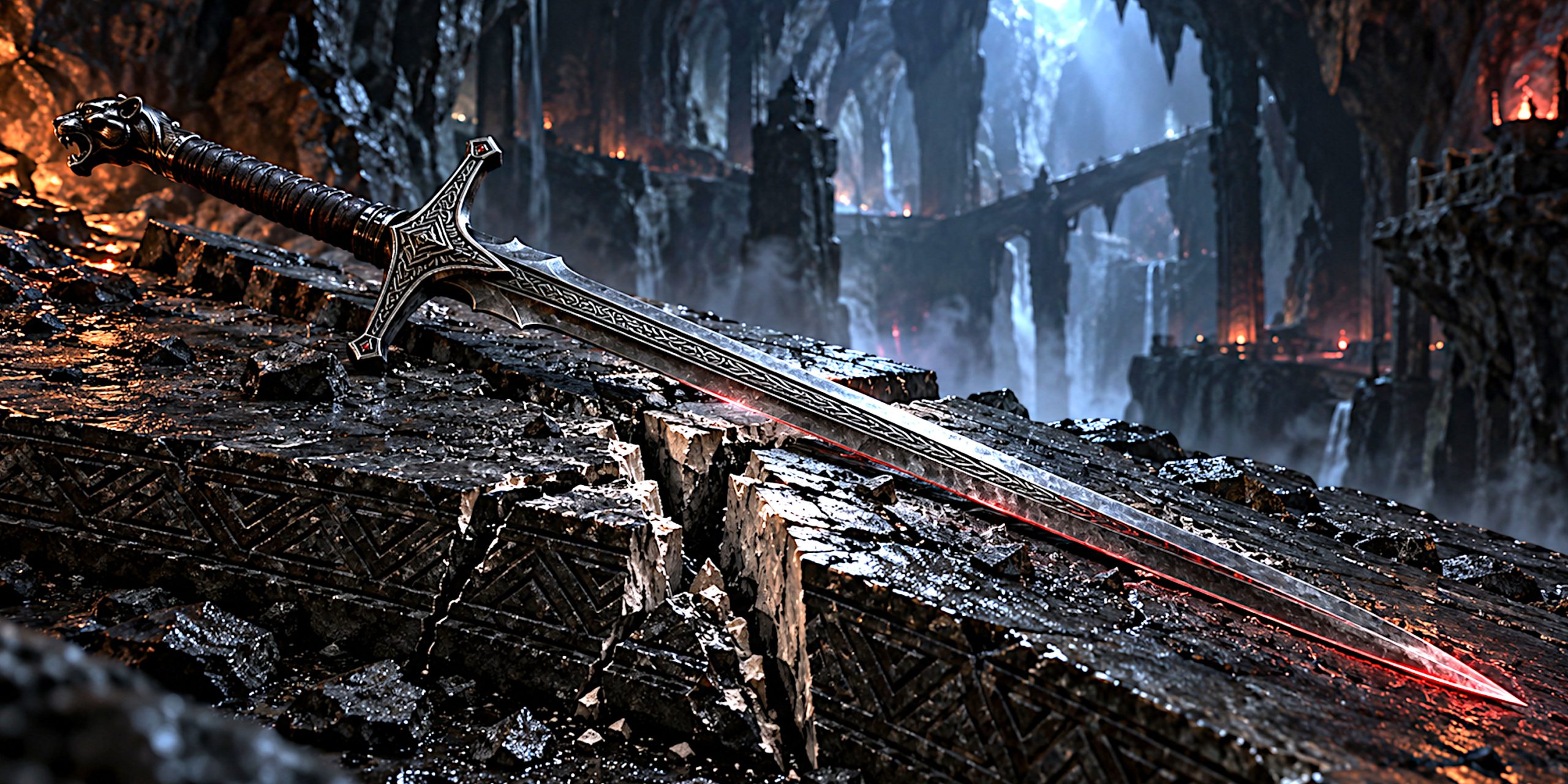
Khazid’hea is usually described as an exceptionally fine longsword with a dark blade and an edge of almost absurd sharpness. Some depictions give it a faint red glow, an appropriate visual warning that this is not a sword to leave beside the coat rack.
Its most distinctive physical ability is the power to alter the appearance of its hilt. This is not decorative whimsy. Cutter uses the transformation deliberately, tailoring its appearance to attract or flatter a desired wielder.
While carried by Dantrag Baenre, its hilt resembled a demonic head. After Dantrag fell to Drizzt, Khazid’hea changed its pommel into a unicorn, the symbol of Mielikki, in an attempt to appeal to the ranger. When Catti-brie established control over it, the hilt took on imagery associated with Guenhwyvar and incorporated symbols of the dwarven gods.
The changing hilt tells us a great deal about the sword. Khazid’hea does not merely read a warrior’s strength. It reads identity, attachments and desire, then dresses itself accordingly. There is something wonderfully sinister about a weapon conducting personalised marketing.
Khazid’hea’s Powers and Abilities
The precise game statistics attached to Cutter vary between adaptations and fan conversions. Its narrative abilities are much more consistent.
An impossibly sharp edge
Khazid’hea can cut through flesh, bone, armour and stone with remarkable ease. Its edge gives a skilled wielder an enormous advantage against heavily protected enemies and solid obstacles. The sword’s danger does not come from throwing fireballs or summoning storms. It performs the basic purpose of a blade at a terrifying level.
A sentient mind
Cutter possesses intelligence, awareness and a forceful personality. It communicates telepathically rather than behaving as a talking sword with a conveniently placed mouth. Its thoughts are shaped by pride, appetite and the desire to reach a supposedly perfect wielder.
Mental influence
Khazid’hea can pressure, tempt and potentially dominate the person carrying it. Strong-minded warriors may resist or master the blade, but vulnerable wielders can lose control of their decisions. The danger is gradual as well as immediate. A person may believe they are using the sword while quietly adopting its priorities.
A shape-changing hilt
The sword can alter its hilt and pommel to suit the tastes or loyalties of a prospective owner. This does not appear to change the blade’s core combat function. Instead, it acts as emotional leverage, which may be the more unsettling power anyway.
Combat instinct
Khazid’hea craves use. It favours aggressive action and resents being ignored. This appetite becomes particularly dangerous when the blade is carried by someone unable to contain it. In such hands, Cutter can turn fear, jealousy or frustration into a route towards violence.
Dantrag Baenre and the Sword’s Life in Menzoberranzan
One of Khazid’hea’s earliest famous wielders was Dantrag Baenre, the formidable weapons master of House Baenre. Dantrag was among the most respected fighters in Menzoberranzan and a natural match for a sword obsessed with martial supremacy.
During Drizzt’s escape from the drow city, Dantrag confronted him and forced a decisive duel. Dantrag possessed superb training, magical equipment and a fearsome reputation. Drizzt nevertheless defeated him by recognising the limitations hidden within Dantrag’s advantages. Speed is useful, but speed without complete control can become a trap.
Dantrag’s death immediately changed Khazid’hea’s ambitions. From the sword’s perspective, the logic was brutally simple. Drizzt had defeated its owner, so Drizzt must be the better warrior. Cutter promptly set about trying to recruit him.
Why Drizzt Refused Khazid’hea
Khazid’hea reshaped its pommel into the head of a unicorn, invoking Mielikki in a calculated attempt to appeal to Drizzt. It was a clever move, but the sword had misunderstood him.
Drizzt was already deeply attached to his scimitars and to the fighting style he had built around them. More importantly, he was not the kind of warrior who measured a weapon purely by destructive power. Cutter offered efficiency and prestige, but also manipulation. Drizzt declined the blade and allowed Catti-brie to take it.
That rejection matters. Khazid’hea believes excellence should naturally desire greater power. Drizzt demonstrates that mastery can include refusing power when it comes with the wrong conditions. Cutter can assess technique, but it repeatedly struggles to understand character.
Catti-brie Becomes Cutter’s True Master
Catti-brie’s relationship with Khazid’hea is the most compelling part of the sword’s history. She was a capable fighter, but Cutter initially wanted Drizzt. It regarded her as a route to the drow ranger rather than its ideal owner.
The blade attempted to influence her thoughts and behaviour, exploiting her feelings for Drizzt in the process. Catti-brie resisted. Through force of will, she established control over the sword and made practical use of its extraordinary edge.
This was not a cosy partnership. Catti-brie could suppress the sword’s telepathic pressure and deny it control, but Khazid’hea remained Khazid’hea. Its obedience depended upon her continued strength. In battle she could turn Cutter into a devastating weapon, complementing her famous bow, Taulmaril the Heartseeker. Away from battle, she effectively carried an armed narcissist at her hip.
Catti-brie’s success also challenges the sword’s own assumptions. Khazid’hea is fixated on visible martial dominance, yet the quality that truly masters it is psychological resilience. The blade wants the strongest hand. Catti-brie proves that the stronger mind matters more.
Delly Curtie and the Cost of Losing Control
Khazid’hea’s influence became deadly after Catti-brie suffered a serious injury during the war against Obould Many-Arrows. Unable to fight as she once had, she could no longer provide the action Cutter craved.
The sword reached out to Delly Curtie, Wulfgar’s wife, whose insecurity and emotional distress left her exposed to its manipulation. Delly took the weapon and travelled into dangerous territory under its influence. Cutter drove her towards combat she was not equipped to survive, and she was killed by orcs.
This episode strips away any temptation to treat the sword as merely mischievous. Khazid’hea does not offer its wielders a fair contest of will. It finds weakness, amplifies desire and pushes people towards situations that satisfy its own hunger. Delly’s death is tragic precisely because the sword turns ordinary human pain into a weapon against her.
Drizzt, Obould and Tos’un Armgo
After passing through the hands of several orcs, Khazid’hea eventually returned to Drizzt during the conflict with Obould Many-Arrows. Drizzt used it in battle against the orc king, although Cutter did not become his permanent weapon.
The blade became lodged in Obould’s armour and was discarded amid the aftermath of their clash. Obould himself rejected it when it called to him, interpreting the voice as some form of deception. This may have been accidental wisdom, but wisdom still counts when an ambitious psychic sword is involved.
Khazid’hea was then found by the drow Tos’un Armgo, who wielded it for a time. Tos’un eventually recognised that his control over Cutter was less secure than he had imagined. He returned it to Drizzt, who entrusted the sword to the elves of the Moonwood for study and safekeeping.
Later stories also connect Khazid’hea with Doum’wielle Armgo and her half-brother Tierflin, particularly in the Cutter comics. These appearances continue the same essential idea: possession of the sword is never a simple upgrade. It is a contest, and Cutter does not stop competing just because someone has fastened the scabbard.
Is Khazid’hea Evil?
Calling Khazid’hea evil is understandable, but the sword is more interesting when viewed as a sentient being governed by appetite rather than a conventional villainous plan. It seeks bloodshed, manipulates people and treats their survival as secondary to its search for worthy combat. Whatever alignment label is placed on a particular game version, its behaviour is plainly destructive.
Yet Cutter does not appear motivated by conquest, religion or political power. It wants excellence close at hand and violence within reach. Its admiration for great warriors resembles devotion until a stronger candidate appears.
That makes Khazid’hea frightening in a very recognisable way. It flatters talent while reducing people to performance. If you win, it praises you. If you falter, it starts browsing.
Khazid’hea in D&D Game Rules
Khazid’hea belongs first to Forgotten Realms fiction, and readers should be cautious about treating any circulating Fifth Edition item card as the single official version. Fan-made adaptations often present it as a legendary or artefact-level longsword with a major attack bonus, exceptional cutting power and rules for sentient conflict.
A campaign version should preserve the weapon’s personality rather than turning it into a large numerical bonus. The most faithful design would include:
- A powerful enhancement to attacks and damage
- The ability to damage or sever unusually hard materials
- Telepathic communication with its wielder
- A high Ego or forceful personality
- Conflict when the wielder avoids combat or appears weak
- Attempts to influence a bearer in favour of a more accomplished warrior
- Cosmetic changes to the hilt based on the person it wants to impress
The Dungeon Master should also establish boundaries before using mind control as a plot device. A sentient weapon works best when it creates choices and consequences, not when it simply removes a player’s agency because the blade felt dramatic that afternoon.
How Khazid’hea Compares with Drizzt’s Scimitars
| Weapon | Defining quality | Relationship with wielder | Main danger |
|---|---|---|---|
| Khazid’hea | Extreme cutting power and sentience | Competitive and manipulative | Mental domination |
| Icingdeath | Frost magic and protection against fire | Reliable magical weapon | Far less psychologically threatening |
| Twinkle | Defensive magic and blue radiance | Closely suited to Drizzt’s style | Lacks Cutter’s raw cutting reputation |
Khazid’hea may be the most physically destructive blade of the three, but Drizzt’s rejection of it is entirely sensible. Icingdeath and Twinkle support his established two-weapon technique without constantly conducting a hostile takeover of his inner life.
Cutter is the more dramatic object. It is not necessarily the better companion.
Why Khazid’hea Stands Out Among D&D Swords
D&D contains plenty of sentient weapons, many of which arrive with booming voices, ancient missions and enough ego to occupy their own initiative slot. Khazid’hea stands out because its personality is expressed through relationships rather than exposition.
Its changing hilt reveals its talent for flattery. Its pursuit of Drizzt reveals its obsession with rank. Its conflict with Catti-brie shows that willpower can master it. Its destruction of Delly demonstrates what happens when it finds a bearer who cannot resist.
The sword also raises a smart question about magical weapons: if an artefact can choose its owner, whose ambitions are actually being served? A warrior may pick up Cutter believing they have acquired power. From Khazid’hea’s point of view, the sword may have acquired a warrior.
Books and Stories Featuring Khazid’hea
Readers interested in Cutter’s history should begin with the following works:
- Starless Night by R. A. Salvatore, for Dantrag’s duel with Drizzt and Catti-brie’s acquisition of the sword
- Siege of Darkness by R. A. Salvatore, for the developing struggle between Catti-brie and Cutter
- The Two Swords by R. A. Salvatore, for the blade’s manipulation of Delly and its role in the war with Obould
- The Orc King by R. A. Salvatore, for Tos’un Armgo and the later fate of the sword
- Dungeons & Dragons: Cutter, by R. A. Salvatore and Geno Salvatore, for the story of Doum’wielle and Tierflin
The novels remain the best route into Khazid’hea because its importance rests on character, temptation and shifting control. A weapon card can tell you how much damage a sword does. It cannot easily convey the sensation that the sword is disappointed in your career choices.
Frequently Asked Questions
What does Khazid’hea mean?
Khazid’hea is generally translated as Cutter in the drow language.
Who originally wielded Khazid’hea?
Its maker and earliest owner are not clearly established. The sword was associated with surface elves before becoming the weapon of the drow weapons master Dantrag Baenre.
Did Drizzt ever wield Khazid’hea?
Yes, but only briefly. Drizzt rejected it after defeating Dantrag because he preferred his scimitars. He later used Cutter during his battle with Obould Many-Arrows.
Was Khazid’hea Catti-brie’s sword?
Catti-brie was its most notable long-term wielder and one of the few people capable of mastering its will. She used it alongside Taulmaril until injury prevented her from continuing as a frontline melee fighter.
Can Khazid’hea control its wielder?
Yes. The sword can exert telepathic influence and overwhelm someone without the will to resist it. Catti-brie controlled the blade, while Delly Curtie became its victim.
Is Khazid’hea an official D&D 5e magic item?
Khazid’hea is an established Forgotten Realms weapon, but many Fifth Edition stat blocks found online are unofficial adaptations. Dungeon Masters should verify the source of any rules they plan to use.
Final Thoughts
Khazid’hea is memorable because it turns the fantasy of the perfect sword slightly inside out. Its edge can defeat armour and stone, yet the real contest takes place in the wielder’s mind. Dantrag suited its pride. Drizzt frustrated it by refusing. Catti-brie mastered it. Delly was destroyed by it.
I find Cutter much more interesting than a weapon that is merely ancient, glowing and very expensive-looking. It has taste, ambition and a ruthless understanding of insecurity. Every change of ownership becomes a character test.
The finest warrior in the Realms might be able to wield Khazid’hea. The wiser one may decide to leave it exactly where it is.
Source Notes
This article follows the narrative history presented across R. A. Salvatore’s Legend of Drizzt novels and the Dungeons & Dragons: Cutter comics. For a concise reference overview, see the Forgotten Realms Wiki entry on Khazid’hea.